
A compressor labelled 600 CFM and a pneumatic tool listed at 600 CFM can appear to be an exact match. The pressure attached to each figure may change that conclusion. For a pipe-ramming enquiry, the useful question is whether the proposed compressor can deliver the required air under the conditions specified for the identified tool.
The 500–600 CFM range includes several documented portable configurations. Their capacities should be read as rated operating points, with the corresponding pressure and measurement basis retained. A capacity category helps organise an enquiry; it does not approve a particular combination of compressor, air-supply equipment and rammer.
This page examines that distinction using a documented pipe-ramming reference. It helps project teams identify the evidence needed before committing equipment, without assigning an unsupported installation rate, casing size or project outcome to a compressor rating.
Start with the rammer identity
Record the tool model and serial identification, together with the applicable manual. Include the intended use: a planned casing installation, an assist operation or another application specified by the contractor. Similar-looking equipment and familiar model-family names should not replace identification of the actual tool.
Ask the trenchless specialist to confirm the selected rammer against the project. Compressor selection follows that equipment decision; it cannot establish that the proposed rammer is suitable for the ground, casing or installation method.
Keep the planned installation details available for that review. Casing information, proposed drive length, site constraints and the contractor's assessment of ground conditions help define the assignment. They should not be converted into an assumed air requirement without the relevant equipment guidance.
Published portable compressor reference points
The following India-market specifications illustrate the range. Each row retains its stated operating pressure.
Descriptive configuration | Published free air delivery | Listed operating pressure |
|---|---|---|
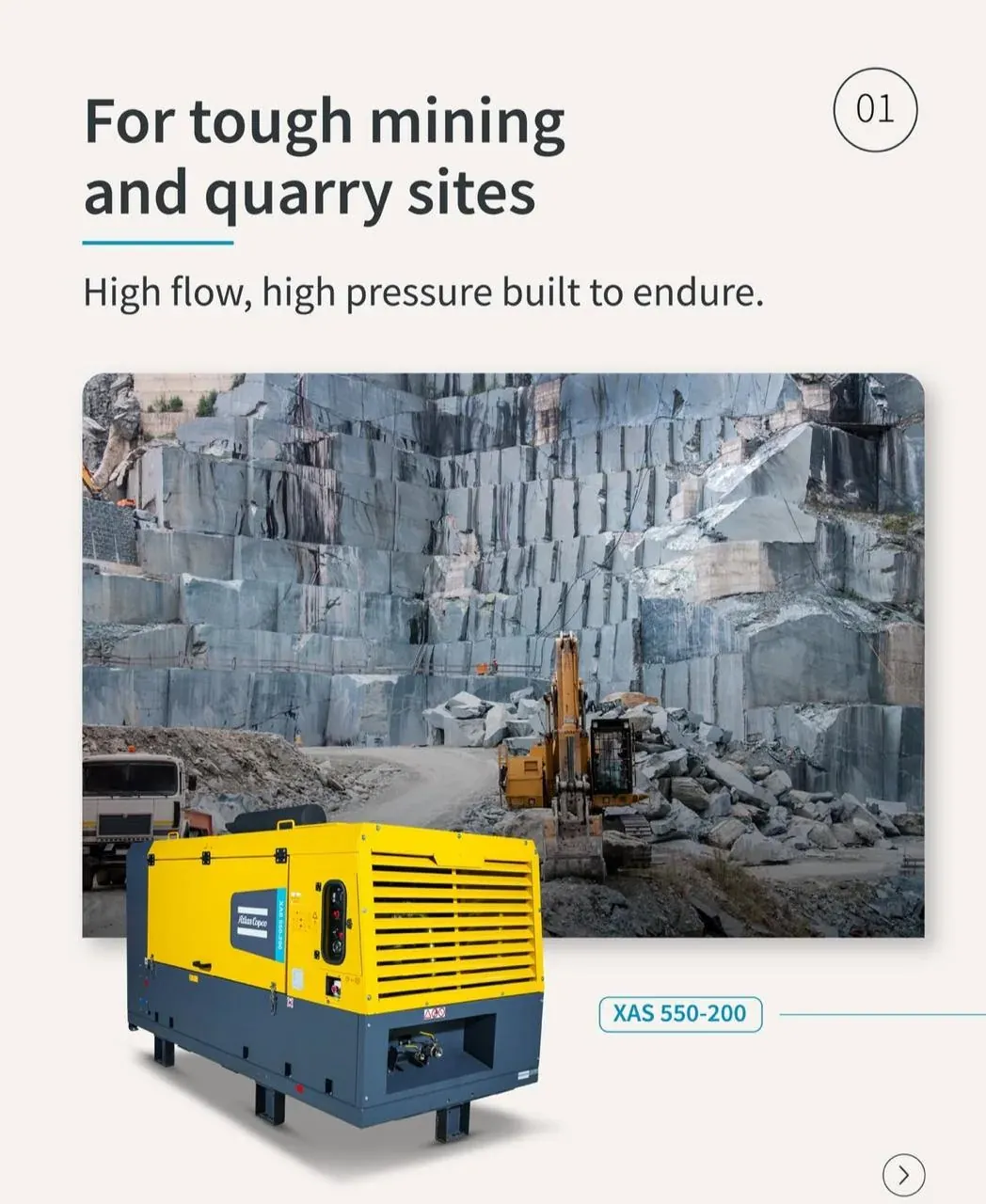
550 CFM higher-pressure reference | 550 CFM | 200 psi |
575 CFM higher-pressure reference | 575 CFM | 225 psi |
600 CFM reference | 600 CFM | 100 psi |
These are manufacturer reference configurations, not named Reddy products or confirmed stock. No adjustment curve has been used to estimate their delivery at another pressure. The offered unit and its governing specification must be identified in the proposal.
The table should not be read as a ranking of suitability for pipe ramming. A higher pressure capability does not establish the required flow, and a larger listed flow does not establish the required pressure. Obtain both at the operating point needed for the selected duty.
Nor does this table prescribe a downstream pressure setting. The tool, hoses and associated equipment must operate within their documented limits under the reviewed supply arrangement.
A boundary case: equal CFM, different pressure
An identified 12-inch pneumatic rammer is listed in its manufacturer's brochure at 600 CFM and 110 psi. The corresponding manual also gives 600 CFM at 110 psi in its air-supply guidance.
Compare that with the 600 CFM compressor reference rated at 100 psi. The flow numbers match, but the documented pressure points differ by 10 psi. The compressor's rated point alone therefore does not prove the tool's stated supply point.
This is an evidence gap, not a finding that the compressor can never operate the tool. Confirmation requires the exact compressor's performance at the proposed setting and the applicable instructions for the actual rammer. No additional output at a different setting is inferred here.
A permitted adjustment range is not a substitute for that performance evidence. Being able to select a pressure does not, on its own, document the volume available at that pressure.
What the comparison permits you to conclude
The comparison is useful because it identifies an unresolved decision before equipment is dispatched. It does not justify an improvised setting change or a claim that all 600 CFM compressors are interchangeable.
Evidence available | Defensible conclusion |
|---|---|
Compressor rating at a different pressure from the tool reference | Further operating-point evidence is needed |
A pressure adjustment range without delivery data | The range does not prove flow at every setting |
Matching tool and compressor flow labels without common rating conditions | Compatibility remains unconfirmed |
Documented performance for the offered machine and reviewed supply arrangement | A technical reviewer can assess the proposed pairing |
If the supplier cannot establish the required point, request another configuration or a revised equipment proposal. A larger capacity category may need consideration, but it should be selected from evidence rather than by adding a universal percentage to the enquiry.
Keep compressor discharge and tool supply distinct
State where each pressure or flow figure applies. A machine datasheet, a compressor control display and a measurement at the tool are different forms of information. The proposal should identify the delivery point at which the required conditions must be achieved.
Ask the responsible reviewer to assess the complete path from compressor to tool. That includes the actual air-supply assemblies and any equipment introduced between them. The review should use the selected components and operating conditions rather than an assumed hose allowance.
Do not use the 10 psi difference in the reference comparison as a permitted distribution loss. It is simply the difference between two published rating points. An allowance for the installed supply system requires its own assessment.
This distinction also prevents a misleading acceptance record. A compressor operating normally at its own outlet is not, by itself, evidence that the tool receives the agreed supply during the intended work.
Identify the supply accessories as equipment
The enquiry should name the control and lubrication equipment specified for the rammer, together with the hoses and connections proposed by the responsible supplier. Treat these as parts of the reviewed arrangement rather than unspecified accessories to be found on site.
Ask who provides each item and which instructions apply to it. A rental request may involve a customer-owned tool, a hired compressor and separately supplied connecting equipment. The responsibilities need to meet at clearly identified interfaces.
Where treatment equipment is proposed, confirm its compatibility with the tool's requirements and its effect on the supply arrangement. Do not assume that an accessory selected for another compressed-air application is automatically appropriate for a pneumatic rammer.
This page does not provide assembly, lubrication or operating instructions. Those must come from the documentation applicable to the tool and the competent personnel responsible for the installation.
Do not select the compressor from casing diameter alone
A description such as “compressor for a casing installation” leaves the air-consuming equipment unidentified. Ask for the selected rammer and its documented requirement before attempting a capacity match.
The casing diameter and tool-body diameter are also different identifiers. Make the enquiry clear about which dimension is being supplied. A number taken from the tool's name should not be represented as the diameter of every casing it can install.
For project approval, the trenchless contractor must assess the installation itself. A compressor quotation cannot certify the ground response, alignment, casing condition or achievable drive length. Those decisions belong to the project-specific method and engineering review.
Avoid accepting an unsupported promise that a certain CFM value guarantees completion of a crossing. The compressor proposal should define its supply obligation; the installation proposal should define the contractor's work and acceptance requirements.
Separate operating stages in the request
Describe the stages the compressor is expected to support. Tool operation, other site air consumers and any separately proposed cleaning activity should have their own identified requirements. Establish whether they occur together or at different times.
A request that combines every stage under one general project label can conceal a change of duty. Ask the reviewer to state which operating combinations the proposed supply covers and which require another assessment.
In particular, acceptance of a rammer supply arrangement should not be treated as approval for pressurising a casing or undertaking a clean-out method. Such work requires a separately engineered and controlled procedure from the responsible specialists. No clean-out procedure is provided here.
Keep that scope distinction in the equipment order. It gives the site team a clear basis for checking whether a later request is part of the accepted arrangement or an additional duty.
Establish evidence for acceptance before work starts
Agree how the supply will be assessed and who will record the result. The acceptance plan should identify the actual machines, the operating condition, the relevant measurement locations and the criteria supplied by the responsible technical parties.
Retain the documents used to select the equipment alongside the acceptance record. If the supplier substitutes another compressor, the record should show that machine's identity and supporting performance information. The original model's documentation should not silently become evidence for the replacement.
Keep air-supply observations separate from installation progress. If progress is unsatisfactory, a useful investigation needs the tool and project information as well as the compressor observations. Increasing pressure without establishing the cause is not an acceptable substitute for review against equipment limits.
Any demonstration or trial should have an agreed scope. Identify what it can establish and which project outcomes remain outside it. A successful equipment check is not a blanket guarantee of the complete crossing.
When one proposed unit cannot be confirmed
A supplier may recommend a different single machine or an engineered multi-compressor arrangement. Either proposal needs supporting information for the required duty. Two nominal flow labels should not simply be added and treated as proof of delivered performance.
If multiple units are proposed, ask for one responsible party to define and approve the complete supply system. Its controls, connections, operating conditions and acceptance requirements need to be addressed as an arrangement, not left as a collection of separate hire items.
This guide does not prescribe a manifold design or instructions for combining compressors. It also does not imply that a second machine is necessary for the reference tool. The decision depends on the verified capability of the proposed supply and the requirements of the actual equipment.
For procurement, keep alternatives clearly labelled. A confirmed primary proposal and a possible backup should not appear as equally approved options when one still lacks technical evidence.
Frequently asked questions
Is 600 CFM at 100 psi the same duty as 600 CFM at 110 psi?
No. They are different stated pressure points. The first rating alone cannot prove delivery at the second. Obtain the manufacturer's performance information for the offered compressor and assess it against the actual tool requirement.
Does this mean every compressor rated at 100 psi is unsuitable?
No. The comparison identifies missing evidence, not universal incompatibility. Some configurations may have relevant operating-point data; others may not. The exact machine specification and applicable tool instructions must determine the assessment.
Will a high-pressure 550 or 575 CFM model solve the problem?
Its higher pressure rating alone does not establish the required flow at the tool's operating conditions. Do not assume extra delivery when reducing pressure. Request the relevant performance data before presenting that configuration as a solution.
Can the rammer's brochure replace its operating manual?
The brochure can support initial identification and comparison. The actual equipment still needs the applicable manual and supplier confirmation. Where documents differ, resolve the model, serial range and revision rather than choosing whichever figure appears easiest to satisfy.
Can you select the compressor from the pipe size I send?
Pipe information helps describe the project, but it does not identify the complete air requirement. Send the selected rammer details and supporting documents as well. If the rammer has not been selected, that decision needs the trenchless specialist's assessment first.
Can the same order cover other air-powered equipment?
Yes, if the additional consumers and their operating schedule are included in the reviewed requirement. Do not assume that an unused outlet or a nominal capacity difference provides approved spare supply. Make any added duty explicit before it is accepted.
Does compressor hire include casing clean-out or trenchless installation?
Those services are included only if specifically agreed. Define who supplies and operates the rammer and who owns the installation method. Any separate clean-out work requires its own approved scope and procedure; it is not authorised by a compressor rating.
What evidence should accompany a replacement compressor?
Provide its exact identity, applicable capacity and pressure data, proposed connection arrangement and confirmation against the accepted duty. Review any differences before mobilisation. Similar appearance or the same capacity label is insufficient evidence of equivalence.
Discuss a 500–600 CFM requirement
Reddy Compressors has operated from the Hyderabad and Secunderabad region since 2002. Telangana and Andhra Pradesh receive priority attention, while projects elsewhere in India are considered against their requirements and confirmed supply options.
For a pipe-ramming enquiry, share the tool identification, relevant manual, intended operating requirement and planned project dates. Include the compressor location, proposed connection route, other air consumers and the responsibility split between your contractor and equipment suppliers.
Sales, hire and associated support can then be discussed against the documented duty. High-pressure supply needs supplier confirmation. Availability, transport and the agreed support scope should be established before relying on a particular machine for the assignment.
Emergency coordination is available for discussion without a promised response time. The portable compressors category provides the wider equipment context for your enquiry.