
Overhaul, refurbishment and repair: what the words mean
These terms are used loosely, and that causes disputes. A clear scope starts with clear definitions.
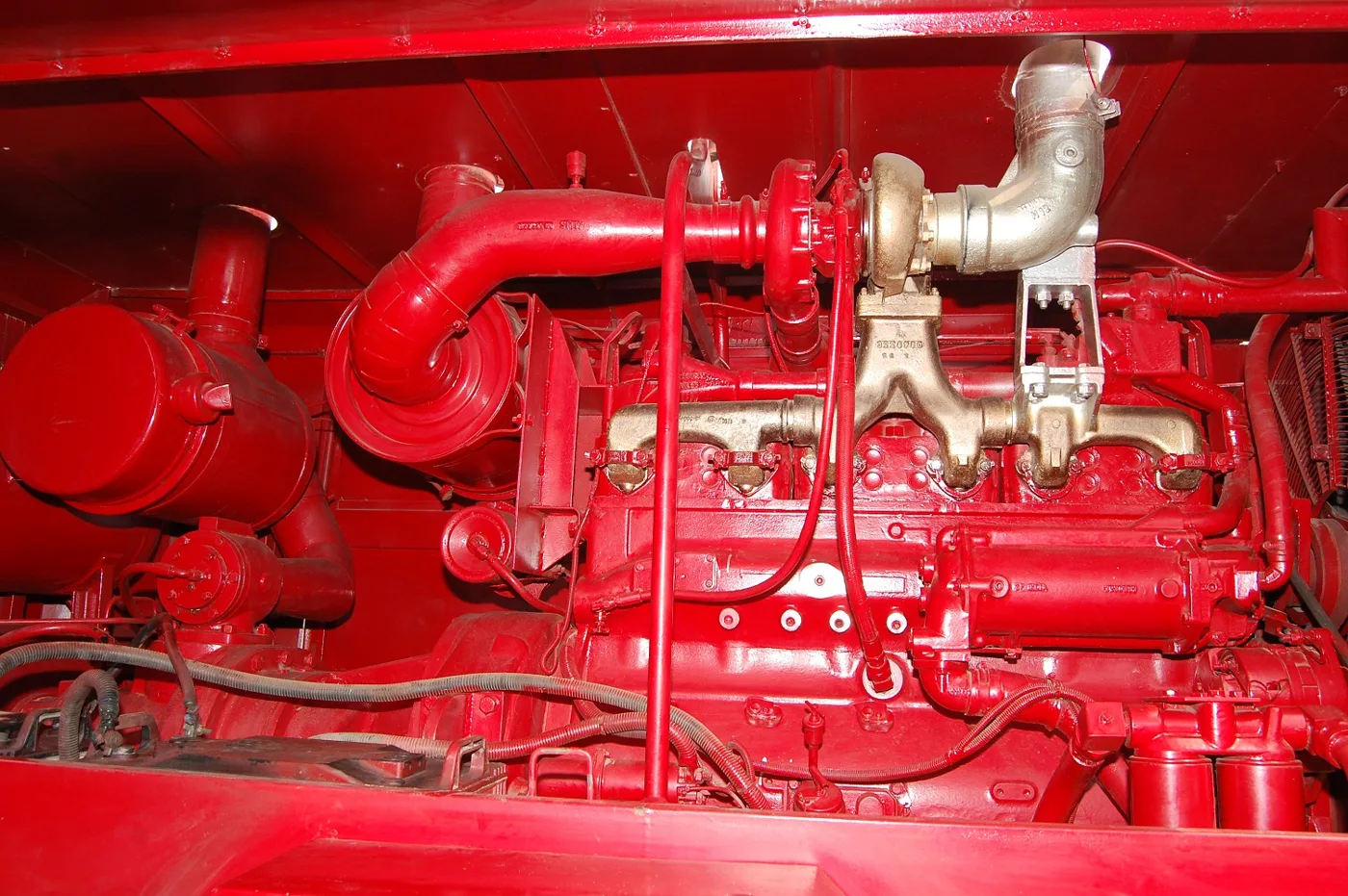
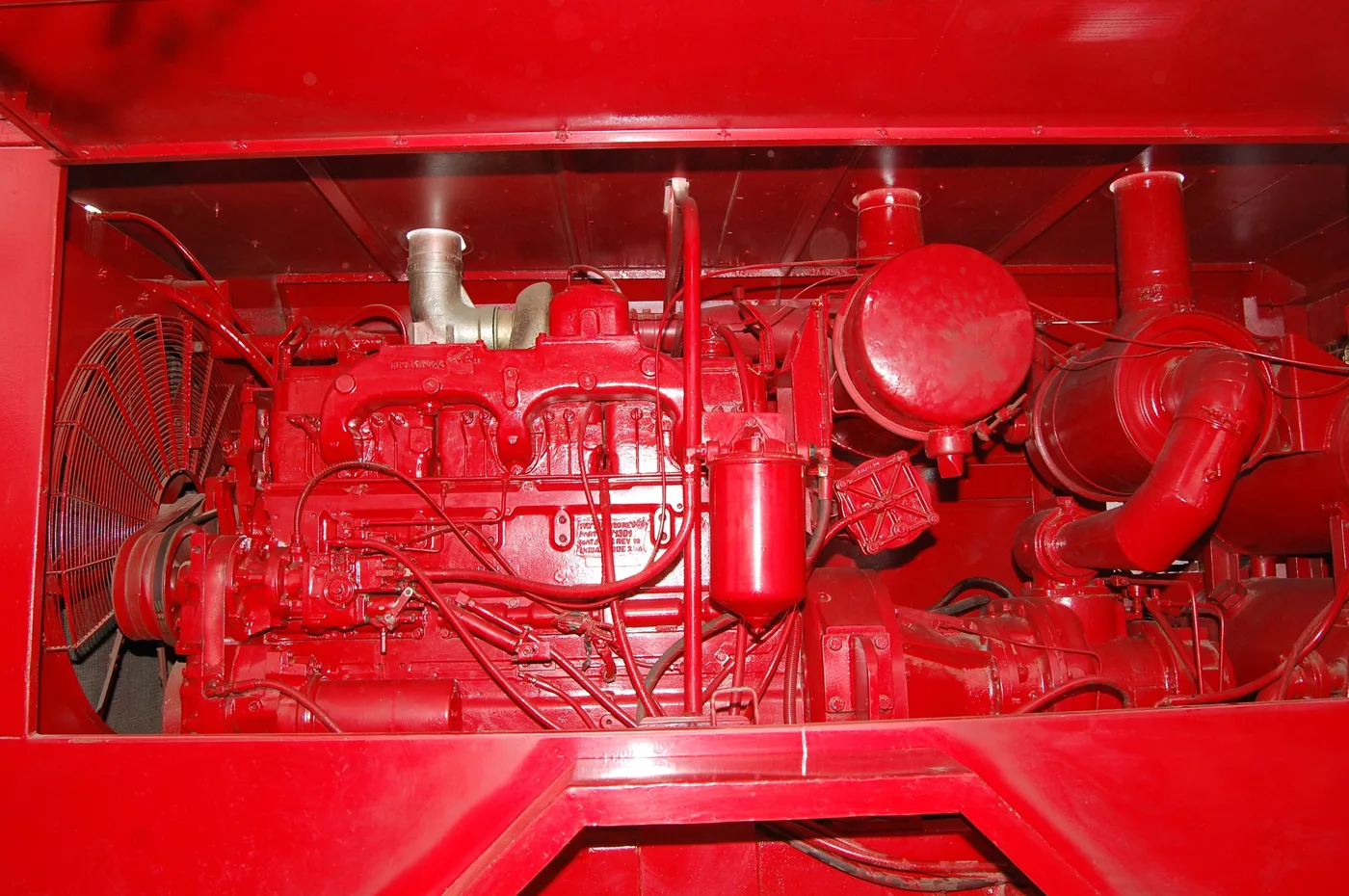
Photographs from Reddy Compressors’ own fleet and workshop.
- Repair fixes one failed item, such as a leaking cooler, a failed motor bearing or a faulty valve, and returns the machine to service.
- Overhaul dismantles one or more major assemblies, measures wear against limits, and renews the worn parts. An airend overhaul, for example, typically renews bearings, shaft seals and gaskets and checks rotor clearances.
- Refurbishment is wider: the main assemblies are overhauled and the rest of the package is brought back to a sound state, including coolers, hoses, valves, controls, electrics and, where useful, canopy and paint.
- Reconditioned or used machines are compressors sold after refurbishment. The value depends entirely on what was actually inspected, renewed and tested.
A fresh coat of paint is not an overhaul. Equally, a sound component that was inspected and kept does not need to be called “replaced”. What matters is a written record of what was done to which assembly.
When does overhauling a compressor pay?
Overhaul is an investment decision, not a reflex. It usually makes sense when most of the following are true:
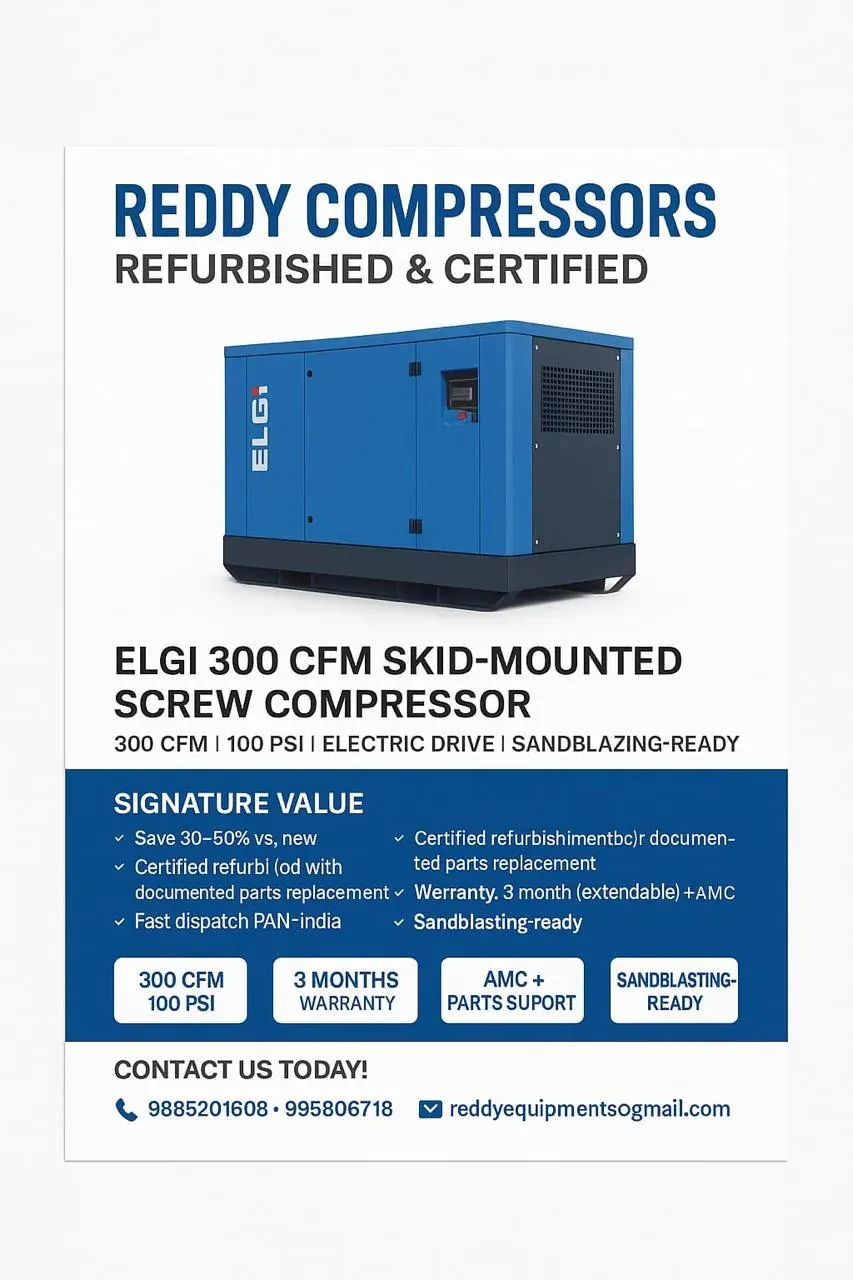
- The frame, base, vessels and drive are in good condition, and the design still suits your duty.
- Genuine or named aftermarket parts are available for the model.
- The overhaul cost, plus the expected running cost, is clearly lower than buying and installing a replacement for the years you plan to keep it.
- Energy performance is acceptable. An older fixed-speed machine running long hours on part load may waste more in power than an overhaul saves.
- Downtime can be planned, or covered with a rental compressor while work is done.
It usually does not pay when several major assemblies have failed at once on a very old machine, when parts are obsolete, when the compressor is badly oversized or undersized for today’s demand, or when a newer machine would cut energy use significantly. Our overhaul versus replacement decision tool and upgrade and replacement planning page help put numbers on that comparison.
Signs a compressor is due for overhaul
Most compressors give warning before a major failure. Watch for trends rather than single readings.
| Sign | What it often indicates |
|---|---|
| Falling free air delivery (FAD) at the same speed and pressure | Increased internal leakage from rotor or piston-ring wear, valve wear, or inlet restriction |
| Discharge temperature drifting above normal (an oil-injected screw normally runs about 75–95 °C) with clean coolers | Internal wear, oil system faults, or bearing distress |
| Rising noise or vibration from the airend or crankcase | Bearing wear, rotor contact, coupling or gear damage |
| Increased oil consumption or carry-over | Separator or scavenge problems, seal wear, ring wear on reciprocating units |
| Longer load times or more running hours for the same plant output | Loss of capacity, or growth in leaks and demand |
| Rising specific power (kW per m³/min or per 100 cfm) | Lower efficiency; the machine is using more energy for each unit of air |
| Running hours near the manufacturer’s recommended airend or major-service interval | Planned overhaul due before failure risk rises |
Condition monitoring, oil analysis and vibration readings make these trends visible early. Planned overhaul is almost always cheaper and faster than a breakdown repair after a seizure.
What a full overhaul includes, by compressor type
The scope differs with the technology. The lists below describe typical work; the actual scope is set after inspection.
Oil-injected rotary screw
- Airend dismantling, cleaning, measurement of rotor clearances and bearing seats, renewal of bearings, shaft seal and gaskets.
- Separator element, oil filter, air filter, oil and minimum pressure valve renewal.
- Thermostatic valve, inlet (unloader) valve and solenoid service.
- Oil and aftercooler cleaning or pressure testing; hoses renewed where aged.
- Motor bearing check or renewal, coupling or belt drive alignment, controller and sensor checks.
Oil-free screw
- Stage element inspection, where specialist rotor coating and timing-gear work is often needed.
- Intercooler and aftercooler cleaning, gearbox oil and bearing work, seal renewal.
Reciprocating (piston)
- Valve plates and springs, piston rings, cylinder bore measurement and honing or reboring, connecting-rod and main bearings, crankshaft check.
- Intercooler, aftercooler, unloaders and pressure switch service.
Portable diesel compressors
- Airend work as above, plus engine top-end or major overhaul as needed, radiator and oil cooler cleaning, fuel system service, and chassis, axle and tow-gear inspection.
Airend overhaul has its own detailed guide. See the airend overhaul and rebuild engineering hub for inspection, measurement, rebuild quality and post-rebuild acceptance in depth.
How we build the overhaul scope
A good overhaul is planned from evidence, not from a fixed list. Our process is designed so that you approve every material decision.
- Agree the future duty. What the machine will do after overhaul, its expected hours per year, and how long you plan to keep it. A standby machine justifies a different scope from a main duty unit.
- Collect history. Running hours, previous major work, recent faults and readings.
- Pre-inspection. Run tests where possible: pressure, temperature, current draw and noise, before dismantling.
- Strip and measure. Dismantle, clean and measure wear against limits, and photograph findings.
- Findings report. Separate mandatory work (needed for safe, reliable running), recommended work (sensible while the machine is open) and optional work (appearance, upgrades).
- Approval. You approve the scope and parts basis. If new findings appear during work, they are raised before extra work begins.
- Rebuild and test. Reassemble, run in, and record pressure, temperature and electrical readings under load.
- Handover. A record of what was inspected, renewed, retained and tested, plus any remaining limitation and the written warranty terms for the work.
Refurbish or replace: a side-by-side view
| Factor | Refurbish or overhaul | Replace with new |
|---|---|---|
| Up-front cost | Usually lower, depending on scope | Higher |
| Lead time | Depends on parts and workshop time; can be planned | Depends on model availability, delivery and installation |
| Energy efficiency | Restores the original design’s efficiency, not better | Can offer newer airend designs, variable speed drive and better controls |
| Installation changes | None; same footprint and connections | May need new foundations, piping, electrical work |
| Remaining risk | Uninspected parts keep their age | Whole machine new, with manufacturer’s warranty |
| Best suited to | Sound machines with available parts and a duty that still fits | Very old, obsolete, or wrongly sized machines, or very high-hour energy-heavy duty |
Remember the energy side. A compressor running long hours spends far more on electricity or fuel over its life than on purchase or overhaul. Running at a higher pressure than needed also costs, at roughly 7% more power per extra bar. If an overhaul is being considered, it is a good moment to check whether the pressure setting, controls and sizing still suit the plant.
Buying used or reconditioned compressors
A well-refurbished used compressor can be good value for standby duty, short projects or tight budgets. The risk is in what you cannot see. Before buying, ask for:
- The make, model, serial number and actual running hours, with a nameplate photo.
- A list of what was inspected, what was renewed and what was retained, assembly by assembly.
- Test readings under load: pressure, discharge temperature, current or engine speed, and ideally FAD.
- The written warranty terms, if any, and what they cover.
- Parts availability for the model.
Our pages on used compressor technical due diligence and reconditioned compressor acceptance explain how to check a machine before you commit. Reddy Compressors also sells used and refurbished compressors, with the work done recorded so you know what you are buying.
Keeping production running during an overhaul
Major workshop work takes the machine out of service. Plan the timing with production, and where there is no standby compressor, arrange temporary air. We supply rental compressors from 50 to 2,000 cfm and 2 to 30 bar, diesel and electric. Treat the rental and the overhaul as separate commitments with their own schedule, but plan them together so the rental covers realistic parts lead times and workshop time.
After return to service, put the overhauled machine on a proper maintenance routine. Our preventive maintenance and AMC pages explain how to keep the benefits of an overhaul for longer.
Typical overhaul intervals by machine type and duty
The maker’s schedule and measured condition always govern. The ranges below are planning figures for running hours to the first major intervention, as commonly seen in the trade. Use them to budget and to judge whether a quoted overhaul is premature or overdue.
| Machine and duty | Major work | Typical planning interval (running hours) | What shortens it |
|---|---|---|---|
| Oil-injected screw, industrial, 7 to 13 bar(g) | Airend bearings, seals, rotor inspection | About 24,000 to 40,000 | Overdue oil changes, high discharge temperature, dusty intake, frequent starts |
| Portable diesel screw, including high-pressure DTH units | Airend bearings and seals; engine overhaul to the engine maker’s guidance | About 10,000 to 24,000 for the airend, lower end on high-pressure dusty duty | Dust, heat, running above rated pressure, poor intake filtration |
| Oil-free screw, two-stage | Stage element overhaul, timing gears, seals | About 30,000 to 40,000, with earlier inspections | Contaminated cooling water, high interstage temperature, frequent load cycling |
| Lubricated piston, slow-speed industrial, two-stage | Valves; rings and packing; then bearings and crankshaft | Valves about 2,000 to 4,000; rings about 8,000 to 16,000; major about 24,000 to 40,000 | Dirty intake, wrong oil, overheating, continuous running beyond rating |
| Small air-cooled piston (garage and workshop) | Valve plate; rings; pump exchange | Valve plate about 1,000 to 2,000; rings about 3,000 to 6,000 | Hot cabins, high duty cycle, water-logged receiver |
| Oil-free piston with PTFE rings | Piston rings, rider bands, valves | About 4,000 to 8,000 | Heat, moisture, abrasive dust |
| Electric motor, regreasable bearings | Bearing renewal | About 20,000 to 40,000, or per greasing records | Over- or under-greasing, misalignment, vibration |
Piston compressor overhaul: clearances and fits
The typical scope for a piston overhaul is listed above. What decides the quality of the job is measurement. The figures below are general engineering ranges for checking a quotation or a strip report. Where the maker publishes limits, those govern.
| Item | How it is measured | General range (confirm against maker limits) | Action |
|---|---|---|---|
| Cylinder taper and ovality | Bore gauge at top, middle and bottom of travel, in two directions | Rejection commonly at about 0.0005 to 0.001 × bore, which is 0.05 to 0.10 mm on a 100 mm bore | Hone glazed or lightly scored bores; rebore or sleeve beyond the limit |
| Ring end gap, cast iron, lubricated | Ring squared in the bore at its least-worn point, feeler gauge | New about 0.003 to 0.004 mm per mm of bore (0.30 to 0.40 mm on 100 mm); renew at about twice the new gap | Renew rings; do not file gaps to suit a worn bore |
| Ring side clearance in groove | Feeler gauge with a new ring in the groove | New about 0.03 to 0.08 mm | Replace the piston if the groove is worn beyond the maker’s limit |
| Plain bearing running clearance | Plastigauge or micrometer and bore gauge | About 0.0005 to 0.001 × journal diameter (0.025 to 0.05 mm on a 50 mm journal) | Renew shells at about 1.5 to 2 times new clearance; regrind a worn journal |
| Bumping clearance (piston to head at top dead centre) | Soft lead wire crushed by turning the crank by hand | Commonly about 0.5 to 2 mm, depending on size | Correct with the specified gasket or shims |
| Valve seats and plates | Flatness on a surface plate, then a seat leak check with paraffin | No steady seepage through a closed valve | Lap heavy plates and seats on a plate with fine compound in a figure-of-eight; renew thin plates, reeds and all springs |
Worked example: why bumping clearance matters. Take a low-pressure cylinder of 100 mm bore and 80 mm stroke, so the swept volume is π ÷ 4 × 0.1² × 0.08 = 0.628 litres. One extra millimetre of clearance, for example from a wrong gasket, adds π ÷ 4 × 0.1² × 0.001 = 0.00785 litres, which is 1.25% of the swept volume. Volumetric efficiency is about 1 − c × (r^(1/n) − 1), where c is the clearance ratio. With a stage pressure ratio r of 3.3 and n = 1.3, the bracket is 1.505. The extra clearance therefore costs 0.0125 × 1.505 = about 1.9 percentage points of delivery, for example a fall from 94.0% to 92.1% on the ideal figure. A gasket error can wipe out some of what new rings recovered.
Overhaul acceptance test: limits and record sheet
An overhaul is complete only when the machine has proved itself under load. Agree this sheet before work starts. Record the as-found and as-left values beside each row.
| Check | Method | Typical acceptance basis |
|---|---|---|
| Before first start | Oil level, guards, safety valve set pressure, direction of rotation by a brief bump | Correct rotation confirmed before loading; a screw element run backwards can be damaged in seconds |
| Run-in | Screw: light load, then progressive to full. Piston: start with drains open, then raise pressure in steps | At least 2 hours at rated pressure, 4 hours preferred. Re-torque piston head bolts after cooling if the maker requires it |
| Free air delivery | Flow meter, or a pump-up test into a known volume | Within about 5% of the original rating at rated pressure and speed. ISO 1217 tolerances for new machines are of a similar order and tighten as machine size grows |
| Power and current | Clamp meter or power analyser at full load | Within nameplate. Phase currents balanced within a few percent. Specific power better than before overhaul |
| Temperatures | Element or stage discharge, oil injection, aftercooler outlet against ambient | Stable under load. Oil-injected screw within its normal band. Stages of a piston machine balanced with each other. No rising trend after one hour |
| Vibration | Velocity, mm/s rms, at bearing housings | Rotary machines of 15 to 300 kW: below about 2.8 mm/s on rigid mounting, about 4.5 mm/s on flexible mounting (zone boundary B/C of ISO 10816-3, now ISO 20816-3). Piston machines: maker limits and comparison with the previous record |
| Leaks | Soap solution or ultrasonic detector at maximum working pressure | No leaks at joints, fittings or seals; package holds pressure when isolated |
| Oil carry-over and consumption | Separator pressure drop and scavenge flow (screw); top-up log over the first 50 hours (piston) | Within maker values; no oil at downstream drains |
| Protections | Simulate high temperature, test emergency stop, lift the safety valve, check overload setting | Every trip proven to act |
| Motor insulation | Insulation resistance test at 500 or 1,000 V DC | Above the motor maker’s minimum. A common field floor is 1 MΩ plus 1 MΩ per kV of rated voltage; a sound motor reads far higher |
Worked FAD check (illustrative): a screw compressor rated at 6.5 m³/min fills a measured system volume of 2.0 m³ (receiver plus pipe) from 3 to 7 bar(g) in 75 seconds. Free air delivered = 2.0 × (7 − 3) ÷ 1.01325 ÷ (75 ÷ 60) = 6.32 m³/min, or about 223 cfm. That is 2.8% below the rating, which is inside a 5% acceptance limit. Air warmed by compression makes a quick fill read high, so treat this as a check and not a certified test. The method is set out on the pump-up test page.
Worked example: overhaul or replace, with energy counted
Inputs (all illustrative): a 55 kW oil-injected screw compressor, originally rated at 10.0 m³/min (353 cfm) at 7.5 bar(g) with 61 kW package input. Today it delivers 8.8 m³/min at 60 kW. Site demand averages 7.5 m³/min over 6,000 hours a year, and the tariff is assumed at ₹8.50/kWh. An airend overhaul is assumed to cost ₹4.0 lakh and restore 9.7 m³/min at 61 kW. An installed new fixed-speed machine is assumed to cost ₹18.0 lakh and give 10.0 m³/min at 58 kW.
| Option | Specific power (kW per m³/min) | Annual energy (kWh) | Annual energy cost | Five-year total (capital plus energy) |
|---|---|---|---|---|
| Run as worn | 60 ÷ 8.8 = 6.82 | 7.5 × 6.82 × 6,000 = 306,818 | ₹26.08 lakh | ₹130.4 lakh |
| Overhaul | 61 ÷ 9.7 = 6.29 | 282,990 | ₹24.05 lakh | 4.0 + 5 × 24.05 = ₹124.3 lakh |
| Replace | 58 ÷ 10.0 = 5.80 | 261,000 | ₹22.19 lakh | 18.0 + 5 × 22.19 = ₹128.9 lakh |
The overhaul saves 23,828 kWh, or about ₹2.03 lakh a year, against running worn, so it pays back in about 4.0 ÷ 2.03 = 2.0 years on energy alone. Replacement costs ₹14.0 lakh more than overhaul and saves a further 21,990 kWh, or ₹1.87 lakh a year. That is a simple payback of about 7.5 years on the extra spend, so overhaul wins on these numbers.
The answer changes if demand swings widely. The model counts loaded energy only: it ignores the fixed-speed machine’s unloaded running and the longer remaining life of a new machine at the end of five years. To draw level over five years, a replacement would need to save a further 10,950 kWh a year, about 4% of its own consumption, which a variable-speed machine on a fluctuating profile can do. Log the demand profile before you decide. The overhaul versus replacement decision tool runs this comparison with your own figures.
Documents an overhaul should hand over
- As-found report: the readings taken before the machine was stripped, including pressure, temperatures, current, vibration and FAD where measured.
- Strip and measurement report: each clearance, measured value against the limit, with photographs of wear, scoring and failed parts.
- Parts record: renewed, reconditioned and reused parts listed separately, with part numbers, bearing makes and an honest statement of genuine or equivalent supply.
- Build record: clearances as left, bolt torques, shim and gasket thicknesses, oil grade and quantity.
- Acceptance test sheet: the table above, completed and signed, with the test date and running hours.
- Safety device and vessel records: safety valve test result and set pressure, gauge calibration, and the status of any statutory vessel inspection.
- Electrical record: insulation resistance, phase currents and overload settings.
- Warranty and limitations: what is covered, for how long, and which assemblies were not opened.
- Next actions: recommended work deferred and the running hours for the next service.
Keep these documents with the machine. They are the first thing a buyer, an insurer or the next service engineer will ask for.
How Reddy Compressors helps
Reddy Compressors has served industry since 2002 from Tarnaka, Secunderabad, with service teams covering all of Telangana and Andhra Pradesh and project-based support elsewhere in India where feasible. We are an independent multi-brand specialist, working on machines from Atlas Copco, Ingersoll Rand, ELGi, KAESER, Chicago Pneumatic, Gardner Denver, Sullair, Doosan, Kirloskar, Bobcat and many others, and we are not an authorised distributor of these brands. We have tie-ups with all major and reputed brands.
- Overhaul assessment and inspection, with findings separated into mandatory, recommended and optional work.
- Airend, reciprocating, portable diesel and package overhauls in our workshop or on site where practical.
- Full machine refurbishment, including coolers, controls, hoses and electrical checks.
- Spare parts identified from the machine (nameplate, model, serial, old part), with fit confirmed before quoting.
- Test and handover records for every overhaul.
- Used and refurbished compressor sales, rentals for continuity, and new-machine options when replacement is the better answer.
What to send us
- Make, model and serial number, with a nameplate photo.
- Running hours and previous major work.
- Current symptoms and recent readings (pressure, temperature, current).
- Intended future duty: hours per year and how long you plan to keep it.
- Your available downtime window and whether you need rental air.
- Site location, and whether the machine can come to our workshop.
Frequently asked questions
How do I know if my air compressor needs an overhaul or just a repair?
A repair suits a single failed part on an otherwise healthy machine. An overhaul is due when output has fallen, temperature or noise has risen with clean coolers, oil consumption has increased, or the machine is near the manufacturer’s recommended airend or major-service hours. Measurements under load, such as pressure, temperature and current, plus an inspection, show which route is justified.
What is included in a screw compressor overhaul?
A typical screw compressor overhaul includes airend dismantling, measurement and renewal of bearings, shaft seal and gaskets, plus renewal of the separator element, oil and filters, and service of the minimum pressure, thermostatic and inlet valves. Coolers are cleaned, hoses checked, and motor bearings and alignment inspected. The final scope is set after inspection and approved before work begins.
Is it better to overhaul or replace an old compressor?
Overhaul is usually better when the frame and drive are sound, parts are available and the machine still suits the duty. Replacement is often better for obsolete, wrongly sized or very high-hour machines, or where a newer design would cut energy use substantially. Compare the overhaul cost and running cost against a new machine over the years you plan to keep it.
Are reconditioned air compressors reliable?
They can be, if the refurbishment is genuine and documented. Ask what was inspected, renewed and retained for each assembly, check test readings under load, confirm running hours and parts availability, and get written warranty terms. A machine that has only been repainted carries the same risk as before. Due diligence before purchase is what makes a used compressor a sound buy.
Do you overhaul compressors of all brands?
Yes. Reddy Compressors is an independent multi-brand specialist and works on screw, reciprocating and portable diesel compressors from many makers, including Atlas Copco, Ingersoll Rand, ELGi, KAESER, Chicago Pneumatic, Sullair, Doosan, Kirloskar, Bobcat and many more. We are not an authorised distributor of these brands. Parts are identified from the nameplate and old part, and fit is confirmed before quoting.
Can I rent a compressor while mine is being overhauled?
Yes. We supply rental compressors from 50 to 2,000 cfm and 2 to 30 bar, in diesel and electric versions, so production can continue while your machine is in the workshop. Tell us the flow, pressure, air quality needs and site details, and we will plan the rental around a realistic overhaul timeline confirmed once inspection findings and parts availability are known.
How many hours before a compressor needs overhauling?
It depends on the type and the duty. As planning figures, an industrial oil-injected screw airend often runs 24,000 to 40,000 hours before bearing and seal work. A portable diesel screw on dusty high-pressure work runs closer to 10,000 to 24,000 hours. A lubricated piston compressor needs valve work every few thousand hours and rings at roughly 8,000 to 16,000. The maker’s schedule and measured condition govern, so trend delivered air, temperature and vibration rather than waiting for a fixed number.
How should an overhauled compressor be tested before handover?
It should be run in under load for at least two hours at rated pressure. Delivered air should be measured and should come within about 5% of the original rating. Check temperatures, current, vibration, leaks and oil carry-over against agreed limits, and prove every safety trip. The results belong on a signed test sheet with as-found and as-left readings. A machine that has only been started and run unloaded has not been accepted.
What is a precision airend overhaul?
The airend is fully dismantled and cleaned, and rotor clearances, bearing seats and housing bores are measured against the maker’s limits. Bearings and seals are renewed, rotor end clearances are set by measurement and shimming, and the result is recorded. It differs from a bearing swap because the clearances that control leakage and efficiency are measured and set, not assumed. The airend is then tested for delivered air and temperature before handover.
Is a refurbished portable compressor a good buy?
It can be, if the refurbishment covered both the airend and the engine and is documented. Ask for the strip report, the parts record, engine and airend hours since the work and an acceptance test showing delivered air at rated pressure and speed. Also ask for written warranty terms. Check the chassis, the canopy and the safety devices yourself. A repainted machine with no records should be priced as an unknown used machine.
Related pages
Technical content reviewed by D. Srinivas Reddy, Managing Partner and service engineer, Reddy Compressors. Last updated 7 November 2026. How our engineering content is reviewed.