
1 Add capacity for the production event that needs it
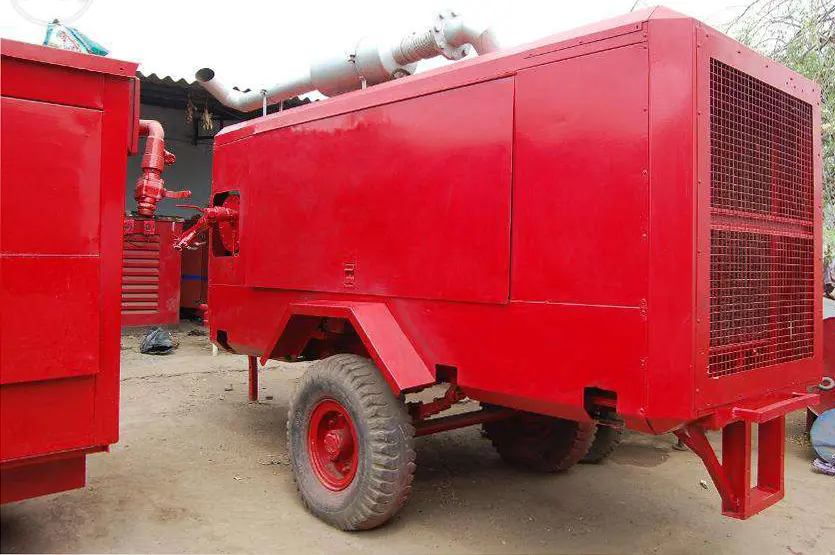
Peak demand rental adds temporary compressed-air capacity when a plant’s required air service exceeds its available permanent supply for a defined operating period. The requirement may arise from an additional shift, a production campaign, simultaneous equipment operation, a short manufacturing contract or commissioning activity alongside normal production. The rental should cover the verified shortfall at the required pressure and quality, with controls that suit the changing load.

A peak is more than a maximum airflow number. Its duration, repetition, rate of rise and relationship to normal demand determine the solution. A twenty-second event, a two-hour production window and a six-week campaign can have the same maximum flow while requiring very different combinations of generation, storage, scheduling and operating support.
The objective is to maintain the intended production service without committing the plant to permanent capacity that may be lightly used after the event. Rental is one option within that decision. Removing waste, correcting restrictions, coordinating process cycles or using suitable storage may resolve part of the requirement before another compressor is needed.
This guide explains how to identify a genuine capacity peak, calculate net supplementary duty, integrate temporary and permanent equipment, and assess the complete cost of the arrangement. The focus is industrial compressed air. Specialist applications retain their own quality, pressure and acceptance requirements.
2 Identify which kind of peak the plant is experiencing
Separate short transients from sustained demand. A brief pressure dip may coincide with filling an equipment receiver or actuating several machines. A sustained deficit may occur when an extra production line runs continuously. The first event may be manageable with storage and sequencing; the second requires a continuing air supply or a reduction in demand.
Peak pattern | Typical engineering question | Candidate response to assess |
|---|---|---|
Seconds-long pulse | Is storage close enough, with sufficient usable pressure range? | Local storage, route improvement or cycle coordination |
Repeated short cycles | Can storage recharge before the next event? | Storage plus verified recharge capacity and controls |
Several hours per shift | Is the deficit sustained throughout the window? | Scheduled supplementary generation |
Production campaign | How many operating days and shifts require extra capacity? | Rental package with maintenance and extension provisions |
Simultaneous start-up | Can process equipment start in an approved sequence? | Staged restart and assessed transient support |
Recurring annual demand | Is the requirement sufficiently predictable for advance reservation? | Planned hire or a longer-term ownership comparison |
Avoid describing every pressure complaint as a peak-capacity problem. If the common header remains stable while one remote branch loses pressure, its distribution route may be the limiting factor. Adding compressor capacity upstream can leave that user’s problem unresolved.
Conversely, a demand peak can coincide with a route restriction. The assessment should therefore identify both the generation shortfall and the pressure loss to the affected user. Treat these as related measurements, not competing explanations that must be resolved by assumption.
3 Measure the event at a useful time resolution
Build a time-aligned record of delivered flow, relevant pressures, compressor operating states and production activity. Where available, include electrical input, treatment condition and quality measurements relevant to the process. The observation period should capture the actual product mix, shifts, recurring events and conditions expected during the rental period.
Choose logging resolution to match the event. A five-minute average can conceal a ten-second pressure collapse even when the shift-average demand appears acceptable. Record the acquisition interval, sensor response and averaging method. A fast chart does not improve evidence if the underlying instrument or data source updates too slowly.
Align timestamps across instruments and the production log. If a line starts at one recorded time and a compressor loads at another, a clock mismatch can produce an incorrect explanation of the pressure event. Note sensor locations so the reviewer knows whether a reading represents package discharge, the common header or a critical point of use.
Do not equate compressor production automatically with process consumption during storage charging or discharge. The receiver can temporarily absorb or supply air. Explain the measurement boundary and relevant stored-volume behaviour when interpreting short events. Where data is incomplete, label the estimate and use a staged validation plan rather than presenting the peak as measured fact.
4 Define permanent capacity that is actually available
Use verified net permanent output at the required operating condition. Nominal nameplate flow is insufficient when pressure, ambient conditions, machine condition or treatment consumption differ from the rating basis. An installed compressor that is unavailable for maintenance is not available capacity for the production campaign.
Separate operating capacity from reserve capacity. If one permanent compressor is designated standby for essential production, using it to cover a new peak may remove that contingency. The production plan should explicitly accept the revised resilience or provide another way to meet the agreed failure duty.
Assess supporting equipment as well as generation. Existing dryers, filters, receivers, manifolds and pipework may have been selected for the original plant flow. Sending additional rental output through them can introduce unacceptable pressure loss or treatment performance limitations even if the compressors together provide sufficient gross flow.
Document how permanent machines will run during the peak. A base compressor near its useful operating point plus a suitable trim source may behave differently from several machines competing through separate pressure bands. The rental selection and permanent control arrangement should be evaluated as one operating station.
5 Calculate the supplementary net duty
For a defined operating phase, supplementary net flow equals required plant flow minus verified available permanent net flow, with a minimum of zero when the permanent system covers demand. Use compatible flow reference conditions and state the required delivery pressure. FAD, standard volume and actual compressed volume are not automatically interchangeable.
Illustrative duty: a plant requires 32 m³/min during ordinary production and 46 m³/min during a two-hour peak. Verified permanent capacity is 35 m³/min net. The sustained supplementary requirement during the peak is 46 − 35 = 11 m³/min. Outside the peak, permanent capacity exceeds the ordinary demand by 3 m³/min under the stated assumptions.
If the rental supplier quotes compressor output before treatment, gross duty must account for treatment consumption. With an illustrative purge fraction of 12% of gross flow and no other air consumption, required gross rental flow is 11 / (1 − 0.12) = 12.5 m³/min. If a further 0.5 m³/min auxiliary demand occurs after that deduction, gross duty becomes (11 + 0.5) / 0.88 = approximately 13.07 m³/min.
These values establish the stated balance, not a final equipment selection or an adequate reserve. Confirm the selected package’s output at the pressure and site conditions, its actual purge behaviour, any additional consumers, and the agreed allowance for uncertainty. If output is already stated net after treatment and auxiliaries, do not deduct them again.
6 Check the full demand profile rather than only the maximum
Two rental candidates that both meet the maximum may perform differently over the rest of the shift. Record how long the station spends at low, normal and peak demand, and identify whether the temporary equipment can be stopped or placed in a suitable operating state outside the required window.
Illustrative twelve-hour shift: demand is 32 m³/min for nine hours, 46 m³/min for two hours and 38 m³/min for one hour. Against 35 m³/min permanent capacity, the supplementary requirement is zero, 11 and 3 m³/min respectively. The net supplementary air volume is (11 × 120) + (3 × 60) = 1,500 m³ on the stated reference basis.
The average supplementary requirement over the whole shift is 1,500 / 720 = approximately 2.08 m³/min. Selecting a rental solely on that average would fail to meet the sustained 11 m³/min peak. Selecting only on the maximum, without considering low-load operation and start readiness, can also produce an inefficient arrangement.
Retain the time sequence. A duration table shows hours at each load, but does not show whether the peak follows a cold start, whether several peaks occur close together or whether equipment can recover between them. The operating schedule and the load-duration summary answer different questions and should be used together.
7 Distinguish storage duty from generation duty
Storage can bridge a short mismatch between demand and generation. It cannot continuously supply a two-hour deficit without an impractically large usable inventory in many ordinary plant situations. Calculate the deficit volume before assuming an existing receiver will solve the peak.
Using the previous sustained deficit of 11 m³/min for 120 minutes, required reference air is 1,320 m³. Under a simplified isothermal model with equal vessel and reference temperatures, a usable pressure drop of 1 bar at a 1 bara reference pressure would require 1,320 m³ of receiver volume. This is a scale illustration, not a recommended vessel design.
Now consider a separate short event: a 6 m³/min deficit lasting 20 seconds requires 6 × 20/60 = 2 m³ of reference air. With the same assumptions and a usable pressure drop from 8 bara to 7 bara, the idealised receiver volume is 2 m³. Real assessment must include the acceptable point-of-use pressure, flow restrictions, temperature behaviour and the receiver’s approved operating limits.
The governing simplified relationship is available reference air = receiver volume × (upper absolute pressure − lower absolute pressure) / reference absolute pressure. State consistent units and temperatures. Where discharge is rapid or temperature changes are material, use a model appropriate to those conditions rather than treating the isothermal estimate as guaranteed usable capacity.
8 Verify recharge between repeated peaks
Storage is only repeatable when the system can replenish what each event removes. Check the surplus generation available between events after normal production and other consumption are satisfied. A receiver can make the first cycle look successful while pressure progressively deteriorates over subsequent cycles.
In the short-event example, the withdrawal is 2 m³ of reference air. If verified surplus capacity between events is 2 m³/min, ideal recharge takes one minute. If the next event occurs every 45 seconds from the start of the previous event, a 20-second peak leaves only 25 seconds for recovery. At 2 m³/min, the available refill is about 0.83 m³, leaving an accumulating deficit.
Possible responses include additional generation, a different process sequence, a longer interval between events or a revised operating strategy. Increasing receiver volume can delay depletion, but it does not correct a negative average balance over repeated cycles.
Also distinguish generation response from storage recharge. A standby rental must start, establish stable operation and deliver acceptable air before its capacity is usable. If the load arrives faster than that response, the operating plan needs advance activation or a verified buffer. Equipment start time alone may not include treatment readiness and the required quality release.
9 Check whether the peak can be reduced before hiring capacity
Investigate avoidable consumption associated with the event. Examples include simultaneous nonessential cleaning, uncontrolled open blowing, leaks on newly connected equipment and unnecessarily high point-of-use pressure. Removing confirmed waste can reduce the rental requirement without reducing productive service.
Assess whether independent process cycles can be staggered. The process owner must confirm whether timing changes preserve throughput, product quality and equipment function. A proposed sequence that reduces peak airflow but lengthens every production cycle may lose more value than it saves in utility cost.
Do not count a planned saving as available capacity before it is demonstrated. If a leak-repair programme is expected to release 3 m³/min, size the initial arrangement against the verified post-repair condition or state a provisional alternative until measurement is available. This avoids committing production to capacity that exists only in a forecast.
Keep pressure optimisation within the process requirement. Lowering pressure may affect demand, but no universal percentage reduction should be applied to justify a smaller rental. Use measured response at the relevant conditions and retain the minimum pressure required by critical users.
10 Select central injection or a dedicated temporary branch
Central injection can supplement several users through the existing distribution system, provided that treatment, headers, controls and isolation arrangements are compatible. It can be convenient where the peak is distributed across the plant and existing pipework has adequate capacity.
A dedicated temporary branch may suit a new production cell or campaign that creates most of the extra demand. Supplying that branch separately can reduce the burden on an already constrained common route and make the campaign’s consumption easier to measure. It also introduces a distinct connection and operating boundary that must be managed.
Compare pressure and quality requirements. A specialised high-pressure user should not automatically cause the entire plant to operate at higher pressure. Likewise, a quality-sensitive process may need independent treatment and acceptance rather than an assumption that ordinary plant air is suitable.
Review flow direction and maintenance access. A temporary connection can pressurise a branch from a direction not anticipated in the original isolation plan. The authorised site team must assess the actual arrangement, component ratings and backflow behaviour. A conceptual route choice does not substitute for an installation-specific connection procedure.
11 Build the pressure budget at peak flow
Pressure losses should be assessed at the operating flow that matters. A route that appears satisfactory during normal production may become restrictive during the peak. Confirm pressure at the critical users while the temporary system and permanent compressors operate together.
Illustrative budget: a process requires at least 6.2 barg. Estimated losses at peak flow are 0.30 bar across treatment, 0.40 bar through the temporary delivery route and 0.20 bar in the remaining branch. The initial required upstream pressure is 7.1 barg before control-band, transient and uncertainty allowances. Final settings must also respect the maximum permitted pressure of connected equipment.
Do not assume pressure losses remain unchanged after adding rental flow. If both sources discharge through a common filter or narrow header, the new combined flow may change its pressure drop and performance. The pressure budget must match the actual topology and flow through each component.
Increasing compressor discharge pressure is not the default correction for an unsuitable route. Compare a less restrictive hose or pipe arrangement, improved manifold design or a closer injection point. Verify the result under the intended duty, and avoid translating a calculated pressure budget into an unsupported performance guarantee.
12 Coordinate controls across permanent and rental compressors
Decide which machines provide base output and which respond to changing demand. Check controller compatibility and whether the temporary package can participate in a suitable sequencing arrangement. If it cannot, an agreed standalone control strategy is needed, with clear operating responsibility and monitored pressure behaviour.
Uncoordinated machines can repeatedly load and unload, operate against conflicting pressure bands or keep running when the peak has ended. A rental can also displace permanent output rather than add only the required increment. This may be acceptable under a deliberate strategy, but it should not be mistaken for evidence that all rental flow served additional production.
For a predictable two-hour production window, scheduled advance readiness may be more reliable than waiting for pressure to collapse before starting the rental. The lead time should follow the equipment and treatment requirements. Avoid repeated starts or operation outside manufacturer limits in an attempt to track every short process pulse.
Observe transitions as well as steady operation: peak onset, peak ending, package trips, dryer cycles and production pauses. Record who may change settings and how changes are documented. This page establishes the control objectives; it does not prescribe universal pressure bands for an unknown combination of equipment.
13 Match the package to part-load behaviour
The rental should be evaluated over its intended operating range. Maximum output is only one characteristic. Review minimum stable operation, unloaded or idle consumption, start limitations, control response and the impact of treatment consumption at reduced demand.
A variable-speed package may suit a varying incremental load if the operating range and system response are compatible. A fixed-speed package may suit a sustained, predictable peak. Neither technology is automatically the best choice for every campaign. Compare the actual available packages and their evidence at the proposed duty.
When a large rental serves a small residual load for much of the day, alternatives may include shorter scheduled operating windows, smaller staged units or a revised distribution of base and trim duties. These choices should be checked against service continuity and the package’s permitted operating behaviour.
Assess diesel, grid-electric and generator-fed electric arrangements on the complete supply boundary. Electrical capacity, cable routes, starting behaviour, fuel logistics, exhaust placement and operator availability can determine whether an otherwise suitable air package is practical at the site.
14 Preserve air quality throughout the peak
State the air-quality requirement at the named delivery point, including relevant limits for moisture, particles, oil and any process-specific contaminants. Additional generation must not dilute the clarity of that requirement. The entire delivered path, including hoses and receivers, influences the air reaching production.
Check treatment capacity at actual flow, inlet temperature and pressure. A dryer selected for the permanent station may not accept the higher combined throughput or hotter temporary inlet conditions. Use manufacturer performance information and applicable corrections. A large connection diameter does not establish treatment capacity.
If sources merge, confirm both are suitable for the receiving users. An oil-free compressor alone does not establish that downstream temporary accessories or existing pipework meet a quality-sensitive requirement. Define sampling or monitoring where the process requires evidence.
Observe quality behaviour during peak transitions and treatment cycles where relevant. Specify the operational response if required quality cannot be maintained. Production or product-release decisions belong to the responsible process or quality team, supported by the utility measurements and agreed acceptance criteria.
15 Define resilience separately from peak capacity
Meeting peak demand with every available compressor running is different from meeting that demand after a failure. Identify the service level required during loss of one machine or a shared supporting component. The acceptable fallback may be essential air, restricted production or full peak output, depending on the process decision.
Illustrative case: permanent output is 35 m³/min and temporary net output is 13 m³/min, giving 48 m³/min against a 46 m³/min peak. Losing the rental leaves an 11 m³/min deficit. The 2 m³/min operating headroom before the trip is not standby capacity for that event.
If peak production must continue after losing the rental, the architecture requires another suitable source or a demonstrated alternative. If reduced production is acceptable, define which loads are removed, who authorises the change and how quickly the response must occur. Check that storage and process tolerance support the response interval.
Include shared failures. Two rental compressors using one dryer, one feeder or one delivery manifold may remain vulnerable to a common outage. Describe redundancy in terms of the covered event and delivered service rather than simply counting machines.
16 Plan mobilisation around the first production peak
Set the required accepted-air time before the production event, allowing for installation, checks and a representative operating trial. Delivery on the morning of a critical campaign may leave insufficient time to correct an unsuitable connection or treatment limitation.
Complete a practical site survey covering access, placement, supporting surface, lifting, hose routes, utilities, intake and exhaust conditions, maintenance access and the connection boundary. Confirm responsibilities for installation materials, authorised connection work, fuel or electricity, testing and daily operation.
Define the hire period in relation to the production schedule. Distinguish delivery date, readiness date, first productive use, last required peak, off-hire notification and collection. A package hired for a brief daily peak may remain on site and billable throughout the campaign, depending on the contract.
Include a change process. An extra shift, longer peak window or new production load can change both duty and cost. The production team should notify the responsible utility coordinator before these changes take effect so capacity, treatment, staffing and commercial implications can be assessed.
17 Prove performance with a representative trial
Acceptance should demonstrate the required net service at the critical delivery points under a representative peak and relevant transitions. Record permanent and rental operating states, pressure, flow basis, treatment behaviour and the production condition during the trial.
Acceptance subject | Evidence to record | Practical conclusion |
|---|---|---|
Net capacity | Compatible flow measurements and known consumption boundary | Required peak duty is supplied under tested conditions |
Pressure | Source, header and critical-user trends | Minimum service and maximum limits are respected |
Air quality | Required measurements or agreed acceptance evidence | Process quality requirement is demonstrated at its boundary |
Controls | Peak start, sustained load and peak ending | Sources operate together without unacceptable instability |
Repetition | Several relevant cycles and recharge observations | The arrangement recovers between recurring events |
Failure response | Approved simulation or documented assessment as appropriate | The agreed fallback has a defined, credible response |
Where a full production trial is unavailable before the campaign, document what has and has not been demonstrated. Use an agreed staged introduction with observation points and escalation actions. Do not label an unloaded compressor run as proof of full peak-service performance.
Keep the handover usable for operators: active equipment, allowed loads, settings ownership, inspection requirements, operating hours, alarm response and contacts. The goal is consistent service across shifts, not merely successful initial installation.
18 Compare complete campaign cost
Compare options over the same service period and duty. Include mobilisation, installation, treatment, distribution accessories, energy or fuel, operating labour, maintenance, testing, extension terms and demobilisation. Confirm whether operating-hour allowances or other contractual limits apply.
Illustrative campaign: twenty operating days require rental support. Assume ₹80,000 for mobilisation and demobilisation combined, ₹10,000/day for equipment and treatment, and ₹2,000/day for operating support. If measured electrical use for the proposed daily duty were 360 kWh/day at an assumed ₹9/kWh, energy would be ₹3,240/day. Total illustrative cost is ₹80,000 + 20 × (₹10,000 + ₹2,000 + ₹3,240) = ₹384,800.
These figures are hypothetical, not a quotation or established equipment consumption. The 360 kWh/day must cover the actual relevant operating states; it should not be inferred from rated motor power multiplied only by productive peak hours while ignoring readiness, unloading or auxiliary use.
Compare that total against feasible alternatives, such as rescheduling, subcontracting, process changes or ownership. A permanent purchase requires its own annualised capital, maintenance, energy, installation and residual-value assessment over an appropriate period. Twenty days of rental cost alone cannot establish a universal rent-versus-buy conclusion.
19 Use verified production value and an exit decision
Rental value depends on the production service it enables. Evaluate additional saleable output or avoided disruption using the plant’s realistic contribution assumptions, and avoid counting output that could have been made at another time without loss. Capacity added is not automatically profit earned.
Using the illustrative ₹384,800 campaign cost, an additional contribution of ₹30,000/day for twenty days would total ₹600,000 and leave ₹215,200 before other incremental costs. At ₹15,000/day, contribution would total ₹300,000 and fall ₹84,800 below that rental cost. The decision changes with utilisation and commercial assumptions, so neither result is a project savings claim.
During the campaign, compare actual demand, operating hours, energy and supported production against the plan. Investigate sustained differences. If what was described as an occasional peak becomes daily base demand, reassess the longer-term architecture rather than automatically extending the same temporary arrangement indefinitely.
End the hire when the peak requirement has genuinely ended and the permanent system can cover the remaining agreed duty. Record final readings and operating findings, complete the approved disconnection and return process, and update the demand baseline. Retain useful campaign data for the next capacity decision.
For a project enquiry, provide the ordinary and peak demand, peak duration and frequency, required pressure and quality, available permanent capacity, campaign dates and connection information. Reddy Compressors is based in Secunderabad/Hyderabad, with Telangana and Andhra Pradesh as priority areas. Wider project support and equipment availability depend on confirmed project arrangements.
20 Frequently asked questions
Is peak demand rental the same as emergency compressor hire?
Peak demand rental supplements capacity for an increased production requirement. Emergency hire replaces service lost through an unexpected failure. The same equipment might serve either role, but demand evidence, readiness planning and contingency assumptions differ.
Should rental capacity equal the total plant peak flow?
Not necessarily. If verified permanent equipment remains available and compatible, the rental can cover the net shortfall. Account for treatment and auxiliary consumption on a consistent boundary, and separately define the required reserve or failure duty.
Can an air receiver eliminate the need for rental?
It may cover a short transient when usable storage and recharge capacity are sufficient. It cannot indefinitely cover a sustained or repeatedly accumulating deficit. Calculate both withdrawal during the peak and recovery before the next event.
Can the rental run only during the peak window?
Possibly, if the equipment, treatment and process requirements permit scheduled operation. Allow enough time for accepted service to be ready, respect start and operating limits, and include readiness or idle consumption in the cost comparison.
Will a larger compressor always prevent pressure drops?
No. Restrictive treatment, hoses, manifolds or distribution branches can cause unacceptable delivery pressure even when generation is adequate. Measure the source and critical user together and assess losses at peak flow.
When should repeated rental lead to a purchase review?
When frequency, duration or total cost suggests the additional duty has become a lasting requirement. Compare verified demand and complete lifecycle costs, including the effect on low-load operation and contingency. There is no universal number of rental days that makes ownership preferable for every plant.
Calculators and worked examples
These tools give indicative figures for screening, comparison and for preparing an enquiry. They run in your browser and send nothing. Prices, tariffs and efficiencies shown are example values: replace them with your own. Results are not a performance guarantee or a design certificate; final selection is confirmed by an engineer against the machine data sheet and the site.
Compressed air demand estimate
Add up the air your tools and processes use, apply duty and simultaneity, then add leakage and growth allowances to reach a capacity to enquire about.
The worked example below shows the method with fixed numbers. Turn on JavaScript to change the inputs.
Worked example
Inputs
- Group A: number of tools: 6
- Group A: free air each (L/s): 4
- Group A: duty (%): 40
- Group B: number of tools: 2
- Group B: free air each (L/s): 15
- Group B: duty (%): 60
- Group C: number of tools: 1
- Group C: free air each (L/s): 40
- Group C: duty (%): 80
- Simultaneity of all tools (%): 65
- Leakage allowance (%): 15
- Growth allowance (%): 10
Result
- Connected demand: 94 L/s
- Average demand (duty-weighted): 59.6 L/s
- Simultaneous peak: 61.1 L/s
- Design capacity with allowances: 77.29 L/s = 4.64 m³/min = 163.8 CFM
Method. Average demand = Σ(number × air per tool × duty). Peak = Σ(number × air per tool) × simultaneity. Design capacity = peak × (1 + leakage) × (1 + growth).
What to take from it. Leakage and growth allowances move the answer as much as any single tool. Where you can, replace catalogue figures with measured ones.
Rental versus ownership
Find the point at which owning a compressor costs less than hiring one for the same duty.
The worked example below shows the method with fixed numbers. Turn on JavaScript to change the inputs.
Worked example
Inputs
- Purchase price incl. installation (₹): 1800000
- Monthly hire charge (₹): 140000
- Monthly running cost under hire (₹): 60000
- Monthly running cost if owned, incl. service (₹): 55000
- Months of need: 18
Result
- Hire total over the period: ₹ 36,00,000
- Ownership total over the period: ₹ 27,90,000
- Break-even: 12.4 months
- Cheaper over this period: Own ignoring resale value and cost of money
Method. Rental total = monthly hire × months + fuel/power. Ownership total = purchase price + running cost × months + service. Break-even month = (purchase) ÷ (monthly hire + monthly rental running − monthly ownership running). All prices are entered by you; none is a quotation.
What to take from it. The answer depends on how long the need really lasts. Below the break-even hire is cheaper; beyond it ownership usually is.
Sources and evidence basis
22 Sources and editorial provenance
Original supplied source: B.A. (13-8-26) RC-1.pdf, discussion distinguishing connected, simultaneous, normal, peak, transient and future demand, and the need to state pressure and compatible airflow reference conditions. These principles informed the duty-profile and net-capacity sections.
Original supplied source: B.A. (16-8-26) RC-2.pdf, discussion of rental for production peaks, seasonal requirements and temporary capacity, together with advance connection and utility preparation. Used to develop the planned supplementary-capacity approach without asserting that rental is universally preferable to ownership.
External primary reference: Atlas Copco Specialty Rental, India, https://www.atlascopco.com/en-in/rental (accessed 03 October 2026), production-fluctuation and flexible-capacity discussion. Supports the general use of rental for changing production needs; the supplier’s fleet, service commitments and performance claims are not attributed to Reddy Compressors.
They are not field measurements, quotations, certified selections or verified customer outcomes. Final package selection and site operation depend on actual equipment data, installation conditions and the responsible project team’s assessment.