
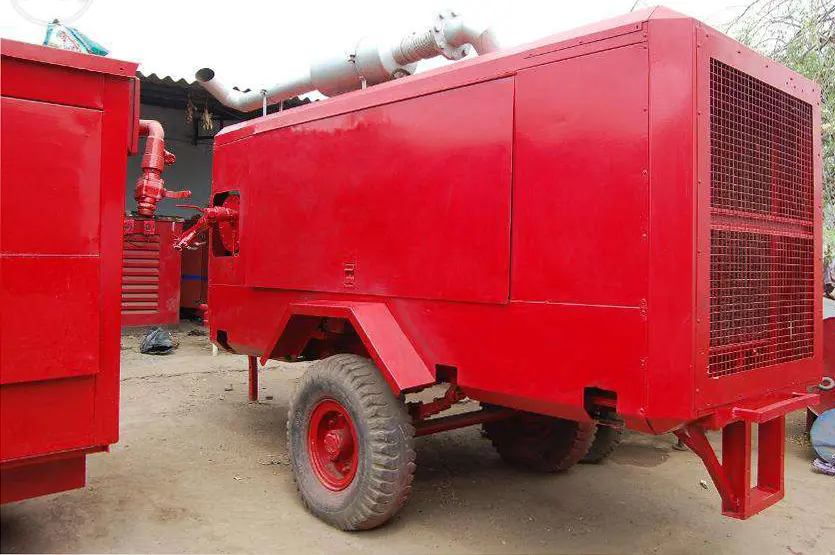
Own the Base, Rent the Peak means keeping permanent compressed-air capacity for a proven recurring duty and using temporary equipment for demand that is intermittent, uncertain or commercially better served by hire. The arrangement succeeds when both sources operate as one coordinated system, delivering the required air quality and pressure at the point of use. It fails when rental capacity is treated as an isolated compressor added to an already constrained station.
For a plant manager, the decision is how much capacity to own, when to bring additional capacity on site, and how to preserve essential production if equipment fails during the peak. For procurement, the comparison must include installation, treatment, energy, availability and repeated mobilisation. For operations, the installation needs a clear sequence for starting, loading, transferring and removing the rental supply.
Reddy Compressors serves compressed-air requirements from its Secunderabad and Hyderabad base, with Telangana and Andhra Pradesh as priority markets and wider project support subject to scope and availability. A hybrid supply proposal should begin with the measured demand profile and site interfaces. This article explains the engineering and commercial method; it does not establish equipment availability or promise a project saving.
01 What the hybrid model actually separates
The owned base is the permanent supply arrangement chosen for the recurring production requirement. It may contain several compressors, treatment equipment, storage and controls. The rental peak is additional useful capacity made available for a defined period or event. Contingency capacity is a third requirement: capacity or an alternative operating plan that remains available when an operating source fails.
These functions can overlap, but their capacities cannot be counted twice. A rental compressor already fully occupied supporting a peak is not spare capacity for an owned-machine failure. Similarly, an owned standby compressor used every afternoon to satisfy demand has become an operating machine during that period. Its maintenance and failure consequences must be reassessed.
The owner-supplied system-selection material explicitly identifies permanent base capacity with rental contingency and planned rental for peaks, overhaul, seasonal work and expansion.
02 Establish a measured demand profile
Record delivered airflow, pressure at the critical users, package or station electrical input, operating states and the production schedule on a common time base. Where diesel equipment is involved, record fuel use and load state with enough detail to distinguish operating periods from calendar hire periods. Log air-treatment condition where quality is important to production.
Capture normal shifts, startup, changeovers, cleaning, weekend conditions and the actual peak-producing process. A week without the seasonal production campaign cannot prove the annual peak. Conversely, a short abnormal event should not automatically become a permanent sizing duty. Identify which events are repeatable, which are avoidable and which reflect unresolved defects.
Flow figures must share an explicit reference basis. Actual line volume, standard volume and compressor FAD are not interchangeable without checking their definitions and conditions. Set the comparison boundary at the useful air delivered after the treatment losses included in the proposal. Retain the original data, logger settings and missing-data periods so later decisions can be traced to observations rather than recollection.
03 Separate duration from timing
A load-duration curve arranges demand from highest to lowest and shows how many hours exceed a candidate owned capacity. It is useful for evaluating utilisation. It removes chronological order, however, so it does not reveal whether the same peak hours occur in one continuous campaign or in many short, unpredictable bursts.
For example, 240 peak hours could occur across twenty consecutive twelve-hour shifts. The same 240 hours could occur as one hour on each of 240 separate days. The air volume may be equal, while rental mobilisation, minimum hire, staffing and readiness costs differ substantially. The first pattern may suit a planned campaign installation; the second may require equipment to remain on site for most of the year.
Use the duration curve to screen capacity candidates and the chronological profile to design dispatch and contracts. Add notice periods, production dependencies and permitted start delays. A rental unit cannot cover a ten-second event from an off-site location. That event needs available local supply, suitable storage, a revised process sequence or an engineered combination of these measures.
04 Determine the owned capacity from operating bands
Do not define the owned base simply as average demand. An average combines high and low periods without showing whether either can be served efficiently. Likewise, selecting the observed minimum as the owned capacity may transfer a large proportion of everyday production into expensive rental support.
Consider a hypothetical annual profile on a common delivered-flow basis: 2,000 hours at 14 m³/min, 3,000 hours at 20 m³/min, 800 hours at 28 m³/min and 200 hours at 36 m³/min. Total production time is 6,000 hours. A candidate owned arrangement delivering 22 m³/min needs an additional 6 m³/min for 800 hours and 14 m³/min for 200 hours. The supplementary air volume is 456,000 reference m³: (6 × 800 + 14 × 200) × 60.
A candidate delivering 28 m³/min needs 8 m³/min for 200 hours, or 96,000 reference m³. This reduces rental volume but requires more permanent capacity. Compare the additional ownership and low-load operating costs against the avoided rental installation and operating costs. Neither candidate can be selected from volume alone; outage duty, timing and the equipment's efficient operating range may change the result.
05 Remove avoidable demand before buying the base
A hybrid model should not lock leakage, failed drains or inappropriate open blowing into permanent capacity. Identify demand that can be removed without affecting production, then measure the resulting profile. Separate completed reductions from proposed savings. Only verified reductions should change the committed capacity requirement.
Suppose the 20 m³/min recurring duty includes a suspected 3 m³/min avoidable load. Until investigation and measurement support that estimate, sizing the base for 17 m³/min risks a shortfall. After a repair programme demonstrates a sustained reduction under comparable production conditions, the new profile can support a revised configuration or a smaller peak rental requirement.
Pressure must also be examined. A distant tool with low operating pressure may indicate a restricted hose, valve or treatment element rather than insufficient generation. Adding capacity could increase cost without restoring useful pressure. Correct the confirmed constraint, repeat the critical-user measurement and reassess the demand. Avoid publishing a fixed energy-saving percentage from pressure reduction; the outcome depends on actual controls, loading and system response.
06 Calculate net rental contribution
Rental contribution is the useful flow remaining after its own treatment and auxiliary consumption, at the required operating pressure and site conditions. A catalogue capacity is only a starting point. Confirm the package performance at the relevant pressure, ambient condition and configuration before adding it to the owned station's delivered capacity.
Assume the owned system delivers 22 m³/min and the peak needs 36 m³/min. The required rental contribution is 14 m³/min. If a proposed treatment arrangement consumes 12% of compressor supply and another auxiliary consumes 0.4 m³/min, the gross compressor requirement is (14 + 0.4) ÷ 0.88 = 16.36 m³/min. A package providing 16 m³/min under the actual conditions would deliver 13.68 m³/min after these assumed losses, leaving the combined system 0.32 m³/min short.
This is a screening calculation, not a universal dryer allowance. Purge behaviour depends on technology and operating state. Use confirmed treatment data and identify whether losses have already been included in the quoted capacity. Where both supplies share a dryer, establish the combined treatment limit rather than deducting the same losses twice.
07 Check the complete flow and pressure path
The same limitation can occur at a manifold, isolation valve, aftercooler, filter or distribution route. Map each shared component and assess its peak duty.
Pressure losses also change with flow. A pressure budget measured during normal production may become inadequate when the peak starts. For a hypothetical critical user needing 6.2 barg, allow the evaluated losses through the actual route: 0.3 bar treatment, 0.4 bar distribution and 0.2 bar local connection. This requires 7.1 barg upstream of those losses, before considering the agreed control margin. The numbers are illustrative and must not become default design allowances.
Confirm component working-pressure limits and temperature suitability independently of the operating-pressure calculation. Increasing compressor pressure to compensate for a restriction can raise energy use and may exceed equipment ratings. A qualified site assessment should determine the permitted arrangement and required protection.
08 Choose the operating configuration
Three common arrangements are worth evaluating. A rental package can feed the common header, supply a separate temporary production branch, or replace an owned machine temporarily while that machine is serviced. Each arrangement creates a different pressure boundary, quality responsibility and failure consequence.
Arrangement | Main engineering advantage | Condition to resolve |
|---|---|---|
Common header support | Capacity can serve several users | Coordinated controls and full shared treatment capacity |
Dedicated peak branch | Peak quality or pressure can be handled locally | Clear isolation and no unintended crossfeed |
Temporary substitution | Owned equipment can be maintained during production | Replacement duty and changeover proven before isolation |
Campaign station | Multiple temporary users share one installation | Local distribution and event schedule defined |
A dedicated higher-pressure branch may avoid raising the entire plant pressure for one process. Conversely, splitting a plant without understanding cross-connections can leave critical users dependent on a temporary source unintentionally. Show the connection boundary on a current schematic, label isolation points and identify who controls each operating state. Use equipment-compatible non-return and isolation arrangements designed for the actual system.
09 Coordinate base and trim duties
Ownership does not determine dispatch priority. The owned compressor need not always carry the base load if another available machine supplies the required air more efficiently under the actual conditions. Compare measured or verified input-power curves, delivered flow, pressure and treatment consumption. Also consider maintenance limits, response behaviour and contractual restrictions.
In a coordinated station, suitable machines can carry relatively stable load while one suitable unit handles changing demand. The US Department of Energy sourcebook describes this base-and-trim approach and the role of sequencing. It is a system principle, not proof that a particular fixed-speed or VSD arrangement will be best for every site.
Document the control authority, permitted pressure range, loading sequence, unloading sequence and response to loss of communication. Avoid multiple independent controllers competing around the same setpoint without a designed strategy. A rental machine that remains unloaded for long periods may incur energy or fuel costs while delivering little useful air. Verify actual operating states instead of assuming that lower airflow means proportionately lower input power.
10 Check turndown and capacity overlap
When a base machine starts, the trim machine must be able to reduce its contribution without creating an unstable capacity gap. Consider a hypothetical 20 m³/min base machine and a trim machine that operates continuously between 8 and 18 m³/min. The trim alone covers 8–18 m³/min, while both continuously loaded cover 28–38 m³/min. Demand between 18 and 28 m³/min is not covered by those continuous ranges.
A real controller may manage that gap through loading cycles and storage, but the resulting starts, unloading, pressure variation and energy use need evaluation. The arithmetic does not condemn the machines; it identifies a duty that cannot be represented as smooth continuous modulation. Selecting a different capacity combination or operating sequence may produce a more suitable station.
Check low demand after the peak finishes as carefully as peak demand itself. A temporary package left connected overnight may cause unnecessary cycling or pressure escalation. Define when the rental unit unloads, stops or is isolated, and confirm that restarting it will restore compliant supply before the next planned event. Follow the equipment's allowable start frequency and operating envelope.
11 Bridge short transitions with evaluated storage
Storage can support the delay between a demand increase and additional useful supply. It cannot replace sustained capacity indefinitely. Calculate the deficit over the actual response interval, including detection, start, loading and any treatment stabilisation that must occur before air can be admitted.
If demand rises from 22 to 36 m³/min and the additional supply takes 20 seconds to become useful, the initial deficit is 14 × 20 ÷ 60 = 4.67 reference m³. Under an ideal, constant-temperature screening assumption, a receiver operating across a usable 1 bar pressure difference at a 1 bara reference pressure would need about 4.67 m³ of geometric volume to release that amount. Actual sizing must account for usable pressure at the end user, temperature, restrictions, controls and reserve.
Recovery matters. If supply after the transition is 38 m³/min against a sustained demand of 36 m³/min, the 2 m³/min surplus would ideally replace 4.67 reference m³ in 2.34 minutes. Another event before recovery can progressively exhaust storage. Review the full sequence rather than treating the receiver as fully charged before every event.
12 Keep peak capacity and failure capacity separate
Suppose an owned station has two machines delivering 11 m³/min each and a rental package contributes 14 m³/min. Together they meet a 36 m³/min peak. Loss of one owned machine reduces available capacity to 25 m³/min. Loss of the rental unit leaves 22 m³/min. The installation therefore meets the normal peak but does not maintain that peak after either failure.
If essential production needs 20 m³/min, a controlled load-shedding plan might preserve that duty in both cases, subject to pressure, quality and transition performance. If the full 36 m³/min is critical, additional independent capacity or another validated continuity measure is required. Define the acceptable service level explicitly instead of describing the installation as redundant merely because three machines are present.
Examine shared electricity, fuel logistics, cooling, treatment, control and the final connection. Separate compressors can still fail together through a common dependency. An off-site replacement plan is useful, but its delivery and commissioning interval must be compared with the plant's tolerable interruption. Availability should be established contractually for the project; it cannot be inferred from a general rental enquiry.
13 Plan mobilisation around the production calendar
Start with the time when compliant air must be available, then work backwards through transport, access, placement, connection, inspection, commissioning and production acceptance. Include the site's actual work windows and dependencies. Arrival at the gate is not the same as accepted air at the machine.
If production needs peak air at 06:00 and the agreed on-site connection and acceptance activities require five hours, equipment must be available sufficiently early to complete those activities, with additional allowance for the identified uncertainties. Do not assume every activity can occur in parallel. Access restrictions, shutdown isolations or a shared lifting resource may force a sequential programme.
For repeated campaigns, permanent connection provisions can reduce repeated work: suitable space, approved connection points, electrical capacity where relevant, and current drawings. These provisions still require inspection before reuse. Confirm the hire start and end definitions, off-hire notice, collection responsibility and weekend terms. A two-week production peak can create a longer chargeable period because of mobilisation and return conditions.
14 Compare equivalent annual strategies
Compare the same delivered duty, service level and analysis period. The hybrid option includes the owned base plus rental peaks. The alternative may be a larger owned station, a smaller owned station with longer rental support, or a fully rented installation. Include energy, maintenance, treatment, connection, staffing, inspection and residual value where relevant.
For a screening example, hold the existing base costs equal and compare only the extra peak capacity. Suppose purchasing the extra capacity has an annual equivalent ownership and fixed-support cost of ₹900,000. Peak rental has an annual connection provision of ₹80,000, mobilisation and return costing ₹120,000 per campaign, and hire of ₹12,000 per chargeable day. Energy and variable operating costs are assumed equal only for this first comparison.
One thirty-day campaign costs ₹80,000 + ₹120,000 + 30 × ₹12,000 = ₹560,000. Two separate thirty-day campaigns cost ₹80,000 + ₹240,000 + 60 × ₹12,000 = ₹1,040,000. Against the assumed ₹900,000 annual owned cost, the first case favours rental by ₹340,000; the second favours ownership by ₹140,000. These are hypothetical screening results, not Reddy Compressors rates or project quotations.
15 Understand the break even boundary
With one campaign and the assumptions above, the chargeable-day crossover is (₹900,000 − ₹80,000 − ₹120,000) ÷ ₹12,000 = 58.33 days. With two mobilisations, it falls to 48.33 total chargeable days. Campaign count changes the crossover even when the total operating hours are unchanged.
The calculation assumes comparable service and equal variable costs. If the rented equipment uses more energy, add the difference; if it uses less, subtract it. Minimum hire, standby charges, overtime support, equipment availability and retained on-site periods can make costs nonlinear. A single break-even number should never be presented without its assumptions.
For a multi-year purchase, use a consistent discounted cash-flow or annual-equivalent approach. Include installation, replacements and credible residual value at the end of the chosen period. Do not add accounting depreciation to the full purchase payment as though both were separate cash costs. Financing, tax and discount-rate treatment should follow the business's agreed financial method, with sensitivity testing rather than an invented universal rate.
16 Account for operating performance
Assume the owned expansion and rental alternative deliver the same useful flow and pressure but differ by 18 kW over 600 operating hours. At an illustrative ₹9/kWh, the annual energy difference is 18 × 600 × 9 = ₹97,200. If the rental option is the higher-input arrangement, the ₹560,000 screening cost becomes ₹657,200 before any other differing costs. Its advantage over ₹900,000 then falls to ₹242,800.
Compare the whole affected station. A rental compressor may change how the owned machines load, unload and sequence. Measuring only the rental power can miss additional unloaded operation elsewhere or a reduction in permanent-machine consumption. Include dryers, cooling and auxiliaries consistently. Diesel and electric alternatives need fuel and electrical boundaries that reflect the actual installation.
Measure comparable production periods and state uncertainty. A fall in total kWh during a quiet production week does not demonstrate an improvement caused by the hybrid arrangement. Useful indicators include energy per delivered reference volume, pressure compliance and cost per accepted production output, interpreted together. Exclude savings from project conclusions unless supported by measurements and a defensible comparison.
17 Test uncertainty and changing utilisation
Hybrid supply is often valuable when demand growth is uncertain, but uncertainty has a cost. A supplier may require an availability commitment, a longer minimum hire or advance booking. Those terms belong in the comparison. Rental flexibility is strongest when the actual commercial and logistical arrangement allows the business to increase, reduce or end the duty without disproportionate cost.
Scenario | Capacity implication | Commercial response |
|---|---|---|
Peak postponed | Base duty continues unchanged | Review reservation and cancellation exposure |
Peak lasts longer | Temporary capacity becomes recurring | Recalculate ownership crossover |
Growth becomes permanent | Owned base may be undersized | Evaluate staged permanent expansion |
Production drops | Extra owned capacity may sit idle | Reassess dispatch and retained hire |
Peak and overhaul coincide | Rental must cover both deficits | Reserve sufficient net duty separately |
For the one-campaign example, ten additional chargeable days add ₹120,000 in hire before energy or support changes. A delayed return can therefore materially alter the result even if the compressor does not run more hours. Define review points before extension dates, and retain a capacity plan for both the expected case and a credible higher-demand case.
18 Use rental as a growth bridge with a defined exit
A temporary installation can support a new production line while the business verifies demand and decides on permanent expansion. The trial is most useful when it measures the exact uncertainty: simultaneous flow, startup demand, required pressure, quality, production hours and seasonal variation. Establish the measurement plan before the rental starts.
A growth bridge should have a decision date, not simply an automatic extension. At that date, compare actual demand with the original assumptions and update the cost model. If the peak becomes regular daily duty, continued rental may still be justified by the contract or financing position, but it should be a conscious decision. If demand fails to materialise, avoid purchasing permanent capacity solely because it appeared in an earlier forecast.
Preserve expansion provisions that remain useful: room, access, electrical infrastructure and connection capacity appropriate to the approved development plan. The supplied CFM-selection material supports modular growth and warns against operating oversized equipment for years while waiting for future demand. Permanent expansion should follow verified need and a suitable equipment configuration, rather than the size of the temporary machine alone.
19 Put responsibilities into the operating agreement
The agreement should identify the required net flow, pressure and quality; the period of use; the connection boundary; and the equipment or service included. Assign responsibility for electricity, fuel, consumables, treatment, drains, routine inspection, operator attendance, maintenance access and breakdown coordination. Define the evidence required for acceptance and the procedure for a changed production duty.
During operation, maintain a shift record of demand, pressure, loading state, energy or fuel use and any alarms. Record temporary changes to setpoints or equipment configuration and restore or formally approve them. Staff should know who can change the sequence and when production must be reduced. A commercial instruction to increase output cannot override the approved equipment envelope.
Before demobilisation, confirm that the owned station can meet the remaining duty under the required service level. Observe the transition back to permanent supply and check critical-user pressure and air quality. Remove temporary connections under the site's authorised isolation procedure and update drawings and settings.
20 Prepare a practical hybrid supply enquiry
Send the recurring and peak demand profiles, flow reference conditions, minimum point-of-use pressure, required air quality, dates and expected notice period. Include the existing machine capacities, treatment arrangement, measured constraints, utility supplies, connection locations and the essential duty after a failure. State whether the rental package is supplementing production, replacing equipment for maintenance, or fulfilling both functions.
Ask for the useful contribution at the agreed boundary, the proposed operating sequence and the complete cost basis. Identify exclusions before comparing offers. A low compressor-only hire rate may become a higher delivered-air cost after treatment, installation, energy and support are added. Request a clear extension and return basis because those terms directly affect the hybrid economics.
Reddy Compressors can use this information to develop a project-specific supply enquiry and evaluate the permanent and temporary interfaces. Equipment selection, availability, mobilisation and commercial commitments remain subject to the confirmed project scope. The intended outcome is a documented decision about owned capacity, temporary capacity and continuity, supported by measurements and a workable site arrangement.
21 Frequently asked questions
Is there an ideal percentage of capacity to own
There is no universal percentage. The appropriate owned portion depends on how long each demand level occurs, its timing, equipment efficiency, reliability needs and rental terms. Evaluate several candidate capacities against the same measured profile. A duration curve helps with utilisation, while the chronological record establishes mobilisation and response requirements.
Can the rental compressor also be the standby machine
Only to the extent that spare useful capacity remains available in the relevant failure scenario. If the rental unit is fully loaded supporting the peak, that output is already committed. Calculate what remains after each important failure and compare it with essential and full-production demand. Include shared treatment and utility failures.
Does renting the peak always reduce energy use
No. Energy performance depends on the equipment, pressure, control sequence and operating profile. Rental may avoid inefficient permanent oversizing, but it may also introduce extra treatment losses, diesel consumption or unloaded operation. Compare the measured total station input and useful delivered air under comparable conditions before claiming a saving.
Can a receiver eliminate the need for peak rental
Sometimes a receiver can support short, infrequent events if sufficient pressure range and recharge capacity exist. It cannot continuously replace a sustained generation deficit. Calculate the integrated shortfall, permitted pressure fall and recovery time between events. The usable pressure at the critical end user determines the practical storage boundary.
When should recurring rental become permanent capacity
Review the decision when chargeable days, repeated mobilisation or growth make ownership competitive, or when the required response cannot be met by the rental arrangement. Use updated demand and costs rather than a fixed month count. Availability, residual value, maintenance and the business's financial method can change the result.
What should be measured before approving the arrangement
Measure delivered flow on a stated basis, critical-user pressure, power or fuel use, production timing and operating states. Confirm quality at the agreed boundary where it matters to the process. Record transitions into and out of peak operation and check the selected failure scenarios. Use those results to update capacity and cost assumptions.
Calculators and worked examples
These tools give indicative figures for screening, comparison and for preparing an enquiry. They run in your browser and send nothing. Prices, tariffs and efficiencies shown are example values: replace them with your own. Results are not a performance guarantee or a design certificate; final selection is confirmed by an engineer against the machine data sheet and the site.
Rental versus ownership
Find the point at which owning a compressor costs less than hiring one for the same duty.
The worked example below shows the method with fixed numbers. Turn on JavaScript to change the inputs.
Worked example
Inputs
- Purchase price incl. installation (₹): 1800000
- Monthly hire charge (₹): 140000
- Monthly running cost under hire (₹): 60000
- Monthly running cost if owned, incl. service (₹): 55000
- Months of need: 18
Result
- Hire total over the period: ₹ 36,00,000
- Ownership total over the period: ₹ 27,90,000
- Break-even: 12.4 months
- Cheaper over this period: Own ignoring resale value and cost of money
Method. Rental total = monthly hire × months + fuel/power. Ownership total = purchase price + running cost × months + service. Break-even month = (purchase) ÷ (monthly hire + monthly rental running − monthly ownership running). All prices are entered by you; none is a quotation.
What to take from it. The answer depends on how long the need really lasts. Below the break-even hire is cheaper; beyond it ownership usually is.