
1 Engineer the temporary air supply around the process
Temporary compressed air engineering connects a short-term air requirement to a complete, operable supply system. It establishes the airflow, pressure, quality and continuity needed at the user's connection, then coordinates compressors, treatment, storage, distribution, energy supply, controls and operating support to deliver that service for the required period.
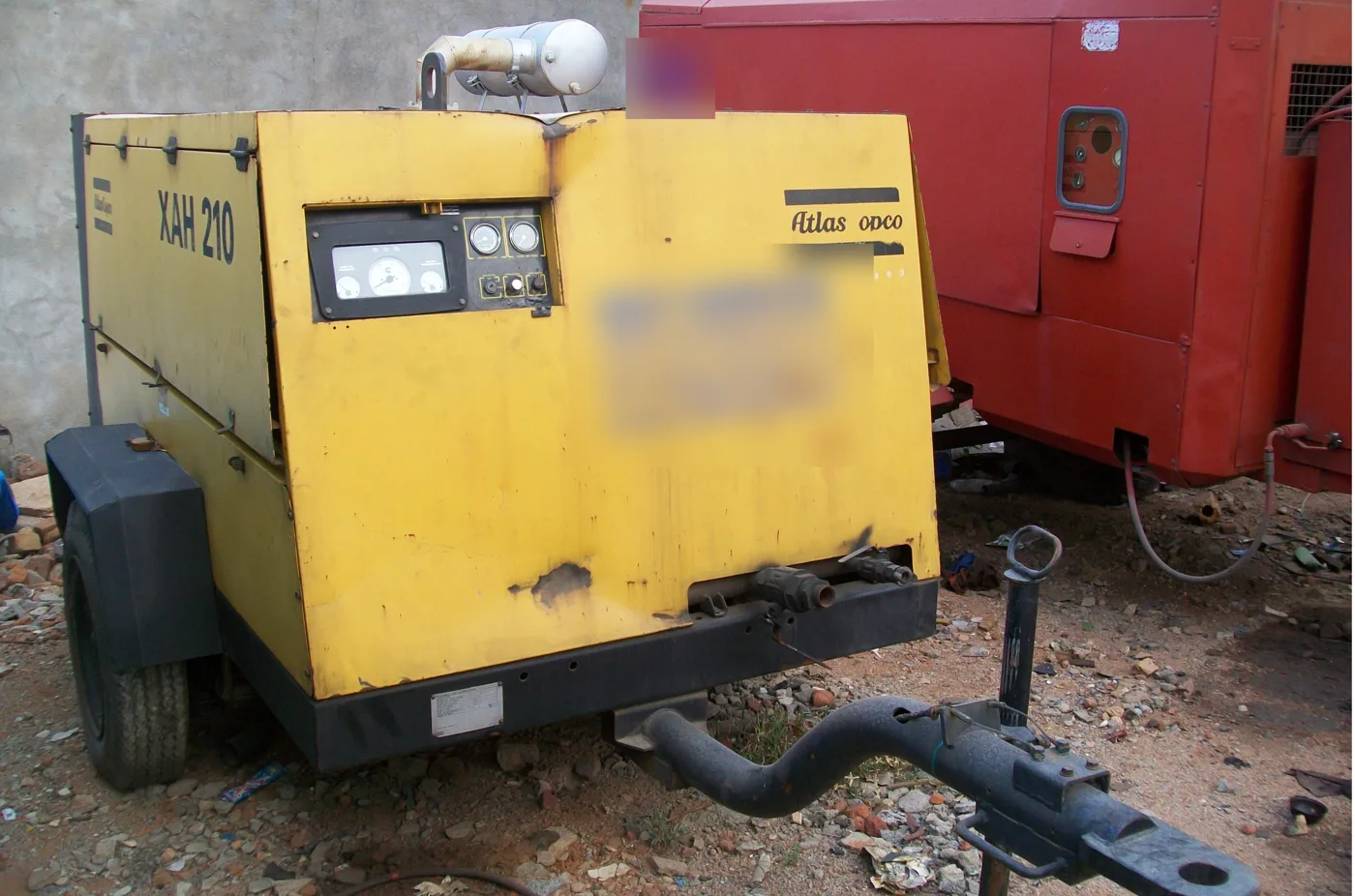
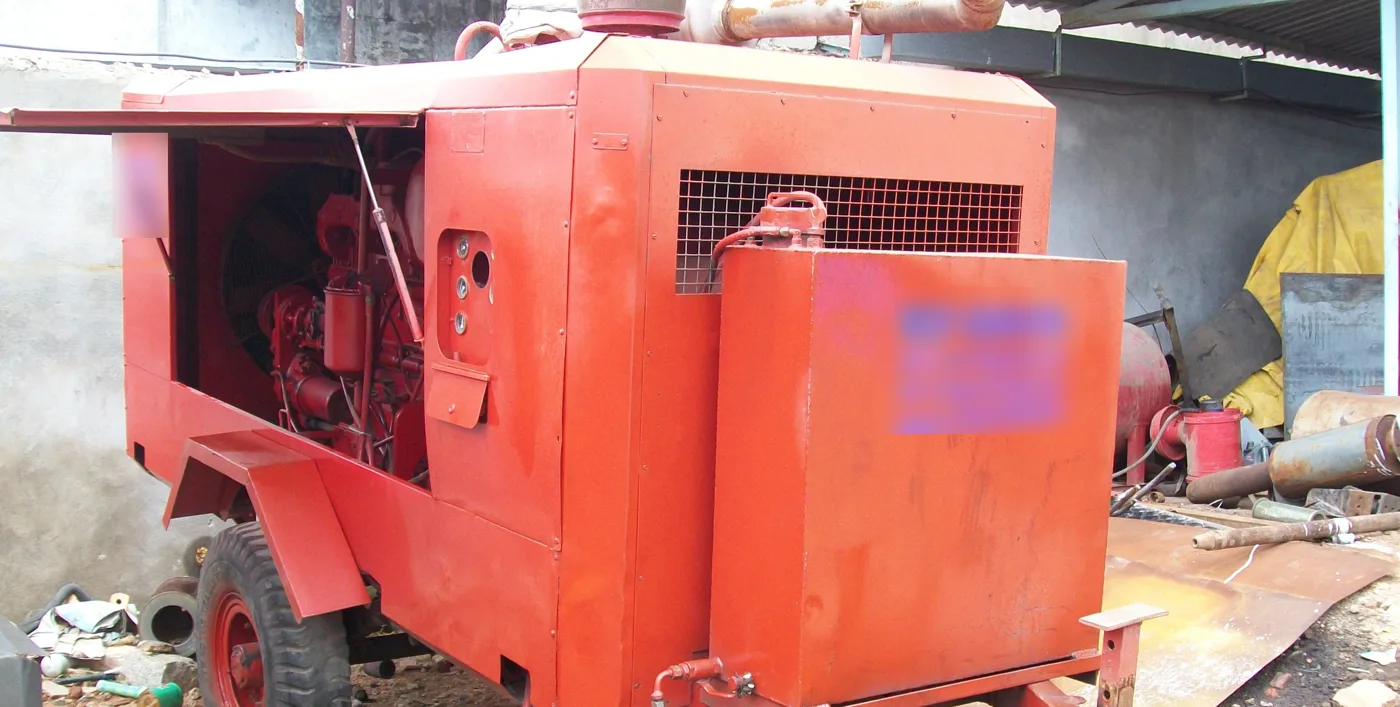
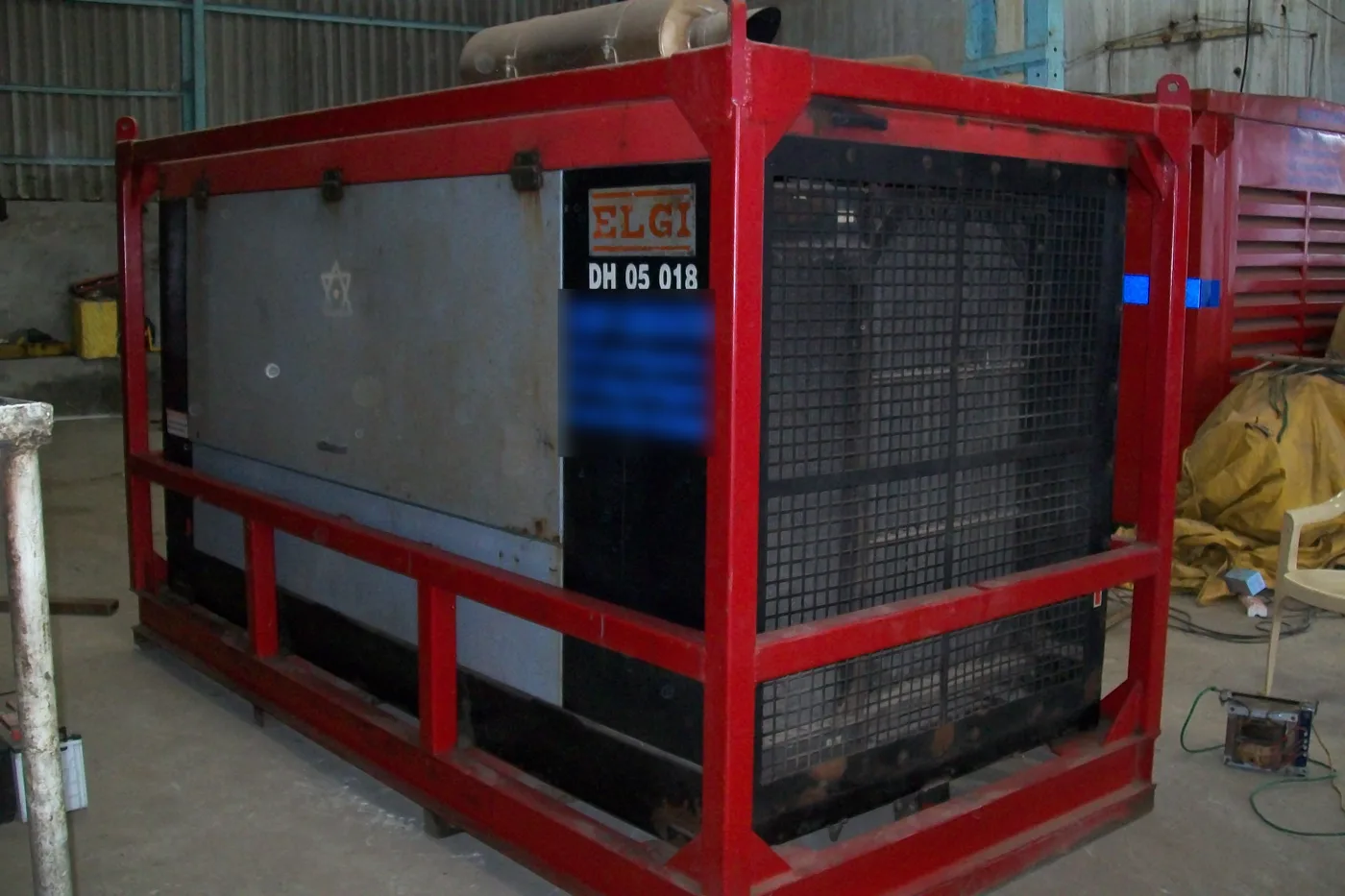
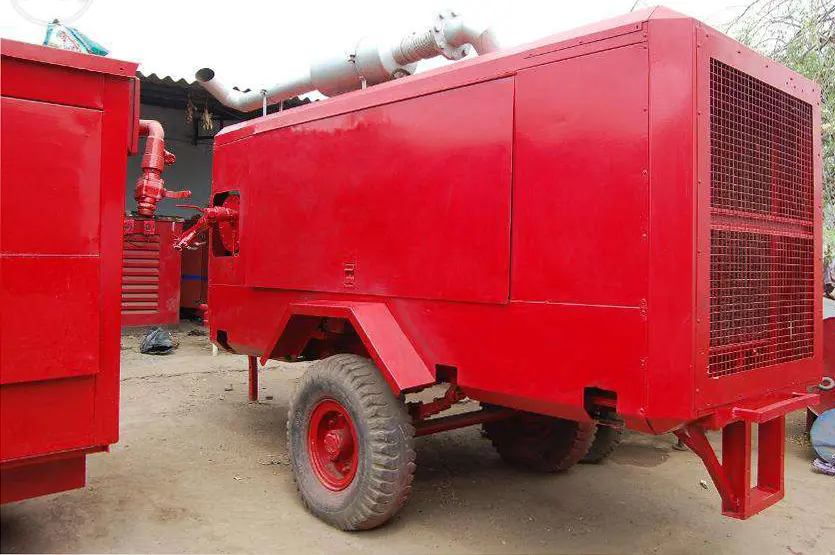
Photographs from Reddy Compressors' own fleet and workshop.
A compressor arriving onsite is only one part of that result. The available machine may have adequate nominal capacity yet fail to support production because the hose is restrictive, the dryer is undersized at actual inlet conditions, the connection is unsuitable or the fuel arrangement cannot sustain the shift. Engineering the entire temporary installation helps expose these problems before they become production interruptions.
This centre brings together the decisions required for planned shutdowns, compressor repairs, commissioning, temporary production peaks and project work. It explains how to establish a duty, configure the installation, manage interfaces and demonstrate acceptable performance. Detailed child guides develop individual subjects such as site surveys, power supply, treatment trains, changeover and hire economics.
The governing principle is straightforward: specify the air service at the delivery boundary, assess the complete route that provides it, and verify the result under representative operating conditions. Equipment availability, project support and mobilisation timing must be confirmed for the particular assignment. A contingency plan improves preparedness; it is not a guarantee of uninterrupted production or immediate equipment availability.
2 Identify the temporary operating case
Begin with why the temporary system is needed and what production must continue. A shutdown bridge may replace an entire station for a known period. Breakdown support may need to restore only essential consumers initially. A peak-demand installation may supplement permanent equipment for a few hours each day. These are different duties with different control and contingency requirements.
For a planned outage, define the isolation boundary and the time when permanent air becomes unavailable. Include commissioning time before the outage and a realistic extension allowance if the repair takes longer. For commissioning, distinguish clean process air from air used for construction tools, cleaning or other work. Do not allow a temporary connection to bypass the final process-quality requirement.
Operating case | Main engineering question | Planning priority |
|---|---|---|
Planned shutdown | What service must continue? | Prove the temporary supply before isolation |
Breakdown recovery | What load must return first? | Prioritise essential demand and confirm access |
Production peak | How does demand vary? | Coordinate rental and permanent controls |
New plant start | What changes during ramp-up? | Define staged duty and acceptance conditions |
Project work | Where will users move? | Reassess routes and connections as work advances |
Write a short operating narrative for the selected case: normal duty, peak duty, non-production periods, planned transitions and credible failure conditions. This narrative gives the equipment supplier, plant team and operator a common understanding of what the system must do.
3 Define the delivery boundary and duty specification
State exactly where the temporary supplier's performance is to be assessed. It may be at a treatment outlet, a temporary manifold or the plant connection. If the required pressure is specified at a remote machine, identify the downstream pipework and fittings included in the assessment. A pressure reading at the compressor outlet cannot prove pressure at a distant process.
Record normal and peak flow, the duration and frequency of peaks, minimum acceptable operating pressure, maximum permitted pressure and required air quality. Add duty hours, ambient conditions, altitude, electrical availability, the proposed hire period and the consequences of interrupted air. Where these values are estimates, state their basis.
Use a consistent flow reference. Free air delivery, actual compressed volume and standardised volume are different quantities. Confirm the reference temperature, pressure and moisture basis before comparing demand with machine performance. Match the candidate's guaranteed or documented capacity to the required working pressure and site conditions rather than selecting by the largest advertised CFM number.
Avoid replacing missing evidence with one arbitrary percentage margin. Separate measured demand, known additional consumers, treatment consumption, leakage allowance, uncertainty and future changes. This makes it possible to refine the selection when better data become available without losing the rationale for the original decision.
4 Build the demand profile and establish priorities
Where practical, log airflow and pressure over representative operation and correlate the records with production activity. If flow measurement is unavailable, develop a consumer register using verified equipment data, operating cycles and observed simultaneity. Identify assumptions explicitly; catalogue consumption values may describe a particular operating condition rather than the customer's actual duty.
Distinguish continuous users from intermittent tools, blowdown events and short high-flow operations. Average flow is useful for energy assessment but does not prove that a supply can support a short coincident peak. Conversely, selecting solely for the sum of every connected tool's maximum demand can lead to unnecessary capacity and poor low-load operation.
For an emergency installation, classify consumers by consequence. Essential control or process users may need priority over cleaning, open blowing or discretionary production. Confirm which loads can be isolated and who can authorise that action. A reduced-service plan should name the processes it supports; it should not be described as full production capacity.
Revisit the profile after temporary operation begins. Real operating patterns can differ from the initial estimate, particularly during a shutdown or commissioning programme. Compare demand, pressure and equipment loading with the design case and adjust the arrangement through controlled changes rather than repeatedly raising pressure to mask a problem.
5 Select capacity on a net delivered basis
The useful output is what remains after equipment limitations and internal consumption are accounted for. Treatment purge, known air losses and the actual supply conditions may change the relationship between compressor output and flow available to production. Establish whether the quoted package flow is measured before or after treatment so the same loss is not deducted twice.
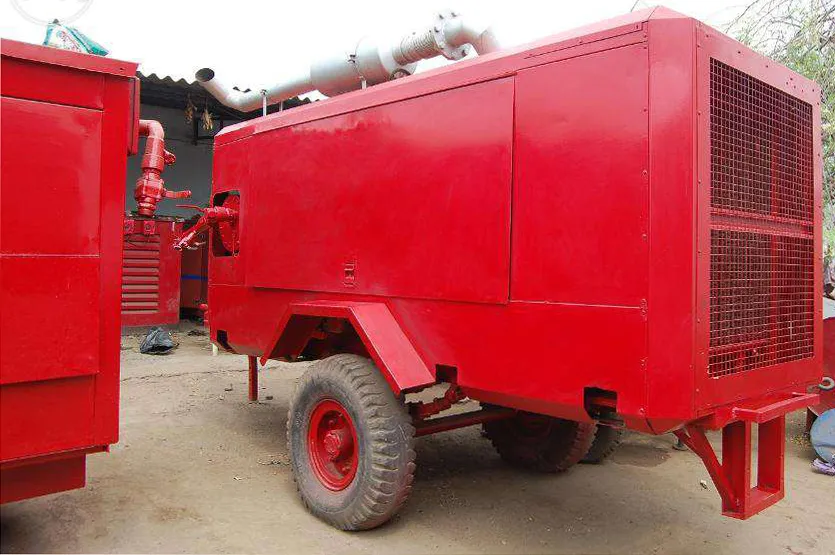
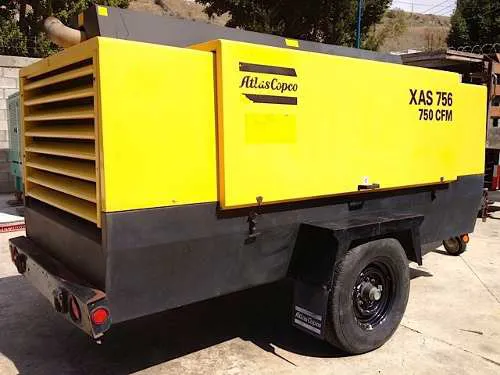
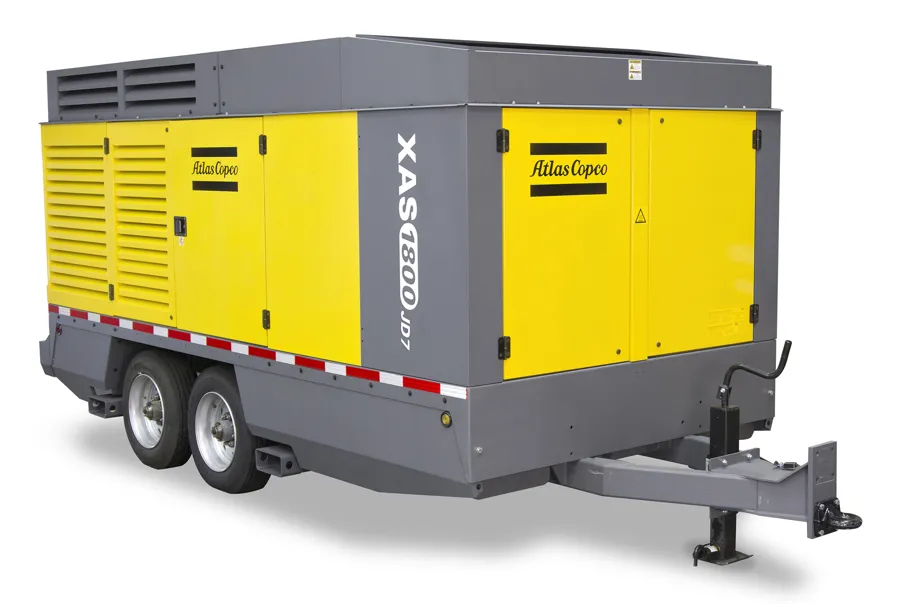
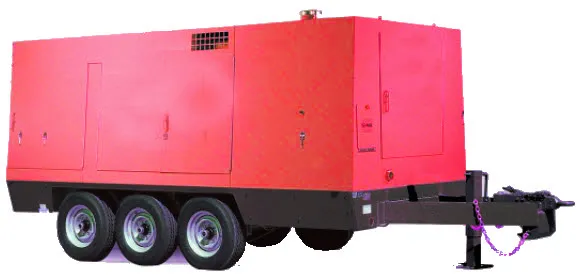
Representative images of machine types we sell, service and rent. Models and capacities are confirmed against your duty.
Consider an illustrative temporary process requiring 600 cfm at a stated free-air reference basis. Assume an adsorption dryer consumes 15% of its inlet flow as purge at the assessed operating condition, with no other losses in this simplified example. The compressor-side flow required is 600 / (1 − 0.15), or approximately 706 cfm. Adding only 15% to the process flow would give 690 cfm and would not cover that assumed inlet-based purge relationship.
This is a calculation example, not a universal dryer allowance. Actual purge behaviour depends on dryer type, operating pressure, control method and specified duty. Refrigerated, heatless and externally heated systems have different consumption and auxiliary-energy characteristics. Obtain the applicable package data and assess the full treatment arrangement.
Next verify the candidate compressor's output at the operating pressure, ambient condition and altitude. Avoid applying unverified generic derating factors. A supplier's confirmed site-duty output is more useful than an unsupported calculation from motor power. Retain practical loading and control limits when combining multiple units.
6 Establish a pressure budget from the critical user upstream
Start with the minimum dynamic pressure required by the most demanding connected user. Add the assessed pressure losses through the active distribution route, temporary hose, manifold, filters, dryer and other components. Account for the control response and operating band needed to avoid dropping below that user's requirement during demand changes.
An illustrative pressure budget might comprise 6.0 bar gauge required at a process, 0.3 bar downstream distribution loss, 0.2 bar temporary hose and manifold loss, and 0.4 bar treatment loss at the design flow. The preliminary compressor-side requirement is 6.9 bar gauge before evaluating the necessary control band and transient response. These assumed losses must be replaced with component evidence or measurements for a real project.
Do not turn a pressure budget into an instruction to exceed equipment ratings. The permitted pressure of every connected component and the existing plant remains a separate constraint. If the calculated supply requirement is incompatible with the system, reduce losses, change the arrangement or segregate the demanding user.
Assess pressure during representative flow, not only when the outlet is closed. A healthy unloaded gauge reading can coexist with severe pressure collapse during production. Simultaneous measurements at the supply and critical user help distinguish inadequate generation from a restrictive route. This distinction can avoid hiring additional capacity that cannot reach the process effectively.
7 Design the treatment train for the application
Specify required particle, water and oil performance at the relevant delivery point. Include pressure dew point where moisture affects the process or where downstream temperatures can produce condensation. Confirm the equipment's capacity at actual inlet temperature, pressure and flow; a dryer nominally matched to compressor CFM can be unsuitable when its operating conditions differ from the rating basis.
An oil-free compressor does not by itself establish every aspect of delivered air quality. Atmospheric contaminants, downstream equipment, hoses and existing piping can affect the final result. Likewise, an oil-injected machine with a treatment package should not be assumed suitable for a sensitive process without evidence that the complete installation meets the defined requirement.
Consider aftercooling, moisture separation, drains, drying and filtration as a connected system. Establish where condensate is collected and how it will be handled. Avoid discharging it where it can create a site or environmental problem. Verify drain operation; both retained water and continuous air loss can undermine the installation.
Breathing air, medical use, food or pharmaceutical process contact, hazardous areas and other specialist applications require application-specific design and acceptance. General industrial rental-air capability is not evidence of suitability for those duties. Obtain the customer's requirements and relevant specialist approval before making a supply commitment.
8 Choose the energy source and location together
Diesel and electric drive should be compared against the site's actual infrastructure and operating constraints. Electric equipment requires a suitable supply, connection arrangement, protective coordination and starting capability. A nearby outlet or an apparently adequate transformer rating does not establish that the temporary load can be connected acceptably.
Diesel equipment introduces fuel logistics, exhaust, engine heat, refuelling arrangements and applicable site restrictions. Assess the installation location for air intake quality, ventilation, access and interaction with occupied areas or process intakes. Do not place a machine where its own hot discharge air can recirculate into the inlet or cooling system.
If a generator supplies an electric compressor, assess the combined system, including starting or drive behaviour and auxiliary loads. Compare fuel consumption and operating practicality for the actual duty rather than assuming that electric drive is necessarily cheaper when electricity is generated onsite.
The location must also accommodate treatment, receivers, safe access, maintenance clearances and the hose route. A convenient parking position may create an unnecessarily long or restrictive distribution path. Evaluate siting and system design together before mobilisation, especially where delivery access or lifting opportunities are limited.
9 Engineer connections and distribution as part of the package
Confirm the tie-in point, connection size, type, pressure rating, isolation arrangement and flow direction. Resolve compatibility before equipment is dispatched. The availability of a mechanically fitting adaptor does not establish pressure suitability or that the arrangement can carry the required flow without excessive loss.
Specify hoses and temporary piping for pressure, temperature, environment and intended service. Include the relevant couplings, restraints, supports and protection appropriate to the system and manufacturer instructions. Route connections to limit damage from vehicles, sharp edges, hot surfaces and moving work. Provide access for inspection without creating unnecessary trip or obstruction hazards.
Check each restriction in the active route. A large hose connected through a small coupling, valve or manifold can still be the limiting component. Use actual internal diameters and component pressure-loss information where available. Avoid treating hose outside diameter or a trade description as a hydraulic calculation input.
Develop a documented isolation and depressurisation arrangement for connection, maintenance and removal. Do not improvise tie-ins to a live pressurised system. Existing and temporary sources may create backfeed or automatic restart hazards; their interaction must be addressed by competent site personnel before work begins.
10 Coordinate controls storage and backup capacity
Where permanent and temporary compressors operate together, define which machine carries base demand, which responds to variations and how pressure settings or coordinated controls prevent unstable interaction. Several independent controllers can produce inefficient loading or conflicting responses if they are connected without a deliberate operating strategy.
Storage can support short demand events and control response, but its useful capacity depends on the permitted pressure range and connection arrangement. A receiver cannot provide sustained capacity beyond the inventory it releases. The supply must subsequently recharge it while meeting ongoing demand. Include this recovery period in the operating assessment.
For a simplified isothermal illustration, useful free-air volume from a receiver is approximately V × (P1 − P2) / Pref when temperatures are equal and pressures use compatible absolute units. A 2 m³ receiver falling from 8 to 7 bar absolute releases approximately 2 m³ at a 1 bar absolute reference. At a net deficit of 1 m³/min, that is about two minutes in the simplified calculation. Actual rapid discharge, heat transfer, pressure loss and control behaviour require a more complete assessment.
Backup capacity must cover the defined failure case at the process boundary. Two compressors do not automatically provide redundancy if both are needed for normal duty or share one critical dryer, electrical feeder or fuel arrangement. Assess common dependencies and the changeover time that the process can tolerate.
11 Worked configuration example
A hypothetical plant requires 600 cfm of net treated air at the reference conditions already stated and 6.0 bar gauge at its critical process. The assessed losses give a preliminary 6.9 bar gauge compressor-side requirement. Assume the proposed treatment loses 15% of its inlet flow to purge and candidate compressors are each confirmed to supply 450 cfm at the final specified pressure and site conditions.
Two operating units provide 900 cfm before treatment, or 765 cfm after the assumed purge. That exceeds the stated 600 cfm duty in this simplified case. One unit alone provides approximately 383 cfm net, which is insufficient for the complete process. Therefore, the two-unit arrangement has capacity headroom but cannot sustain full duty with one compressor unavailable.
Adding a third compatible unit may support a one-unit-out compressor scenario if two remaining units can be brought into service within the permitted response time. The treatment, distribution, controls and energy source must still support that case. If all air passes through one dryer that has no acceptable alternative path, the installation retains a common point of failure.
The final choice may instead be a reduced-service contingency, a different machine combination or a different treatment architecture. The appropriate solution follows from the consequence of interruption, available evidence and project constraints. These numbers demonstrate the method only and do not specify an available Reddy Compressors rental package.
12 Plan mobilisation and changeover before the outage
Prepare a site arrangement showing equipment positions, vehicle access, lifting or unloading needs, service connections and the air route. Confirm that the installation can be completed within the available work window. Include treatment, distribution, power or fuel arrangements in readiness checks rather than treating them as items to resolve after the compressor arrives.
Assign responsibility for transport, unloading, connection work, electrical work, fuel, operators, isolation and commissioning. Identify the people authorised to accept the temporary supply and to permit the permanent system to be isolated. Contractual scope should match these responsibilities so essential tasks are not left between suppliers.
For critical planned work, establish the temporary system and prove acceptable service before releasing permanent equipment for maintenance, where the plant configuration permits. Define a rollback or reduced-service arrangement if the trial fails. A schedule that allows no commissioning time transfers avoidable uncertainty into the production outage.
Maintain a practical extension plan. Repairs can uncover additional work, and commissioning schedules can move. Confirm how rental duration changes, service visits, fuel supply and replacement needs will be managed if the temporary installation must remain longer than originally expected.
13 Demonstrate acceptance at the delivery point
Commissioning should show that the complete installation provides the agreed service under representative conditions. Record equipment identity, configuration, instrument locations, control settings and the operating load during the assessment. Check pressure at the delivery boundary and critical users, alongside the evidence required for flow and air quality.
Acceptance area | Evidence to record | Decision supported |
|---|---|---|
Pressure service | Dynamic readings and load state | Required users remain supplied |
Capacity | Defined flow basis and delivery boundary | Net demand is supported |
Air quality | Agreed test or monitoring evidence | Treatment meets the application requirement |
Controls | Loading and changeover observations | Machines respond as intended |
Continuity | Defined failure or recovery assessment | Contingency is credible |
Site readiness | Completed interfaces and responsibilities | Operation can be handed over |
A brief no-load run demonstrates only limited functionality. Include the duty cases that matter, particularly peak demand and low-load control behaviour. Where a complete failure test would put production at risk, agree another defensible verification method and record its limitation rather than claiming a test that was not performed.
Separate equipment delivery acceptance from process-performance acceptance and from the commercial start of hire. These may occur at different times. Clear definitions avoid disputes and help the operating team understand what has actually been demonstrated.
14 Operate monitor and respond to changes
Provide the operator with a concise operating record: normal settings, pressure limits, treatment indicators, fuel or power arrangements, alarm response, contact responsibilities and authorised adjustments. Record actual running hours and important changes in demand. Do not rely on an incoming shift remembering an informal explanation.
Monitor the delivered service as well as the compressor. Increasing filter differential pressure, a failed drain, rising dryer inlet temperature or a damaged hose can degrade supply while the compressor itself appears normal. Investigate recurrent pressure alarms using evidence from both ends of the route before changing settings.
Define servicing responsibilities and how air will be maintained during service. Include consumables, access, isolation and replacement arrangements. Temporary equipment operating continuously may reach service requirements sooner than a calendar-based expectation suggests; actual operating hours and manufacturer instructions govern the intervention.
When new users are connected or work areas move, reassess demand, pressure loss and the connection arrangement. Temporary installations often evolve quickly. Record changes so the remaining duty, contingency and hire scope remain understood until demobilisation.
15 Compare the complete hire cost
Compare alternatives against the same air service, operating hours and project period. Include equipment hire, treatment, hoses, transport, mobilisation, connection work, energy, operators, servicing and removal. Identify minimum periods, extension terms, operating-hour limits and responsibilities for consumables or damage where relevant to the quotation.
Use a measured or defensible load profile for energy estimates. Motor nameplate power alone is not annual or shift energy consumption, and an engine's maximum fuel rate does not represent every operating condition. For generator-fed electric equipment, include the generator's response to the compressor duty and auxiliary loads.
A lower machine rate can be offset by a restrictive installation, excessive unloaded operation or additional energy supply costs. Conversely, a technically elaborate package may be unnecessary for a simple intermittent duty. Select the least-cost acceptable service over the expected period, with reliability and quality requirements clearly defined.
Longer hire periods may justify comparing purchase, refurbishment or a permanent capacity change. Use the expected future duty and lifecycle costs rather than the accumulated hire bill alone.
16 Restore permanent service and close the temporary installation
Before removing temporary air, demonstrate that permanent equipment can meet the required duty and that the intended controls and treatment are restored. Plan the transition so the process does not experience an unexpected pressure or quality disturbance. Confirm which temporary settings, bypasses or connections must be removed.
Apply the agreed isolation, depressurisation and disconnection procedures. Restore connection points and site access, reconcile equipment and accessories, and record final operating hours and condition. Resolve outstanding hire or damage records using the agreed scope and evidence.
Retain a short operational review: actual demand, pressure losses, treatment performance, connection details, mobilisation constraints and issues encountered. This information improves the next contingency plan. A successful temporary installation should leave the plant with a more accurate understanding of its air requirement, not only a closed rental order.
17 Frequently asked questions
What information is needed to arrange temporary compressed air
Provide the application, normal and peak airflow, flow reference basis, required pressure at the connection, air-quality requirement, operating hours, duration, location and available power. Add tie-in details, access restrictions and the consequence of interruption. Where data are unavailable, identify what can be measured or verified before selection.
Can a rental compressor connect directly to the existing plant
Only after the pressure, flow, quality, connection and control interfaces are assessed. Existing treatment may be usable if it remains available and suitable for the temporary duty. A convenient physical connection is not sufficient evidence of compatibility.
Does a larger compressor solve low pressure
Not necessarily. A restrictive hose, coupling, filter or downstream pipe can prevent air reaching the user. Measure supply and user pressure during demand to distinguish insufficient generation from distribution loss before increasing capacity.
Is oil free compressed air automatically dry and process ready
No. Dryness, particulate control and final delivered quality are separate requirements. Select and verify the treatment and distribution arrangement for the application, including any process-specific acceptance criteria.
How much standby capacity is necessary
It depends on the load that must continue, the permitted interruption and the failure being considered. Assess the net output of the remaining equipment and shared dependencies. Spare compressor capacity does not remove a single critical treatment or power-supply dependency.
Can an emergency arrival time be guaranteed
Timing depends on confirmed equipment availability, location, transport, access and installation requirements. Advance planning can identify the duty and interfaces, but project-specific mobilisation commitments must be agreed rather than assumed.
18 Start a temporary air enquiry
Reddy Compressors supports compressed-air enquiries from its Secunderabad and Hyderabad base, with Telangana and Andhra Pradesh as priority markets and project support elsewhere subject to confirmation. Send the duty, location, required dates and available site information so the proposed arrangement can be assessed against the actual application.
For high-pressure or specialist requirements, confirm the complete package and supplier capability before committing to a supply arrangement. For urgent requirements, state the essential load and the time by which air is needed, together with any restrictions on access, power or connection work. Emergency coordination does not imply a guaranteed response time.
20 Source record and continuation
Original Reddy Compressors master: the recovered rental and temporary-utility-system passage establishes the progression from requirement, application, CFM and pressure through site, duration, treatment, deployment and operation. Its compressor, hose, aftercooler, separator, dryer, filter, receiver and connection scope informs the integrated structure of this article.
Uploaded benchmark register: Separated Rc B.M dated 25 September 2026, uploaded 03 October 2026. Its rental reference entries were used for source discovery. The register contains reference titles and links; these are not treated as measured plant data or equipment guarantees.
Technical source consulted: Atlas Copco, Contingency planning, https://www.atlascopco.com/en-uk/rental/why-rental/contingency-planning. Supports the limited principle that contingency assessment covers demand, pressure, quality, site restrictions and deployment interfaces. Manufacturer service claims are not transferred to Reddy Compressors. Calculations in this article are explicitly hypothetical engineering examples.