
Dryer technologies and their parts
Refrigerated dryers use compressors, condensers, evaporators, expansion devices and drains. Desiccant dryers use desiccant beds, valves, controllers and filters. Each technology has its own wear parts and failure modes.
Identify the part
We need:
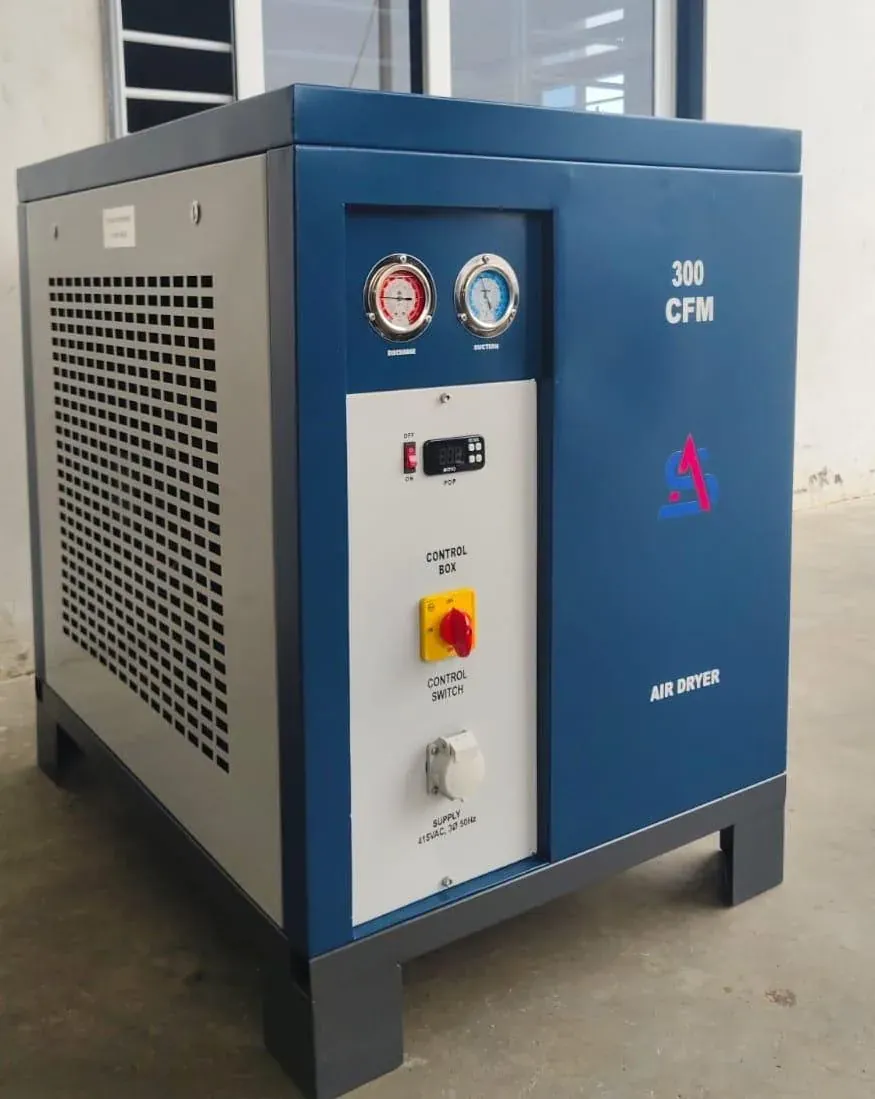
- Dryer make, model and serial number from the nameplate
- The technology: refrigerated, desiccant or other
- The part or symptom: poor dew point, high pressure drop, alarms or leaks
- Photographs and the operating conditions
Diagnose before replacing
Poor dew point can come from high inlet temperature, overload, blocked heat exchangers, drain failure, failed desiccant or control faults. We check the operating conditions and the dryer's own readings.
Maintain the dryer
Regular drain checks, clean condensers and timely desiccant and filter changes protect the dew point and cut energy use.
Before you order
Confirm the part against the dryer model and revision and the refrigerant or desiccant type where relevant.
Ask for the supply status of the item: whether it is genuine, OEM-approved or an alternative, and whether it is in stock or must be sourced.
Check the lead-time basis and the warranty terms that apply.
Frequently asked questions
Why is moisture reaching my tools?
Possible causes include a failed drain, overload, high inlet temperature, a failed dryer part or a bypass. We check the system.
How often should desiccant be changed?
It depends on the dryer, the operating conditions and the air quality. Follow the manufacturer's schedule and the dew point reading.
Can you supply refrigerant dryer parts?
Where the part can be identified and sourced, yes. Refrigerant work should be done by qualified people.
Field guide
Dryer spare parts: keep the dew point where it should be
A dryer that is not drying is easy to miss until water appears at a tool, an instrument or a product. Regular checks catch most problems early, and most fixes involve a small number of parts.
Refrigerated dryers
| Symptom | Likely parts or causes |
|---|---|
| Water downstream, dew point high | Blocked or failed drain, dirty condenser, refrigerant leak, inlet air too hot, overload |
| Dryer trips on high pressure | Dirty condenser, failed condenser fan, high room temperature |
| Compressor in dryer cycling frequently | Refrigerant charge, hot gas bypass valve, controls |
| High pressure drop | Blocked pre-filter or heat exchanger fouling |
Typical parts: drain valves and their strainers, condenser fan motors, pressure switches, hot gas bypass valves, controllers and dew-point indicators. Refrigerant work must be done by a qualified technician.
Desiccant dryers
| Symptom | Likely parts or causes |
|---|---|
| Dew point rising over months | Desiccant contaminated by oil or water, exhausted desiccant, purge setting |
| Towers not changing over | Solenoid valves, shuttle or check valves, controller |
| Loud or continuous purge | Leaking exhaust valve or silencer blockage |
| Dust downstream | Afterfilter element due, desiccant breaking down |
Typical parts: desiccant, valve and solenoid kits, silencers, pre-filter and afterfilter elements. The pre-filter is the desiccant's protection: a missed pre-filter change can ruin a full desiccant charge.
What to send for a quotation
- Dryer make, model and serial number (nameplate photo).
- Type: refrigerated or desiccant.
- Symptoms and any alarm, with the inlet temperature and pressure if known.
- Photos of the part to be replaced.
Send it through find my part or the spare parts enquiry, or call +91 99590 60718 or +91 92468 88812.