
When does hiring a borewell compressor make sense?
Hire is the right answer when the air demand is real but temporary, uncertain or larger than your owned fleet can cover. Rig owners and drilling contractors usually come to us in one of four situations.
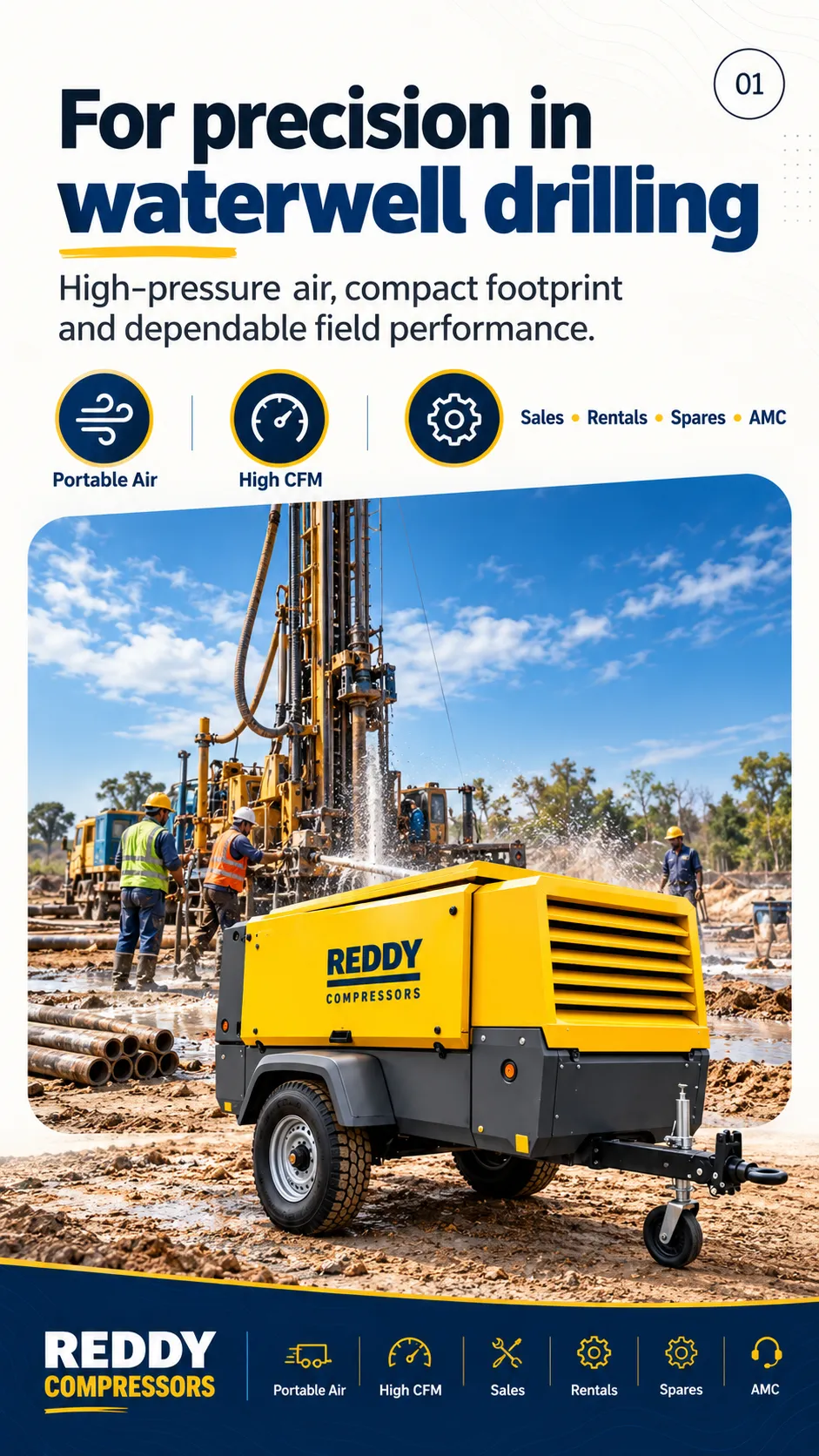
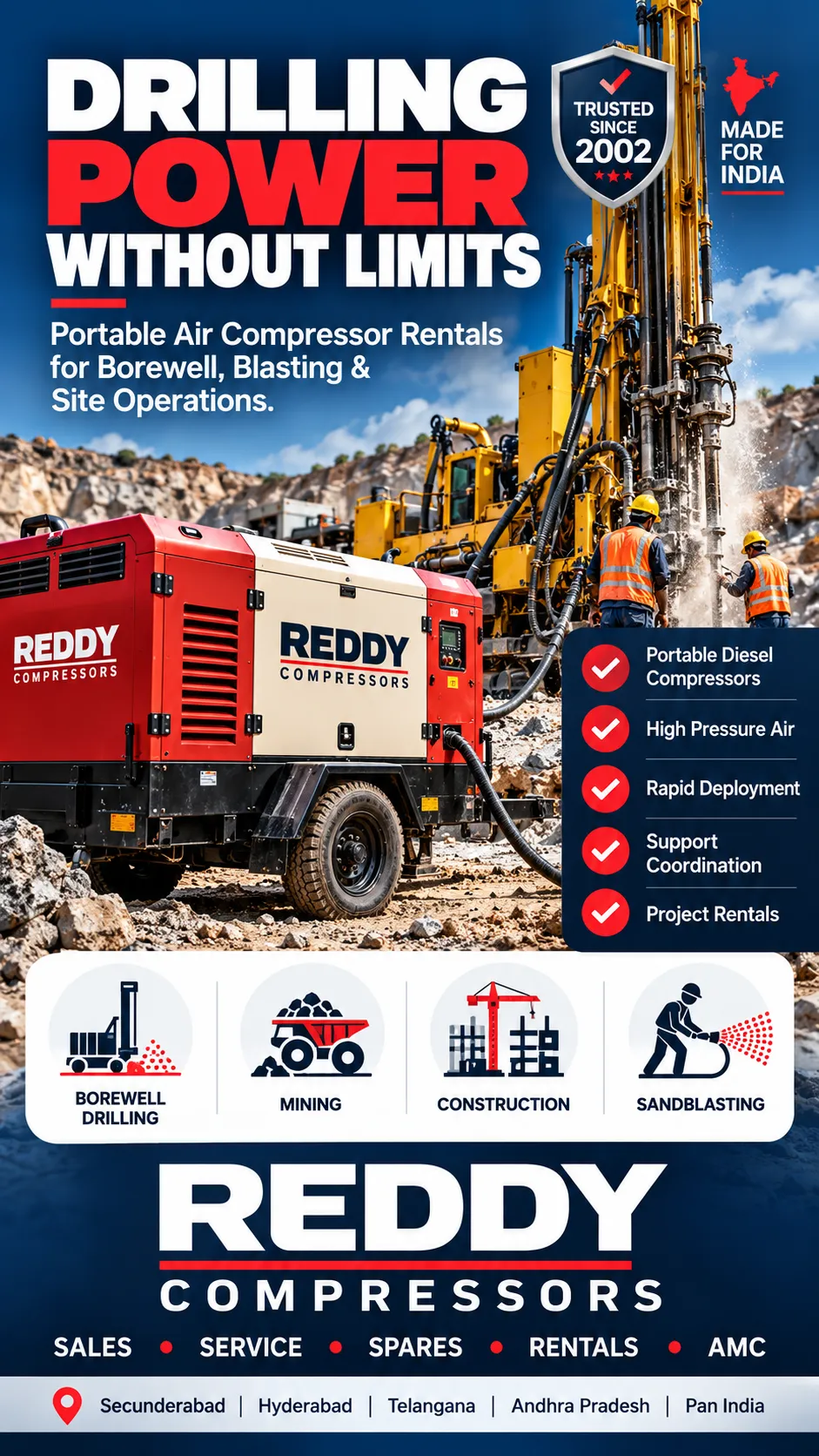
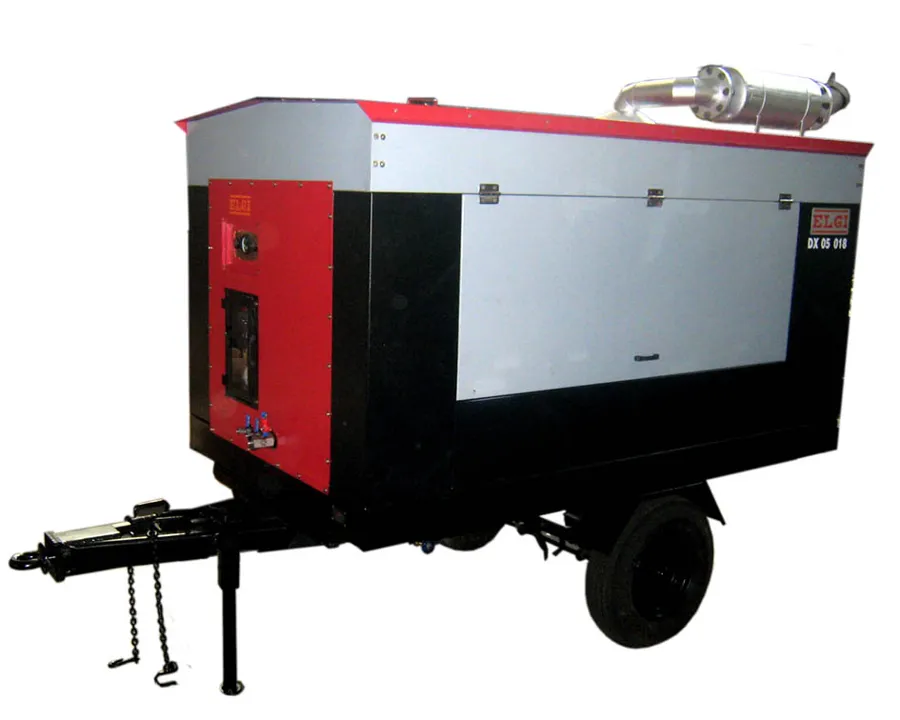
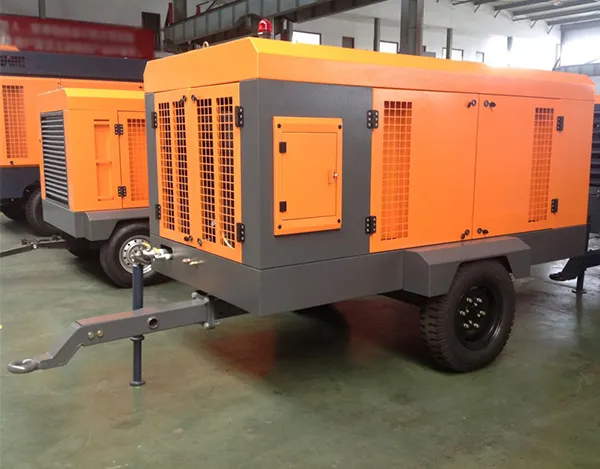
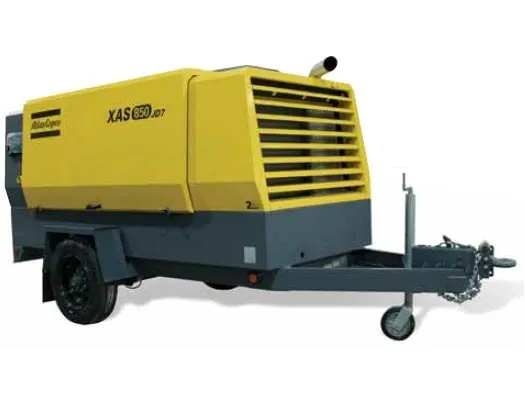
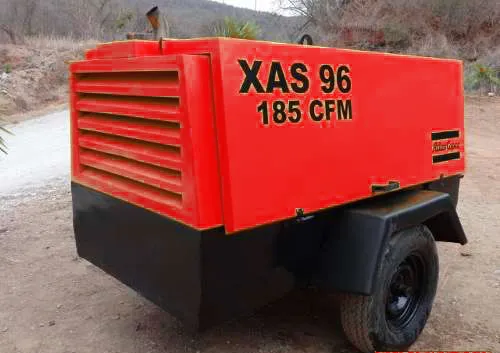
Representative images of machine types we sell, service and rent. Models and capacities are confirmed against your duty.
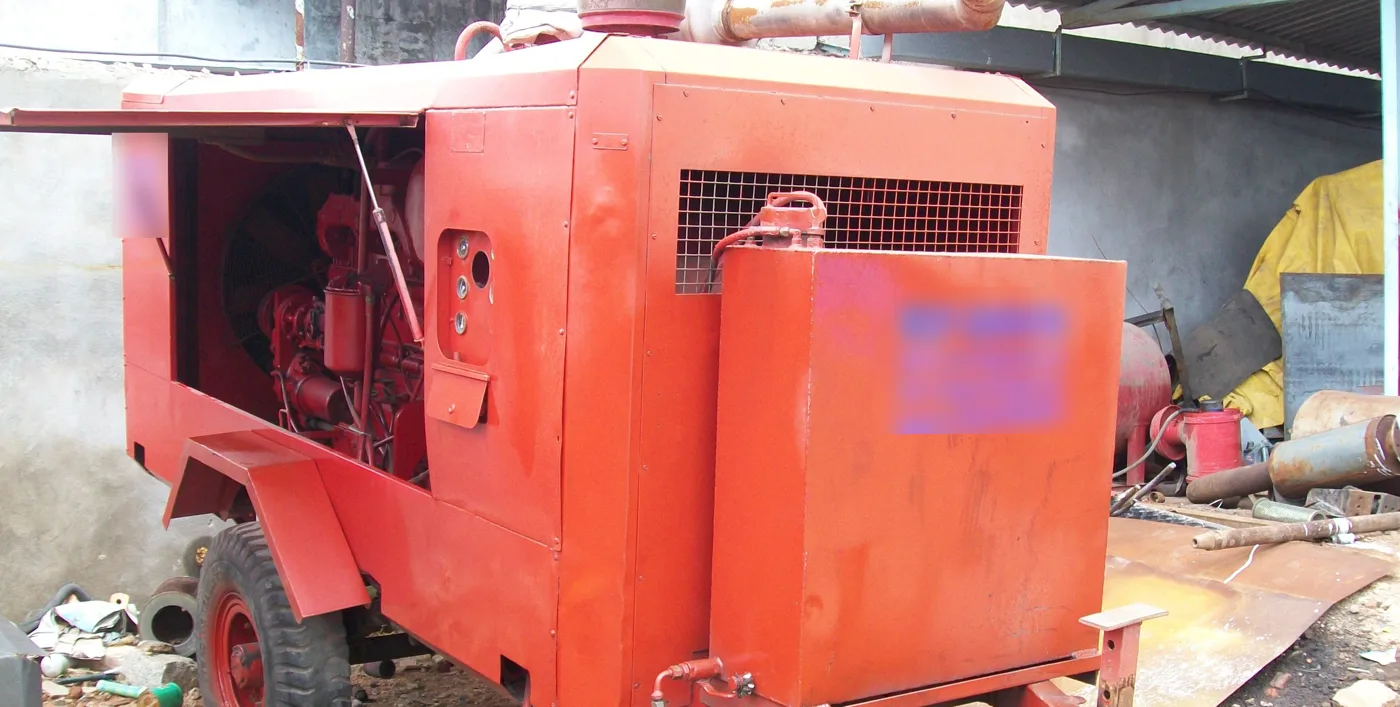
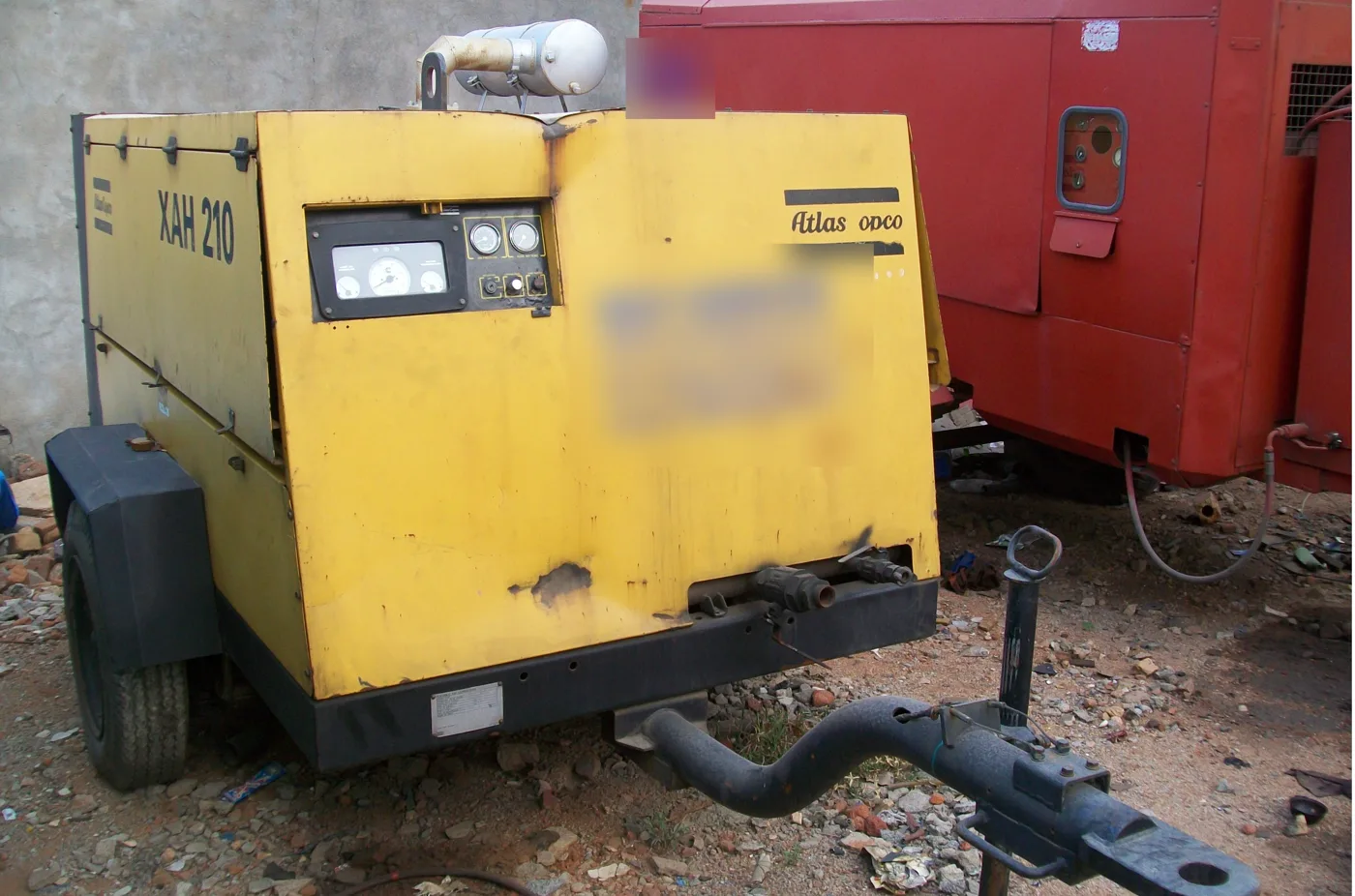
Photographs from Reddy Compressors’ own fleet and workshop.
- A seasonal or contract peak. Pre-monsoon drilling in Telangana and Andhra Pradesh, or a government water-supply package with a fixed number of bores, needs extra air for a few months, not for ten years.
- A deeper or harder job than usual. Your own 150 or 200 psig machine handles shallow bores in soft formation, but a contract calls for deeper holes in hard granite or a high water table that needs more pressure.
- Your own machine is down. An owned compressor is waiting for an airend overhaul, an engine rebuild or parts, and the rig cannot stand idle.
- Trying before buying. You want to run a particular size and pressure class on real work before committing capital to a new or used machine.
A useful rule for contractors with their own rigs is to own the base load and hire the peak. Keep owned machines for the work you do every month, and hire extra or higher-pressure air for the deep contract, the busy season or the weeks your own machine is in the workshop. That avoids both an oversized fleet standing idle and a permanent dependence on hire.
If the demand is steady for most of the year, ownership usually works out better over the life of the machine. Our rental versus ownership calculator helps you compare the two on your own utilisation figures.
How we size a hire compressor to your hammer and depth
A compressor label that says “1,000 cfm” tells you only part of the story. What matters is whether the machine can deliver the flow your hammer needs at the pressure the hole demands, at the bottom of the hole, in the heat of an Indian summer afternoon. We size a hire unit in this order.
- Hammer and bit. We start from the hammer make and size (for example a 4-inch, 5-inch or 6-inch DTH hammer) and the bit diameter. The hammer maker’s chart gives air consumption against operating pressure; consumption rises steeply as pressure rises.
- Hole cleaning. The air must also lift cuttings out of the annulus between drill pipe and hole wall. Drillers commonly aim for an uphole velocity of roughly 15–25 m/s (about 3,000–5,000 ft/min) for dry rock cuttings; larger holes with small pipe need much more air to reach it.
- Depth and water head. Every 10 metres of standing water above the hammer adds roughly 1 bar (14.5 psi) of back-pressure. A bore that hits water at 60 metres and continues to 200 metres can need far more pressure at the end than at the start. This is why deeper wet holes push contractors from 200–250 psig machines towards 300–400 psig or high-pressure units.
- Altitude and ambient. Hot, dusty sites reduce engine and cooler margins. We check that the unit you hire can run at full load in high ambient temperature without tripping on high discharge or coolant temperature.
- Margin and booster need. We allow a margin for line losses, hose length and wear. Where pressure rather than flow is the limit, a booster-assisted arrangement may be the better answer than a larger single machine.
For a deeper explanation of the method, see DTH compressor sizing and duty confirmation.
Typical hire bands for borewell and DTH work
The table below shows how our hire range usually maps to drilling work. It is a starting guide, not a substitute for sizing against your hammer chart and site conditions.
| Typical duty | Flow (cfm) | Pressure | Notes |
|---|---|---|---|
| Shallow to medium bores, softer formation, small hammers | 600–900 | 200–250 psig (13.8–17.2 bar) | Common on agricultural and domestic borewells. |
| Medium to deep bores in hard rock | 800–1,200 | 250–300 psig (17.2–20.7 bar) | Allows a larger hammer or better hole cleaning in wet zones. |
| Deep bores, larger diameters, high water inflow | 1,000–1,500 | 300–400 psig (20.7–27.6 bar) | Used where water head and annulus size both grow with depth. |
| High-pressure deep drilling | By duty | Up to 35 bar (507.6 psig) | For special deep or high-head jobs; availability confirmed per enquiry. |
| Support air on the same site (tools, flushing, cleaning) | 100–600 | 7–14 bar (101.5–203.1 psig) | Portable site compressors from our general rental fleet. |
Our wider rental fleet covers 50–2,000 cfm and 2–30 bar in diesel and electric drive. Browse it from the rental engineering hub.
What is included in a monthly hire?
Hire terms are agreed for each job, and every quotation sets out in writing what is and is not included. A typical monthly borewell hire from us is built around these items.
- The compressor from our own fleet of diesel portables and high-pressure units, checked before dispatch, with the hour meter reading recorded.
- Agreed running hours per month, with the basis for extra hours stated up front. Many contractors hire on a fixed monthly hour allowance; round-the-clock jobs are quoted differently.
- Delivery and return transport to and from site, or collection from Secunderabad if you prefer to arrange your own lorry.
- Hoses, couplings and safety whip-checks appropriate to the pressure class, where agreed.
- Operators on single or double shift if you need them, able to run the machine and handle routine troubleshooting.
- Scheduled servicing at 300 running hours and breakdown support, carried out by our service team.
Fuel, rig-side lubricators and hammer oil are normally the hirer’s responsibility. The quotation will say so clearly so there is no confusion on site.
Operators and 300-hour servicing on hire jobs
A drilling compressor runs hot, dusty and hard, and the hire period is when it gets the least attention from anyone except the people paid to look after it. That is why we keep servicing in our own scope rather than leaving it to the site.
On our hire jobs we change oil and service the machine every 300 running hours. This interval comes from our own work orders on demanding contracts, including a round-the-clock portable hire on a steel-plant site in Andhra Pradesh, where operators worked 12-hour shifts and maintenance stayed with us throughout. A typical 300-hour visit covers:
- compressor oil and engine oil change, with oil and fuel filters;
- air filter elements checked and replaced as dust load requires;
- cooler and radiator cores cleaned of drilling dust and mud spray;
- belts, hoses, clamps and the safety valve checked;
- shutdown functions checked: high discharge temperature, low engine oil pressure and high coolant temperature;
- a short note of hours, readings and any observations for both parties.
Our operators can run the machine, watch discharge temperature (normally about 75–95 °C on an oil-injected screw at load), and spot early warning signs before they become a breakdown. If you use your own operator, we brief them at handover. For the general service method behind this, see portable compressor service for field duty.
How to brief us for a borewell hire
A good brief gets you a correctly sized machine faster and avoids a second mobilisation. It also lets us tell you honestly if a hire is the wrong answer.
- Describe the rig: make, model, rotation head and pipe size.
- Give the hammer make and size, bit diameter and preferred operating pressure.
- Give expected depth, typical water-strike depth and formation (soil, weathered rock, granite).
- State the site location, start date, expected duration and working hours per day.
- Say whether you need operators, hoses or any other site support.
- If you are replacing a failed machine, tell us what it was and why it stopped, so we do not repeat the problem.
Hire, buy used or buy new?
| Question | Hire | Buy used or reconditioned | Buy new |
|---|---|---|---|
| Demand pattern | Short, seasonal or uncertain | Steady, on a budget | Steady and long-term |
| Capital needed | None up front beyond agreed terms | Moderate | Highest |
| Maintenance in your scope | Mostly ours, as agreed | Yours | Yours, with warranty terms from the supplier |
| Flexibility to change size | High | Low | Low |
If ownership looks right, see our pages on used and reconditioned borewell compressors and new borewell compressor sales.
How Reddy Compressors helps
For borewell rig owners we supply all types, all brands and all models of borewell compressors: new sales, used and refurbished machines, rentals, service and spare parts.
We have supplied compressed air to industry since 2002. As an independent multi-brand specialist we rent, sell and service machines from ELGi, Atlas Copco, Ingersoll Rand, KAESER, Chicago Pneumatic and others, so our sizing advice is not tied to one maker’s catalogue. Our hire fleet is our own: diesel portables and high-pressure units that our team maintains.
More than 20 service engineers and technicians support our customers across the whole of Telangana and Andhra Pradesh. Rentals are supplied across India, with project-based site support wherever it is feasible. Where a job runs long enough, we can also supply a brand-new compressor to site instead of hiring. Our office is at Srinilayam, 12-13-200, First Floor, Street No. 1, Tarnaka, Secunderabad 500017. Call +91 99590 60718 or +91 92468 88812, WhatsApp +91 99590 60718, or email reddycompressors@gmail.com.
What to send us
- Rig make and model, hammer make and size, bit diameter.
- Expected depth, water-strike depth and formation type.
- Site location, start date, hire duration and daily working hours.
- Whether you need operators, hoses or round-the-clock duty.
- Details of any machine being replaced and why it stopped.
Frequently asked questions
How much air does a borewell compressor need for a DTH hammer?
It depends on hammer size, operating pressure and hole diameter. The hammer maker’s chart gives consumption at each pressure, and the flow must also lift cuttings out of the annulus. Most borewell work falls between 600 and 1,500 cfm at 200 to 400 psig (about 14 to 28 bar). Send us your hammer and bit details and we will size a hire unit against them.
Can I hire a borewell compressor on a monthly basis?
Yes. Monthly hire is our usual arrangement for borewell and DTH work. The quotation states the included running hours, the basis for extra hours, transport, operators if required, and servicing. Shorter or longer periods can be discussed, and extensions are easier to arrange if you mention a likely extension in your first enquiry.
Do you provide operators with hired borewell compressors?
We can. Our operators can run the compressor on single or double shift, watch temperatures and pressures, and handle routine troubleshooting on site. If you prefer to use your own operator, we brief them at handover on start-up, shutdown, warning signs and daily checks. Tell us your shift pattern when you ask for a quotation.
Who services a hired compressor during the hire period?
Servicing stays with us. On our hire jobs we change oil and service the machine every 300 running hours, and we attend breakdowns. The hirer usually supplies fuel and keeps the machine accessible for service visits. The exact split of responsibilities is written into each quotation so both parties know who does what.
Why does a deeper borewell need a higher-pressure compressor?
Once the bore strikes water, the column of water above the hammer pushes back against the air. Roughly every 10 metres of water adds about 1 bar (14.5 psi) of back-pressure. A machine that drills comfortably at shallow depth may stall in a deep wet hole, so deep work often needs 300 to 350 psig or a high-pressure unit up to 35 bar.
Do you rent borewell compressors outside Telangana and Andhra Pradesh?
Yes. Our service teams cover all of Telangana and Andhra Pradesh, and we supply rental compressors across India. For distant sites we agree transport, operator arrangements and service support for the specific project before dispatch, so you know in advance how routine servicing and breakdowns will be handled.
Related pages
Calculators and worked examples
These tools give indicative figures for screening, comparison and for preparing an enquiry. They run in your browser and send nothing. No prices or tariffs are assumed: enter your own to see costs. Efficiencies and other figures shown are example values: replace them with your own. Results are not a performance guarantee or a design certificate; final selection is confirmed by a service engineer against the machine data sheet and the site.
DTH hammer duty against two compressors
Check whether each of two compressors can supply a DTH hammer’s documented air consumption at the pressure the hammer needs, after hose, string and water-column losses, and with what margin.
The worked example below shows the method with fixed numbers. Turn on JavaScript to change the inputs.
Worked example
Inputs
- Hammer working pressure at the hammer (bar g): 21
- Hammer air consumption at that pressure (cfm): 950
- Pressure loss from compressor to hammer (bar): 1
- Water column above the hammer to be lifted (m): 0
- Compressor A: maximum working pressure (bar g): 17
- Compressor A: data-sheet flow at the required pressure (cfm): 1150
- Compressor B: maximum working pressure (bar g): 24
- Compressor B: data-sheet flow at the required pressure (cfm): 1000
- Site derating of delivered flow: heat, altitude, condition (%): 0
Result
- Hammer working pressure: 21 bar g = 305 psig
- Water column allowance: 0 bar
- Required compressor discharge pressure: 22 bar g = 319 psig
- Hammer consumption: 950 cfm = 26.9 m³/min
- Compressor A: Fails: cannot reach 22 bar g (maximum 17 bar g); its flow does not count
- Compressor B: flow available at 22 bar g: 1,000 cfm = 28.3 m³/min
- Compressor B: margin: +5.3 % (covers the duty)
- Result: Only compressor B covers the duty
Method. Required discharge pressure = hammer working pressure + pressure loss from compressor to hammer (hose, swivel, drill string, check valves) + water column to be lifted (0.0981 bar per metre of water). A compressor whose maximum working pressure is below the required pressure fails, whatever its flow. Available flow = data-sheet flow at the required pressure × (1 − site derating). Margin (%) = (available flow − hammer consumption) ÷ hammer consumption × 100. Use the same flow basis (FAD or scfm) for hammer and compressor. 1 bar = 14.504 psi; 1 m³/min = 35.31 cfm. Hole cleaning (annular velocity) is a separate check.
What to take from it. Compare flows at the same pressure. More cfm at a lower pressure does not run a hammer that needs higher pressure.
Technical content reviewed by D. Srinivas Reddy, Managing Partner and service engineer, Reddy Compressors. Last updated 17 October 2026. How our engineering content is reviewed.
Rental versus ownership
Find the point at which owning a compressor costs less than hiring one for the same duty.
The worked example below shows the method with fixed numbers. Turn on JavaScript to change the inputs.
Worked example
Inputs
- Months of need: 18
Result
- Result: Enter your own prices above (purchase price and monthly hire charge are needed; no prices are assumed)
Method. Rental total = monthly hire × months + fuel/power. Ownership total = purchase price + running cost × months + service. Break-even month = (purchase) ÷ (monthly hire + monthly rental running − monthly ownership running). All prices are entered by you; none is a quotation.
What to take from it. The answer depends on how long the need really lasts. Below the break-even hire is cheaper; beyond it ownership usually is.