
An air receiver tank stores compressed air between the compressor and the users. It evens out demand peaks, lets the compressor run in longer and more efficient cycles, steadies system pressure and gives water a place to settle out before it travels down the pipework. Reddy Compressors supplies air receiver tanks with the right fittings for rotary screw, reciprocating and portable compressor systems, and inspects and services existing receivers.
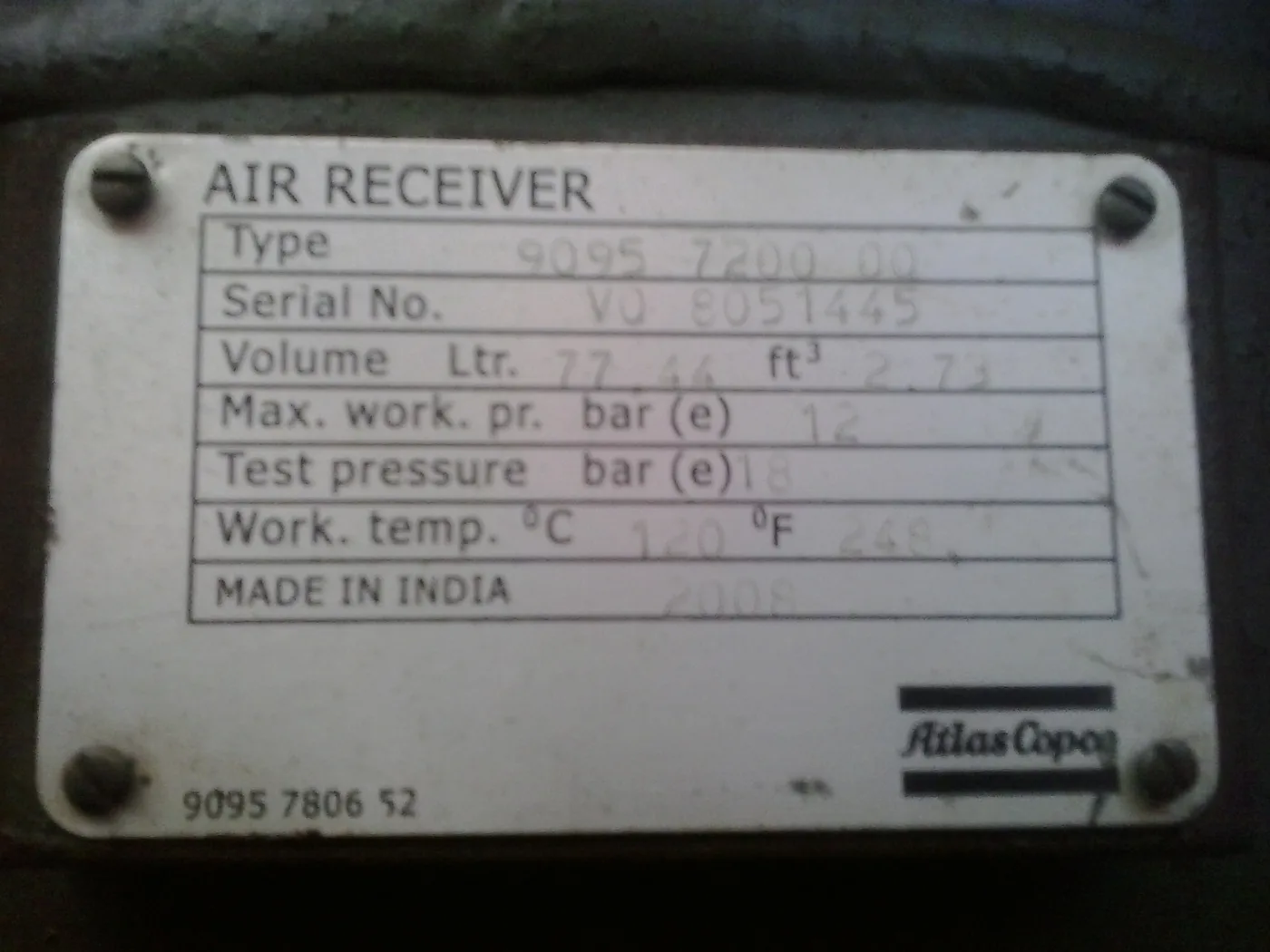
Photographs from Reddy Compressors' own fleet and workshop.
What a receiver does
- Buffers demand. Short peaks are supplied from storage instead of starting another compressor.
- Protects the compressor. Fewer load and unload cycles and fewer motor starts.
- Stabilises pressure, so the compressor can be set lower and users see a steadier supply.
- Removes water. Air cools in the tank and condensate collects at the bottom, where a drain removes it.
- Gives time for a standby compressor to start after a trip.
Types of receiver
| Type | Where it is used |
|---|---|
| Vertical receiver | Most compressor rooms: small footprint, good condensate collection at the bottom dish |
| Horizontal receiver | Low-headroom rooms, skids and tank-mounted compressors |
| Wet receiver (before the dryer) | Collects bulk condensate and smooths flow into the dryer |
| Dry receiver (after the dryer) | Stores dried air close to demand; supplies peaks without overloading the dryer |
| Point-of-use receiver | Next to a large intermittent user, such as a blast pot, press or test bench |
| Tank-mounted compressor | Small screw and piston compressors built onto their own receiver; see tank-mounted reciprocating and tank-mounted screw compressors |
Choosing a receiver
Volume
Volume depends on compressor capacity, control type, the size and length of demand peaks, and the pressure drop that users can accept. Our receiver sizing guide explains the calculation with worked examples.
Pressure rating
The receiver's design pressure must be above the highest pressure the compressor can produce, with the safety valve set at or below the design pressure. A receiver bought for a 7 bar system cannot be used on a 10 bar or 13 bar compressor unless it is rated for that pressure.
Construction and documents
A receiver is a pressure vessel. It should be designed and built to a recognised code (in India, commonly IS 2825, or ASME Section VIII), hydrostatically tested by the manufacturer, and supplied with a nameplate and test certificate showing design pressure, test pressure, volume, serial number and year. Keep these documents: they are needed for inspections and insurance.
Fittings every receiver needs
- A correctly sized and set safety valve.
- A pressure gauge.
- An inspection opening (manhole or handhole) appropriate to the size.
- Inlet and outlet connections sized for the flow, and an isolation valve so the receiver can be inspected without shutting the whole plant where possible.
Installation
- Place the receiver on a level, firm base, with space to read the nameplate, open the inspection cover and reach the drain.
- Install it in a cool, ventilated spot; a cooler receiver separates more water.
- Connect the inlet low and the outlet high on a vertical receiver where the design allows, so air passes through the tank rather than short-circuiting.
- Route condensate to an oil-water separator, not straight to a drain, for oil-lubricated compressors.
- Never weld on, drill or modify a receiver.
Inspection and safety
Receivers corrode from the inside, especially where water is left standing. They must be drained regularly and inspected periodically, with the safety valve tested. Statutory inspection and testing intervals for pressure vessels are set by the factory rules that apply to your site. See receiver inspection and safety and receiver lifecycle integrity.
Ask for a receiver
Tell us the compressor capacity and maximum pressure, the type of control (load/unload, VSD), the peaks you need to cover, wet or dry duty, vertical or horizontal, and the space available. Call +91 99590 60718 or +91 92468 88812, email reddycompressors@gmail.com, or use the equipment enquiry.
Watch
A short explainer on this topic
Slide-by-slide engineering explainers from Reddy Compressors. More in the video library.