
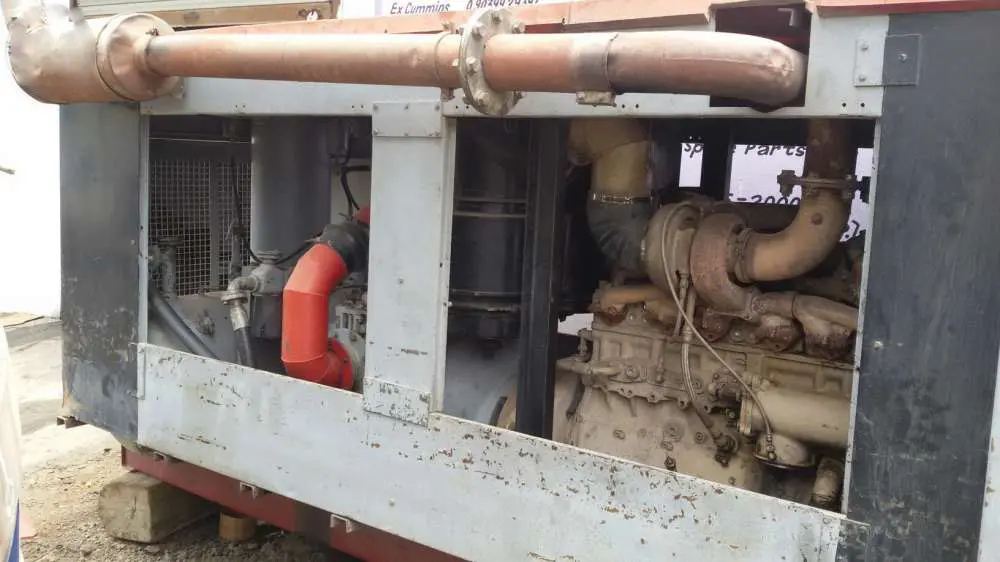
This library brings together every Reddy Compressors guide on borewell and DTH drilling air: how to size a compressor, what the hammer needs, how cuttings are lifted, how water and depth change the duty, and how to buy, hire, service or overhaul a drilling compressor. Typical borewell duties run 600–1,500 cfm at 200–400 psig (13.8–27.6 bar).
What this library covers
A borewell rig reaches the rock, but the air system decides whether the hammer works and whether cuttings leave the hole. Three ideas run through every page here:
- Pressure runs the hammer. The supply pressure at the DTH hammer sets the blow energy and the margin over any water standing in the hole.
- Flow cleans the hole. Free air delivery (FAD) sets the annular velocity that lifts chips up past the drill pipe.
- Losses decide what reaches the bit. Hoses, swivel, drill string friction and water inflow all use up pressure and flow before it gets to the hammer.
The same air also cools the bit, keeps the hole bottom clean, and brings up the cuttings that tell the driller when the formation changes. A duty stated only as “750 cfm” is incomplete without the pressure, depth and water condition it applies to.
Each guide below deals with one decision. Start with duty and sizing, then follow the air path down the hole, then the site, the finished well and the commercial choices.
How do I choose a borewell compressor?
Choosing a compressor for DTH drilling is a short sequence. Work through it in order and the right machine class usually becomes obvious.
- Start from the hammer. Its rated pressure range and air consumption curve define the minimum duty.
- Check the annulus. Bit diameter and drill pipe size set the flow needed for cleaning, typically enough for an uphole velocity of 3,000–5,000 ft/min in dry air.
- Allow for depth and water. Every 10 m of water above the hammer adds roughly 1 bar (14.5 psi) of back pressure at start-up.
- Add losses and margin. Hoses, swivel and string friction come off the compressor’s discharge pressure.
- Check site derating. High summer ambient in Telangana and Andhra Pradesh, dust and altitude all reduce the margin.
- Decide how to source it. Buy new, buy used or refurbished, hire, or add a booster to an existing machine.
| Drilling situation | Typical pressure class | Typical flow class |
|---|---|---|
| Shallow, mostly dry holes | 200–250 psig (13.8–17.2 bar) | 600–900 cfm |
| Medium-depth hard-rock borewells | 250–300 psig (17.2–20.7 bar) | 800–1,200 cfm |
| Deep holes with significant water | 300–400 psig (20.7–27.6 bar) | 1,000–1,500 cfm |
| Very deep or large wet holes | Up to about 500 psig (34.5 bar), high-pressure units or boosters | Matched to annulus and hammer |
These bands are typical starting points. The hammer data and site conditions always decide the final selection.
Start here: duty, selection and sizing
These pages set the compressor duty: the pressure and flow the rig must have, and how bore size and depth change it.
- Borewell compressors, parts and lifecycle support
- Borewell compressor parts and lifecycle overview
- Water-well drilling compressors
- Water-well drilling compressors: buyer’s guide
- DTH drilling compressors
- DTH drilling compressors: guide
- DTH compressor selection
- DTH compressor selection guide
- DTH hammer air requirement
- DTH hammer air requirement guide
- Bore diameter vs air requirement
- Annular velocity
- Drilling depth and compressor selection
- DTH compressor sizing and duty confirmation
Air path, hammer and drill string
Once the duty is set, these guides follow the air from the compressor outlet to the bit face, where most pressure is lost and most problems start.
- Deep hole drilling air planning
- Booster-assisted drilling air
- High-pressure borewell air: pressure, flow and depth
- DTH hammer and bit selection
- Drill string and air path review
- Air hoses and rig connections
- DTH lubrication and air treatment
Hole cleaning, water and ground
Groundwater and formation change the duty more than anything else. A hole that drills easily dry can stall the hammer once it meets water, and broken ground can swallow air before it lifts the cuttings.
- Cuttings transport and borehole cleaning
- Wet hole drilling and water ingress
- Casing and unstable formation planning
- Final bore diameter and pump passage
- Groundwater, geology and drilling method selection
Drilling performance and site readiness
These pages help when a rig is drilling slower than it should, when you are judging cost per metre, or when a compressor is being mobilised to a new site.
- Borewell compressor performance diagnostics
- Drilling productivity and cost per metre
- Drilling air mobilisation and site acceptance
- Tractor and PTO driven compressors
- The borewell rig as an integrated system
- Borewell rig reliability and drilling records
Completing and testing the well
Air is also used after drilling, to clean and develop the well and to support yield testing before a pump is selected.
Buy, hire, parts and service
When the duty is clear, these pages cover how to source the machine and keep it working through the drilling season.
- New borewell compressor sales
- Used and reconditioned borewell compressors
- Borewell compressor rentals and hire
- Borewell compressor spare parts
- Borewell compressor service and repairs
- Compressor overhauling and refurbishment
- Borewell project enquiry brief
- Complete borewell and DTH engineering centre
For hire planning beyond drilling, see our temporary air engineering centre.
Buy, hire or boost: which route suits you?
| Route | Suits | Watch for |
|---|---|---|
| Buy new | Contractors with steady year-round drilling and a defined duty | Matching the machine to the hammers you actually run |
| Buy used or refurbished | Lower capital outlay, known duty | Airend and engine condition, service history, delivered FAD at pressure |
| Hire | Seasonal peaks, one-off deep holes, trial of a higher pressure class | Hire period, transport, operator scope, servicing during hire |
| Add a booster | Owners of a sound lower-pressure compressor moving into deeper wet holes | Booster flow match, hoses rated for the higher pressure |
How Reddy Compressors helps
For borewell rig owners we supply all types, all brands and all models of borewell compressors: new sales, used and refurbished machines, rentals, service and spare parts.
Reddy Compressors, at Tarnaka in Secunderabad and serving industry since 2002, is an independent multi-brand specialist. We sell, rent and service drilling compressors of Atlas Copco, Ingersoll Rand, ELGi, KAESER, Chicago Pneumatic and other makes, without being an authorised dealer of any of them.
- Duty review from your hammer, bit, pipe, depth and water data before a machine is proposed.
- New and used or refurbished borewell compressors, and rentals from our own fleet of diesel portables and high-pressure units.
- Service, AMC, breakdown repair and overhaul by over 20 service engineers and technicians covering all of Telangana and Andhra Pradesh.
- Spare parts identified from make, model, serial and nameplate, with fit confirmed before quoting; supply across India.
What to send us
- Rig, hammer and bit make, model and sizes, and drill pipe diameter.
- Target depth, standing water level and formation.
- Your existing compressor’s nameplate photo, if any.
- Buy, hire, booster, service or parts, and the site location.
Frequently asked questions
Which compressor is best for borewell drilling?
There is no single best machine; the right one matches your hammer and hole. Most DTH borewell rigs use 600–1,500 cfm compressors at 200–400 psig. Shallow dry holes sit at the lower end, while deep hard-rock holes with water above the hammer need the 300–400 psig class or a booster. Start from the hammer’s data and the annulus size.
Watch
A short explainer on this topic
Slide-by-slide engineering explainers from Reddy Compressors. More in the video library.
What is the difference between pressure and cfm in DTH drilling?
Pressure, in psig or bar, drives the hammer and overcomes water standing in the hole. Flow, in cfm, carries cuttings up the annulus between pipe and bore wall. You need both at the same time: a compressor’s rated cfm must be available at the pressure the hammer needs, otherwise the hole either drills slowly or fails to clean.
Should I hire or buy a borewell compressor?
Buying suits contractors with steady drilling and a well-defined duty. Hiring suits seasonal peaks, one-off deep projects, or trying a higher pressure class before committing. Used and refurbished machines sit between the two. Compare running hours, servicing scope, transport and the hammers you will run before deciding; we can price more than one route.
Why does a borewell compressor lose performance over time?
Common causes are worn airend rotors, blocked air filters, choked oil coolers, faulty unloader or regulator settings, and engine power loss. Hose and swivel leaks also reduce what reaches the hammer. A performance check measures delivered flow and pressure under load and compares them with the rating, which shows whether service, repair or overhaul is the right next step.
Do you supply borewell compressors outside Telangana?
Yes. Our service teams cover the whole of Telangana and Andhra Pradesh, and we supply compressors, rentals and spare parts across India, with project-based site support elsewhere where feasible. Send us the site location along with the drilling duty, and we will confirm what supply and support arrangement is practical for that job.
Related pages
- తెలుగులో చదవండి: బోర్వెల్ కంప్రెసర్
- हिंदी में पढ़ें: बोरवेल कंप्रेसर
- Borewell drilling season: the rig compressor pre-season checklist
- Borewell compressor in Hyderabad: sales, rental, service and spares
- DTH hammer duty comparison tool
- Annular area and velocity calculation tool
- Verified borewell air supply projects
- Portable compressed-air engineering
- 35 bar / 507.6 psi portable air
- Tractor-mounted air compressors
Technical content reviewed by D. Srinivas Reddy, Managing Partner and service engineer, Reddy Compressors. Last updated 7 November 2026. How our engineering content is reviewed.