
Connect the air package to the actual rig, site and work programme.
Water-well compressor enquiries need a clear account of how compressed air will be used on the assignment. The drilling method, installed rig equipment, planned hole and available site information establish the context. The compressor proposal then needs to identify the duty it can support and the boundary at which that duty applies.
An external compressor may be requested for a rig with no suitable onboard supply, as a replacement source, or as part of a separately engineered air arrangement. These are different starting points. Establish which one applies before comparing machines or discussing mobilisation.
Reddy Compressors considers water-well project-air requirements from its Secunderabad/Hyderabad base, prioritising Telangana and Andhra Pradesh. Wider Indian assignments depend on confirmed project arrangements. High-pressure equipment availability requires supplier confirmation.
Begin with the drilling arrangement
The term “water-well rig” does not identify one air system. Manufacturer literature includes rigs configured for rotary and DTH work, with different installed equipment and options. Obtain the specification that applies to the machine on the project, including relevant modifications.
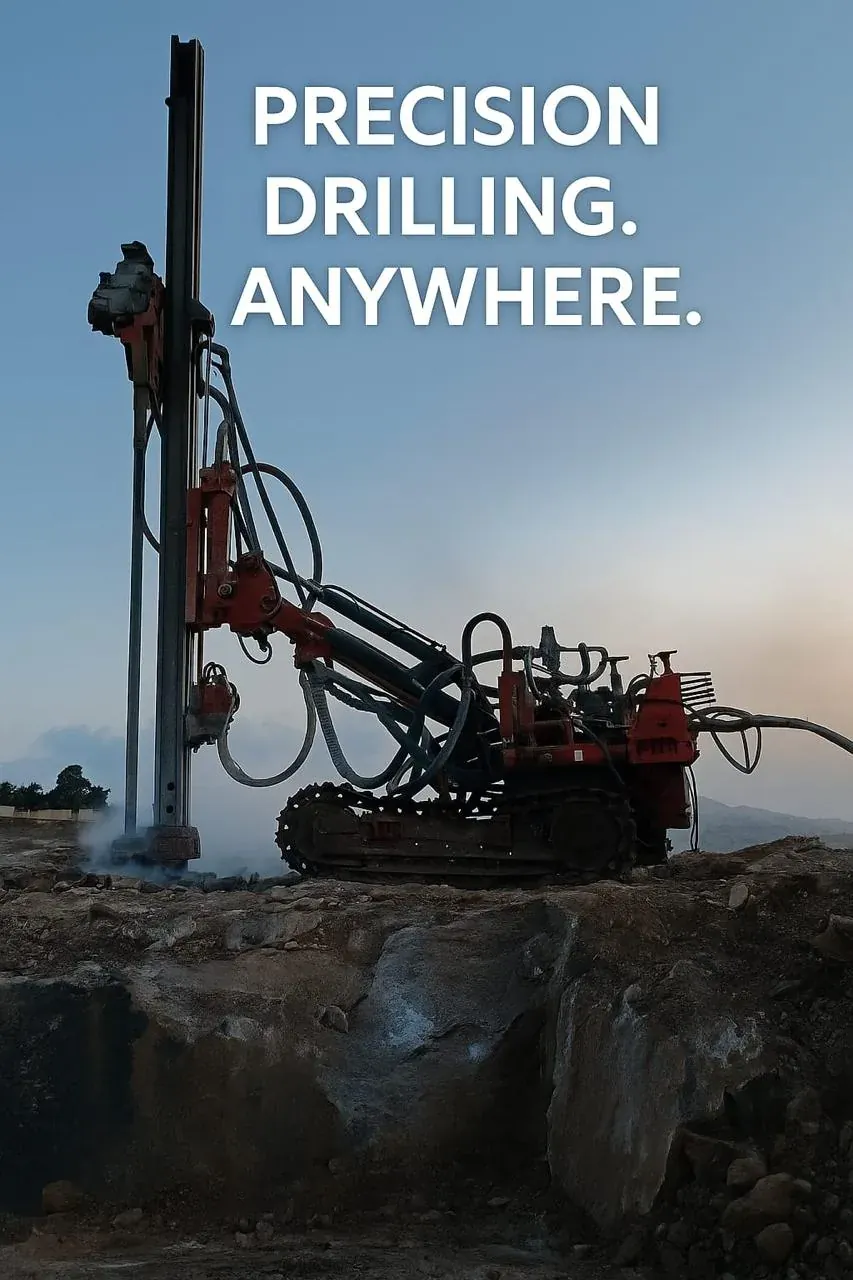
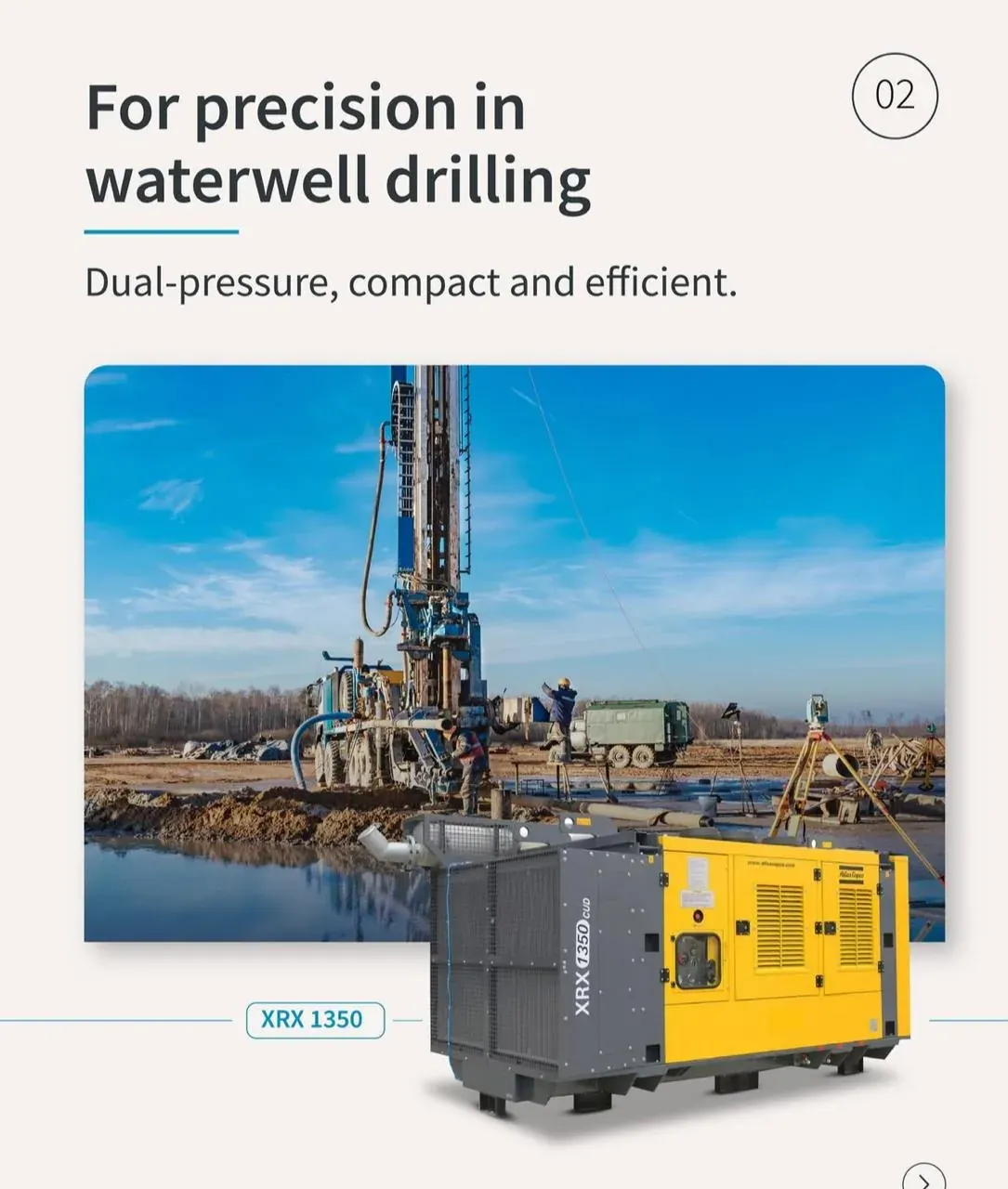
Watch
A short explainer on this topic
Slide-by-slide engineering explainers from Reddy Compressors. More in the video library.
For DTH work, compressed air supports the downhole hammer and the removal of drilled material. Other drilling arrangements can have different requirements. The drilling contractor should identify the method and its air requirements; the compressor enquiry should carry that information forward accurately.
Separate the intended work from the equipment currently installed. A rig owner's preferred future capability is useful planning information, but it is not evidence that the present assembly supports that duty.
Starting arrangement | Question to resolve |
|---|---|
Rig with onboard compressor | Is that supply available, and what role is proposed for external air? |
Rig using an external compressor | What documented inlet requirement and connection arrangement apply? |
Temporary replacement of an existing source | Which functions must the replacement serve, and which existing equipment remains in use? |
Proposed additional air source or booster | Who will establish compatibility and approve the complete arrangement? |
Do not assume that an external machine can simply be added to an onboard compressor. Manufacturer literature distinguishes particular auxiliary-air and booster connection options. The presence and suitability of such an option must be checked on the actual rig.
Build a site brief with traceable information
A useful site brief distinguishes measured or documented information from estimates. Record who supplied each important input and when it was last checked. This makes it easier to resolve an uncertainty without restarting the entire enquiry.
Hole and formation information
Include planned hole dimensions, the intended depth range, available formation records and the drilling contractor's proposed method. Where information comes from nearby work, identify it as background rather than a confirmed description of the new hole.
Ask the drilling specialist which uncertainties could alter the equipment requirement. The purpose is to identify decisions needing further information. It is not to prescribe a drilling method from a general description such as “hard rock” or “deep bore.”
Water observations
Water influx and back pressure are recognised considerations in deep-hole DTH applications. Supply available observations and relevant investigation records to the person assessing the drilling duty. A report of water encountered is useful only when its meaning and limitations remain clear.
Planned hole depth, recorded water level and observed inflow describe different aspects of the assignment. Do not replace them with a single depth-based compressor recommendation. Any implication for hammer operation or air supply requires review for the actual equipment and conditions.
Surface conditions
Record site elevation, expected ambient conditions and exposure to dust, together with the proposed equipment location. Manufacturer field testing illustrates why performance assessment needs the applicable operating environment. A machine's capability at one set of conditions should not be assumed at every site.
Request manufacturer-backed guidance for the offered configuration where site conditions differ from its stated basis. This page supplies no universal altitude correction or temperature allowance.
Describe the route from compressor to rig
The air package includes more than the source machine. Prepare a simple equipment schedule or marked site sketch showing the proposed compressor position, delivery line, intermediate equipment and rig connection.
The sketch helps the responsible technical team identify the interfaces that need checking. It does not replace ratings, installation instructions or an engineering assessment.
Interface | Information to obtain | Question for the responsible technical team |
|---|---|---|
Compressor outlet | Outlet identification, supported duty and applicable connection data | What supply is available at this boundary? |
Delivery line | Proposed route, dimensions, length and assembly identification | Does the selected assembly suit the intended service? |
Intermediate equipment | Identity and documentation for any treatment, valves or other devices | What requirements and limitations does each item introduce? |
Rig inlet | Actual inlet assembly, installed options and rig documentation | Is this the approved connection for the proposed source? |
Instrumentation | Location, units and purpose of relevant indications | Which reading establishes which part of the requirement? |
Agree who provides, inspects and accepts the connecting equipment. If the customer supplies an existing hose or manifold, include its identity and records in the assessment. A familiar connection shape does not establish suitability for the proposed duty.
The final arrangement should be reviewed against applicable equipment instructions. No hose size, connection rating, protective-device setting or installation procedure is prescribed here.
Identify where the air requirement applies
A request for flow and pressure should state the delivery point and reporting basis. The reviewer needs to know whether the figures describe compressor output, the rig inlet or a component requirement.
A compressor display and an indication elsewhere in the system refer to different locations. Record the measurement locations before interpreting a difference or judging compliance with a requirement. Do not present an outlet indication alone as proof that an entire drilling system is performing as intended.
Keep pressure and flow together in the requirement. If a hammer document is the starting reference, identify what additional rig demands are included elsewhere and what remains unresolved. Detailed demand reconciliation belongs to the equipment selection assessment.
For an offered machine, request evidence for the relevant operating point, configuration and conditions. A maximum pressure headline and a maximum airflow headline need not describe the same operating point.
Separate air supply from injection and lubrication arrangements
Some water-well rigs have separately specified water-injection, foam-injection or hammer-lubrication equipment. Their presence, configuration and instructions must be established from the actual machine records.
Ask which systems are already installed, which are required by the selected drilling arrangement and who will assess their compatibility. Record customer-provided equipment explicitly. A compressor quotation should not silently imply that every rig accessory is included.
The interface review should follow the relevant manuals and specialist advice. Do not infer an injection rate, lubricant, additive, connection location or operating sequence from a general water-well description. These decisions can be equipment-specific.
If the enquiry mentions aftercooling, moisture separation or filtration, state the actual requirement and its source. Adding a treatment label to a quotation does not establish that the complete arrangement satisfies the rig or hammer's requirements.
Plan placement as part of the assignment
A workable delivery plan needs the proposed equipment position and access route, not only the town or village name. Provide available site photographs and explain constraints that may affect vehicle access, unloading, positioning or later service attendance.
Have the responsible site team assess the proposed location against the equipment's installation and operating instructions. Include space for the machine, the air connection route, routine access and agreed operating inputs. Any unresolved placement issue should be visible before transport is committed.
Clarify who supplies fuel or electrical power, as applicable, and who coordinates normal operation and service reporting. The selected machine determines the relevant requirements; a generic portable-compressor category does not resolve them.
Remote work also benefits from a practical communications plan. Identify the site contact, the person responsible for the rig and the contact handling the compressor supply. Confirm available support arrangements for the location instead of assuming a fixed attendance time.
Give each operating activity its own requirement
Water-well work can involve air duties associated with drilling, flushing or well development, depending on the selected method and equipment. State which activities the requested supply must cover.
The drilling specialist should establish the relevant requirements for each activity. Avoid treating one hammer figure as evidence for every stage of the project. Equally, avoid assuming that every activity requires the compressor's maximum output.
Work description | What the project brief should identify |
|---|---|
Drilling | Method, installed tooling and applicable air-duty evidence |
Flushing or clearing | Required function and specialist assessment for the actual hole and equipment |
Well development, if included | Separate scope, responsible party and supported air requirement |
Interruptions and recommencement | Applicable equipment instructions and responsibility for coordination |
This is a scope table, not a recommended operating sequence. The project team determines which activities apply and how they will be undertaken.
Keep observations useful when conditions change
An operating record is most useful when it identifies the equipment and the circumstances of an observation. Capture available indications, their locations, the activity underway and any relevant change reported by the drilling team.
Separate symptoms from conclusions. A reported reduction in progress, an altered discharge observation or a machine warning does not by itself establish the cause. Supply factual information to the responsible specialists and follow their directions under the applicable instructions.
Where a material change affects the original requirement, retain the previous brief and record the revision. This creates a clear basis for discussing a different supply duty, configuration or scope. It also prevents an informal conversation from becoming an undocumented equipment commitment.
What a project handover should establish
Before the agreed supply is put into service, the project parties should reconcile the offered equipment with the accepted requirement and their respective responsibilities.
The handover record should identify the supplied machine, agreed accessories, delivery boundary, relevant documents and unresolved items. Record any assessment performed and the conditions under which it was made. An unloaded demonstration should not be described as proof of the full drilling duty.
Keep the compressor supply acceptance separate from the outcome of the well. Water yield, finished depth and suitability of the completed well require their own evidence and responsible assessment. Compressor delivery alone establishes none of those outcomes.
Frequently asked questions
Can the compressor be selected from the planned well depth?
Depth provides project context. Selection also needs the drilling arrangement, tooling, documented air duty, site conditions and relevant equipment interfaces. There is no general depth-to-CFM rule provided by this guide.
Does a rig with onboard air still need an external compressor?
That depends on the installed supply and intended assignment. First establish the reason for external air and the rig's approved connection arrangement. Existing onboard equipment does not establish that two sources can be combined.
What if the formation or water conditions are uncertain?
Identify the uncertainty in the brief and provide the available records. Ask the drilling specialist which additional information or review is needed. Do not convert an unknown condition into an unsupported performance promise.
Can one quoted duty cover drilling and well development?
Only if the requirements for the included activities have been assessed and the proposed package supports them. Record the scope and its evidence rather than assuming that one figure covers all activities.
Will a compressor supply include the connecting hose and rig accessories?
The written offer determines the supplied items. Identify connections, treatment and rig accessories separately, including customer-provided equipment and responsibility for compatibility review.
Can an earlier successful project prove suitability for the next site?
Earlier records can inform the discussion. Compare the actual equipment, conditions and requirement before relying on them. A previous outcome is not an unconditional guarantee for another well.
Discuss your water-well air requirement
Send the rig identity, proposed drilling method, documented air requirement and available site information. Include a connection sketch or photographs where possible, the required mobilisation date and the name of the person who can clarify the drilling arrangement.
For a replacement supply, add the existing compressor details and explain what must remain operational. For an additional source, identify the proposed integration and who will assess it.
Reddy Compressors can consider the enquiry against the required supply scope and confirmed equipment arrangements. See the Portable Compressors overview for the wider division context.
A useful enquiry connects four things: the work, the rig, the site and the required air-delivery boundary.
*Content prepared: 29 September 2026.*