
1 Treat extended hire as an operating utility
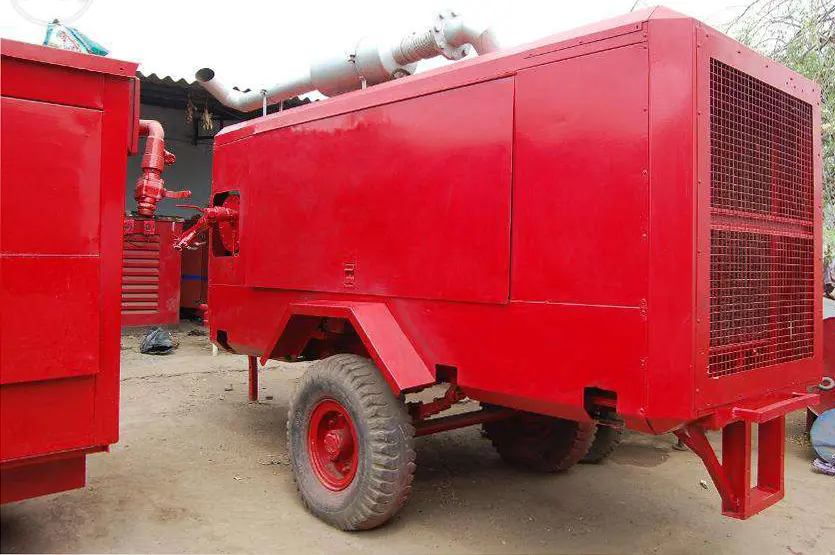
Long-term compressor hire provides compressed-air capacity over an extended project or operating period while the customer retains the flexibility of hired equipment. The arrangement may bridge permanent equipment delivery, support a construction programme, serve a production contract, cover a prolonged overhaul or provide capacity while future demand remains uncertain. The defining engineering question is whether the complete air service can remain suitable throughout that period.

There is no universal number of days that makes a hire long term. The distinction becomes practical when maintenance, changing conditions, accumulated operating cost and future transition decisions materially influence the arrangement. A compressor that works satisfactorily during a short demonstration may still be unsuitable for months of high utilisation, changing weather or restricted maintenance access.
Evaluate the delivered service: airflow, pressure, air quality, operating hours, continuity and support at the agreed connection. The compressor, treatment, utilities, distribution and operating responsibilities form one supply system. A monthly rental price describes only part of that system.
This guide explains how to specify extended hire, preserve service during maintenance, monitor performance and compare the complete cost over the expected term. It also explains how to manage extension, equipment exchange and the eventual return to permanent supply without allowing a temporary arrangement to become an unmanaged permanent dependency.
2 Define why the hire exists and how it will end
State the business purpose before choosing equipment. A six-month construction project, a nine-month production contract and a bridge until a new compressor is commissioned have different demand patterns and end conditions. Equipment selection and commercial flexibility should follow those differences.
Hire purpose | Main uncertainty | Decision needed before mobilisation |
|---|---|---|
Permanent equipment delivery bridge | Delivery and commissioning dates may move | Extension mechanism and transition overlap |
Production contract | Demand may increase, decline or finish early | Capacity adjustment and agreed minimum commitment |
Extended overhaul | Repair scope and proving period may change | Continuity during repair and acceptance before off-hire |
Construction programme | Work fronts and air users move | Relocation, route changes and site responsibilities |
Demand evaluation | Future permanent duty remains uncertain | Measurement plan and ownership review date |
Remote project | Service access and consumables may be difficult | Local support, spares and maintenance coverage |
Define a review date as well as an expected finish date. If the permanent installation is delayed, the project should assess the continuing rental arrangement deliberately. Repeated short extensions can conceal an emerging long-term requirement and prevent useful improvements to energy performance or the installation.
Record the exit condition in operational terms. For a bridge project, “new compressor delivered” is not equivalent to “permanent air service accepted.” Installation, treatment, controls, commissioning and representative production operation may still be outstanding. The rental remains relevant until the agreed replacement service is usable.
3 Specify the demand envelope over the whole term
Define minimum, normal, peak and essential demand, together with the hours and days associated with each. Include start-up, cleaning, process changes and expected growth. Use compatible airflow reference conditions and identify whether values represent compressor output, output after treatment or net delivery to the process.
For long-term hire, the initial month may not represent the entire duty. Construction can add crews and tools; production can move from one shift to three; the permanent station may return capacity in stages. Divide the programme into phases when these changes are credible rather than choosing one oversized package for every possible future condition.
State pressure and quality at named delivery points. A requirement for 20 m³/min at a compressor outlet is incomplete if the critical process needs that flow after treatment and a long distribution route. Include the minimum acceptable process pressure and maximum limits of the connected equipment.
Identify evidence quality. Measured operating profiles, verified equipment data and estimates should remain distinguishable. Where future demand is uncertain, define a review and adjustment process instead of presenting a speculative allowance as measured capacity. The hire should be adaptable within agreed technical and commercial boundaries.
4 Calculate net capacity and treat reserve separately
Select the package against net delivered duty at the proposed operating pressure and site conditions. Account for treatment purge and other air consumption within the stated boundary, using actual supplier data for the selected equipment. Do not deduct consumption again when the quotation already states net output after treatment.
Illustrative requirement: normal net demand is 18 m³/min and sustained peak demand is 22 m³/min. If treatment consumes an assumed 10% of compressor gross flow and there is no other air consumption, gross capacity corresponding to the peak is 22 / 0.90 = approximately 24.44 m³/min. A package producing 25 m³/min gross would provide 22.5 m³/min net under those assumptions.
The remaining 0.5 m³/min is only a nominal operating margin. It is not proof of adequate allowance for uncertainty, a guarantee of performance at different ambient conditions, or standby capacity after a machine failure. Verify the selected package’s performance and the demand evidence before accepting the balance.
If essential demand is 12 m³/min, define how that service is maintained during maintenance or a fault. A second package, retained permanent capacity or an approved production response may be needed. Reserve should be described by the failure or service event it covers, not by an unexplained percentage added to the normal duty.
5 Evaluate the operating profile and part-load performance
Extended running hours magnify differences that may be minor during a brief hire. Review how the package behaves at normal and low demand, including unloaded consumption, minimum stable operation, start limitations and treatment consumption. Rated motor power and maximum flow do not describe the complete operating profile.
Illustrative daily schedule: an electric package draws an assumed measured 110 kW for twelve hours, 80 kW for six hours and 30 kW for six hours in its respective operating states. Daily energy is (110 × 12) + (80 × 6) + (30 × 6) = 1,980 kWh. At an illustrative ₹9/kWh, that is ₹17,820/day or ₹534,600 over thirty identical days, excluding other tariff components.
The six-hour low-load period contributes 180 kWh/day. Whether that period can be reduced, stopped or supplied differently depends on service requirements, equipment limits and treatment readiness. It should be assessed rather than ignored because the package is described as temporary.
Compare candidate arrangements at the same delivered service. A smaller trim machine, staged packages or coordinated operation with a permanent compressor may improve utilisation, but the actual benefit requires equipment data and measurements. No compressor technology is automatically most economical across every long-term duty.
6 Select the drive source for sustained operation
Grid-electric hire may suit a site with verified capacity, a suitable connection and acceptable power continuity. Assess the full electrical arrangement, including starting behaviour, protection, cables, isolation and any relevant supply limitations through the responsible electrical team. Spare transformer rating alone does not prove the connection is suitable.
Diesel-driven hire provides independence from a fixed electrical connection but requires fuel logistics, appropriate intake and exhaust arrangements, ventilation and maintenance access. Over an extended period, fuel delivery reliability and actual consumption can become significant operating considerations.
Generator-fed electric air introduces another equipment system. Compare generator performance over the combined load, starting compatibility, auxiliaries, maintenance and losses. It should not be evaluated as if the compressor were drawing directly from a grid tariff.
If permanent power will become available later, assess a planned change of supply architecture. A diesel package that is practical during initial construction may not remain the preferred option once a suitable electrical connection exists. The review should include changeover cost, installation work, service interruption and the remaining hire duration.
7 Build an installation suitable for the expected duration
A long-term hire should have a defined placement, supported distribution route and practical service access. Equipment may remain movable, but the installation should not depend on an improvised connection that deteriorates unnoticed during months of operation. Select components and arrangements for their actual duty and environment.
Survey ground support, drainage, vehicle access, lifting arrangements, intake conditions, exhaust route and clearance for maintenance. Consider how the site changes: construction activity may block access, stored materials may obstruct ventilation, and new traffic routes may affect hoses or cables.
Review the temporary delivery route for pressure loss, ratings, supports, movement, weather exposure and protection from site activity. The authorised project team should determine suitable piping or hose arrangements and inspections. A route acceptable for a controlled short task may require a different design for continuous occupancy and repeated access.
Define the installation boundary on a marked drawing. Show sources, treatment, receivers, isolation points, delivery connections and instrumentation. Keep that record current when equipment moves or the process expands. Familiarity with a temporary system should not replace knowledge of how it is actually connected.
8 Account for environmental changes across the hire
Select equipment for the conditions expected throughout the term, not only those observed on delivery day. Ambient temperature, intake conditions, humidity, dust and cooling availability can affect generation and treatment performance. Obtain applicable limits and correction data for the actual package.
A dryer may face different moisture loading and inlet temperature as operating conditions change. A dusty work area can increase intake restriction or cooler fouling. Outdoor placement can introduce exposure and drainage concerns. These factors should inform inspection, maintenance and placement rather than being treated as unexpected explanations after performance declines.
Do not apply a generic derating percentage to every compressor and dryer. Confirm the manufacturer’s basis, package configuration and relevant correction method. Where future conditions are uncertain, document the range and the action required if the system approaches its approved limits.
Review the surrounding environment periodically. A compressor installed in an open area can later be enclosed by materials or temporary structures, affecting cooling and access. Changes outside the package can alter its operating condition even when no one has changed its settings.
9 Maintain air treatment as part of the service
Specify the quality requirement at the point where air is handed over or used, with relevant limits for moisture, particles, oil and other process-specific contaminants. The compressor’s compression technology does not by itself establish the condition of the entire delivered-air path.
Include dryers, filters, drains, receivers and condensate arrangements in the maintenance scope. Identify consumables, inspection responsibilities, replacement criteria and any required monitoring. Long service duration makes neglected drain faults, increasing differential pressure and treatment deterioration especially important to detect.
Establish acceptance evidence at commissioning and the monitoring required during operation. Depending on the process, this may include pressure dew point, differential pressure, drain operation or other quality measurements. Use the appropriate instruments, locations and methods for the agreed requirement.
An equipment exchange must preserve the service specification. A replacement compressor of similar nominal capacity may have different treatment needs, control behaviour or connection conditions. Confirm that the complete replacement arrangement still meets the defined quality and pressure boundary before returning it to productive service.
10 Plan maintenance from operating hours and condition
Maintenance planning should combine the selected equipment’s requirements with actual operating hours and site conditions. Calendar-based reminders alone may be inadequate for continuously running equipment. Conversely, low-use equipment can still have calendar-dependent tasks and preservation requirements.
Illustrative planning calculation: a task has 1,800 operating hours remaining before its scheduled due point under an assumed equipment-specific plan. At 20 hours/day, that point is reached in 90 operating days. At continuous 24-hour operation, it is reached in 75 days. The correct date therefore depends on the actual duty, and any applicable calendar or condition limit may require earlier work.
This example does not prescribe a universal service interval. Obtain the maintenance schedule for the actual compressor, drive and treatment equipment. Record the as-delivered hours, recent completed work, next due tasks and the evidence needed to close each task.
Plan intervention before the due date. Confirm parts, personnel, access, isolation, expected duration and continuity provision. After work, verify the relevant operating condition rather than treating a completed consumable change as proof that performance has been restored.
11 Preserve supply during planned service
The maintenance plan should state what air service remains available while an operating package is isolated. If production cannot pause, the arrangement needs suitable standby capacity, temporary overlapping equipment or another verified source. A service commitment without a continuity method does not establish uninterrupted air supply.
Illustrative event: production needs 18 m³/min and a service intervention is expected to remove the only source for two hours. The missing reference air volume is 18 × 120 = 2,160 m³. Under a simplified isothermal model with equal temperatures, a 1 bar usable pressure drop at a 1 bara reference pressure would require 2,160 m³ of receiver volume to cover that deficit. This scale calculation shows why ordinary storage should not be assumed to cover a long service outage.
Define how replacement or standby equipment is brought into accepted service before isolating the primary package. Account for treatment readiness, connection work and control interaction. The site-specific changeover procedure belongs to the authorised project team; there is no universal valve sequence suitable for every installation.
Test the maintenance arrangement early enough to resolve practical problems. A spare connection that cannot be accessed once production is running is not a usable continuity provision. Shared dryers, power supplies and headers should remain part of the assessment.
12 Assign responsibilities through the whole hire
Write the operating scope in practical terms. Identify who performs inspections, starts and stops equipment, authorises setting changes, provides utilities, arranges maintenance and responds to alarms. Long-term hires can involve several shifts and contractors, making assumed responsibilities unreliable.
Activity | Responsibility to name | Evidence or arrangement to retain |
|---|---|---|
Daily operation | Trained site or supplier operator | Shift record and operating limits |
Maintenance | Named service provider and site coordinator | Due schedule, completed work and release record |
Fuel or electricity | Responsible site utility team | Supply limits, replenishment or interruption plan |
Treatment and condensate | Assigned operating and service parties | Quality checks, drain checks and disposal arrangements |
Breakdown response | Reporting contact and escalation owner | Response stages and continuity plan |
Duty changes | Production owner and technical approver | Revised flow, pressure, hours and configuration |
Equipment exchange | Supplier and site installation team | Compatibility review and recommissioning evidence |
Off-hire and removal | Commercial and site coordinators | Release approval, readings and collection arrangements |
Clarify the difference between reporting a fault, acknowledging it, attending the site and restoring accepted air service. These are distinct events. Any project-specific targets should be agreed explicitly; this article does not establish a guaranteed response or repair time.
Include site access and permit responsibilities. Service personnel cannot complete work if access, isolation or supporting resources are unavailable. Record what the customer and supplier each need to provide for the agreed support arrangement to function.
13 Monitor condition and performance over time
Establish a baseline after commissioning at known load, pressure and environmental conditions. Track relevant parameters such as operating temperature, differential pressure, power or fuel consumption, pressure stability, treatment performance and recurring alarms. Trends are meaningful only when the measurement basis and operating context are understood.
Use observations to investigate changes. Increasing cooler temperature difference, intake restriction, separator differential pressure or dryer pressure drop may indicate deterioration requiring assessment. The appropriate action depends on equipment limits and the cause; a trend does not automatically identify a failed component.
Evaluate electrical specific energy over a defined boundary when suitable measurements exist. For example, 20,000 kWh divided by 200,000 m³ of net delivered reference air equals 0.10 kWh/m³. Compare with another period only after checking pressure, flow reference, auxiliaries, quality treatment and demand profile. A changed denominator or excluded auxiliary can create a misleading apparent improvement.
Do not use an isolated efficiency number as the sole acceptance criterion. The system must also deliver the required pressure, quality and continuity. A low energy figure during restricted production may not represent the duty for which the hire was selected.
14 Record availability at the delivered-service boundary
Equipment running hours and service availability answer different questions. A compressor can be running while the required air service is unavailable because pressure or quality is outside the agreed condition. Define the measurement boundary and the required service hours before reporting availability.
Illustrative month: the service is required for 720 hours and does not meet the agreed delivered condition for 8 hours. On that stated basis, availability is (720 − 8) / 720 × 100 = approximately 98.89%. If a contract excludes certain events or planned maintenance, its reported figure may use a different denominator; explain that basis rather than comparing unlike percentages.
Record the event start, service restoration time, affected users, cause classification and recovery action. Distinguish a supplier equipment fault from loss of site power, unavailable fuel, restricted access or a downstream failure. Classification should support correction without concealing the actual effect on production.
Use the record in periodic reviews. Repeated short interruptions, treatment excursions or increasing recovery time can justify a different arrangement even when the monthly total appears modest. Match the response to process consequence and the agreed service requirement, not only to a single headline percentage.
15 Compare the complete cost over the expected term
Long-term hire cost includes equipment, treatment, mobilisation, installation, utilities, operation, maintenance responsibilities, agreed extras, extension and removal. State the price basis and what is excluded. Compare candidate arrangements over the same duration, delivered duty and scope.
Illustrative six-month scenario: equipment and treatment hire is ₹250,000/month, operating support is ₹40,000/month, and electricity is 40,000 kWh/month at an assumed ₹9/kWh. Monthly recurring cost is ₹650,000. Add ₹180,000 for mobilisation, installation and demobilisation combined. The six-month total is (6 × ₹650,000) + ₹180,000 = ₹4,080,000, or ₹40.8 lakh.
These are hypothetical planning figures, not current Reddy Compressors prices or measured package consumption. The example excludes taxes, financing and other tariff or site charges unless already included in its assumptions. A real comparison must identify and apply the relevant quoted items consistently.
If the same recurring cost continues for a further three months, the illustrative incremental cost is ₹1,950,000 before changes or additional one-time charges. The nine-month total becomes ₹6,030,000. Duration uncertainty can therefore materially change the decision even when the monthly rental rate remains unchanged.
16 Test energy and utilisation sensitivity
At high utilisation, a small sustained difference in input can outweigh a lower rental rate. Compare measured or well-supported performance at the same net air service, not nominal motor size. Include the relevant operating states and auxiliaries.
Illustrative comparison: candidate B requires 12 kW less average electrical input than candidate A across 600 operating hours/month at equivalent delivered service. Energy difference is 7,200 kWh/month. At an assumed ₹9/kWh, that is ₹64,800/month. If B costs ₹30,000/month more to hire, the indicated net operating advantage is ₹34,800/month before other differences.
If B also requires an additional ₹100,000 installation cost, the simple recovery period for that difference is ₹100,000 / ₹34,800 = approximately 2.87 months. Over six months, the illustrative net advantage is ₹108,800 after that additional installation cost. At only 200 operating hours/month, the energy value falls to ₹21,600/month, which no longer offsets the assumed ₹30,000 rental premium.
This comparison demonstrates sensitivity, not a recommendation for a particular machine. Confirm the input difference over the actual profile, the electricity price structure, service equivalence and other costs. Exclude predicted savings from project conclusions until supported by appropriate evidence.
17 Define commercial scope without relying on broad labels
Terms such as fully maintained, all-inclusive or standby support require a detailed scope. Establish which equipment, consumables, service visits, labour, travel, replacement arrangements and testing are included. Identify exclusions and the circumstances that trigger additional charges.
Define the chargeable period, minimum commitment, included operating hours, excess-hour method, extension process, notice requirements and off-hire condition in the quotation or agreement. Commercial terms vary by project and supplier; no universal charging rule is assumed here.
Clarify equipment substitution. A replacement should meet the agreed technical service, and any difference in footprint, connections, utilities, controls or treatment must be addressed. A nominally equivalent compressor is not automatically an installation-equivalent replacement.
Separate equipment hire from operation or managed utility service. The customer may retain daily operating responsibility in one arrangement, while another includes defined supplier operation and monitoring. Evaluate the actual scope and accountability rather than treating these models as interchangeable because both use hired compressors.
18 Review changes before they become operating problems
Reassess the system when hours, demand, pressure, quality or location changes. A second shift can increase maintenance frequency and utility cost even if maximum flow remains the same. A new process can alter air-quality requirements without changing the compressor’s apparent loading.
Use scheduled reviews tied to the project. Examine measured demand, performance trends, upcoming service, open faults, expected duration and cost against the original assumptions. Keep the review concise and decision-focused: retain the arrangement, adjust operation, change package size, exchange equipment or prepare the exit.
If permanent power becomes available or demand falls, compare the cost of adapting against the remaining hire period. Include the interruption and recommissioning work needed for the change. Avoid changing equipment solely because another package has a lower nominal rate when the complete transition cost exceeds the benefit.
Update drawings, settings records and responsibilities after each accepted modification. A long-term temporary installation can accumulate informal changes. Maintaining a current configuration prevents the maintenance and operations teams from relying on an arrangement that no longer exists.
19 Plan transition and off-hire before the final week
For a bridge hire, track permanent equipment delivery, installation, utilities, treatment, controls and acceptance as separate milestones. Keep an appropriate overlap until the replacement service is demonstrated at the agreed duty. The required proving period depends on process conditions and consequence, not a universal fixed number of days.
Prepare the transfer with the responsible site team. Confirm isolation boundaries, control interaction, pressure and quality monitoring, and the response if permanent supply does not remain stable. Do not remove the rental contingency before the agreed permanent service is accepted.
For a project ending without replacement equipment, confirm all air users have been released from the temporary supply. Record final operating hours, meter readings, fuel position, accessories and equipment condition. Agree off-hire notification and collection arrangements according to the actual contract.
Complete removal and reinstatement through site procedures, then retain the demand and performance record. The project should finish with useful evidence for future sizing, maintenance and procurement decisions. A temporary utility that served for months provides valuable operating information when its measurement basis has been preserved.
For a long-term hire enquiry, provide expected and possible extended duration, net flow, pressure, quality, shift pattern, site conditions, utilities, continuity requirement and the intended exit condition. Reddy Compressors is based in Secunderabad/Hyderabad, prioritising Telangana and Andhra Pradesh; wider project support depends on confirmed requirements and arrangements. Equipment suitability, availability and support scope are established for each project.
20 Frequently asked questions
How long is a long-term compressor hire?
There is no universal duration. The practical distinction is whether accumulated operating cost, scheduled maintenance, changing conditions and the eventual transition materially shape the arrangement. The quoted term and commercial conditions must be agreed for the project.
Is maintenance automatically included?
Do not assume it. Confirm the maintenance scope, consumables, labour, travel, access requirements and responsibility for continuity while work is carried out. An inclusive service label should be supported by a clear list of included and excluded activities.
Can the compressor run continuously for several months?
Only within the selected equipment’s permitted duty and operating conditions, with required maintenance and supporting systems. Continuous plant air service may require standby capacity or equipment exchange during maintenance; it does not mean one machine runs indefinitely without intervention.
Is the lowest monthly rental rate the best option?
Not necessarily. Utilities, treatment, installation, operation, maintenance and duration can materially affect total cost. Compare options at the same delivered pressure, flow, quality and availability requirement, including their actual operating profiles.
Can capacity be changed during the hire?
It may be possible under the agreed arrangement and available equipment. Review the revised duty, utilities, connections, controls and treatment, together with the commercial effect. Do not assume an equipment exchange can occur without installation work or service interruption.
When should long-term hire be compared with ownership?
When the requirement becomes sufficiently stable or extended to justify a full lifecycle review. Include capital, installation, energy, maintenance, utilisation, residual value and flexibility. There is no universal rental duration after which ownership is always preferable.
Calculators and worked examples
These tools give indicative figures for screening, comparison and for preparing an enquiry. They run in your browser and send nothing. Prices, tariffs and efficiencies shown are example values: replace them with your own. Results are not a performance guarantee or a design certificate; final selection is confirmed by an engineer against the machine data sheet and the site.
Rental versus ownership
Find the point at which owning a compressor costs less than hiring one for the same duty.
The worked example below shows the method with fixed numbers. Turn on JavaScript to change the inputs.
Worked example
Inputs
- Purchase price incl. installation (₹): 1800000
- Monthly hire charge (₹): 140000
- Monthly running cost under hire (₹): 60000
- Monthly running cost if owned, incl. service (₹): 55000
- Months of need: 18
Result
- Hire total over the period: ₹ 36,00,000
- Ownership total over the period: ₹ 27,90,000
- Break-even: 12.4 months
- Cheaper over this period: Own ignoring resale value and cost of money
Method. Rental total = monthly hire × months + fuel/power. Ownership total = purchase price + running cost × months + service. Break-even month = (purchase) ÷ (monthly hire + monthly rental running − monthly ownership running). All prices are entered by you; none is a quotation.
What to take from it. The answer depends on how long the need really lasts. Below the break-even hire is cheaper; beyond it ownership usually is.
Sources and evidence basis
22 Sources and editorial provenance
Original supplied source: B.A. (16-8-26) RC-2.pdf, discussion of planned rental, overhaul, expansion, equipment trials and advance preparation of connections, utilities and access. These principles informed the extended-hire purpose, installation and transition sections.
Original supplied source: B.A. (15-8-26) RC.pdf, failure-mode-driven maintenance passages covering intake restriction, lubrication condition, cooling, separation, motor/drive condition and treatment performance. Used to develop maintenance planning and evidence-based condition review; no universal manufacturer service interval is inferred from that source.
External primary reference: Atlas Copco Rental — Hyderabad, India, https://www.atlascopco.com/en-in/rental/locallanding/atlas-copco-rental-air-power-nitrogen-hyderabad-india (accessed 03 October 2026). Supports the general industry context of short- and long-term project rental with installation, maintenance and removal support. That supplier’s fleet, operating hours and service commitments are not attributed to Reddy Compressors.
Numerical scenarios are hypothetical, not customer measurements, quotations, certified equipment selections or verified savings. Actual project decisions require the selected equipment data, installation conditions, agreed commercial scope and responsible technical assessment.