
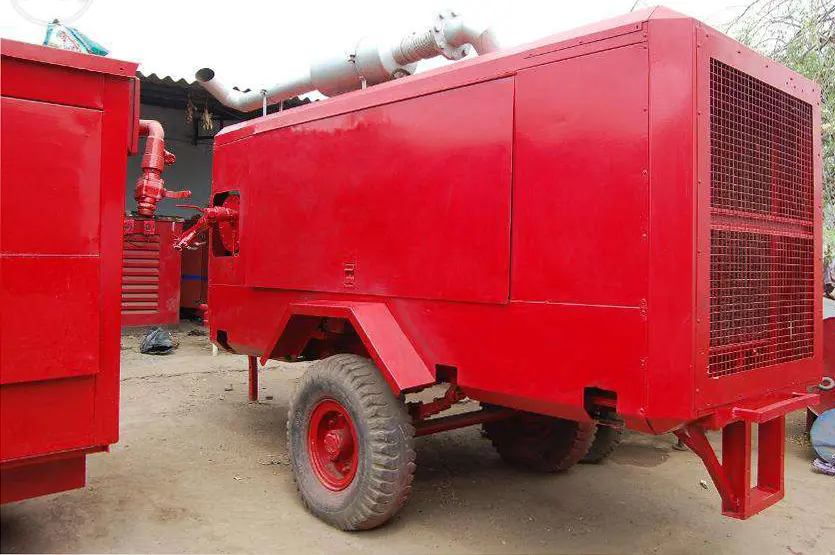
Reddy Compressors
A temporary compressed-air station needs a defined operating owner on every shift. The operator must know the accepted duty, current equipment configuration, usable reserve, developing defects and the next action required. Effective shift management keeps the commissioned air service within its agreed pressure, flow, quality and continuity limits as production, weather, fuel availability and equipment condition change.
This guide is for plant engineers, rental coordinators, maintenance supervisors and operators responsible for an installed temporary-air system. It develops the maintenance, observation and trend principles in the supplied Reddy Compressors material into a practical operating framework. Equipment-specific operating instructions and the approved site procedures govern physical actions. Numerical examples are illustrative and do not establish settings for a particular installation.
01 Carry the accepted duty into daily operation
Begin with the commissioning record. Record the required pressure at the receiving boundary, net delivered flow, relevant air-quality limits, permitted demand events and allowed interruption. Keep these requirements accessible beside the operating log. A compressor outlet pressure reading does not represent the complete service delivered after treatment and distribution.
Identify which machines, dryers, receivers, utility supplies and connections formed the accepted arrangement. If a temporary station supplements permanent plant, record the contribution expected from both. An operator needs to know whether the temporary units can support the entire demand or only the shortfall. Loss of a permanent machine can turn an apparently comfortable temporary arrangement into an overloaded station.
State the operating restrictions inherited from acceptance. Examples include a maximum approved simultaneous load, a restricted application, an unavailable standby unit or a temperature envelope requiring further observation. These restrictions must follow the system between shifts rather than remaining inside a commissioning folder. Changes require review by the responsible technical authority.
Retain a practical baseline: pressures at useful locations, flow basis, normal load states, treatment condition, utility consumption and representative ambient conditions. A baseline is useful only when its measurement points and operating state are known. Comparing today's full-load temperature with yesterday's idle reading can create a misleading diagnosis.
02 Assign ownership and decision authority
Identify the person operating the station, the person controlling production demand and the maintenance contact responsible for the hired equipment. Define who may change operating modes, approve maintenance access, authorise a return to service and communicate with the receiving process. Small temporary installations still need these responsibilities, even when one competent person holds several roles.
Separate observation from intervention. An operator may record a rising temperature or abnormal sound without being authorised to open equipment, change a protection setting or work on an electrical connection. Escalation should lead to a named responsible person rather than an informal instruction to keep the compressor running at any cost.
Define the supplier and customer boundary explicitly. If the supplier maintains the compressor but the customer maintains the downstream dryer, neither party should assume the other monitors delivered moisture. Similar gaps occur around external fuel tanks, generators, condensate containers and temporary hoses. Allocate each interface before the first unattended period or shift change.
Authority must remain clear during an abnormal event. The operating plan should specify who can initiate the approved process response, request demand reduction or stop equipment when necessary. No general website article can determine the safest action for every critical process. The agreed site response must consider both equipment hazards and the consequences of losing air.
03 Build an operating brief that can be used in the field
The operating brief should identify equipment by tag, physical location and function. Include the final connection drawing, accepted operating modes, control ownership, observation points, approved limits, alarm meanings and support contacts. Keep the current revision available where the operator works, with a usable offline copy if digital access is unreliable.
Use units that eliminate ambiguity. Distinguish barg from bara; distinguish actual flow from FAD or reference volume; state the location and pressure associated with a dew-point reading. Specify whether fuel inventory means indicated tank volume or usable volume above the minimum operating reserve. Ambiguous labels can survive for many shifts if nobody challenges the first entry.
The brief should also identify actions that require specialist involvement. Examples include adjustments affecting protective functions, electrical switching, intrusive maintenance and changes to treatment bypass arrangements. Link to the relevant approved procedure instead of copying a generic instruction into the logbook.
A concise brief is more effective than a large file of unrelated manuals. Keep the complete manuals available, but make the operator's immediate information easy to find. Where different teams use different languages, confirm that equipment labels, alarms and handover messages are understood consistently.
04 Choose observations according to consequence and response time
Set observation frequency from equipment instructions, process criticality, operating stability and the time available to respond. Do not adopt a universal hourly or once-per-shift interval for every parameter. A slowly changing service-hour balance and a rapidly falling instrument-air pressure require different arrangements.
Manual rounds are suitable for many condition observations, but cannot capture every short event. A ten-second pressure dip between rounds may interrupt production without appearing in the handwritten record. Use suitable continuous monitoring or event capture where the service requirement depends on short-duration behaviour. Confirm that someone receives and acts on the indication.
Increase attention after startup, a load change, maintenance, relocation, severe weather or a change of utility source. Stable operation under one condition does not prove stability under another. Return to the normal observation pattern only when the responsible team has enough evidence that the changed condition is controlled.
Operating subject | Useful observation | Interpretation needed |
|---|---|---|
Delivered service | Pressure, flow and quality at defined points | Compare with accepted duty and current demand |
Compressor condition | Load state, temperature, alarms and unusual behaviour | Compare under similar operating conditions |
Treatment | Dew point, differential pressure and drain condition | Check quality and pressure loss separately |
Utilities | Usable fuel, supply status and relevant electrical readings | Establish remaining support and abnormal changes |
Continuity | Available units, restrictions and maintenance state | Confirm usable reserve rather than equipment count |
Site condition | Cooling paths, hose routes, access and containment | Identify changes since the previous round |
05 Begin each shift with a clear transfer of responsibility
A shift starts with understanding what is already happening. Review the outgoing log, current demand, outstanding defects, active work and planned events. Confirm which equipment is running, available, isolated or unavailable. A parked machine is not automatically ready standby, and a silent alarm display does not prove that every required function is healthy.
HSE's shift-handover guidance emphasises preparation, exchange of relevant information and checking the incoming team's understanding. Apply that principle through a recorded handover and a direct discussion, with field confirmation where the equipment state is uncertain. A signature by itself does not establish that a changed isolation or restriction was understood.
For a hypothetical 06:00 handover, the useful message may be that compressor B is unavailable, the dryer is operating normally, fuel delivery is expected at 09:00 and production intends a high-demand cleaning cycle at 08:00. Each item affects the next shift's decisions. A message saying only all normal would conceal the reduced reserve and upcoming demand.
Resolve contradictions before relying on the record. If the log identifies a unit as isolated but its controller shows remote availability, obtain confirmation through the authorised site process. Do not infer permission to operate from one indicator. Record when responsibility transfers and who remains responsible for any unfinished action.
06 Monitor pressure where the service is required
Use the accepted measurement locations to distinguish generation performance from treatment or distribution loss. A rising package pressure combined with falling user pressure may point towards restriction or changed demand rather than a need for a higher setpoint. Record simultaneous readings where practical, together with the flow and operating units.
Suppose the accepted baseline at a comparable duty is 7.0 barg at the package, 6.7 barg after treatment and 6.3 barg at the critical user. Later readings are 7.0, 6.4 and 6.0 barg. Treatment loss has risen from 0.3 to 0.6 bar, while the downstream difference remains 0.4 bar. This suggests investigating treatment and the measurement conditions; it does not prove a specific filter has failed.
If the required user minimum is 6.2 barg, the later 6.0 barg reading needs the agreed response. Investigate changed flow, drain behaviour, valve state, filter condition and instrument validity. Do not conceal the shortfall by reporting only the unchanged 7.0 barg package reading.
Record both steady pressure and meaningful events. Averages can hide shortfalls, while a single low sample may need time alignment with production or switching. Keep the event duration, affected user and recovery behaviour with the value so the next shift can understand its consequence.
07 Understand net capacity and the current demand combination
Track useful delivery after treatment consumption and other loads within the supply boundary. Gross compressor capacity is not the same as air reaching production. Verify whether dryer purge varies with flow, remains approximately fixed or changes with operating mode before estimating the available margin.
For illustration, a package delivers 20 reference m³/min. If purge is assumed to be 10% of gross flow and other auxiliaries consume 0.4 reference m³/min, estimated net capacity is 17.6 reference m³/min. Normal demand of 15 leaves 2.6, but a new 4 reference m³/min work zone raises demand to 19 and creates a 1.4 shortfall. The arithmetic assumes compatible flow bases and applicable equipment performance.
The operator should therefore know which loads may run together. An approved sequencing arrangement can be defeated when a cleaning team, contractor or production supervisor connects a new user without notice. Keep the authorised demand combination in the shift brief and require technical review before adding loads outside it.
Receiver storage can support a short event but cannot correct a sustained deficit. In the example, a ten-minute shortfall of 1.4 reference m³/min requires 14 reference m³ of additional air. Describing the receiver as a buffer is insufficient without demonstrating usable pressure range, available storage and recovery before the next event.
08 Protect air quality throughout the shift
Air quality remains an operating requirement after commissioning. Observe the specified moisture condition, relevant alarms, treatment pressure loss and evidence of carryover or abnormal drainage. Use appropriate testing for the contaminants the application controls. One satisfactory pressure-dew-point reading does not establish particle or oil compliance.
A dryer can remain energised while its delivered condition deteriorates because of increased inlet temperature, excessive flow, changed pressure, regeneration problems or a failed drain. Keep relevant upstream conditions with the quality record. If a fault occurs, communicate with the receiving process as well as the equipment maintainer.
For a hypothetical process requiring pressure dew point at or below −40°C at a defined boundary, a change from −43°C to −35°C is warmer and fails that stated criterion. It should not be described as an improvement because the number appears numerically closer to zero. Confirm the instrument and conditions, then follow the agreed quality-excursion response. This example is not a universal specification for instrument air.
Do not use a treatment bypass as an informal way to restore pressure. Any alternate path must meet the approved process requirements and equipment arrangement. Product-contact, pharmaceutical, breathing and other specialist applications require their own controls; ordinary industrial-air operating practices do not certify those uses.
09 Use temperature and condition trends intelligently
Record the relevant equipment temperature alongside load, ambient condition and cooling configuration. A high reading can arise from greater load or warmer surroundings, but can also indicate fouling, restricted cooling, fluid problems or another developing defect. Equipment limits and alarms remain authoritative; trend analysis does not permit operation beyond them.
Suppose a selected temperature point rises from 85°C at 30°C ambient to 95°C at 40°C ambient under a similar load. The difference above ambient remains 55°C. A later reading of 101°C at 32°C ambient produces a difference of 69°C, which deserves investigation. This simple comparison is a screening observation, not a thermal model or a replacement for manufacturer limits.
Describe unusual noise, vibration or smell in useful terms: equipment tag, operating state, time, location and whether the observation is new or recurring. Avoid asking an operator to diagnose internal mechanical damage from sound alone. Retain the evidence and involve qualified maintenance personnel.
The supplied maintenance source links cooling, intake, lubrication, separation and drive faults with corresponding condition evidence. Carry that principle into the log: record observations that help distinguish plausible causes. Repeatedly writing hot compressor without load, ambient condition or measurement location limits the value of every later investigation.
10 Manage drains and condensate as operating functions
Check drain behaviour using the approved equipment method. A drain that fails open can waste air and reduce available capacity; a blocked or failed-closed drain can allow liquid accumulation. The absence of visible discharge does not alone prove failure, because condensate production and drain cycles vary with conditions.
For illustration, an open drain losing 0.4 reference m³/min for an eight-hour shift releases 192 reference m³. That is an air-volume calculation, not an established electricity saving. The resulting energy effect depends on the compressor control response and measured operating boundary.
Record collection-container level, discharge routing and any spill or overflow. Treatment equipment can operate correctly while an unmanaged condensate container creates a separate site problem. Maintain the approved disposal arrangement; do not assume compressor condensate is suitable for discharge merely because it resembles water.
When a drain is repaired, verify the affected service and record the as-left condition. If liquid has travelled downstream, restoring the drain may not immediately restore the user's air quality. Assess the downstream consequence with the responsible process team rather than closing the issue solely because the replacement drain cycles.
11 Forecast utilities before the next shift runs short
Use remaining usable fuel and expected consumption to forecast support time. Include delivery lead time, access restrictions and contingency in the operating plan. A delivery booking is not the same as fuel physically available at the station. Update the forecast when load or running hours change.
Suppose indicated inventory is 260 litres and the defined minimum operating reserve is 60 litres. At an assumed 25 litres/hour, usable support is (260 − 60) ÷ 25 = 8 hours. If delivery takes six hours and the plan requires three hours of contingency, the nine-hour requirement needs 225 usable litres. The available 200 litres is already 25 litres short of that planning allowance.
This is a forecasting example, not permission to run to an empty tank or refuel while operating. Follow the approved refuelling arrangement and the selected equipment instructions. Retain the next delivery time, responsible contact and contingency action in the handover.
For electric packages, carry forward known supply restrictions, generator support status and any abnormal electrical observations reported by qualified personnel. New site loads may affect the same supply. Operators should not improvise cable changes, protective settings or switching to resolve an air-capacity complaint.
12 Track service hours against the real running pattern
Record service-hour readings by equipment identity. Calendar hire duration does not establish maintenance due dates. A unit moving from single-shift to continuous operation can consume its remaining service allowance much faster than the original plan anticipated.
If 180 operating hours remain before a scheduled service, an 18-hour/day pattern reaches that point in ten days. At 24 hours/day it reaches it in 7.5 days. The difference matters for arranging technicians, parts, production coordination and an alternate supply. Apply the actual manufacturer's maintenance requirements, including calendar limits where relevant.
The shift record should identify the next due task, remaining hours, booked support and any preparation needed. Operators should not extend intervals by resetting counters or treating the absence of an alarm as maintenance approval. Condition evidence can inform maintenance decisions, but changes to the specified programme require appropriate technical authority.
After maintenance, confirm the unit's status before returning it to the operating rotation. HSE's maintenance-error guidance highlights problems such as incorrect assembly, wrong settings and protective features left disconnected. Use the required recommissioning checks, record the completed work and carry any restrictions into the next handover.
13 Keep standby status truthful
Describe units as running, available under the approved arrangement, restricted, under maintenance or unavailable. Available standby means more than a machine being present on site. Its utilities, controls, treatment path and connection must support the intended duty, and any required readiness checks must be current.
For example, three trains each capable of 12 net reference m³/min provide 36 in total. At a demand of 20, two operating trains provide 24. If one operating train stops, only 12 remains until the third supplies useful air. A label of one standby does not prove uninterrupted service during that transition.
A shift should know the current consequence of losing the largest required component. If a standby dryer is unavailable, an apparently spare compressor may not restore the required air quality. Record common utility dependencies and temporary restrictions in plain language.
Follow the approved rotation and readiness programme. Do not start or transfer equipment simply to demonstrate activity during a round. Readiness exercises, maintenance rotation and live changeovers must be coordinated with production and the equipment instructions. Detailed redundancy design belongs to the following specialist page; this page keeps its current operational status visible.
14 Respond to alarms without erasing the evidence
Record the first relevant alarm, time, equipment tag, operating state and process consequence before information is lost, where doing so is safe. Later alarms may be consequences of the initial event. Preserve controller history or a timestamped image when available and permitted by site practice.
Acknowledging an alarm does not correct its cause. Resetting and restarting repeatedly can remove useful context and expose the system to recurring failure. Follow the approved response, including the conditions under which authorised personnel may attempt a restart. Do not bypass a protection function to maintain output.
Differentiate an advisory condition, a service shortfall and an immediate hazard using the site's established criteria. The operator should know whom to contact and what process response applies. A generic instruction to stop everything is no more useful than an instruction to keep everything running regardless of consequence.
For escalation, communicate the facts needed for a decision: what changed, which users are affected, what equipment remains available, what readings were observed and what action has already been taken. State uncertainty explicitly. A concise factual message helps maintenance prepare the right intervention without encouraging remote guesswork.
15 Manage changes during the shift
Control changes to setpoints, operating modes, connected loads, hoses, treatment paths and utility arrangements. Record who authorised the change, its reason, the equipment affected and the resulting verification. A temporary adjustment can become a permanent hidden condition if nobody records it.
Before adding a load, review net capacity, pressure loss, quality and continuity. Before moving a package, review cooling, exhaust where applicable, ground support, access and connections. Before changing a control setting, consider interaction with the other compressors and the receiving process. The review should be proportionate to the change but must address the affected duty.
Do not treat a return to the previous controller number as proof that the original arrangement has been restored. A changed hose route, filter or utility source may still alter performance. Compare the affected functions with the accepted baseline and document what was demonstrated.
Keep configuration records clear enough that the next shift can identify the current state without reconstructing conversations. Retain the original baseline and record the approved revision rather than silently overwriting the earlier evidence.
16 Use shift data to detect waste without inventing savings
Record energy or fuel together with useful air delivered over compatible time periods. Hours running alone cannot distinguish productive supply from unloaded operation, leakage or a different production mix. Separate measured values from estimates and preserve the flow reference basis.
In a hypothetical eight-hour shift, station electricity is 960 kWh and useful delivered volume is 9,600 reference m³. The ratio is 0.100 kWh/reference m³. A later shift uses 1,050 kWh for 9,000 reference m³, or approximately 0.117 kWh/reference m³. The ratio has increased by about 16.7%, but the data alone do not identify the cause.
Compare pressure, demand profile, treatment consumption, unloaded hours, ambient conditions and measurement boundaries before assigning a cause. Lower throughput can worsen an energy-per-volume ratio even when the equipment has not deteriorated. A controller change or leak repair needs suitable before-and-after evidence before a saving is claimed.
If a machine spends three of eight running hours unloaded, the unloaded share is 37.5% of running time. It is not automatically 37.5% of energy. Use measured unloaded power or an appropriate verified performance basis to quantify energy, and retain the need for reserve and control stability when considering operating changes.
17 Make remote monitoring support accountable operation
Remote monitoring can reveal trends, service hours and alarms, but it needs a defined response owner. Specify which events generate notifications, who acknowledges them, how escalation works and what happens when communication is lost. A dashboard that nobody watches does not provide an operating response.
Confirm timestamps, equipment identity, sensor units and data freshness. A normal-looking value may be the last received sample from a disconnected device. Display or record communication failure separately from healthy operation, and retain local instructions for periods without connectivity.
Remote visibility does not establish authority to change settings. Limit access according to the agreed responsibilities, preserve a change record and coordinate interventions with the on-site team. Unannounced remote actions can conflict with maintenance or process work even when the adjustment seems small.
Use automation to reduce repetitive logging where reliable, while retaining human observations that sensors do not capture well: a blocked access route, a new hose crossing, a damaged enclosure or an unreported contractor connection. The operating record should combine these sources without treating either as complete by itself.
18 Keep a concise shift record that supports the next decision
Record time, equipment identity, operating mode and relevant conditions with each material observation. Use explicit entries for unavailable data rather than copying the previous reading. Keep corrections traceable, and distinguish an observed fact from an operator's suspected cause.
Handover field | Information to transfer | Next shift decision |
|---|---|---|
Accepted service | Current duty and restrictions | Which loads may operate |
Equipment state | Running, available, isolated or unavailable units | What reserve actually exists |
Developing defects | Evidence, consequence and assigned action | What needs attention and when |
Quality and pressure | Relevant trends and excursions | Whether service remains acceptable |
Utilities and maintenance | Usable fuel, deliveries and service hours | What must be arranged before depletion or due time |
Work in progress | Responsible team and controlled status | Which equipment must remain untouched |
Planned events | Production changes and authorised interventions | What coordination is required |
A good record might state that dryer differential pressure increased under comparable flow, maintenance has been notified, the accepted user pressure is still maintained and a review is due before the next production increase. It should not turn an unresolved condition into a confirmed diagnosis or promise a repair time that has not been agreed.
Retain records for the project period and the agreed commercial or technical retention requirement. Protect sensitive site information and keep access practical for authorised personnel. At demobilisation, the operating history helps explain equipment condition, recurring faults and the basis of any performance claim.
19 Coordinate operating workload and support
Match staffing and observation arrangements to the station and the process consequence. A single operator covering distant work zones, refuelling coordination, manual logging and multiple alarms may not be able to respond as assumed. Review the actual workload when temporary capacity or operating hours expand.
Plan handover time and avoid leaving complicated work undocumented at the shift boundary. Ensure that authorised support contacts remain valid for nights, weekends and holidays where these periods are part of the hire duty. An emergency contact list should identify responsibilities; it must not imply an unconfirmed response-time guarantee.
Review recurring issues with the supplier and plant team. Repeated high temperature, pressure complaints or drain failures should lead to a focused investigation rather than another identical log entry. Prioritise according to service consequence and evidence, and carry the agreed action through to closure.
For a Reddy Compressors enquiry, provide the required duty, shift pattern, operating responsibilities, monitoring expectations and support scope. Secunderabad and Hyderabad form the operating base, with Telangana and Andhra Pradesh as priority regions. Wider project support, operator provision and remote monitoring depend on confirmed scope and resources.
20 Frequently asked questions
Is one inspection per shift sufficient
Not necessarily. Observation frequency depends on equipment instructions, process consequence, stability and the time available to respond. Short pressure or quality events may require continuous monitoring. Establish the arrangement for the actual duty rather than adopting one interval for every station.
What information is most important at handover
Transfer the current configuration, accepted restrictions, unavailable equipment, developing defects, quality or pressure excursions, utility outlook, maintenance status and planned demand changes. Confirm that the incoming person understands the actions and responsibilities that remain open.
Can the operator raise pressure when users complain
Only within the authorised operating procedure and limits. First establish whether the complaint comes from increased demand, treatment or distribution loss, a changed connection or an incorrect reading. A higher setpoint may create other problems and does not establish the cause.
Does a running standby machine prove redundancy
No. The arrangement must provide useful air of the required pressure and quality when needed. Utility availability, treatment, controls and recovery time matter. Record the actual readiness and restrictions rather than assuming that another machine guarantees uninterrupted service.
Can shift fuel consumption prove a saving
Fuel use needs a comparable duty and measurement basis. Changes in delivered air, pressure, running hours, ambient condition and production can alter consumption. Use suitable measured comparisons before claiming a saving, and retain the assumptions behind any estimate.
When should the operating baseline be reviewed
Review it after changes that affect the accepted service, including added demand, equipment replacement, treatment changes, relocation, altered controls or a different utility source. Verify the affected functions and retain the original record alongside the approved revision.
Sources and evidence basis
22 Sources and technical basis
Owner-supplied source: B.A. (15-8-26) RC, supplied PDF, failure-mode maintenance and condition-evidence sections. Its treatment of intake, lubrication, cooling, separation, drives and air treatment informed the operating-trend framework. It does not establish equipment-specific alarm limits or maintenance intervals.
Owner-supplied source: B.A. (19-7-26) RC Tips, supplied PDF, routine maintenance and performance-observation sections. Its discussion of visual inspections, drains, pressure, temperature, leaks and performance review informed the daily observation scope.
UK Health and Safety Executive, Shift handover. Reference for preparation, information exchange and checking understanding during transfer of responsibility. https://www.hse.gov.uk/humanfactors/topics/shift-handover.htm
UK Health and Safety Executive, Maintenance error. Reference for recognised maintenance-error mechanisms and communication between operations and maintenance. https://www.hse.gov.uk/humanfactors/topics/error.htm
UK Health and Safety Executive, Permit to work systems. Reference for communication about work status and safe transfer of unfinished work. This is contextual guidance, not a statement that UK rules govern an Indian installation. https://www.hse.gov.uk/humanfactors/topics/ptw.htm
Compressed Air and Gas Institute, Resource Library. Industry reference catalogue covering compressed-air education, monitoring and performance subjects. The selected equipment manuals and project requirements remain the basis for actual operating settings. https://www.cagi.org/resource-library
References checked for this edition on 3 October 2026. Numerical examples are original hypothetical illustrations. Actual operating limits, staffing, response arrangements and maintenance requirements depend on the selected equipment, accepted duty and approved site procedures. No project saving, service guarantee or installation compliance is certified by this article.