
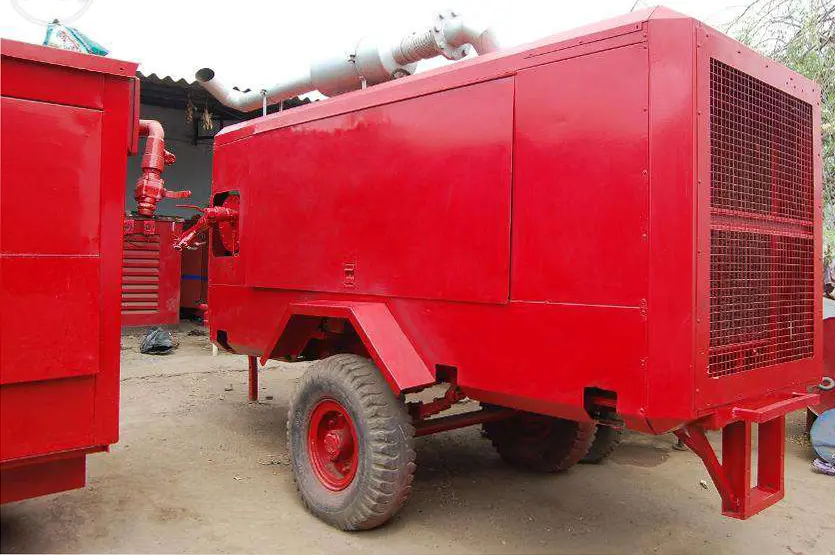
What should commissioning of rental air actually prove?
Commissioning turns a delivered machine into a proven air service. The question is not whether the compressor starts, but whether the whole temporary package does what the plant needs, where the plant needs it, for as long as it needs it.
Agree the acceptance criteria before the equipment arrives. Write down:
- Net delivered flow at the receiving point, in cfm or m³/min, and how it will be estimated or measured.
- Minimum and maximum pressure at that point, in bar and psig, for example 6.5–7.5 bar (94.3–108.8 psig) at the plant header.
- Air quality: pressure dew point, oil and particle requirements, expressed as ISO 8573-1 classes where the process has them.
- Operating pattern: shifts, peaks, start-up surges and the longest acceptable interruption.
- The receiving boundary: compressor outlet, treatment outlet, plant header or a critical user.
- Who witnesses the tests, who can accept deviations and who signs the release to service.
These boundaries matter. A machine can deliver its rated free air delivery (FAD) at its own outlet while the plant header sits 0.8 bar lower because of a long hose run, an undersized dryer or a choked filter. Acceptance at the wrong point hides the very losses that cause production trouble later.
Agree the role of the temporary package
Be clear whether the hired air replaces the entire station, supplements permanent compressors or feeds a small group of users. Each arrangement needs a different test.
If permanent compressors stay connected to the same header during the trial, the result does not prove the rental package can carry the load on its own. Either isolate the permanent machines for a defined test window, or measure their contribution and subtract it. Equally, if the package is expected to run on grid power and later on a generator, or on two different hose routes, each configuration needs its own check. A good result on one arrangement is not evidence for another.
Ambient conditions are part of the envelope. A package commissioned on a cool January morning in Secunderabad may behave differently at 40–45 °C in May, when cooling margins shrink and discharge temperatures climb. Where the hire will run through summer, check cooling air paths, recirculation and enclosure temperatures with that in mind.
Pre-start checks before the first run
Most commissioning problems are visible before anything is started. A disciplined walk-down catches them cheaply.
| Area | What to check | Why it matters |
|---|---|---|
| Placement | Level, stable ground; clearances for cooling air and service access; no hot-air recirculation; exhaust away from intakes and people | Recirculated hot air raises discharge temperature and causes trips |
| Hoses and pipework | Pressure rating above the maximum working pressure, correct couplings, whip checks or restraints on every joint, protected crossings | Stored energy in a failed hose is a serious hazard |
| Treatment train | Flow direction, filter elements fitted, drains connected to a safe discharge, bypass valves in the intended position | A reversed filter or open bypass defeats the air-quality target |
| Electrical (electric units) | Supply matches nameplate, protection settings, earthing verified by a competent electrician, phase rotation | Wrong rotation can damage an airend within seconds |
| Fuel (diesel units) | Correct clean diesel, adequate level, no leaks, spill containment, refuelling access | Fuel starvation is a common avoidable stop |
| Fluids | Compressor oil, engine oil and coolant at correct levels | Low levels trigger shutdowns or cause damage |
| Isolation | Lockable isolation between the rental package and the plant; non-return valve where needed | Prevents back-feeding and allows safe intervention |
Record each item with a name, time and photograph. That record becomes part of the acceptance file and is far more useful than a tick on a generic checklist.
A practical commissioning sequence
The exact sequence follows the equipment instructions and the site’s approved method. A typical order for a temporary package looks like this:
- Complete the pre-start walk-down and permit requirements; confirm everyone knows the isolation points.
- Start the compressor with the outlet isolated or venting to a safe point, and check for abnormal noise, vibration, leaks and alarms.
- Bring the machine to rated pressure and confirm load/unload or modulation control works at the set points.
- Pressurise the hose and treatment train gradually, checking every joint for leaks and restraint.
- Confirm the dryer reaches its operating condition; a refrigerated dryer typically settles at a pressure dew point around +3 °C, while desiccant dryers are usually specified for −20 °C or −40 °C.
- Open slowly to the plant, watching pressure at both the package and the receiving point.
- Run the defined load test, then the transient and protection tests below.
- Hand over with operating instructions, alarm responses, contact numbers and the service plan.
Performance tests that matter
Steady flow at the receiving point
Run the package under representative demand for long enough to stabilise temperatures, typically at least one to two hours, and log pressure at the package outlet, after treatment and at the receiving point. The difference between those readings tells you where the losses are. On a well-sized temporary installation the total drop from compressor to header is usually kept within a few tenths of a bar; a larger figure points to hose diameter, length, couplings or treatment sizing.
Demand transients
Many plants fail on peaks, not averages. Start the largest user, open the biggest blow-off or run the production event that causes a surge, and watch how far the header pressure dips and how quickly it recovers. If the dip breaks a process limit, add receiver volume, adjust control settings or add capacity before acceptance.
Air quality
Measure pressure dew point at the outlet of the treatment train with a suitable instrument after the dryer has stabilised. Where oil or particles matter, sample to the agreed method. Remember that compressed air at the outlet of an oil-injected compressor always carries some oil aerosol; quality comes from the treatment train, and only measurement proves it.
Protection and recovery
Confirm the critical shutdowns respond: high discharge temperature, and on diesel units low engine oil pressure and high coolant temperature. Then simulate a realistic interruption, such as a controlled stop or loss of power on an electric unit, and confirm how the package restarts and how long the plant can ride through. Never test protection by creating a genuinely dangerous condition; follow the maker’s test method.
Common reasons temporary air fails acceptance
| Symptom | Likely cause | Typical correction |
|---|---|---|
| Good pressure at the compressor, low at the header | Undersized or long hose, restrictive couplings, blocked filter | Larger or parallel hose, shorter route, clean or upsized filtration |
| Wet air downstream | Dryer overloaded, drains not working, bypass left open | Correct dryer sizing for flow and inlet temperature, fix drains, close bypass |
| High-temperature trips in the afternoon | Hot-air recirculation, blocked cooler, high ambient | Relocate or duct exhaust air, clean coolers, add shade and clearance |
| Pressure collapses on start-up of a large user | Insufficient capacity or storage for the transient | Add receiver, stagger starts, add a compressor |
| Frequent load/unload cycling | Little storage, narrow pressure band, oversized machine | Add receiver volume, widen band within process limits |
| Electric unit trips on start | Supply weak for starting current, protection mis-set | Review supply capacity and starter type with an electrician |
Recording a defensible acceptance decision
Acceptance is a decision, so record it like one. The file should show what was required, what was measured, by whom, with which instruments and under what conditions. Include deviations and how they were resolved or accepted, with the name of the person who accepted them.
Keep three ideas separate. Delivery receipt confirms the equipment arrived. Technical acceptance confirms the air service meets the agreed criteria. Commercial start of hire follows whatever the agreement says. Mixing these creates disputes later, so the hire terms should state which event starts the charges.
A short acceptance sheet usually covers:
- Equipment list with serial numbers and hour-meter readings at handover.
- Configuration: hose sizes and lengths, treatment items, set pressures, power or fuel source.
- Logged readings from the load test and transient test.
- Dew-point and any air-quality results.
- Protection tests performed and results.
- Open items with owners and dates.
- Signatures for release to service.
Keeping it accepted: after handover
Acceptance is a snapshot. Conditions change as filters load, ambient rises and demand grows. Agree simple daily checks for the site team: pressure at package and header, dew point indicator, drain operation, fluid levels, fuel level and alarm history. On our hire jobs we service machines every 300 running hours, including the oil change, and the service visit is a good moment to re-check the acceptance readings. If the duty changes, for example a new production line is connected, treat it as a change and re-test the affected part.
How Reddy Compressors helps
Reddy Compressors rents compressors from its own fleet, and sells and services machines of ELGi, Atlas Copco, Ingersoll Rand, KAESER, Chicago Pneumatic and others, as an independent multi-brand specialist rather than an authorised dealer. Our rental fleet covers 50–2,000 cfm and 2–30 bar (29–435.1 psig), diesel and electric, with hoses, aftercoolers, moisture separators and dryers where the duty needs them.
For commissioning, our engineers can help define the acceptance criteria with your team, install and start the package, run the pressure, flow and dew-point checks, and leave a clear record and operating brief. With over 20 service engineers and technicians, we support sites across Telangana and Andhra Pradesh from our office at Tarnaka, Secunderabad, and supply equipment and project support across India where feasible. On one long-running project our team supplied, erected and commissioned a temporary power-and-air package for an oilfield-services contractor at Kakinada, including compressors up to 1,100 cfm at 300 psig (20.7 bar), generators, distribution boards, operators and a technician.
Before mobilisation, see our guides on the temporary air duty specification and the temporary air site survey.
What to send us
- Required flow, pressure (bar or psig) and air quality at the receiving point.
- Whether the hire replaces, supplements or backs up your existing compressors.
- Duration, shift pattern and the longest interruption the process can tolerate.
- Available power (voltage, supply capacity) or preference for diesel.
- Site layout or photos showing placement area, hose route and connection point.
- Who will witness tests and sign acceptance on your side.
Frequently asked questions
How do I check that a rental compressor is delivering enough air?
Measure pressure at the point that matters, usually the plant header or the critical user, while the plant runs its normal and peak demand. If pressure holds within the agreed band with the rental package carrying the load alone, capacity is adequate. Compare outlet, after-treatment and header readings to see where pressure is being lost. Where accuracy matters, a temporary flow meter on the main line gives a direct figure.
How long should a commissioning test run for temporary compressed air?
Long enough for temperatures, dryer performance and pressure to stabilise, and to include the plant’s real demand events. For most temporary installations that means at least one to two hours of representative load, plus a separate test of start-up surges and a controlled interruption. Critical duties such as instrument air or pharmaceutical production may justify a longer witnessed trial before the plant is switched over.
What pressure dew point should I expect from a rental air dryer?
A refrigerated dryer typically delivers a pressure dew point around +3 °C when it is sized for the actual flow, pressure and inlet temperature. Desiccant dryers are usually specified for −20 °C or −40 °C. In Indian summers, high inlet temperatures can push a marginal refrigerated dryer beyond its rating, so check the dew point after the dryer has stabilised under full load rather than relying on the panel indicator alone.
Why is header pressure lower than the compressor gauge on a hired machine?
Every hose, coupling, filter and dryer between the compressor and the header causes a pressure drop, and the drop rises sharply with flow. Long or undersized hoses, quick-couplings with small bores, and blocked filters are the usual causes. Measuring pressure at each stage under load locates the loss. Fixing it is often cheaper than raising the compressor set pressure, which costs about 7% more power per extra bar.
Who is responsible for accepting a temporary compressor installation?
The plant should name the person who accepts the air service against the agreed criteria, usually from engineering or maintenance, with quality involved where air touches product. The rental supplier demonstrates the performance and records the results. Accepting delivery of equipment is not the same as accepting the air service, and the hire agreement should state which event starts the charges so that there is no later confusion.
Do I need to re-commission if the rental compressor is moved or the duty changes?
Yes, for the parts that change. Moving the package, changing hose routes, adding users, switching from grid power to a generator, or changing the treatment train can all alter delivered pressure and air quality. Repeat the relevant checks, such as leak tests on new joints, pressure at the receiving point under load and dew point, and add the results to the acceptance record so it remains a true picture.
Related pages
Technical content reviewed by D. Srinivas Reddy, Managing Partner and service engineer, Reddy Compressors. Last updated 17 October 2026. How our engineering content is reviewed.