
Oil-free should begin with the process
Not with a technology label.
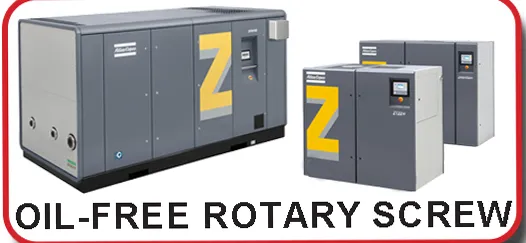
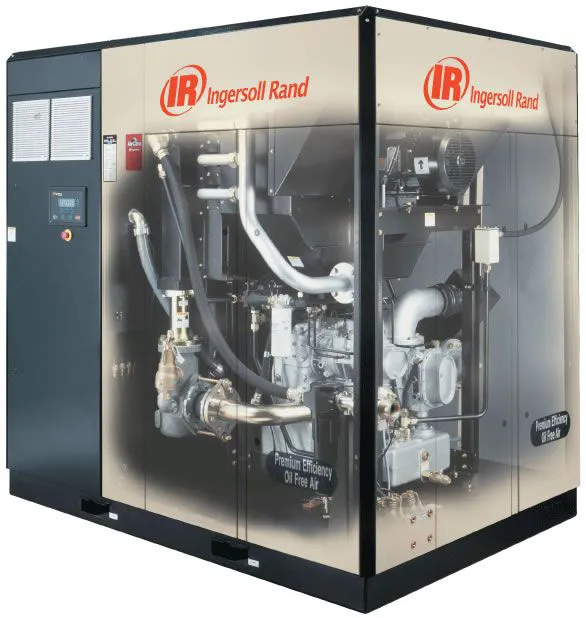
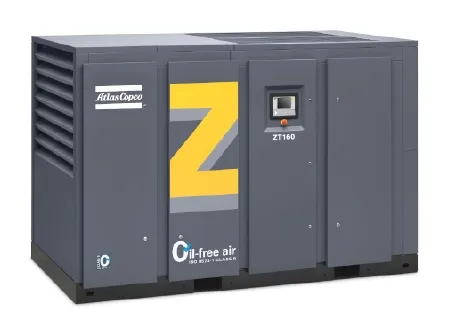
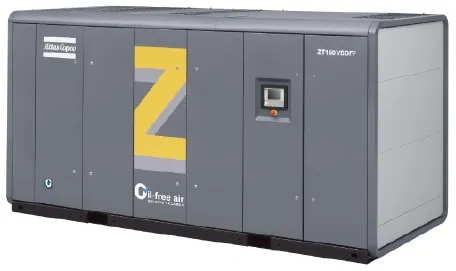
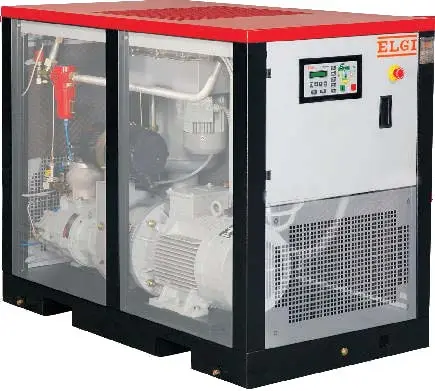
Representative images of machine types we sell, service and rent. Models and capacities are confirmed against your duty.
That wording is important.
Every industrial process needs oil-free
It says:
Select it where the air-quality or process requirement justifies it
The oil-free hub principle
Oil-free technology is an input.
Not the entire equation.
01 — what problem is oil-free compression trying to solve?
The correct question is not:
“Is oil-free better?”
It is:
“What contamination risk does the process require us to control?”
The source repeatedly works backwards from process requirements.
Air-quality design should therefore begin with:
- How the Air Interacts With the Process
- What Contaminants Matter
- What Acceptance Criteria Apply
- Where Those Criteria Must Be Met
02 — oil-free should not be selected just because it sounds premium
Oil-free compressor technology may be justified by a sensitive process.
But technology sophistication alone does not prove better lifecycle value.
Selection still requires:
- FAD
- Pressure
- Duty
- Maintenance
- Reliability
- Treatment
- Lifecycle Cost
An oil-free machine that does not fit the operating requirement is still the wrong machine.
03 — oil-free does not define FAD
A compressor labelled oil-free can still be:
Too Small
or:
- Too Large
- for the requirement
- Capacity must be evaluated from actual delivered airflow
Therefore:
Oil-free ≠ capacity
04 — oil-free does not define pressure
Likewise, “oil-free” does not establish:
- Working Pressure
- Point-of-Use Pressure
or:
- Pressure Class
- Actual manufacturer/model capability must be matched to the application
05 — oil-free does not define duty cycle
A machine may be oil-free and still have manufacturer-specific operating limits.
Therefore:
Oil-free ≠ continuous duty
Oil-free ≠ intermittent duty
Duty is a separate technical characteristic.
06 — oil-free does not define compressor technology
The approved Reddy architecture separates several oil-free technology routes:
- Oil-Free Screw
- Oil-Free Reciprocating
- Oil-Free Portable
- Water-Injected
- Scroll
- Tooth
- and specialist application pages
- These should not be treated as one mechanical architecture
Oil-free screw uses a fundamentally different compression arrangement from oil-injected screw technology.
The same discipline should apply across the pillar:
Verify the actual technology
07 — oil-free screw
It says oil-free screw compressors use a fundamentally different compression arrangement and should be treated separately where air-quality or process requirements justify them.
08 — oil-free reciprocating
Therefore:
Model-specific architecture remains required
Oil-free piston should not be defined by invented ring, coating or lubrication details.
09 — oil-free portable
Therefore that page should remain controlled until:
- Manufacturer
- Model
- Pressure
- FAD
- Duty
- Oil-Free Definition
- Application Suitability
- are verified
10 — two-stage oil-free
But:
Two-stage ≠ oil-free by definition
and:
Oil-free ≠ two-stage by definition
Stage count and oil-free architecture require independent verification.
11 — water-injected
Therefore it should not yet publish generic claims about:
- Compression Mechanism
- Efficiency
- Air Quality
- Water Circuit
- Maintenance
or:
- Suitability
- without verified sources
12 — scroll
Therefore scroll-specific mechanical claims must remain on verification hold until supported.
14 — “what oil-free means” deserves its own page
The words:
Oil-free
can be misunderstood.
Oil-free is a compressor-technology characteristic that must be defined by the actual manufacturer / equipment documentation
15 — oil-free does not mean the inlet air is contamination-free
Atmospheric air contains:
- Water Vapour
- Airborne Particles
- Other Contaminants Depending on Environment
- Compression concentrates these contaminants into a smaller volume
Therefore:
Oil-free compression does not remove inlet moisture
- Oil-free compression does not remove inlet particles
- 16 — the complete air-quality question is bigger than oil
Contamination-risk assessment can include:
- Particles
- Water
- Oil
- Microbiological Concerns Where Relevant
- Pipework Contamination
- Downstream System Condition
Oil is one air-quality variable
Not the only one.
17 — compressor technology alone does not define point-of-use air quality
This directly:
COMPRESSOR TECHNOLOGY ALONE DOES NOT DETERMINE FINAL POINT-OF-USE AIR QUALITY.
That statement should anchor the entire oil-free hub.
18 — the air-quality chain
Note:
Oil-free compressor selection therefore belongs inside this larger system.
19 — air quality should be defined at the point of use
The final specification should be defined where air contacts the process.
That means:
Compressor outlet condition ≠ automatic process condition
Pipework, storage, treatment and operating environment can all influence what reaches the user.
20 — drying may still be required
Oil-free compression does not eliminate moisture.
When compressed air cools, water vapour can condense and contribute to:
- Corrosion
- Water in Tools
- Instrumentation Problems
- Process Contamination
- Product-Quality Problems
- Therefore drying remains an application decision
21 — refrigerated drying
Refrigerated drying may be appropriate for many general industrial applications.
Selection should consider:
- Airflow
- Inlet Temperature
- Ambient Temperature
- Pressure
- Required Pressure Dew Point
- Pressure Loss
- Condensate Drainage
- Oil-free technology does not remove these dryer-selection variables
Required pdp comes from the process
Not from the words “oil-free.”
23 — filtration may still be required
Filters can target:
- Particulates
- Liquid Contamination
- Aerosols
- Fine Downstream Contamination
Do not tell customers:
“Oil-free compressor = no filters required.”
That conclusion is unsupported.
24 — no single filter removes “everything”
A credible oil-free system defines:
Which contamination mechanism?
What acceptance limit?
Where must it be achieved?
25 — filter pressure drop still matters
Filtration protects the process but restricted filters can become an energy penalty.
Maintenance should reflect:
- Manufacturer Recommendations
- Differential Pressure
- Operating Conditions
- Contamination Load
- Oil-free architecture does not eliminate treatment pressure loss
26 — food & beverage: do not use one universal oil-free rule
In practice:
“Food plant air” is not one air-quality class
The older blanket statement that all food-plant compressed air must universally be:
- Clean
- Dry
- Oil-Free
- was deliberately removed as too broad
27 — classify how air interacts with food / packaging
The distinction:
- Non-Product-Contact Utility Air
- Indirect Process Air
- Direct Product-Contact Air
A more demanding contamination-risk assessment may be required as process interaction changes.
The plant's quality, engineering and regulatory requirements should define the specification.
28 — oil-free ≠ food-grade certification
Food-safety/regulatory compliance should only be represented where:
- The Application Is Defined
- Appropriate Equipment Documentation Exists
- Required Validation Is Performed
Therefore:
Oil-free compressor ≠ automatic food-grade system
29 — pharmaceutical applications
The distinction:
- Utility Air
- Instrument Air
- Process Air
- and says these categories can require materially different specifications
Oil-free technology may deserve evaluation depending on the documented requirement.
But industry name alone does not define the final specification.
30 — pharmaceutical air quality
Air-quality requirements can involve:
- Particles
- Water
- Oil
- Dew Point
- Microbiological Risk Where Relevant
- Point-of-Use Condition
- The site's quality/process team should define acceptance criteria
31 — oil-free ≠ automatic gmp / fda compliance
Saying:
“System configuration developed against the customer's documented process and air-quality requirements.”
rather than claiming automatic GMP/FDA compliance.
This should be a hard oil-free hub rule.
32 — paint & finishing
Painting can be sensitive to:
- Moisture
- Oil
- Particles
- Pressure Stability
- Oil-free compressor technology may be relevant in some architectures
DO NOT ASSUME “OIL-FREE COMPRESSOR” ALONE GUARANTEES PAINT-QUALITY AIR.
33 — cnc / machine tools
CNC air requirements can differ by machine and warns against assuming every CNC application requires oil-free compression.
Therefore:
Cnc ≠ automatic oil-free
Machine specification should control.
34 — laboratory applications
Laboratory requirements can vary widely and recommends asking:
What Equipment Consumes the Air?
Does Air Contact a Sample?
What Purity Is Required?
What Pressure?
What Dew Point?
Is Redundancy Required?
35 — medical air is a separate safety & regulatory category
The master creates a firm boundary:
Ordinary industrial compressed-air equipment should not be represented as equivalent to medical/patient-connected air systems.
Therefore:
Oil-free ≠ medical-air compressor
36 — dental applications also require equipment-specific verification
Specialised/dental equipment can have manufacturer-specific:
Air-Quality
and:
- Safety
- requirements
- Use the equipment specification as the design basis
37 — electronics / semiconductor
without verified project/manufacturer documentation.
38 — oil-free technology does not remove reliability engineering
A sensitive process can still stop if:
- Pressure Is Lost
- Flow Is Insufficient
- Treatment Fails
- Controls Fail
or:
- The Compressor Is Unavailable
- Air quality and reliability must be engineered together
39 — redundancy should follow process consequence
Possible architecture may include:
- Redundant Compressors
- Redundant Treatment
- Receivers
- Pressure Monitoring
- Alarms
- Backup Strategy
- with the required level depending on process consequence
Therefore:
Oil-free ≠ automatic n+1
Criticality decides.
40 — treatment redundancy can matter as much as compressor redundancy
Two oil-free compressors do not create a complete resilient system if a single dryer or other critical treatment component can make the air unsuitable for the process.
For critical applications, review the complete:
Generation + treatment + distribution
architecture.
41 — oil-free should not cause over-treatment
If only one process requires a more stringent air-quality specification, consider whether the complete plant should be treated to that standard.
This can become an important oil-free system-design question.
42 — oil-free should not cause under-treatment either
The opposite mistake is:
“We bought oil-free, so no more air-quality engineering is needed.”
The source directly rejects this logic.
Point-of-use quality remains a system property.
43 — pressure loss remains part of the system
Oil-free compression does not remove:
- Dryer Pressure Loss
- Filter Pressure Loss
- Pipework Loss
- Valve / Regulator Loss
- or other downstream effects
A system can have excellent contamination control and still perform poorly if pressure does not reach the process.
44 — air quality & energy should be balanced
Treatment components exist for a reason.
But every unnecessary pressure restriction can increase system burden.
Therefore:
Install the treatment required by the process
- Maintain it
- Avoid unnecessary components
This is consistent with the master system philosophy.
45 — technology should follow duty as well as air quality
An oil-free process may still have:
- Intermittent Demand
- Sustained Demand
- Variable Demand
- High Operating Hours
- Critical Continuous Duty
Therefore compressor technology selection must account for operating profile as well as contamination requirements.
46 — oil-free screw may be a different decision from oil-free piston
The choice should therefore be based on:
- FAD
- Pressure
- Duty
- Technology Suitability
- Air Quality
- Lifecycle Requirements
- not merely the shared label “oil-free.”
47 — “oil-free” should not become a branding shortcut
A technically responsible website should avoid phrases such as:
- Ultra-Pure Air
- Zero Contamination
- Pharma Certified Air
- Food-Safe Air
- unless the relevant specification, measurement and evidence are present
- The technology name is not the evidence
48 — no generic “zero oil” numerical claim
or any other numerical oil-content claim generically.
Use model-specific evidence.
“All oil-free compressors are ISO class 0.”
Any classification claim requires applicable model documentation and/or relevant measurement evidence.
50 — no generic “100% pure air” claim
Air quality involves more than oil.
Key points:
- Water
- Particles
- Oil
- and other contamination risks
Therefore:
“100% pure air”
is not a technically defensible generic oil-free claim.
51 — point-of-use verification
Where air quality is important, project evidence may include appropriate:
- Dew-Point Measurement
- Particle Testing
- Oil-Content Testing
- Laboratory Reports
- Filter Records
- Differential-Pressure Records
- Customer Quality Records
- where relevant and properly documented
The measurement method and sampling location should be stated when results are published.
52 — measured result ≠ generic technology claim
If one customer system achieves a particular air-quality result, that does not mean every installation using the same compressor technology achieves the same result.
Project outcome must remain tied to:
- The Actual System
- The Actual Measurement
- The Actual Sampling Point
- The Actual Operating Conditions
53 — product cards require verified model data
Any oil-free product listing should verify:
- Manufacturer
- Exact Model
- Compression Technology
- Manufacturer's Oil-Free Definition
- FAD
- Working Pressure
- Motor kW / HP
- Duty / Operating Limits
- Cooling
- Control
- Air-Quality Documentation
- Dimensions
- Weight
- Electrical Requirement
- Service Requirements
- Current Availability
- before publication
54 — application claims require evidence too
Food
Pharmaceutical
Medical
Dental
Laboratory
Electronics
or:
- Semiconductor
- applications merely because it is oil-free
- Verify the application's actual requirements and manufacturer documentation
55 — oil-free equipment should still be compared on lifecycle requirements
A complete comparison may consider:
- Purchase
- Energy
- Maintenance
- Treatment
- Repairs
- Reliability
- Downtime Exposure
- Installation
- Parts Support
Oil-free technology should not be treated as economically superior or inferior by default.
“Oil-free compressors need less maintenance.”
Different oil-free architectures have different maintenance requirements.
57 — no universal energy advantage
Likewise:
“Oil-free always uses more energy.”
or:
“Oil-free always saves energy.”
are unsupported blanket claims.
Compare actual equipment under actual duty.
58 — no universal reliability advantage
- “Oil-free is more reliable.”
- “Oil-lubricated lasts longer.”
Reliability comes from application match, equipment design, installation, duty, maintenance and operating conditions.
59 — oil-free hub selection gate
Before recommending oil-free technology, ask:
Why is oil-free being considered?
Document the process reason.
How does air interact with the process?
Non-contact, indirect or direct?
What FAD is required?
Capacity first.
What pressure is required?
Verify point-of-use requirement.
What is the duty profile?
Intermittent, sustained or variable?
What particle limit is required?
Define it.
What water / dew-point limit is required?
Define it.
What oil requirement is specified?
Use documented process criteria.
Are other contamination risks relevant?
Include the complete process context.
Which oil-free technology fits the duty?
Screw? Reciprocating? Another verified architecture?
What treatment is still required?
Do not assume oil-free eliminates dryers or filters.
What happens if air is lost?
Define reliability.
How will point-of-use quality be verified?
Evidence matters.
Only then should equipment be selected.
60 — oil-free technology navigation
What Oil-Free Means
Terminology, claim control and the difference between compressor architecture and point-of-use air quality.
Oil-Free Screw Compressors
Oil-free rotary screw architecture and application-led selection.
Oil-Free Reciprocating Compressors
Piston technology for verified oil-free duties.
Oil-Free Portable Compressors
Controlled specialist page pending verified product evidence.
Two-Stage Oil-Free Compressors
Stage architecture separated from air-quality claims.
Water-Injected Compressors
Technology page requiring dedicated verified engineering evidence.
Scroll Air Compressors
Technology page requiring dedicated source/model validation.
Tooth Compressors
Technology page requiring dedicated source/model validation.
Medical Air Compressors
Strict regulated/specialist boundary; industrial oil-free equipment must not be represented as automatically equivalent.
Dental Air Compressors
Equipment-specific air-quality and safety requirements.
Laboratory Air Compressors
Purity, pressure, dew point and redundancy defined by equipment/process needs.
Food-Grade Compressed Air
Process-contact classification, contamination-risk assessment and evidence governance.
Pharmaceutical Compressed Air
Utility, instrument and process-air boundaries with documented acceptance criteria.
Electronics & Semiconductor Compressed Air
Controlled specialist page pending dedicated technical specifications.
Oil-free air compressors in one line
Oil-free compression should be selected when the documented process or air-quality requirement justifies it
Then FAD, pressure, duty, drying, filtration, storage, distribution, reliability and point-of-use verification must still be engineered as one system
Closing
- Oil-free is a technology decision
- Air quality is a system result
A credible oil-free compressed-air system therefore starts with:
Process interaction
- Required FAD
- Required pressure
- Duty profile
- Particles
- WATER
- OIL
- Dew point
- Verified compressor technology
- Drying
- Filtration
- Distribution
- Reliability
- Point-of-use evidence
It also establishes the broader boundary that compressor technology alone does not determine final point-of-use air quality and that the final air specification should be defined where the air interacts with the process.
And for sensitive uses, it deliberately rejects blanket claims: food-plant air is not one universal air-quality class, pharmaceutical requirements should follow documented process criteria, and an oil-free compressor alone does not guarantee paint-quality air.
Reddy compressors
- Compressed air. engineered for uptime
- Oil-free air compressors
- Define the process
- Define the contamination risk
- Verify the FAD
- Verify the pressure
- Match technology to duty
- Engineer the treatment
- Protect the distribution
- Plan for reliability
- Verify air quality at the point of use
- Claim only what the evidence supports
- Primary CTA
Request an Oil-Free Compressor Assessment
Secondary CTAs
Understand What Oil-Free Means
Compare Oil-Free Screw Technologies
Compare Oil-Free Reciprocating Options
Review Process-Air Requirements
Review Air Treatment & Point-of-Use Quality