
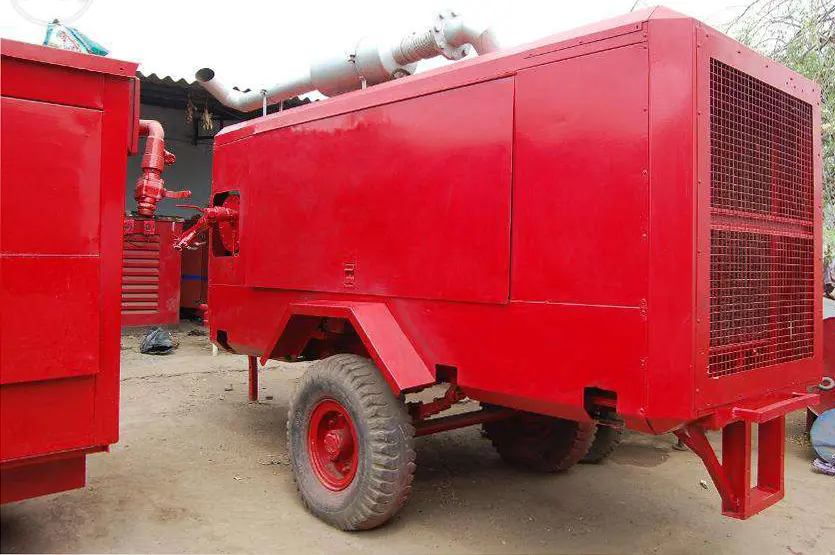
Temporary air for a planned shutdown should be ready to deliver the agreed service before the permanent supply is taken out of operation. The plan must cover changing demand through maintenance and restart, the actual isolation boundary, air quality, site utilities, changeover responsibility and a credible response if the shutdown lasts longer than expected. Reserving a compressor is only one part of that preparation.
This guide explains how plant engineering, maintenance, production and rental teams can organise compressed-air continuity during compressor overhauls, dryer replacement, header modifications and wider plant shutdowns. It provides a phase-based duty example, scheduling calculations, readiness criteria and a structured return-to-service approach. It is a planning guide, not a site-specific valve sequence or isolation procedure. Numerical scenarios are illustrative assumptions, not completed Reddy Compressors project measurements.
1 Define what the shutdown removes from service
Start with the work scope and the equipment that will become unavailable. A compressor overhaul may leave the existing dryer and header operating. A dryer replacement may require temporary treatment as well as generation. A header modification can remove the connection that a rental package would normally use. The scope determines the temporary air path.
Mark the equipment under maintenance and the users that must remain supplied on the same drawing. Identify the planned isolation boundary and every potential source of pressure into it. A temporary connection on the wrong side of that boundary can either fail to supply the users or reintroduce energy into the maintenance work area.
List other utilities affected by the shutdown. Electricity, cooling water, drainage, fuel access, control communications and site lighting may be unavailable even if they exist during the initial survey. A rental electric compressor connected to the electrical system being maintained does not provide independent continuity.
Separate the operational objective from the maintenance objective. The first defines the users that need air, their service requirements and permitted interruption. The second defines the equipment that must be safely isolated and accessible. A workable plan satisfies both; continuity must never depend on compromising the maintenance isolation.
2 Identify the users that remain live
A shutdown does not always mean that air demand disappears. Instrumentation, essential valves, packaging lines outside the work scope, wastewater equipment, maintenance tools and controlled cleaning activities may still require air. Some demands become more important when normal production stops.
Classify users by consequence and operating requirement. Determine which can stop, which can tolerate a brief interruption and which require maintained service throughout transfer. Obtain these decisions from the responsible process teams. Do not infer criticality from a pipe diameter or the apparent size of the connected machine.
Record air quality separately from quantity. Maintenance tools and contamination-sensitive process equipment may require different supplies. A contractor connecting a lubricated tool to a clean process-air branch can undermine the quality arrangement even when total demand remains within compressor capacity.
Where reduced operation is acceptable, define the permitted load reduction in advance. Name the users, the initiating condition and the person authorised to implement it. An instruction to reduce demand if necessary is not operationally useful when several teams assume their activity has priority.
3 Map air demand across the shutdown phases
Use a time-based profile covering preparation, transfer, maintenance, testing, restart and normalisation. The controlling demand may occur during simultaneous restart rather than during the maintenance window. A rental selected from the quietest shutdown period can be inadequate at the moment production returns.
For each phase, record normal flow, short peaks, minimum pressure, maximum permitted pressure, quality and duration. Identify the evidence behind the values. Distinguish measured demand from equipment estimates, contractor declarations and provisional allowances. Preserve those distinctions when preparing the enquiry.
The supplied system-design article treats rental as part of planned compressed-air architecture, including shutdowns, overhauls and contingency. It also calls for advance consideration of connections, cabling, ventilation and access.
Do not apply a universal diversity factor to maintenance tools or start-up operations. If two activities must occur together to meet the critical path, their coincident demand is real. If their timing can be separated, record that scheduling dependency rather than reducing the calculated peak without explanation.
4 Work through a phase based duty example
Consider an illustrative sixteen-hour compressor-room shutdown. Essential users require 8 m³/min throughout. During the main work, permitted tool demand adds 4 m³/min. A cleaning activity adds a further 6 m³/min for ten minutes when it overlaps those tools. During restart, essential users and returning production together require 24 m³/min for five minutes. All flows use the same agreed reference basis.
Phase | Assumed net demand | Planning consequence |
|---|---|---|
Transfer and essential service | 8 m³/min | Maintain the defined continuity requirement |
Main maintenance work | 12 m³/min | Include authorised contractor demand |
Cleaning overlap | 18 m³/min | Coordinate the ten-minute event |
Production restart | 24 m³/min | Check the five-minute restart duty |
Stable operation after restart | Confirm from plant profile | Prove permanent supply before release |
Assume the proposed rental package delivers 20 m³/min gross and its treatment consumes 10% of gross flow. Net delivery is 18 m³/min. It nominally matches the cleaning peak with no allowance under these assumptions, but cannot sustain the 24 m³/min restart demand. A statement that the package covers the shutdown is therefore incomplete.
Possible responses include a larger package, an additional compatible supply, or an authorised staged restart that keeps demand within available delivery. The production team must confirm that staging is technically acceptable and achievable. A schedule change is part of the design only when it is agreed and controlled.
5 Show why storage may not solve the restart deficit
In the example, restart demand exceeds net supply by 6 m³/min for five minutes. The reference-volume deficit is 6 × 5 = 30 m³. That is substantially different from a brief control transient. A receiver should not be offered as an undefined answer without checking its usable inventory.
For a simplified isothermal ideal-gas estimate, Vref = Vreceiver × (Phigh − Plow) / Pref × Tref / Treceiver. With a 1 bar usable pressure difference, a 1 bara reference pressure and equal receiver and reference temperatures, supplying 30 m³ of reference air would require 30 m³ of physical receiver volume.
This is an illustration, not a selected vessel. Connecting losses, rapid-discharge cooling, minimum user pressure, control response and vessel suitability require a project-specific assessment. The example shows why a sustained restart deficit may be better addressed by capacity or restart sequencing than by assuming a small receiver will cover it.
If demand falls to 12 m³/min afterwards, the nominal surplus from an 18 m³/min net package is 6 m³/min. Recharging 30 m³ takes at least five minutes under the constant-surplus assumption. A second restart event before recovery can deepen the deficit. Evaluate the full event and recovery cycle, not only the first pressure dip.
6 Specify net delivery and pressure at the actual connection
The hire enquiry should state net airflow at the agreed delivery point, its reference conditions and the pressure required while that flow is being delivered. Confirm whether supplier ratings include treatment consumption and site corrections. Do not compare a process requirement after the dryer with compressor gross delivery as though the boundaries were identical.
Build the pressure budget through the proposed temporary route. Include treatment, hoses, manifolds, valves, regulators where used and the final connection. A shutdown tie-in may be farther from the critical user than the permanent compressor station and may follow a less favourable route.
For illustration, assume the critical user requires 6.2 barg during the peak. Estimated treatment loss is 0.3 bar, temporary distribution loss is 0.4 bar and final-connection loss is 0.2 bar. These assumed losses must be confirmed at the relevant flow.
Check the receiving system's maximum permitted pressure as well as its minimum need. If the required pressure budget cannot fit within the allowed operating envelope, revise the route, equipment or configuration. Raising discharge pressure alone can create a different problem without resolving the original restriction.
7 Survey the site in its shutdown condition
Visit the proposed installation and tie-in locations with the shutdown scope available. Confirm delivery access, unloading, ground support, equipment footprint, ventilation, exhaust exposure, noise constraints and service clearances. Review how the area changes when scaffolding, cranes, parked materials and contractors arrive.
Trace the complete temporary hose or pipe route. Check vehicle crossings, walking routes, hot surfaces, moving equipment and access to maintenance work. The shortest route is not automatically the best if it passes through an area that must remain clear or is scheduled for demolition or lifting activity.
Verify utility availability against the shutdown plan. Record the exact electric supply or generator arrangement, cooling needs, fuel access and condensate disposal. Ask who can authorise and complete the connections, and whether their work depends on another shutdown task.
Confirm that the tie-in can be prepared safely and in time. Some work may be possible before the shutdown; other work may require a defined outage or isolation. Identify that dependency early. A package arriving fully assembled does not remove the time needed to make the receiving system ready.
8 Work backwards from the required service time
Use the time at which temporary air must be accepted as the planning milestone. Delivery, unloading, placement, connections, checks and performance demonstration must fit before it. A booking that promises arrival at the start of the shutdown leaves no time for installation or correction.
Illustrative schedule: temporary service must be ready by 06:00. Assume two hours for placement and connections, one hour for the agreed checks and trial, and two hours of contingency allowance. If these activities must occur sequentially, the latest planned arrival is 01:00. If overnight work is not permitted, delivery and preparation must move to an earlier available window.
These are assumed durations, not mobilisation commitments. Replace them with supplier, site and task-specific estimates. Add travel uncertainty, access permits, lifting availability and test-result turnaround where relevant. Do not hide those dependencies in one unexplained allowance.
Identify the latest decision time for unresolved items. A missing adapter found the day before the outage may be recoverable; the same discovery after the permanent header is isolated may stop the work. The schedule should make time-sensitive procurement and preparation visible.
9 Agree responsibilities before contractors mobilise
One named coordinator should maintain the combined plan, but specialist responsibilities remain with the relevant teams. Plant engineering defines the system interfaces, maintenance controls the work scope, production confirms the operating demand and quality teams define release requirements where applicable. The supplier confirms the offered package and service scope.
Activity | Responsible function to name | Required output |
|---|---|---|
Operating duty | Production and plant engineering | Phase demand and continuity requirement |
Isolation boundary | Site maintenance authority | Approved isolation and work arrangement |
Temporary package | Rental supplier | Equipment schedule and operating limits |
Site connections | Named competent installation team | Completed and checked connections |
Quality release | Responsible process or quality owner | Acceptance criteria and decision |
Changeover | Authorised site coordinator | Controlled transfer and communications |
Return and release | Plant operations with supplier | Accepted permanent service and demobilisation decision |
State who supplies hoses, connectors, electrical work, fuel, operators, measurements and standby support. Define where the rental scope ends. A boundary at the compressor flange creates different responsibilities from a complete service at the customer header.
Keep a shared contact and escalation arrangement covering the whole operating period, including nights and weekends. The plan should identify who can approve a schedule extension or additional demand. Avoid relying on a person who is unavailable during the critical transfer window.
10 Demonstrate readiness before withdrawing permanent supply
Inspect the installed package against the agreed equipment list and layout. Confirm the actual machine, treatment, connections, protective arrangements and utilities. Record substitutions and assess their effect on capacity, quality, pressure loss and controls. Similar external appearance does not establish equivalent service.
Complete the feasible checks before the permanent system is isolated. Verify operation through a suitable test arrangement, relevant temperatures, drainage, alarms and instruments. If full process flow cannot be demonstrated before connection, record the limitation and specify the evidence and response for the first loaded operation.
Where air quality is critical, allow time for the agreed sampling and release process. Equipment delivery and mechanical readiness do not automatically mean that the process may use the air. Include laboratory turnaround or stabilisation needs in the schedule when those are part of the acceptance plan.
Define objective readiness criteria. They may include available net capacity, verified connection, suitable operating pressure, accepted air quality, a completed operating briefing and the required standby state. If a criterion is unmet, the shutdown coordinator needs an explicit decision about postponement or a technically accepted alternative.
11 Plan changeover around pressure isolation and continuity
The detailed changeover sequence must be written for the actual plant and approved by the site's responsible personnel. It should identify sources, valves, isolation points, pressure zones and the equipment that will remain live. This article cannot safely prescribe a universal open-this-valve-first sequence for unknown piping.
Consider whether the permitted arrangement involves an interruption or a period of overlapping supply. Overlap requires compatible pressure control, quality and backflow arrangements. An interruption requires the users, storage or process response to tolerate the agreed loss of supply. Neither option should be assumed without checking the receiving system.
Communicate the transfer status to the maintenance team before work begins. Starting a rental compressor must not invalidate an isolation relied on by workers. Pressure can enter through a secondary connection, a shared header or a bypass, so the isolation assessment must include every available source.
Observe pressure at the critical user during transfer and confirm the expected load is being served. A stable gauge on the rental package does not establish pressure at the far end of the plant. Record the transfer time, configuration and any abnormal response while the evidence is fresh.
12 Separate temporary supply from the maintenance work area
Maintain a clear distinction between the live temporary network and equipment released for maintenance. Use the plant's identification, isolation and permit arrangements so contractors understand which lines remain pressurised. Do not use physical proximity as an indication that two branches have the same status.
Review temporary tool connections individually. Unplanned hoses can add demand, create trip or vehicle hazards and connect incompatible pressure or quality zones. Provide designated outlets where required, with suitable equipment and a stated demand allowance.
Coordinate simultaneous activities. Lifting, hot work, vehicle movements, electrical maintenance and cleaning may affect the rental installation even when they belong to another work package. The daily shutdown meeting should include changes that affect air access, intake conditions, utilities or distribution routes.
If a route or connection changes, update the operating arrangement and consider the need for rechecking pressure loss, cleanliness and mechanical suitability. A temporary modification should receive the same technical attention as its effect warrants; its short duration does not make it inconsequential.
13 Control additional demand during the shutdown
Shutdown demand often grows after the plan is issued. More contractors arrive, a cleaning task expands or another department requests air. Define how new users are assessed before connection. Their flow, pressure, quality and timing should be compared with the remaining station capacity and continuity requirement.
In the phase example, the 18 m³/min cleaning condition already matches the assumed rental net capacity. Adding a 3 m³/min tool creates a sustained deficit of 3 m³/min during the overlap. The fact that most of the day runs at 12 m³/min does not make that overlap acceptable.
An authorised schedule change may avoid the overlap. Alternatively, additional capacity or a separate tool supply may be appropriate. Record the chosen response and inform the teams controlling the activities. A verbal request to use less air is unlikely to remain effective across shifts.
Track pressure excursions alongside activity logs. A recurring dip when a cleaning crew starts can be investigated more efficiently than an unexplained low-pressure complaint. Use that evidence to adjust the duty plan without attributing every event to compressor failure.
14 Prepare for loss of the temporary supply
The planned shutdown removes the permanent system from its normal role, so the temporary supply may become the only source for critical users. Define the consequences of losing its compressor, treatment, fuel, power or common distribution connection. The response must be feasible while the maintenance work is in progress.
A standby compressor provides useful protection only if its net duty, air quality and connection arrangements meet the required service. Include its starting and loading time, treatment readiness and any manual actions. Storage can bridge a finite deficit only when its usable inventory and response support the actual event.
If the contingency protects essential users only, define and rehearse the permitted load reduction where appropriate. In the example, a backup delivering 10 m³/min may cover the 8 m³/min essential load but cannot support the 12 m³/min maintenance condition. Contractors must understand which work pauses following the loss.
Do not describe the dismantled permanent compressor as the fallback. Once an overhaul reaches a point where reassembly takes hours, restoration is not an immediate option. Update the contingency assessment as the maintenance progresses and the available recovery paths change.
15 Plan for shutdown extension before it happens
An inspection can reveal additional work, a spare part can be delayed or the permanent system can fail its return-to-service check. The rental duration should allow a practical extension mechanism, with an identified decision time and confirmation of equipment availability. An assumed extension is not the same as an agreed one.
Calculate the operational consequences as well as the extra hire. Fuel, maintenance intervals, operators, treatment consumables and site access may need revision. A package suitable for a short window may require scheduled service if the outage extends several days.
Illustrative fuel planning: assume combined consumption of 28 litres/hour for an additional eighteen operating hours. The extension requires 504 litres under that assumption. If only 300 litres of usable stock remains, the minimum additional quantity is 204 litres before adding a justified contingency allowance. Actual demand and fuel records must replace these figures for the project.
Confirm delivery access during the extension. A refuelling truck cannot support the station if the route has been occupied by a crane or materials. The extension decision should include logistics and supervision, not only a revised commercial date.
16 Verify the permanent system before restart
Completion of maintenance work does not itself demonstrate restored service. The supplied system-design material distinguishes a signed service record from evidence of improved or acceptable performance. Apply that distinction to the permanent plant before relying on it for restart. [1]
Confirm mechanical completion, required inspections, controls, treatment, connections and operating readiness through the site's process. Establish which measurements demonstrate the work's intended outcome. A compressor overhaul, dryer replacement and header modification require different verification evidence.
Where practicable, observe the permanent source under representative load while the temporary arrangement remains available. Check flow, pressure, relevant temperatures, treatment behaviour and air quality where required. Ensure the overlap arrangement itself is approved and does not conflict with isolation or controls.
Keep the rental package available until the agreed permanent-service acceptance point. Releasing transport merely because the machine has restarted can remove the contingency before production has tested the repaired system. The release decision should follow evidence of the required service, not the sound of a running compressor.
17 Stage production restart deliberately
Restart can create simultaneous actuator movements, receiver refilling, purge demand and production loads that exceed the maintenance demand. Identify these events and their duration. A plant that starts smoothly from a fully charged permanent system may behave differently after an extended outage.
Coordinate restart groups where the process allows. State which equipment starts first, the condition for advancing and the action if pressure or quality moves outside the agreed limits. The production team owns the process sequence; the air-supply team confirms the service available to it.
For the illustrative 24 m³/min restart requirement, a temporary package supplying 18 m³/min remains inadequate unless an accepted additional source, storage design or revised demand sequence resolves the deficit. Do not treat the successful 12 m³/min maintenance period as evidence that the restart peak is covered.
Monitor the critical point through the whole restart, including recovery between groups. A short pressure minimum may matter more than the average. Record any deviation and confirm the stable running condition before declaring the transition complete.
18 Return to permanent supply and close the temporary installation
Use an approved return sequence that addresses pressure control, source isolation, potential backflow and quality. Confirm that the permanent source is carrying the expected load and that the temporary source is no longer required before disconnecting it. Do not assume that unloading a rental compressor proves the receiving header is isolated from it.
Follow the site's isolation and depressurisation procedures for removal, including separately trapped volumes. Protect and secure the permanent connection after disconnection. Record the final valve configuration and restore any control settings that were deliberately changed for temporary operation.
Inspect the temporary installation and receiving area for remaining hoses, cables, drains, waste and access obstructions. Demobilisation should leave the site in the agreed condition. Record equipment return status and any damage or service issue promptly rather than relying on later recollection.
Retain the approved layout, duty record, transfer observations, acceptance results and meaningful operating history. These provide a stronger starting point for the next shutdown, but update them when the plant changes. A successful previous rental is useful evidence, not a permanent guarantee that the same arrangement remains suitable.
19 Compare the complete shutdown support scope
Compare quotations against the same service boundary, operating schedule and contingency requirement. Include preparation, delivery, installation, treatment, distribution, operators, fuel or electricity, testing, standby provision, extension terms and demobilisation. A compressor-only rate cannot be compared directly with an installed continuity service.
Distinguish planned cost from contingent cost. The planned period may be short, while an extension or extra shift changes hire, fuel and labour. Ask how those changes are authorised and charged. Clear commercial arrangements allow technical teams to respond without losing time over an undefined scope.
Avoid claiming that every rental prevents a quantified production loss. Compare the actual shutdown plan with the credible alternative and document the assumptions. Conclusions about avoided downtime, improved output or savings require operational and cost evidence; the presence of rental equipment does not establish those outcomes by itself.
The useful procurement question is whether the proposal delivers the agreed service throughout the shutdown and restart at an understood cost. Price remains important, but a lower rate is not equivalent value when essential connections, air quality or extension support are excluded.
20 Questions about planned shutdown air supply
When should temporary equipment arrive
Early enough for the required placement, connections, checks, performance demonstration and correction allowance before temporary service must be available. Work backwards from the service milestone using confirmed site and supplier durations.
Can existing dryers and receivers be reused
Yes, where they remain available, suitable and outside the maintenance isolation. Confirm their capacity, condition, quality performance, pressure rating and connection arrangement. Shared equipment can become the limiting dependency.
Is the shutdown demand always lower than normal production
No. Some users stop, but maintenance tools, cleaning and restart can create different peaks. Build a phase-based profile rather than using the normal daily average or assuming that a shutdown has negligible demand.
Can production remain completely uninterrupted
Only if the designed and demonstrated supply, changeover and contingency arrangements meet the process requirement. Do not promise uninterrupted operation solely because a rental compressor and receiver are present.
What if the permanent compressor is not ready on time
Use the agreed extension and contingency plan, confirm continued rental availability, and revise fuel, maintenance and staffing needs. Keep the temporary service until the permanent system meets the accepted return-to-service requirements.
When should the rental package be released
After the agreed permanent-service acceptance and production transition, followed by controlled isolation and removal. Starting the repaired machine alone does not establish that the required pressure, flow, quality and continuity have been restored.
Sources and evidence basis
22 Sources and evidence boundaries
[1] User-supplied B.A. (16-8-26) RC-2.pdf, planned rental architecture, utility interfaces and maintenance-evidence sections. Used for the foundation that rental supports planned shutdowns and overhauls, and that completed maintenance requires performance evidence. The phase schedule, calculations and decision guidance in this article are newly developed examples.
[2] Atlas Copco Specialty Rental, contingency planning guidance. Consulted for the importance of a site survey, demand and quality requirements, logistics, utilities and phased preparation. Supplier fleet and response claims are not adopted as Reddy Compressors commitments. https://www.atlascopco.com/en-uk/rental/why-rental/contingency-planning
The article provides planning guidance rather than a site-specific isolation method, pressure-system design or process release procedure. Numerical examples use stated assumptions and must be replaced by project data before selection. Measurements and documented operating conditions should support conclusions about capacity, quality, continuity and savings.