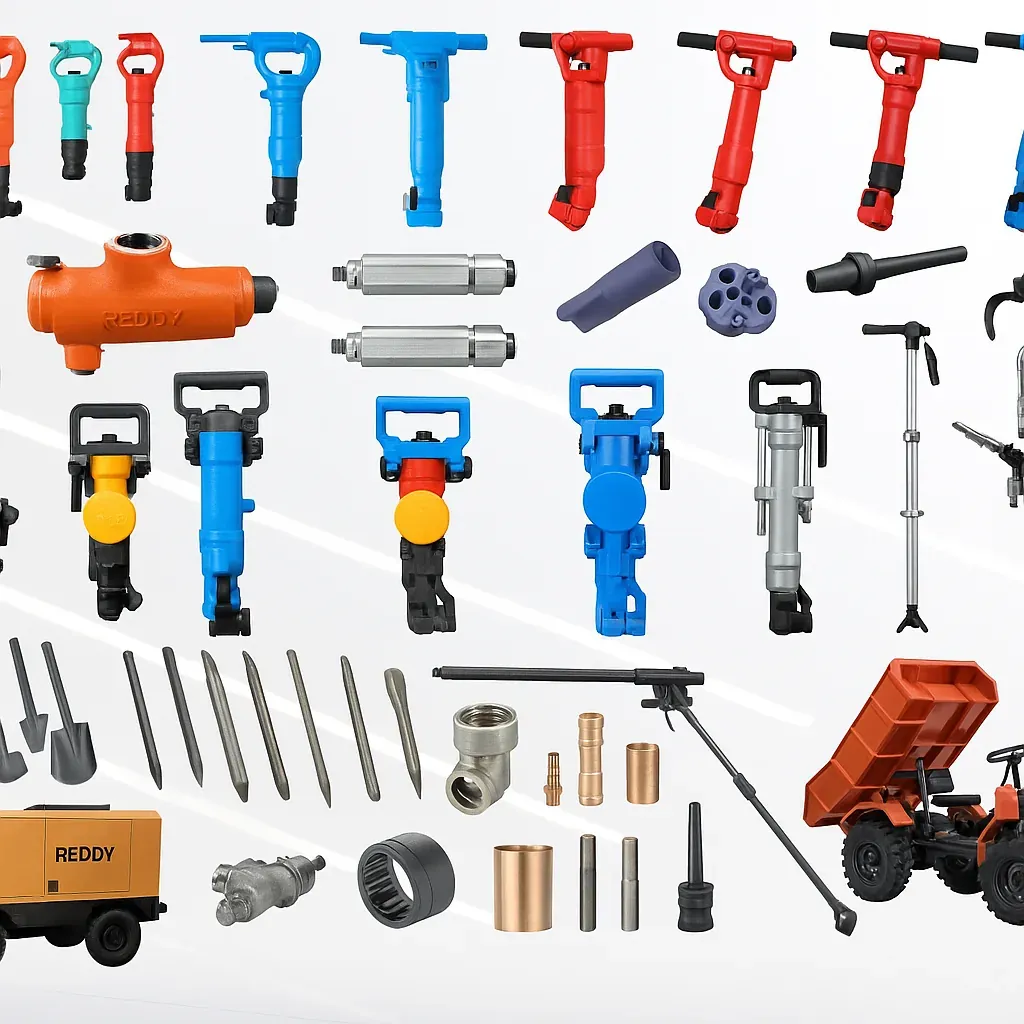
Pneumatic breakers, jackhammers, rock drills and other air tools are only as good as the air that reaches them. A tool starved of air hits weakly, drills slowly and wears faster. This page explains how much air common tools use, how to size the compressor and hoses, and what to look for on site. Reddy Compressors supplies, hires and services the portable compressors that power these tools.
Typical air consumption
Air tools are rated at a working pressure, usually around 6 to 7 bar (90 to 100 psi) at the tool. The figures below are typical ranges for common classes of tool. Always check the manufacturer's data for the exact tool:
- Heavy paving breakers and jackhammers (around 25 to 40 kg class): roughly 50 to 90 CFM each.
- Medium and light breakers (around 10 to 20 kg class): roughly 30 to 60 CFM each.
- Hand-held rock drills: roughly 60 to 150 CFM each, depending on size and type.
- Chipping and scaling hammers: roughly 15 to 30 CFM.
- Clay spades and diggers: roughly 20 to 40 CFM.
- Rammers and tampers: roughly 20 to 40 CFM.
- Air grinders and impact wrenches: from under 10 CFM for small tools to 30 CFM or more for large ones.
Sizing the compressor
- List every tool that will work at the same time and add their air consumption.
- Add an allowance for tool wear and hose leaks. Worn tools use noticeably more air than new ones.
- Check the pressure the tools need at the tool, then allow for the pressure lost in the hose run.
- Choose a compressor whose rated free air delivery covers the total with a margin, at a working pressure that covers the tools plus hose losses.
As an example, two heavy breakers at about 70 CFM each plus a chipping hammer at 25 CFM need around 165 CFM. With a margin for wear and leaks, a compressor in the 185 to 250 CFM class at 7 bar is a sensible choice.
Hoses and pressure loss
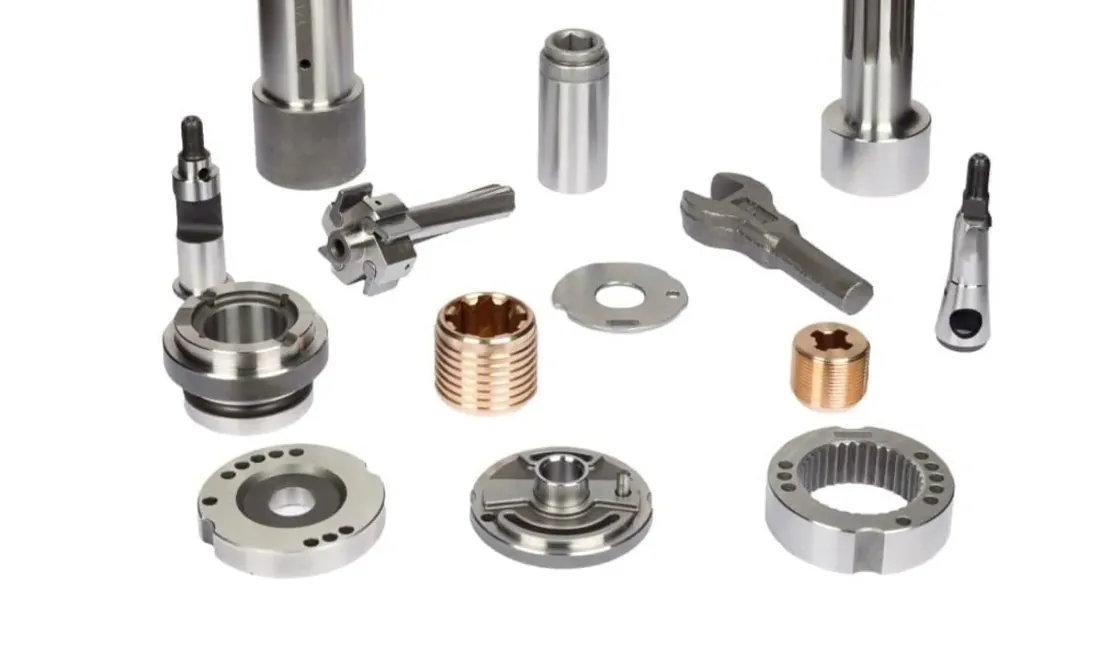
Hose bore and length matter as much as compressor size. A long, narrow hose can lose enough pressure to make a breaker noticeably weaker. Keep runs as short as practical, use a larger bore for long runs and multi-tool manifolds, and avoid many small couplings in series. Use whip checks and safety clips on every coupling, because a hose that separates under pressure can cause serious injury.
Lubrication and moisture
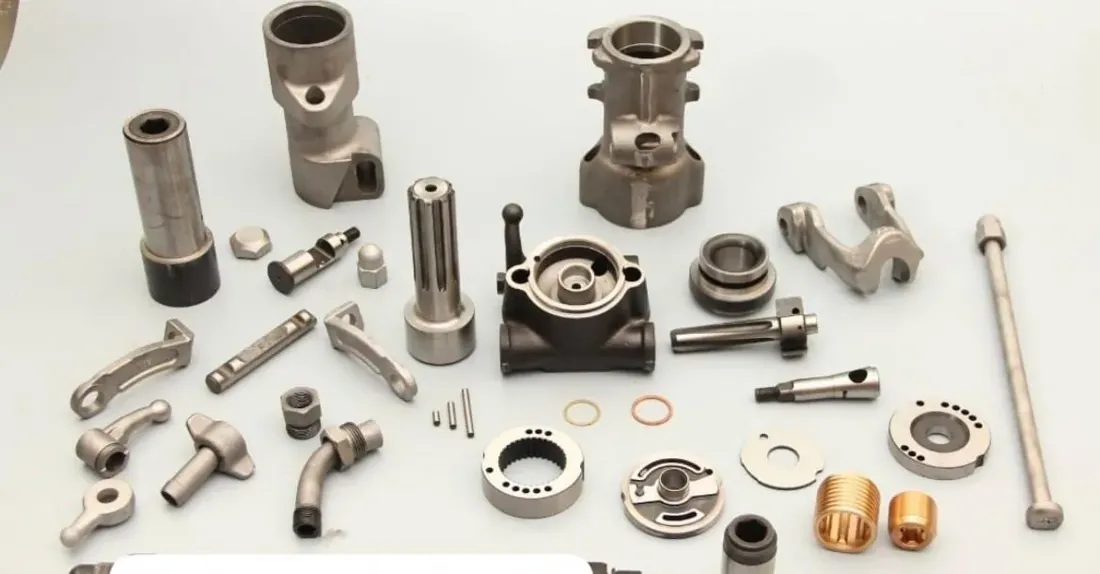
Most percussive tools need oil in the air. A line lubricator set correctly near the tool keeps the mechanism working and reduces wear. Water in the air washes lubricant away and can freeze in exhaust ports in cold conditions. Drain the compressor's moisture separator and any line filters regularly.
Which compressor for which job
- One breaker or a few small tools on a road or building site: a compact portable diesel compressor in the 100 to 200 CFM range.
- Several breakers, rock drills or a mixed crew: a mid-size portable in the 250 to 450 CFM range.
- Quarry and rock drilling with larger drills: a drilling-class compressor, often at higher pressure. See borewell and DTH compressors.
- Workshops and fabrication yards with power available: an electric screw or reciprocating compressor with a receiver.
Short-term site work is usually best served by compressor hire. For regular use, a portable diesel compressor can be bought new or used.
What to tell us
List the tools, how many run together, hose lengths, the site and the duration. Send it through the rental enquiry or equipment enquiry, or call +91 99590 60718.
Related pages
- Pneumatic applications
- CFM, PSI and bar guide
- Hoses, manifolds and distribution
- Construction projects