
Start with the right question: engine or airend?
A diesel portable is two machines on one chassis. The engine supplies speed and torque; the airend turns that into compressed air. Before touching a spanner, decide which side the fault belongs to.
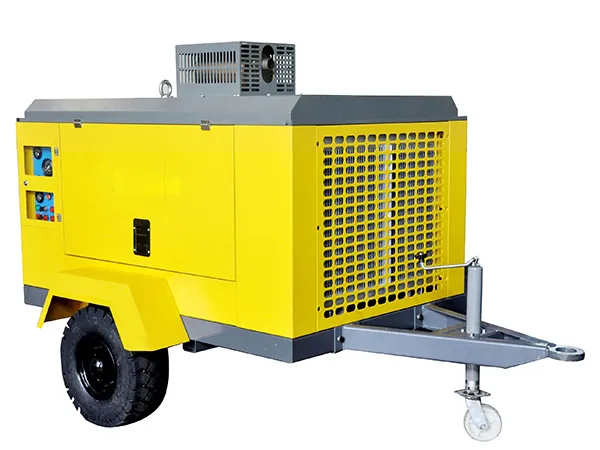
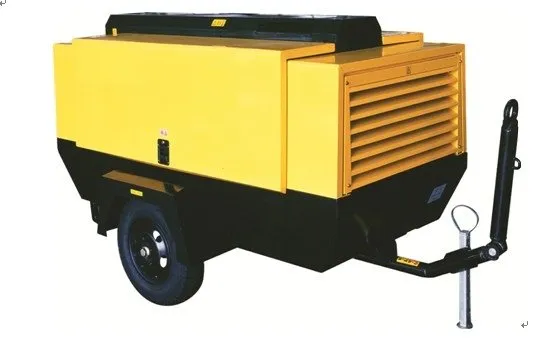
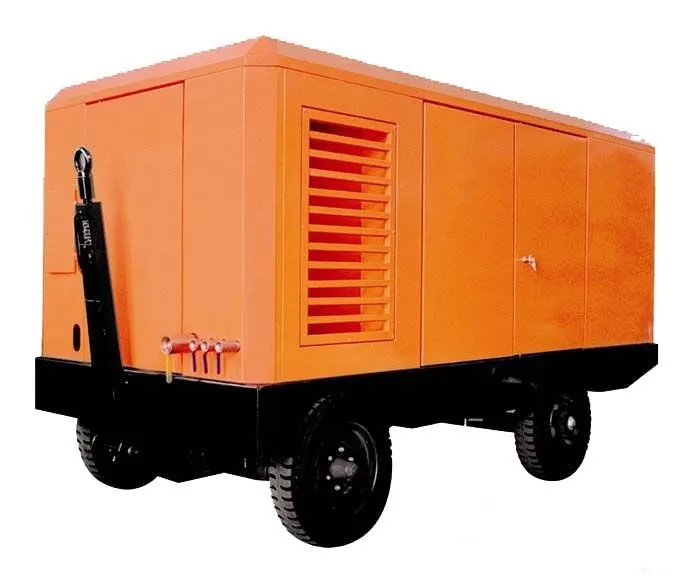
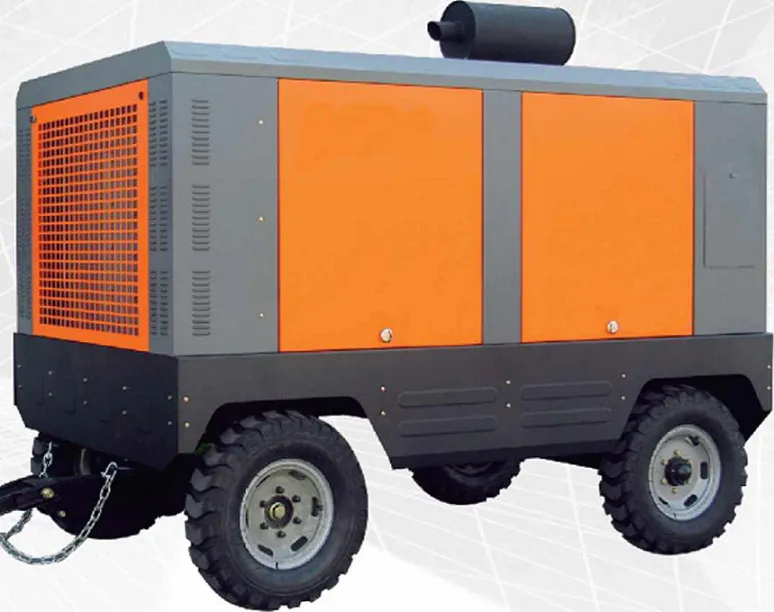
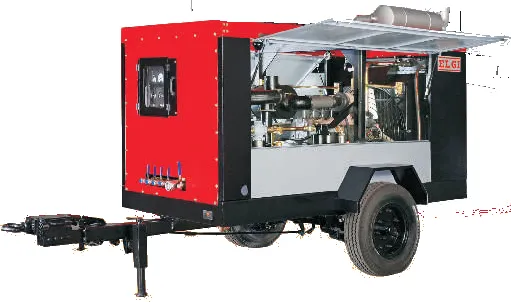
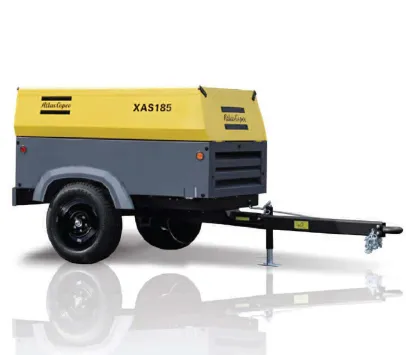
Representative images of machine types we sell, service and rent. Models and capacities are confirmed against your duty.
- Engine side: hard starting, low engine oil pressure, high coolant temperature, smoke, loss of rpm under load, high fuel use.
- Airend side: low discharge pressure, low air delivery, high discharge temperature, oil in the air, safety valve lifting, machine not loading or not unloading.
- Both: overheating in summer, poor performance at full load, and any shutdown that happens only after an hour or more of running.
Note what the machine was doing when the fault appeared: engine speed, discharge pressure, how many tools or which nozzle was connected, ambient temperature and how long since the last service. Those five facts narrow most problems to one or two systems.
A field method that avoids parts-swapping
- Observe. Read the controller fault log or shutdown lamp before resetting it. A reset without a record destroys the best clue.
- Inspect. Walk round the machine: filter indicators, oil and coolant levels, belt condition, leaks, debris in the cooler fins, hose couplings.
- Measure. Engine rpm loaded and unloaded, discharge pressure, discharge temperature, coolant temperature, engine oil pressure, and if possible separator differential pressure.
- Isolate. Run unloaded, then loaded with the service valve partly open, then at full demand. Faults that appear only at full load point to cooling, fuel or airend capacity.
- Correct one thing at a time, then repeat the measurement so you know what actually fixed it.
- Record and prevent. Write down the cause and the change made, and plan the step that stops it recurring, such as a shorter filter-cleaning interval on a dusty site.
Symptom, likely cause and what to check
| Symptom | Likely causes | What to check first |
|---|---|---|
| Will not build pressure | Demand above capacity, leaks, intake valve not opening, minimum pressure valve stuck, low engine speed, blocked air filter | Close service valve: does pressure rise? Check loaded rpm, filter indicator, intake valve travel |
| Shuts down on high discharge temperature | Dirty oil cooler, low oil level, failed thermostatic valve, blocked oil filter, hot air recirculating into the cool box | Cooler fins, oil level when settled, oil filter differential, door seals and site position |
| Oil in the air | Separator element failed, scavenge line or orifice blocked, oil overfilled, running at low pressure, minimum pressure valve faulty | Oil level, scavenge sight glass or line, separator differential pressure, operating pressure |
| Engine will not start | Weak battery, corroded cables, starter fault, fuel air-lock, safety interlock active, cold-start aid not working | Cranking voltage and speed, fuel supply, interlock status |
| Low engine oil pressure trip | Low oil, wrong viscosity, fuel dilution, blocked filter, faulty sender, worn pump or bearings | Dipstick, oil smell and colour, mechanical gauge comparison |
| High coolant temperature | Radiator blocked with dust, low coolant, slack fan belt, thermostat, water pump, mixture too weak | Radiator core from both sides, belt tension, coolant level when cold |
| Safety valve blowing | Unloader or pressure regulator fault, blocked control line, set pressure too close to relief, weak safety valve | Pressure at which it lifts compared with set pressure and valve rating |
| Black smoke and loss of power | Restricted engine intake, injector fault, turbocharger problem, overload | Engine air filter, intake hoses, rpm under load |
Why won’t my portable compressor build pressure?
The first test is simple: close the service valve with the engine at full speed. If pressure rises to the set point, the machine is healthy and the problem is downstream: too many tools, a larger blasting nozzle than the compressor can feed, leaking hoses or couplings, or a hose run that is too long or too small. A No. 6 nozzle on a 250 cfm class machine, for example, will simply drag pressure down.
If pressure still does not rise with the valve shut, look at the machine itself:
- Engine speed. If the engine does not reach rated rpm when loaded, air delivery falls in proportion. Check the throttle linkage or speed control, fuel filters and engine air filter.
- Intake valve. A sticking intake (inlet) valve or a faulty control regulator keeps the machine partly unloaded.
- Air filter. On dusty Indian sites a filter can choke within days. A restricted inlet reduces free air delivery even when everything else is right.
- Minimum pressure valve. If it sticks open, the machine struggles to build pressure; if it sticks shut, nothing reaches the service valve.
- Airend wear. A worn airend is the last suspect, not the first. Rule out everything above before considering an overhaul.
Why does it shut down on high temperature?
An oil-injected screw airend normally runs at a discharge temperature of about 75–95 °C. The high discharge temperature shutdown protects the oil and the airend; it is not a nuisance to be bypassed. Repeated trips almost always come from heat not being removed.
- Cooler fouling. Dust, cement, oil mist and cotton fluff build up between the fins of the oil cooler and radiator. Clean from the fan side outwards with low-pressure air or water, never with a high-pressure jet that bends fins.
- Oil level and condition. Low oil, wrong grade or oil that has gone dark and thick carries less heat.
- Thermostatic valve. If it fails to open, oil bypasses the cooler and temperature climbs steadily.
- Recirculation. Hot air leaving the cool box gets drawn back in when the machine is parked against a wall, in a pit, or with the exhaust pointing at the intake side. Keep the canopy doors closed while running; the cooling air path depends on them.
Overheating in summer: a special case for Indian sites
Telangana and Andhra Pradesh summers routinely bring 40–45 °C, and above 45 °C on open sites, and a compressor parked on dark ground in direct sun sees higher inlet temperatures than the weather report suggests. Many machines are designed for high ambient conditions, but they lose margin quickly when coolers are partly blocked. Before the hot season:
- clean both the oil cooler and engine radiator thoroughly, and check the fan and belt;
- check coolant concentration and level, and replace weak hoses;
- change oil and filters if they are near the interval;
- place the machine in shade where possible, with clear space on all sides and the exhaust away from the cooling inlet;
- avoid running continuously at the limit of capacity; if the job needs every last cfm, the machine may simply be undersized for summer duty.
Oil in the air and high oil consumption
Oil carry-over shows up as oil mist at tools, oily blasting media or oil spray on the ground near the service valve. The usual causes are a separator element that has torn or reached the end of its life, a blocked scavenge line returning oil from the separator, an overfilled sump, or running at a pressure well below design so that the separator sees too much air velocity. Check the oil level with the machine stopped and settled, check the scavenge line and its orifice, then measure separator differential pressure if a gauge point exists. Fit a genuine or correctly specified element; a cheaper element with the wrong media lets oil through from day one.
Engine will not start and low engine oil pressure trips
A no-start is usually electrical or fuel, rarely the engine itself. Check cranking speed and battery voltage during cranking, look for an active safety interlock or emergency stop, and confirm fuel is reaching the injection pump. Air in the fuel lines after a tank has run dry or a filter has been changed is common; bleed the system following the engine maker’s sequence. The full chain of battery, starter, alternator and cold-start aids is covered on our starting and charging diagnostics page.
A low engine oil pressure trip should never be reset and ignored. Check the level first, then smell the oil: a diesel smell means fuel dilution, which thins the oil. Confirm the reading with a mechanical gauge before blaming the sender. If oil pressure is genuinely low with correct oil, stop the machine; continued running risks bearing damage.
Safety valve blowing
The safety valve lifts when pressure in the separator tank exceeds its set point. That means the control system failed to unload the machine in time. Check the pressure at which unloading starts, the regulator, the control line from the separator tank, and whether the working pressure has been set too close to the safety valve rating. Never plug or tighten a safety valve to stop it blowing; find out why pressure is rising that far, and replace a valve that leaks below its rating.
Prevention: what stops most of these faults
Most portable faults are maintenance faults that arrive late. On our own round-the-clock hire jobs, including a 450 cfm machine at a steel plant in Andhra Pradesh with operators on 12-hour shifts, we change oil and service at every 300 running hours, and clean filters more often when the site is dusty. A simple daily check of levels, filter indicators, leaks and cooler fins catches most problems before they become shutdowns. For the full service routine see portable compressor service and field duty.
How Reddy Compressors helps
We service and repair diesel portable compressors of ELGi, Atlas Copco, Ingersoll Rand, KAESER, Chicago Pneumatic, Doosan and other makes as an independent multi-brand specialist, from our office at Tarnaka, Secunderabad. Our service teams work across Telangana and Andhra Pradesh, and we supply spares and rental machines across India. We diagnose on site, identify parts from the nameplate before quoting, and can put a rental machine on site while yours is repaired. For a wider view of the product line, start at our diesel portable compressors guide.
What to send us
- Make, model, serial number and a photo of the nameplate
- Running hours and date of last service
- The symptom, the fault code or shutdown lamp, and when it happens
- Readings you have: pressure, temperatures, engine oil pressure, rpm
- Site location and the job the machine is doing
Frequently asked questions
Why is my diesel compressor running but not building pressure?
Close the service valve at full engine speed. If pressure rises, the compressor is fine and demand, hose leaks or an oversized nozzle are the cause. If it does not, check loaded engine rpm, the air filter restriction indicator, the intake valve and regulator, and the minimum pressure valve. Airend wear is possible but should be the last suspect, after the simpler causes are ruled out.
Watch
A short explainer on this topic
Slide-by-slide engineering explainers from Reddy Compressors. More in the video library.
Why does my portable compressor trip on high temperature in summer?
Usually because heat is not being removed: oil cooler and radiator fins blocked with dust, low or degraded oil, a stuck thermostatic valve, or hot exhaust air recirculating into the canopy. Indian summer ambients of 40–45 °C leave little margin, so clean coolers before the hot season, keep canopy doors shut while running, and park the machine in shade with clear space around it.
What causes oil to come out with the air from a screw compressor?
The common causes are a failed or worn separator element, a blocked scavenge return line or orifice, an overfilled oil sump, and running at a pressure well below design. Check the level with the machine stopped and settled, inspect the scavenge line, and measure separator differential pressure. Replace the element with one of correct specification rather than the cheapest available.
Can I reset a low engine oil pressure shutdown and keep working?
Not without finding the cause. Check the oil level, smell it for diesel dilution, and confirm the reading with a mechanical gauge. A faulty sender can cause false trips, but genuinely low oil pressure damages bearings quickly. If pressure is low with the correct oil at the correct level, stop the machine and have it inspected before further running.
Why does the safety valve keep blowing on my compressor?
The safety valve lifts because the control system did not unload the machine before pressure exceeded its rating. Check the regulator, the control line, the unloading pressure setting and the intake valve. Working pressure set too close to the relief setting also causes it. Never block or adjust a safety valve to stop it lifting; replace one that leaks below its rated pressure.
How often should a portable diesel compressor be serviced on hire?
Follow the manufacturer’s schedule, adjusted for the site. On our own continuous hire jobs we change oil and service every 300 running hours, with more frequent air filter cleaning on dusty sites. Daily checks of oil and coolant levels, filter indicators, leaks and cooler condition prevent most of the shutdowns described on this page.
Related pages
Technical content reviewed by D. Srinivas Reddy, Managing Partner and service engineer, Reddy Compressors. Last updated 17 October 2026. How our engineering content is reviewed.