
1 Restore the required air service, not merely compressor operation
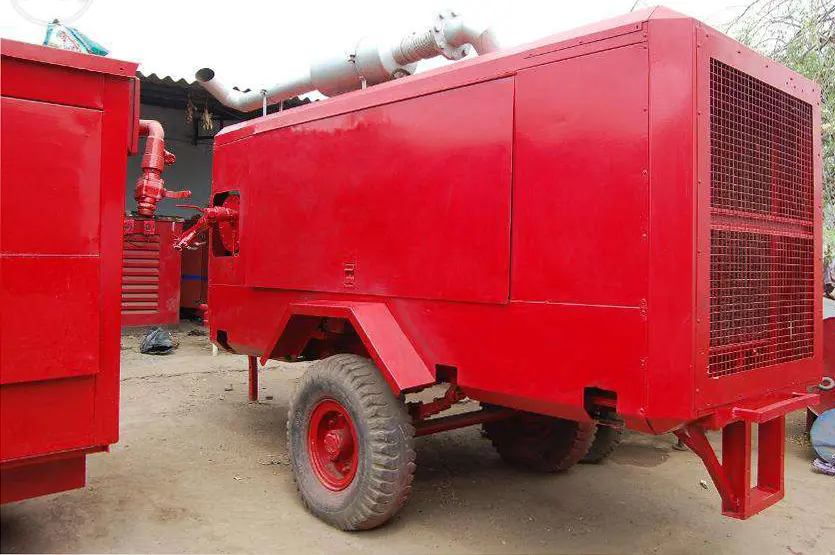
Temporary air for compressor breakdown is a replacement supply arranged to maintain an agreed level of plant operation while a failed permanent compressor or associated system is isolated, investigated and repaired. A successful response delivers usable airflow at the required pressure and quality to the correct users, through a connection that remains available throughout the repair.
The first question is not simply which rental compressor is nearby. It is what has failed, which air users remain essential, and which parts of the existing station can still be used. A compressor fault, electrical feeder outage, failed dryer and contaminated common header create different temporary supply requirements. Delivering another machine does not automatically resolve the failed service.
Emergency recovery therefore has two linked workstreams: stabilising the plant and establishing a suitable temporary air system. Repair diagnosis continues alongside them. The temporary arrangement must allow the repair team to work without unintentionally removing air from live production or exposing isolated equipment to reverse pressure.
This guide explains how to define that arrangement under time pressure, compare recovery options, manage staged production, and decide when the temporary equipment can be released. It addresses industrial plant and process air; breathing air, medical air and other specialist duties require their own approved supply and acceptance arrangements.
2 Establish the incident boundary before selecting equipment
Record the time of failure, equipment identity, active alarms, observed pressure behaviour and the operating state immediately before the event. Preserve controller logs and relevant trends before resets erase useful evidence. The site’s authorised personnel should determine whether the affected equipment can be safely inspected and what isolation is required.

A low-pressure alarm is not proof of compressor mechanical failure. Possible causes include a failed-open drain, a major distribution leak, a closed valve, a blocked treatment component, control sequencing problems, loss of electrical supply or a sudden increase in demand. Replacing the compressor while retaining the actual restriction can leave the plant with the same pressure problem.
Identify the furthest upstream and downstream points that remain serviceable. If the receiver, dryer and final filters are verified usable, a rental may feed that treatment arrangement within its ratings. If contamination, flooding or thermal damage has affected the downstream system, the temporary package may need independent treatment and a different delivery point.
Keep uncertainty visible. Write “dryer condition unconfirmed” rather than “dryer available” when no assessment has been completed. An explicit unknown allows the response team to select an alternative; an assumed available component can make the entire recovery plan unusable on arrival.
3 Separate immediate stabilisation from production recovery
The plant response should identify essential air users, users that can pause, and processes that need an orderly shutdown if pressure continues falling. These categories must come from the process owner. Utility staff should not decide independently which actuators, instruments or production operations can lose supply.
Stop discretionary air use where the site permits it. Isolate confirmed nonessential branches through the approved procedure, and control unauthorised cleaning, additional tools and intermittent high-demand operations. This can preserve existing capacity while a temporary solution is arranged. It does not justify lowering the pressure below an essential user’s requirement.
Distinguish service preservation from full production. A small available package may support essential controls and a limited production cell before a larger station is ready. That is a useful first recovery stage only when its pressure, quality and connection suit those users and the restricted operating scope is clearly communicated.
Define the transition between stages. Record who may authorise another production line, what pressure and quality evidence is required, and which action follows if the added load causes instability. Without this discipline, successful initial recovery can be defeated by simultaneous restart of every air user.
4 Build a concise emergency duty record
The initial request should be short enough to complete during an incident and precise enough to support equipment selection. Photographs of nameplates and connection points are useful, but they do not replace a statement of the air service required. Separate measured information from estimates and record the time of each observation.
Information | Minimum useful detail | Why it changes the response |
|---|---|---|
Failed system | Compressor or utility affected; remaining usable equipment | Defines the replacement boundary |
Essential duty | Net flow, minimum pressure and air quality at named users | Establishes the first recovery stage |
Production duty | Normal flow, peaks, duration and restart demand | Determines expansion beyond essential service |
Existing supply | Healthy compressors and verified net output | Prevents unnecessary duplication or optimistic assumptions |
Connection | Location, size, rating, isolation and access photographs | Determines hoses, manifolds and site work |
Utilities | Electrical supply, fuel, cooling and ventilation availability | Determines the practical drive and placement options |
Timing | Required service milestone; access and work windows | Separates delivery from usable-air readiness |
Contacts | Incident lead, operations, maintenance and site access | Removes responsibility gaps during mobilisation |
If flow is unknown, provide recent production conditions, compressor operating records and equipment data. A specialist can develop a provisional estimate, but it remains provisional until supported by reliable measurement or performance evidence. Nameplate motor power alone is not a delivered-air measurement.
5 Calculate the net replacement requirement
Temporary supply should be specified at a defined delivery boundary. Compressor advertised flow, flow after treatment and air actually available to production may differ. Compare all flows on a compatible reference basis and at the operating pressure, with relevant ambient and altitude corrections supplied for the selected equipment.
For an initial steady-state balance, required temporary net flow equals the agreed plant demand minus verified surviving net capacity. Include additional consumption that belongs within the selected boundary, such as treatment purge or package auxiliaries, once only. Do not deduct a purge allowance twice when a supplier has already quoted net output after treatment.
Illustrative example: essential demand is 12 m³/min, restricted production requires 22 m³/min and full production requires 30 m³/min. A healthy permanent compressor can deliver 8 m³/min net on the same basis. The temporary net requirements are therefore 4, 14 and 22 m³/min respectively. These are three different recovery duties, not interchangeable descriptions of one rental requirement.
Suppose a proposed temporary package provides 18 m³/min gross and its treatment consumes an assumed 10% of that flow. Net temporary output is 18 × 0.90 = 16.2 m³/min. Combined with the surviving 8 m³/min, the plant has 24.2 m³/min. It can support the stated restricted duty with 2.2 m³/min nominal headroom, but it cannot support the 30 m³/min full-production duty continuously. Actual selection must confirm the package’s output, treatment consumption and operating conditions.
6 Manage uncertainty without hiding it inside a large margin
An emergency demand estimate often mixes historical averages, operator observations and a small amount of current measurement. Identify the confidence of each input. A verified healthy compressor performance record is stronger evidence than the assumption that an old machine still produces its original nominal flow.
Use a sensitivity check. In the previous example, if surviving capacity is only 6 m³/min, combined supply falls to 22.2 m³/min. The nominal margin above restricted demand is now just 0.2 m³/min. Small additional loads or degradation could remove it. That finding supports verification, further load restriction or additional capacity; it does not support a blanket statement that the arrangement has adequate reserve.
Keep sizing allowance distinct from standby provision. Extra flow allowance addresses uncertainty or growth in duty. Standby capacity addresses loss of an operating component. A package with 10% spare flow does not necessarily maintain essential service after a compressor trips.
Where the consequences warrant it, stage the recovery around measured operation: establish essential supply, log behaviour, release a defined additional load and evaluate the result. This approach still requires suitable pressure and quality from the outset. It is not permission to experiment on critical users without an agreed operating plan.
7 Pressure recovery depends on the complete temporary route
Determine the minimum acceptable pressure at the most demanding critical delivery point and the maximum pressure permitted by connected equipment. Account for treatment, hoses, couplings, manifolds and distribution losses at the intended flow. A large compressor feeding a restrictive temporary hose can show satisfactory package pressure while the process remains starved.
Illustrative pressure budget: a critical user needs at least 6.0 barg. Estimated losses are 0.35 bar across treatment, 0.45 bar along the temporary route and 0.20 bar in the remaining distribution. The initial upstream requirement is 7.0 barg before allowing for control band, transients and uncertainty. This arithmetic does not establish the final setpoint or prove every component is suitably rated.
Check the highest possible pressure as well as the minimum delivery pressure. Compressor control settings, relief arrangements and downstream ratings must be compatible. Increasing discharge pressure to compensate for an avoidable restriction can create other operating problems and consume additional energy without resolving the underlying route limitation.
Measure at both the temporary package and the critical delivery point during loading. The difference helps distinguish inadequate generation from route loss. If pressure falls everywhere together, investigate supply-demand balance and controls. If source pressure remains stable while one branch falls, investigate that branch before adding more generation.
8 Receiver storage provides a time buffer, not an indefinite replacement
Stored air can support a short interruption or a demand peak while another source responds. It cannot maintain a continuing deficit indefinitely. Its useful duration depends on usable receiver volume, the permitted pressure drop and the net flow deficit, not the receiver’s nominal size alone.
For a simplified isothermal estimate with equal receiver and reference temperatures, available reference air volume is Vreceiver × (Pupper − Plower) / Preference. Pressures must use consistent units; upper and lower states should be expressed on an absolute basis. At different temperatures or where rapid discharge changes gas temperature materially, a more detailed model is required.
Illustrative example: a 2 m³ receiver can fall from 8 bara to 7 bara, with reference pressure 1 bara. Available reference air is approximately 2 m³. At a deficit of 4 m³/min, the calculated buffer is 0.5 minute, or 30 seconds. It is not enough to cover equipment transport or site installation, and useful time may be lower once dynamic losses and operating limits are considered.
Recovery between peaks also matters. A 2 m³ withdrawal needs approximately one minute to replenish if verified surplus supply is 2 m³/min. Repeated events closer together can progressively reduce storage pressure. Treat receiver calculations as duty checks for an engineered arrangement, not as instructions to change vessel pressure limits.
9 Choose a supply architecture that avoids the failed dependency
The temporary source should remain usable despite the incident that disabled the permanent system. If the electrical feeder is unavailable, an electric rental on that same feeder is not an independent recovery solution. If contaminated cooling water caused the outage, another water-dependent package requires an independently acceptable cooling arrangement.
Electric rental may suit a site with verified spare electrical capacity and an accessible connection. Generator-fed electric equipment introduces a separate power system whose starting, protection and operating compatibility require assessment.
Parallel packages may provide staged mobilisation and partial service after one unit becomes unavailable. However, common dryers, headers, power feeds, fuel arrangements and controls can remain single points of failure. Define which events the proposed redundancy actually covers.
An independent temporary treatment train may be appropriate where the permanent dryer is under repair or its condition is uncertain. Conversely, verified existing treatment can reduce mobilisation complexity when its capacity, pressure rating, condition and accessibility suit the new source. Choose on evidence rather than an automatic preference for reusing or replacing every component.
10 Protect air quality during emergency restoration
Urgency does not change the process’s air-quality requirement. Confirm whether the users need limits for particles, moisture, oil or other contaminants, and where compliance must be demonstrated. A compressor described as oil-free does not by itself establish the cleanliness of hoses, receivers, treatment equipment or the plant distribution downstream.
A failure involving oil carryover, water contamination or damaged treatment requires a contamination assessment. Supplying clean air into an affected header does not prove that the delivered air has recovered. The responsible process or quality team should determine inspection, cleaning, sampling and release requirements for the affected service.
Specify treatment for actual inlet conditions and flow. Temporary equipment may operate at different discharge temperatures or pressures from the permanent station. Dryer capacity and performance depend on those conditions; selection should use the applicable manufacturer data and correction method rather than nominal connection size.
Define the response to a quality excursion before production resumes. Depending on the process, it may involve isolating an affected user, stopping production, quarantining product or restoring an alternative supply. The utility team provides operating evidence; it should not make unsupported product-release decisions on behalf of the process owner.
11 Plan mobilisation around usable-air readiness
Equipment dispatch, site arrival, installation completion and accepted air service are separate milestones. A transport estimate is not a promise of production restart. The recovery schedule should include equipment preparation, loading, travel, gate access, placement, connection, checks and the release conditions required by the plant.
Illustrative sequence: two hours for preparation, three hours for transport, one hour for unloading and placement, and two hours for connection and acceptance produce an eight-hour sequential estimate from authorisation to usable supply. If one hour of gate delay and two hours of unexpected connection work occur, the same recovery becomes eleven hours. Some activities may overlap, but dependencies must support that assumption.
Advance photographs and verified connection information can reduce uncertainty. Confirm lifting arrangements, vehicle access, ground suitability, hose routing and availability of authorised site personnel before dispatch where practicable. Equipment waiting outside a locked gate provides no continuity benefit.
Publish the estimate with its assumptions and update it when they change. Reddy Compressors can coordinate an emergency enquiry, subject to equipment suitability, availability and site conditions. No universal response or restoration time is implied by this article.
12 Keep the live supply boundary separate from the repair boundary
The temporary connection must be reviewed against the failed compressor’s isolation and the maintenance scope. A common header can feed pressure back towards equipment believed to be isolated. The approved isolation arrangement must address the actual piping topology and all relevant energy sources.
Identify every live branch and every component to be opened, removed or tested. Record the temporary supply route on a marked diagram accessible to operations and maintenance. A hose crossing the plant floor should have a known source, destination, operating duty and responsible owner rather than being treated as an informal emergency connection.
The authorised site team should establish isolation, depressurisation, verification and work controls using site procedures and equipment requirements. This article intentionally does not prescribe a universal valve-opening or isolation sequence: the correct sequence depends on the installed system and work boundary.
Changes during repair require coordination. Removing a shared dryer, changing a header valve or disconnecting a common electrical panel can disable temporary service if dependencies were overlooked. The repair plan and temporary operating plan should therefore be reviewed together whenever their boundaries change.
13 Commission against a defined recovery stage
Before admitting temporary air to production, confirm the installed package matches the agreed duty, the connections and components are suitable, and the relevant equipment records are available. Check control behaviour, treatment operation, condensate management, leaks, instrumentation and the delivery boundary through the project’s authorised commissioning procedure.
Release essential users first where the process permits staged recovery. Verify pressure and required quality at the stated points, then introduce the approved restricted-production demand. Observe both steady operation and the transitions that matter: tool operation, process cycles, compressor loading and dryer regeneration where applicable.
Acceptance should state what has been demonstrated. “Restricted production at the observed operating condition” is more useful than “temporary air commissioned” when full demand has not been tested. Record any limitations, required manual coordination and conditions that trigger a pause or reassessment.
Name the people authorising operation and receiving the system. A clear handover includes active equipment, operating limits, alarm response, refuelling or power responsibilities, inspection frequency, contacts and restrictions on adding loads. Emergency installation does not eliminate the need for understandable operating ownership.
14 Control production restart peaks
Restart demand can exceed normal running demand because multiple actuators, equipment receivers and empty branches require air at once. Separate this filling transient from the ongoing process load. A temporary package selected for average production may be unable to support simultaneous restart without excessive pressure decline.
Suppose the restricted operating demand is 22 m³/min and combined available supply is 24.2 m³/min. An additional 8 m³/min restart demand lasting 30 seconds produces a deficit of 30 − 24.2 = 5.8 m³/min. Over half a minute that is 2.9 m³ of reference air. Suitable storage might bridge the event, but its available pressure range, route and recharge capability must be checked.
Staggering independent equipment starts can reduce coincident demand when the process permits it. The authorised restart schedule should identify the sequence, observation points and conditions for proceeding. Do not assume that a successful first machine start proves the complete line can restart simultaneously.
Maintain the agreed load restrictions after restart. Cleaning activity, a new work crew or another production shift can add demand that was absent during acceptance. A temporary system’s operating permission should follow its demonstrated service envelope, not expand informally as confidence grows.
15 Operate through an uncertain repair duration
Breakdown hire often starts before the repair scope is known. Investigation may reveal an unavailable part, further damage, specialist workshop work or a commissioning problem. Plan for a defined initial period and a practical extension process rather than assuming the earliest repair estimate is certain.
Track operating hours, pressure trends, relevant quality indicators, fuel or electrical consumption, treatment condition and recurring alarms. Schedule maintenance for the rental equipment according to its requirements, with a plan for any resulting interruption. A replacement compressor can itself become the next single point of failure during an extended hire.
Fuel planning should use the actual duty and usable storage. For illustration, consumption of 25 litres/hour over a 16-hour operating day is 400 litres/day. A usable 500-litre supply represents 20 operating hours at that assumed rate, before reserve and practical refuelling constraints. It is not a 24-hour supply. Confirm real consumption and delivery access as the load pattern develops.
At shift handover, report remaining limitations and open actions as well as normal readings. Include expected repair milestones, rental maintenance needs, possible load changes and escalation contacts. Information that remains only with the installation team can be lost once routine operation begins.
16 Define the fallback if temporary supply fails
Decide what happens if the temporary compressor trips, treatment becomes unavailable, fuel cannot be replenished or the connection is damaged. Essential users may require a separate fallback, additional standby equipment or an approved process response. Spare capacity at a supplier’s depot is not equivalent to immediately available on-site standby.
Recovery arrangement | What it can address | Remaining dependency to examine |
|---|---|---|
One temporary package | Loss of the original compressor | Failure of the replacement package itself |
Two operating packages | Higher combined duty and partial output after one loss | Whether remaining output meets essential demand |
Operating plus standby package | A covered machine outage after standby activation | Start delay, storage buffer and shared utilities |
Separate essential-air branch | Prioritised service to selected users | Branch isolation, quality and independent route |
Permanent plus temporary supply | Capacity recovery with the healthy station portion | Shared treatment, header and control behaviour |
Verify the required response time against available storage or process tolerance. A standby unit that takes longer to establish accepted supply than the process can tolerate does not provide uninterrupted service merely because it is parked nearby.
17 Repair completion requires performance evidence
The end of mechanical work is not automatically the end of the breakdown. Establish what caused the failure, what was corrected, and what evidence demonstrates that the permanent system can carry its intended duty again. A replaced component may restore operation while leaving the original overheating, contamination, control or utility problem unresolved.
Acceptance should reflect the repair. Relevant evidence may include leakage checks, temperatures, differential pressures, electrical behaviour, control sequencing, delivered pressure, air quality and capacity under appropriate conditions. Compare against equipment requirements and a credible healthy baseline where one exists.
Keep rental support available for the agreed proving period. Its duration should reflect the operating cycle, failure mechanism and consequence of recurrence rather than a universal number of hours. A machine that runs unloaded during a short check has not demonstrated loaded production performance.
Preserve the repair report, as-found and as-left observations, changed settings and outstanding monitoring actions. These records support future diagnosis and help distinguish a repeated failure from a new event. They also prevent the temporary supply from concealing continuing permanent-system underperformance.
18 Return to permanent air and release the hire
Use a coordinated transfer plan that protects live users and respects equipment operating limits. Confirm permanent treatment and controls are available, then transfer demand through the approved arrangement while observing the critical delivery points. Avoid uncontrolled interaction between temporary and permanent pressure-control systems.
After transfer, check performance at the operating conditions that matter, including normal production and relevant peaks. Retain the temporary system in the agreed readiness state until the responsible plant team accepts permanent service. Record who authorises disconnection and the effect of that decision on contingency coverage.
Only then complete isolation, depressurisation, disconnection and removal under site procedures. Reinspect the permanent connection, reinstate protective arrangements and remove temporary routing obstacles. Record off-hire timing, meter readings, equipment condition, fuel position and collection responsibilities to avoid commercial ambiguity.
Use the incident to improve the next response: identify the missing connection detail, delayed permit, uncertain duty or unavailable accessory that extended recovery. Convert those findings into an updated contingency record rather than treating every breakdown as a completely new mobilisation exercise.
19 Compare the cost of an accepted recovery option
Evaluate the complete temporary service: hire, transport, installation, hoses, treatment, power or fuel, operation, maintenance, testing, extensions and demobilisation. Compare options at the same delivered duty and readiness milestone. The lowest daily compressor rate can produce a higher total cost if essential accessories or site work are omitted.
Use realistic production assumptions. Illustratively, if an earlier accepted recovery could avoid four hours of lost contribution assessed by the plant at ₹60,000/hour, the potential value is ₹240,000. A ₹90,000 incremental mobilisation cost would leave ₹150,000 of potential net benefit before other costs, but only if those four hours of usable recovery are actually achievable. This is a hypothetical decision example, not a Reddy Compressors price or a measured savings claim.
Do not count gross sales as automatically recoverable contribution, or include output that can be made up later without loss. The site’s commercial team should validate the downtime consequence. Equipment arrival alone cannot support a claim for avoided production loss.
Request emergency air coordination with the failed equipment details, operating requirement, available utilities, connection photographs and location. Reddy Compressors is based in Secunderabad/Hyderabad, with Telangana and Andhra Pradesh as priority areas; wider project support depends on the particular requirement and confirmed arrangements. Equipment suitability and availability must be established for each enquiry.
20 Frequently asked questions
Can a rental replace any failed compressor immediately?
No universal replacement is possible. The package must match the required delivered flow, pressure and quality, and the site must support its connection, utilities and operation. Confirm the usable-air milestone after assessing these conditions rather than treating dispatch as completed recovery.
Should we rent the same motor power as the failed unit?
Motor power alone does not establish equivalent air service. Compare verified airflow at the required pressure and reference basis, account for treatment consumption, and assess the actual recovery demand. A restricted-production requirement may differ substantially from the failed machine’s original design duty.
Can the rental use our existing dryer?
It may, if the dryer is serviceable, available during repair and suitable for the new inlet conditions, flow, pressure and quality requirement. A dryer implicated in the failure or contamination event should not be assumed usable without assessment.
Will a receiver keep the plant running until the rental arrives?
Usually the relevant question is its calculated duration at the actual deficit. Usable stored air depends on volume and the permitted pressure reduction. Calculate the available time; do not assume a receiver provides hours of backup simply because it is physically large.
Can production restart before the failed compressor is repaired?
It can restart within an accepted temporary supply arrangement if the responsible plant team confirms the process requirements are met. The permitted production level may be restricted. Additional lines and restart peaks require assessment before demand is increased.
When should temporary equipment be returned?
After the permanent service has been repaired, demonstrated at the agreed conditions and accepted following transfer. Mechanical completion or a short unloaded run is insufficient evidence for every failure type. Agree the proving period and off-hire decision with the plant and supplier.
Sources and evidence basis
22 Sources and editorial provenance
Original supplied source: B.A. (16-8-26) RC-2.pdf, passages covering continuity, common electrical/cooling/treatment dependencies, emergency breakdown rental, and advance preparation of connections, cables, ventilation, piping and access. These principles informed the recovery architecture in this article.
Original supplied source: B.A. (15-8-26) RC.pdf, maintenance-evidence discussion and the passage on confirming the root cause has been removed. Used for the distinction between mechanical repair and demonstrated restoration of reliable service.
External primary reference: Atlas Copco Specialty Rental, India — Emergency support for industrial applications, https://www.atlascopco.com/en-in/rental/why-rental/emergency-renting-projects (accessed 03 October 2026). Supports the general context of temporary industrial utility supply following unexpected breakdown and contingency preparation. The supplier’s fleet, response claims and service commitments are not attributed to Reddy Compressors.
Every numerical scenario is illustrative, not a field measurement, certified equipment selection, quotation or verified project outcome. No claim is made that an entire technical standard has been consulted or that this generic article certifies a site installation.