
What makes a borewell compressor different to service
A borewell rig compressor is not a factory screw compressor on wheels. It is a diesel-driven, high-pressure package, typically delivering about 600–1,500 cfm at 200–400 psig (13.8–27.6 bar), with high-pressure units for deep holes going up to 35 bar (507.6 psig), built to drive a down-the-hole (DTH) hammer and lift cuttings out of a hole that may be several hundred feet deep. It works outdoors, often in direct summer sun, on uneven ground, surrounded by rock dust, and frequently at full load for long hours.
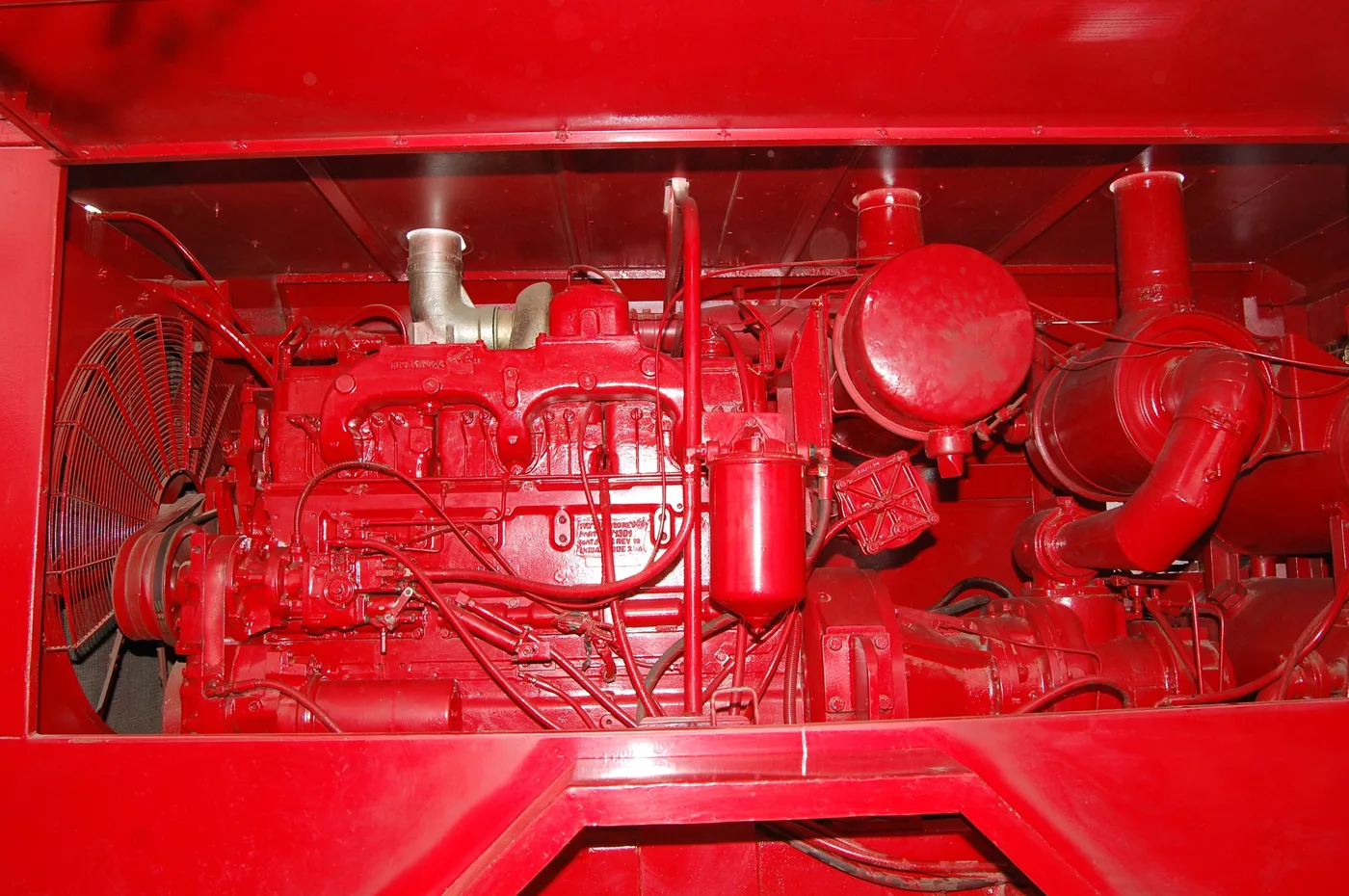
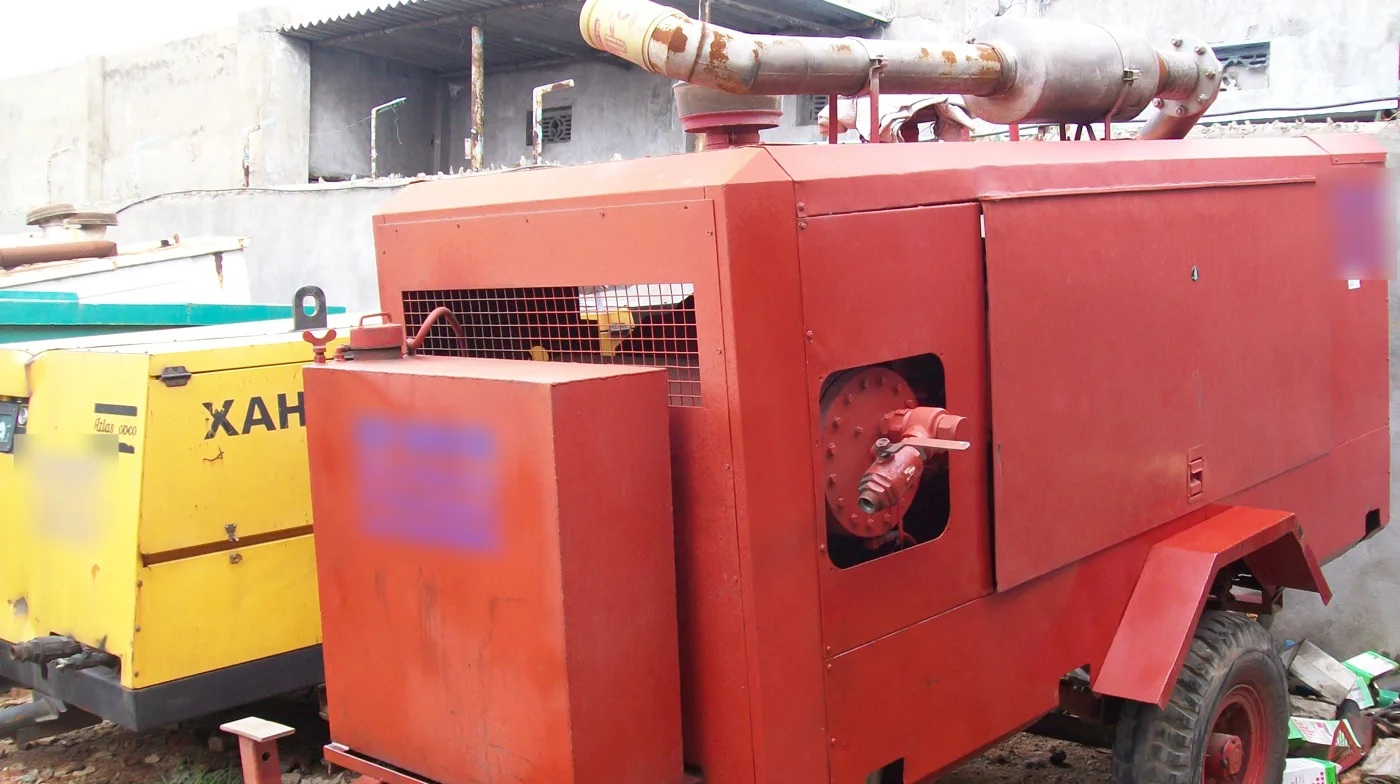
Photographs from Reddy Compressors’ own fleet and workshop.
That duty shapes the service. Three things matter more than on a stationary machine:
- Two prime movers in one package. The diesel engine and the screw airend must both be healthy. A tired engine that cannot hold rated speed reduces free air delivery (FAD) just as surely as a worn airend.
- Dust is the main enemy. Fine silica dust from drilling enters through the air cleaners, cooler fins and breathers. It wears engines and airends, blocks coolers and contaminates oil.
- Downtime costs drilling days. A rig that stands idle on site loses earnings and can lose the job. Service is planned around the drilling programme, not the other way round.
For the wider picture of how compressor, hammer, bit and rig work together, see our page on the borewell rig as an integrated system. This page focuses on keeping the compressor itself fit and repairing it when it fails.
How the high-pressure package works
Most modern borewell compressors use an oil-injected rotary screw airend, often in single-stage or two-stage form for higher pressures. Oil is injected into the compression chamber to seal rotor clearances, carry away heat and lubricate the bearings. The air-oil mixture passes to a separator vessel, where most oil drops out; the final separator element removes the rest before air leaves through the minimum pressure valve to the service valve and the rig.
The engine drives the airend directly or through a coupling or gearbox. A capacity control system, usually an inlet (unloader) valve with a pressure regulator, throttles intake and adjusts engine speed to match air demand. When the driller stops blowing, the machine unloads and idles; when the hammer is working, it runs at full speed and full load.
Oil temperature is the key health signal. On an oil-injected screw, discharge temperature normally sits around 75–95 °C. It rises when the oil cooler is choked with dust, when oil level or quality is poor, when the thermostatic valve sticks, or when ambient temperature is very high. Most machines shut down on high discharge temperature to protect the airend, which is why a blocked cooler is one of the most common reasons a rig stops in April and May.
Common borewell compressor failures and their usual causes
The table below lists the faults we see most often on drilling compressors, with the typical causes to check first. It is a starting point for diagnosis, not a substitute for testing the machine.
| Symptom | Typical causes | What we check |
|---|---|---|
| High-temperature shutdown | Choked oil cooler or radiator, low or degraded oil, stuck thermostatic valve, failed fan or belt, high ambient | Cooler fins, oil level and condition, thermostatic valve, fan drive, temperature sensor accuracy |
| Low pressure or slow drilling | Engine not reaching rated speed, inlet valve not opening fully, regulator set wrong, worn airend, leaks in hoses or the rig line | Engine speed under load, inlet valve stroke, regulator setting, airend discharge pressure and FAD, hose and swivel leaks |
| Oil carry-over into the air line or hammer | Damaged separator element, blocked scavenge line, overfilled oil, low minimum pressure | Separator differential pressure, scavenge orifice and line, oil level, minimum pressure valve |
| Engine smoke, loss of power | Dirty air cleaner, fuel contamination, injector or turbocharger wear, high engine back pressure | Air cleaner restriction indicator, fuel filters and water separator, injectors, turbo, exhaust |
| Hard starting or no start | Weak batteries, charging fault, starter motor, fuel air-lock, safety switch tripped | Battery and alternator, starter circuit, fuel system, shutdown switches |
| Safety valve lifting | Regulator or blow-down fault, minimum pressure valve sticking, blocked separator, faulty valve | Control line, regulator, separator pressure drop, safety valve condition and setting |
| Abnormal airend noise or vibration | Bearing wear, oil starvation, coupling or gearbox damage, dust ingestion | Oil supply, coupling, gearbox oil, bearing noise; airend inspection if confirmed |
Starting and charging problems on diesel units have their own page on diesel compressor starting and charging diagnostics. For a structured approach when a machine has stopped and the cause is unclear, our breakdown diagnostics page sets out the triage method.
Dust, heat and Telangana–Andhra drilling conditions
Borewell drilling across Telangana and Andhra Pradesh is often in hard granite and gneiss, which produces fine, abrasive dust. Combined with summer ambient temperatures of 40–45 °C, and above 45 °C on open sites, this is the hardest test a portable compressor faces. Most premature failures we see trace back to one of three dust paths.
- Intake air. The engine and airend air cleaners must be sealed properly, with no cracked hoses, loose clamps or missing gaskets. A small leak downstream of the filter bypasses it entirely. Watch the restriction indicators and change elements when they call for it, not by guesswork; avoid knocking primary elements clean, which can damage the media.
- Coolers and radiator. Dust mixed with oil mist forms a cake on cooler fins that the fan cannot push air through. Clean from the clean-air side with low-pressure air or water, without bending fins. In heavy drilling season, inspect daily.
- Oil and breathers. Dust entering through filler caps, breathers or careless top-ups contaminates oil and accelerates wear. Use clean containers and the correct, specified oil grade.
Siting also matters. Park the compressor upwind of the hole where possible, with enough space around it for hot air to escape rather than recirculate. Keep the canopy doors closed during operation so the designed cooling-air path works.
A practical service plan by running hours
Service intervals should follow the manufacturer’s schedule for that model, adjusted for dust and load. Drilling duty is severe, so intervals often need to be shorter than for clean, light work. On our own hire jobs for portable diesel units we change oil and service every 300 running hours, which gives a sense of what severe duty demands. A typical plan looks like this:
| When | Engine | Compressor |
|---|---|---|
| Every shift | Oil and coolant level, fuel water separator drain, air cleaner indicator, belts, leaks | Compressor oil level, discharge temperature, pressure, cooler cleanliness, hose whip-checks and couplings |
| Weekly in heavy dust | Clean radiator and pre-cleaner, check battery terminals | Clean oil cooler, check air cleaner hoses and clamps, inspect separator drain or scavenge |
| Scheduled service (by hours) | Engine oil and filters, fuel filters, air cleaner elements as required | Compressor oil filter, oil sample or change as specified, air cleaner, check inlet valve and regulator |
| Major service | Valve clearances, injectors, turbo inspection, coolant renewal per manufacturer | Separator element, oil change, minimum pressure valve and safety valve check, thermostatic valve, hoses |
Keep a simple log of running hours, readings and parts used. It costs nothing and is the most useful document we can see when diagnosing a fault or estimating the remaining life of a machine. Our rotary screw service page covers airend-side service tasks in more depth, and our portable compressor service page covers the wider mobile package.
Engine and airend care that keeps the rig earning
The fastest way to lose drilling capacity is to let the engine or airend degrade quietly. Rated air delivery depends on rated engine speed, so check that the engine reaches its specified full-load speed with a tachometer, not by ear. A machine that has lost a few hundred rpm will drill slower and clean the hole poorly, and the driller may simply blame the hammer.
For the airend, protect three things: clean oil, correct temperature and clean intake air. Oil that is overdue, mixed with another type or contaminated with dust loses its sealing and lubricating ability. Repeated high-temperature running varnishes the oil and stresses bearings. Dust scores rotors and housing. When an airend shows falling pressure at rated speed, rising temperature with a clean cooler, or noise, an inspection is due. Our airend overhaul and rebuild engineering hub explains how airend condition is measured and when a rebuild is justified.
Do not ignore small air leaks either. Leaking hoses, swivels and couplings waste air that the hammer needs, and running a higher pressure to compensate costs fuel; as a rough guide, each extra bar of pressure takes about 7% more power. Fixing the leak is cheaper.
What a service visit or repair includes
When we attend a borewell compressor, whether at a rig site or in the workshop, the work follows a consistent sequence so that findings are recorded and repairs are authorised before they begin.
- Identify the machine. Make, model, serial number, engine details, running hours and service history.
- Listen to the operator. When the problem appears, under what load and depth, any alarms, and what has already been tried.
- Check safely. Follow the shutdown procedure, release pressure, and never bypass protection switches to keep drilling.
- Measure under load where safe. Engine speed, discharge pressure, discharge temperature, separator pressure drop and air cleaner restriction.
- Report findings and options. What is wrong, what is likely, what needs further inspection, and the parts basis for repair.
- Repair after approval. Carry out the agreed work, with any further scope agreed before it starts.
- Test and hand over. Run the machine, record readings, and note any remaining limitation so the owner knows where the machine stands.
Some repairs can be done at the rig; others, such as airend overhaul or major engine work, need the workshop. If the machine must come in, we can discuss temporary air so the rig keeps working while repairs proceed.
Repair, overhaul or replace?
A single failure on an otherwise healthy machine is a repair. Several worn assemblies at once, falling output across the board, or very high running hours point toward overhaul. A machine whose engine, airend and frame all need major work may be better replaced or sold. Base the decision on the duty you expect over the next few years, the machine’s measured condition, and parts availability for that model. Our compressor overhauling and refurbishment page and overhaul versus replacement decision tool help structure that choice.
Field checks that separate one cause from another
The fault table above lists what usually goes wrong. On a rig, the quicker route to the right part is a measurement that rules causes in or out. Take readings while the rig is drilling, not on an idling machine. You need a tachometer, an infrared thermometer, a calibrated test gauge and the operator’s notes.
| Symptom | Likely causes, most common first | Field check and what the reading means |
|---|---|---|
| Low pressure at the hammer | Engine below rated speed; inlet valve not fully open; leaking or undersized hose and manifold; regulator set low; worn airend | Read pressure at the compressor service valve and at the rig manifold at the same moment. More than about 1 bar between them points to the hose, couplings or manifold. If the compressor’s own pressure is low at rated engine speed with the inlet valve fully open, look at blowdown and minimum pressure valve leakage, then the airend. |
| High temperature shutdown | Air side of the oil cooler blocked; thermostatic valve not opening; low oil level; choked oil filter; slipping fan belt | Measure oil temperature into and out of the cooler. Hot in with little drop across the core means the air side is blocked or the fan is not doing its job. A cool cooler with a hot airend means oil is bypassing the cooler, so check the thermostatic valve. A normal drop with high discharge temperature points to low oil flow: level, filter or oil stop valve. |
| Oil in the discharge air | Scavenge line blocked; separator element damaged; sump overfilled; running below minimum pressure; foaming oil | Check the scavenge sight glass shows oil flow under load. Read separator pressure drop: near zero at full flow suggests a ruptured element, a high reading a choked one. Confirm the oil level is read with the machine stopped and blown down, and that the machine is not being run open-ended at low pressure. |
| Engine losing speed under load | Fuel filter or water separator choked; air filter restricted; discharge pressure set above rating; turbocharger or injection fault | Compare speed unloaded and fully loaded. Correct speed unloaded but a deep drop on load is a fuel or air supply problem first. Check that the regulator is not set above the rated pressure, because the engine then carries more load than it was matched for. |
| Safety valve lifting | Inlet valve not closing on unload; regulator set too high or sticking; faulty gauge; weakened safety valve | Watch the test gauge when the valve lifts. If pressure has climbed past the unload setting, the fault is in regulation (see the regulation table below). If the valve lifts below its set pressure, the valve must be tested and replaced. Never gag or re-set a safety valve on site. |
Worked example: checking delivered air with a test nozzle
A receiver fill test is impractical on a rig because the separator tank is small and the airend fills it in seconds. A calibrated test nozzle is the better field method. Air leaving a nozzle at these pressures flows at sonic speed, so the mass flow depends only on the nozzle bore, its discharge coefficient and the pressure and temperature just upstream. Mount the nozzle rigidly, point it away from people, wear hearing protection and run the engine at rated speed with the inlet valve fully open.
For air, mass flow (kg/s) = 0.0404 × Cd × A × p0 ÷ √T0, with A in m², p0 in Pa absolute and T0 in kelvin.
Inputs (illustrative): machine rated 1,000 cfm at 24.1 bar(g) (about 350 psig). Nozzle bore 11.0 mm, discharge coefficient 0.97 from its calibration. Site ambient 35 °C and 0.955 bar(a) (about 500 m above sea level). Steady reading at the nozzle: 22.0 bar(g) and 55 °C.
- Nozzle area: π ÷ 4 × 0.011² = 0.00009503 m².
- Upstream absolute pressure: 22.0 + 0.955 = 22.955 bar(a) = 2,295,500 Pa. √(55 + 273.15) = √328.15 = 18.115.
- Mass flow: 0.0404 × 0.97 × 0.00009503 × 2,295,500 ÷ 18.115 = 0.472 kg/s.
- Density of intake air: 95,500 ÷ (287.05 × 308.15) = 1.080 kg/m³.
- Free air delivered: 0.472 ÷ 1.080 × 60 = 26.2 m³/min = 26.2 × 35.315 = about 926 cfm.
That is about 7% below the 1,000 cfm rating. A healthy machine would have held this nozzle at about 23.8 bar(g). Because a screw delivers slightly more air at lower pressure, the true shortfall at rated pressure is a little larger. A field nozzle test is good to roughly ±5%, so treat a shortfall beyond that as real: confirm engine speed and inlet valve opening first, then check blowdown and minimum pressure valve leakage before suspecting the airend. Record the result as the machine’s baseline for next season.
Unloader and regulation faults on high-pressure machines
On a diesel portable the regulation system does two jobs at once: it closes the inlet valve and it pulls the engine back towards idle as pressure rises. A fault in either half looks like a compressor or engine problem, so check the controls before opening the airend.
| Component | Fault | What the operator sees | Check |
|---|---|---|---|
| Pressure regulator | Dirty seat, torn diaphragm, wrong setting | Pressure hunting, early unloading, or safety valve lifting | Compare set and actual unload pressure on a test gauge; clean or renew the regulator kit |
| Inlet valve and its actuator | Sticking spindle, worn seal, weak return spring | Slow to load, will not unload fully, or low output | Watch the valve stroke through full travel; check the actuator for oil or water |
| Speed control cylinder | Leaking seal, seized linkage | Engine stays at full speed when unloaded, or will not rise to full speed | Measure speed loaded and unloaded against the plate; free and adjust the linkage |
| Start/run (load) control | Failed solenoid, warm-up valve stuck | Machine never leaves idle | Check voltage at the coil and air at its outlet |
| Blowdown valve | Stuck open or not opening at stop | Cannot build pressure, or hard restart against a pressurised separator | Listen at the silencer when loaded; confirm the tank empties after stopping |
| Minimum pressure valve | Stuck closed or passing | No air at the service valve, or oil carry-over and slow pressure build | Compare separator and service valve pressures |
| Control lines and orifices | Water, oil sludge, cracked tube | Erratic regulation that changes with temperature | Blow through, renew damaged tube, drain the control filter |
Where a machine has a pressure selector for two working pressures, test regulation at both settings. For readings that point beyond the controls, see borewell compressor performance diagnostics.
Season start and season-end layup
Before November, work through the drilling season compressor checklist and repeat the nozzle test above so you start with a measured baseline. The part most rigs skip is the layup at the end of the season, when the machine stands through four or five humid monsoon months.
- Change oils before standing, not after. Used compressor and engine oil carries acids, water and dust. Renew compressor oil, oil filter, engine oil and filters, then run for 15 to 20 minutes to coat internal surfaces with clean oil.
- Drain every water point: separator tank, cooler drains, fuel water separator and fuel tank sump.
- Fill the fuel tank to leave little air space for condensation. Check coolant concentration.
- Seal openings: intake, exhaust outlet and breathers with caps or tape against moisture, insects and rodents. Hang a “do not start” tag listing the seals.
- Battery: disconnect and charge monthly, or keep it on a maintenance charger.
- Chassis: park on firm, raised ground under cover, chock the wheels, set tyres to pressure and grease the running gear.
- Monthly run: if seals are removed, run to full operating temperature for at least 30 minutes with some load. Short idle runs add condensation rather than remove it.
- Book the overhaul work now, using the hour readings described below, so it is finished before the next season.
Reading engine and compressor hours to plan overhauls
Most diesel portables have one hour meter that counts engine running time, loaded or idling. Engine wear follows fuel burnt more closely than hours, and airend wear follows loaded hours. Keep three numbers each season: meter hours, litres of diesel bought for the machine and hours since the airend was last fitted or overhauled.
Worked example (illustrative): engine meter reads 9,600 hours in October. Last season logged 1,800 hours and 90,000 litres of fuel. Average burn is 90,000 ÷ 1,800 = 50 litres per hour. The engine data gives about 70 litres per hour at full load, so average loading is roughly 50 ÷ 70 = 71%. This is only an indicator, because an idling engine still burns fuel. Assume the engine maker’s guidance for major overhaul is 12,000 hours. There are 12,000 − 9,600 = 2,400 hours left, which is 2,400 ÷ 1,800 = 1.3 seasons. After the coming season the meter will read about 11,400 hours, and the interval would fall early in the season after. Plan the overhaul for the layup after the coming season rather than risk a failure in March. If oil analysis shows rising wear metals or the fuel rate per metre drilled climbs, bring it forward.
For the airend, count hours from the date it was fitted, not from the engine meter. Compare nozzle test results season to season: a steady fall in delivered air at rated speed is the clearest sign the airend is approaching overhaul. See compressor overhauling and refurbishment for what the work includes.
How Reddy Compressors helps
For borewell rig owners we supply all types, all brands and all models of borewell compressors: new sales, used and refurbished machines, rentals, service and spare parts.
Reddy Compressors has served industry since 2002 from our office at Tarnaka, Secunderabad. Our service teams cover the whole of Telangana and Andhra Pradesh, and we work on borewell and DTH compressors from many makers, including Atlas Copco, Ingersoll Rand, ELGi, KAESER, Chicago Pneumatic, Doosan, Sullair, Kirloskar, Bobcat and many more. We are an independent multi-brand specialist, not an authorised distributor of these brands. We have tie-ups with all major and reputed brands.
- Scheduled service and annual maintenance arrangements for rig owners and drilling contractors.
- Breakdown diagnosis and repair on site or in our workshop.
- Engine-side and compressor-side service, cooler cleaning, valve and control repairs.
- Airend inspection and overhaul, and wider machine refurbishment.
- Spare parts identified from the machine nameplate, model and old part, with fit confirmed before quoting, supplied across India.
- Rental compressors from 50–2,000 cfm and 2–30 bar (29–435.1 psig) to keep a rig working during major repairs.
- New, used and refurbished borewell compressors when replacement makes more sense.
What to send us
- Make, model and serial number, with a photo of the nameplate.
- Engine make and model, and running hours.
- The symptom, when it happens, and any alarm or shutdown messages.
- Readings you have: pressure, discharge temperature, engine speed.
- Recent service history and parts changed.
- Rig location and whether the machine can be moved to a workshop.
Frequently asked questions
Why does my borewell compressor shut down on high temperature?
The most common cause is a dust-choked oil cooler or radiator, especially in summer. Other causes are low or degraded oil, a stuck thermostatic valve, a slipping fan belt, a faulty temperature sensor, or the machine sited where it recirculates its own hot air. Clean the cooler from the clean-air side first, check the oil level and fan drive, and if it still trips, have the thermostatic valve and sensor tested.
Why is my DTH rig compressor not building full pressure?
Check engine speed first, because a diesel that cannot reach rated full-load speed reduces air delivery. Then check the inlet valve opens fully, the pressure regulator is set correctly, and there are no leaks in hoses, swivels or the rig line. If all of these are correct and pressure still falls at rated speed, the airend may be worn and needs inspection by a competent technician.
How often should a borewell compressor be serviced?
Follow the manufacturer’s running-hour schedule for your model, and shorten it for heavy dust and continuous full-load drilling. Daily checks of oil level, temperature, air cleaner indicators and cooler cleanliness are essential. On our own hire jobs for portable diesel compressors we change oil and service every 300 running hours, which reflects severe-duty practice rather than a universal rule.
What causes oil to come out with the air into the hammer?
Oil carry-over usually means a damaged or saturated separator element, a blocked scavenge line or orifice, an overfilled oil sump, or a minimum pressure valve that is not holding pressure in the separator. A little lubrication oil for the hammer is supplied separately by the rig lubricator, so excess oil from the compressor is a fault that should be checked promptly to avoid oil loss and damage.
Can you repair my borewell compressor at the drilling site?
Many faults can be diagnosed and repaired at the rig, including cooler cleaning, filter and valve work, control faults, hoses and many engine-side issues. Airend overhaul, major engine repairs and some fabrication work need a workshop. Our service teams cover Telangana and Andhra Pradesh, and we confirm what can be done on site after understanding the symptom and machine details.
Is it worth overhauling an old borewell compressor?
It can be, if the frame, canopy and running gear are sound, parts are available for the model, and the expected drilling work justifies the cost. If the engine and airend both need major work and the machine has very high hours, replacement or a refurbished unit may be better value. We assess measured condition and expected duty before recommending either route.
How can I check how much air my borewell compressor is actually delivering?
Use a calibrated test nozzle at the service valve with the engine at rated speed and the inlet valve fully open. Note the steady pressure and air temperature just upstream of the nozzle, then calculate the mass flow and convert it to free air at site conditions, as in the worked example on this page. A shortfall of more than about 5% against the rating is worth investigating. Check engine speed and the controls before you suspect the airend.
Why does my DTH compressor stay at idle and not load?
The usual causes are in the control system, not the airend. Check that the start/run solenoid gets voltage and passes air, that any warm-up control has released, and that the pressure regulator is not stuck closed. Also check that the inlet valve actuator moves through its full travel and that control lines are not blocked by water or sludge. If the engine also stays at idle speed, check the speed control cylinder and its linkage.
How should I store a borewell compressor during the monsoon?
Change the compressor and engine oils and filters before standing it, not after. Drain all condensate and fuel water, fill the fuel tank and seal the intake, exhaust and breathers. Disconnect and charge the battery monthly. Park the machine raised and under cover. If you run it during storage, run it for at least 30 minutes at full temperature with some load; short idle runs add moisture. Remove every seal before the first start of the new season.
When is a borewell compressor engine due for overhaul?
Use the engine maker’s overhaul guidance as the starting point, then adjust it for how hard the engine has worked. Fuel burnt per hour shows average loading. Oil analysis, blow-by, oil consumption and smoke show condition. Project your season hours forward and time the overhaul for the monsoon layup, so it is never forced in the middle of the drilling season.
Related pages
Technical content reviewed by D. Srinivas Reddy, Managing Partner and service engineer, Reddy Compressors. Last updated 7 November 2026. How our engineering content is reviewed.