
What the intake filter does
It cleans the air entering the compressor. Dust that gets past the filter wears the airend, contaminates the oil and reduces life. In dusty sites such as quarries, cement, mining and construction, intake filtration is especially important.
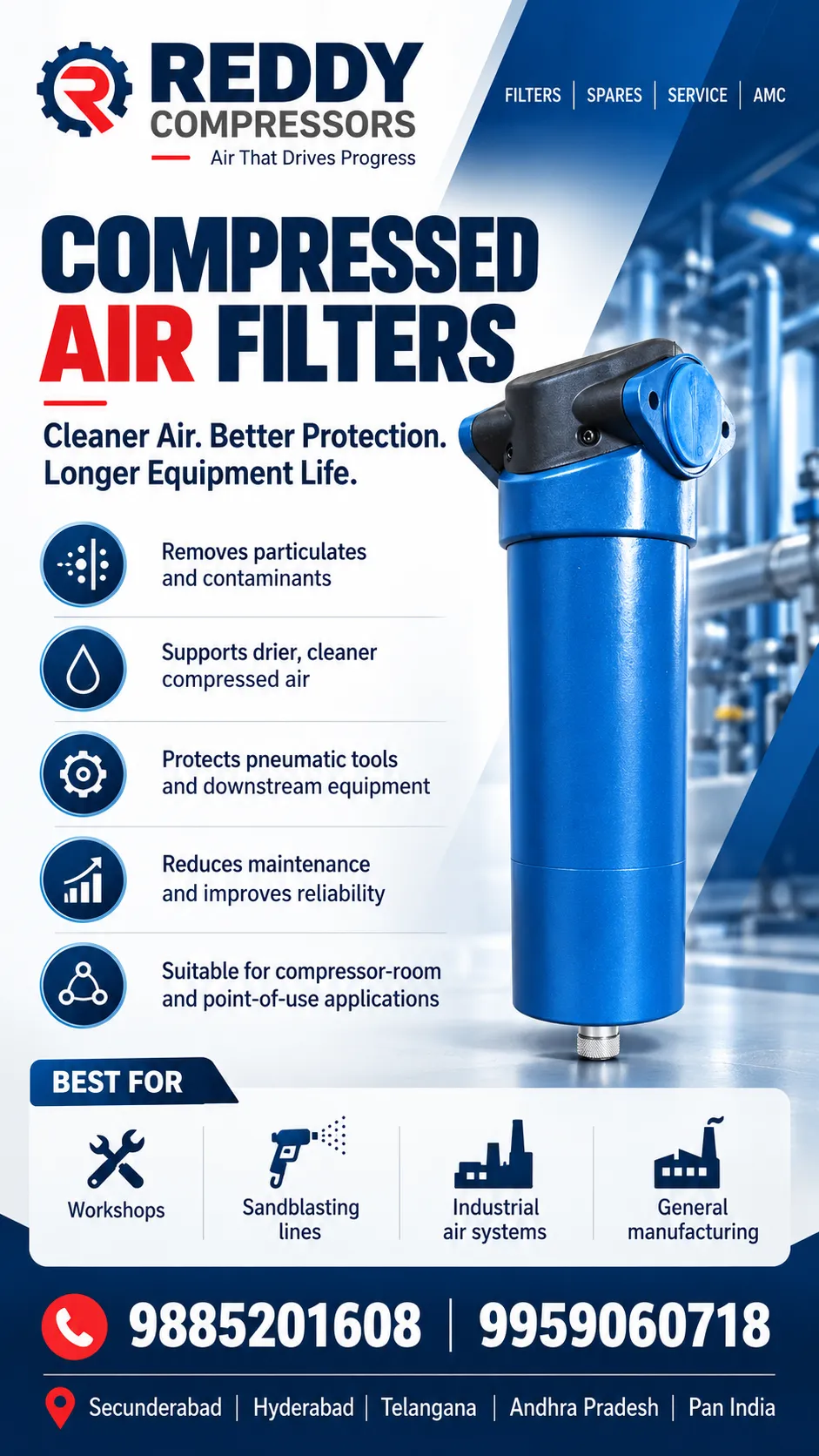
Identify the element
To identify it:
- Compressor make, model and serial number from the nameplate
- The existing part number and any superseded number
- Photographs of the nameplate and of the installed part
- Operating hours and the fault or service interval that triggered the enquiry
Signs the filter needs attention
Typical signs:
- A filter restriction indicator or alarm
- Falling output or rising temperature
- Visible dust or damage on the element
- The service interval has been reached or the site is unusually dusty
Conditions that change the choice
Dust loading, humidity, ambient temperature and the type of site decide how often the filter must be changed and whether heavy-duty or pre-cleaner arrangements are needed. We take the site into account, not just the machine.
Before you order
Check the element dimensions, seal type and media against the machine, not only against the old element.
Ask for the supply status of the item: whether it is genuine, OEM-approved or an alternative, and whether it is in stock or must be sourced.
Check the lead-time basis and the warranty terms that apply.
Frequently asked questions
How often should the intake filter be changed?
It depends on the machine and how dusty the site is. Follow the maintenance schedule and the restriction indicator, and shorten the interval in dusty conditions.
Can I clean and reuse an element?
Only where the manufacturer allows it for that element type. Many elements are replace-only, and cleaning can damage the media.
What happens if I use the wrong element?
A poor fit or poor media can let dust bypass the filter and wear the airend. The cost of that damage is far higher than the cost of the right element.