
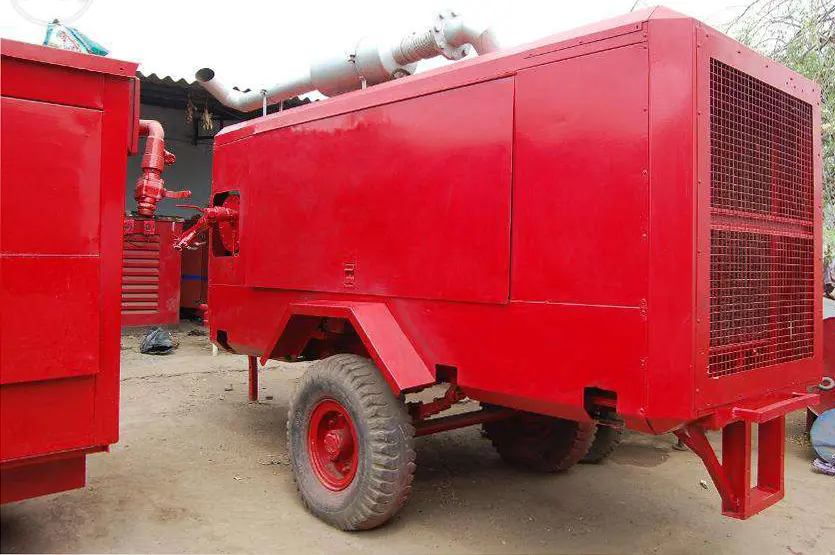
Reddy Compressors
Temporary-air mobilisation is complete when the correct equipment and accessories are safely positioned, connected and ready for the agreed commissioning process. A truck arriving at the gate is an intermediate milestone. Route access, handling arrangements, delivery sequence, utility readiness and missing accessories can determine when usable compressed air becomes available.
This guide supports plant engineers, maintenance planners, rental coordinators, transport teams and procurement managers arranging temporary compressed-air stations. It covers dispatch information, transport selection, access, loading and unloading coordination, installation dependencies, receiving records and schedule recovery. It develops the planned-rental and site-interface principles in the supplied Reddy Compressors material. All worked values are hypothetical. The article is planning guidance, not a lift plan, vehicle approval or equipment-specific handling instruction.
01 Define the mobilisation endpoint
Specify what the project means by delivery, placement, installation readiness and air available. These are different events with different owners. A compressor delivered without its required dryer may satisfy a transport milestone while failing the production requirement. Use a common definition across the rental order, transport booking and shutdown schedule.
Define the air-ready endpoint at the agreed receiving boundary: required pressure, net flow, quality and operating response demonstrated through the applicable commissioning process. Mobilisation prepares the system for that result; it does not establish acceptance merely because the engine starts.
Work backwards from the time the plant needs air. Include inspection, connection, electrical or fuel preparation, treatment stabilisation and controlled transfer. Where the existing station must be isolated for connection, coordinate the interruption explicitly. The transport schedule cannot be designed independently of the operating plant.
State the conditions that would prevent release to service. Missing connection components, transit damage, an unsuitable utility supply or unresolved support conditions should remain visible to the team responsible for the air requirement. Avoid reporting a single percentage-complete figure that conceals the one unresolved item blocking operation.
02 Build a complete equipment and accessory manifest
List the complete station by identifiable item: compressor, dryer, filters, receivers, manifolds, hoses, fittings, restraints, drains, cables, distribution equipment, fuel accessories and approved instruments. Include the documents and specialised connection items needed for the selected interfaces. Standard rental equipment may still require project-specific adaptors or terminations.
For each item, record quantity, equipment identification where assigned, shipping dimensions, transport mass, lifting or handling information, destination position and delivery priority. Separate confirmed supplier data from provisional estimates. Any change to the selected unit must be checked against transport and interface assumptions.
Small accessories can control the entire schedule. A missing flange, electrical termination or quality-compatible hose may prevent connection even when all major machines are present. Pack these items in labelled groups associated with the corresponding connection, and make the receiving team aware of their location.
The manifest should also identify items supplied by the customer or another contractor. A blank responsibility entry is a likely mobilisation failure. Record whether each item travels with the package, arrives separately or is already available and verified on site.
03 Use the actual transport configuration
Confirm mass and dimensions for the configuration being shipped. Fuel, fluids, batteries, mounted accessories, protective frames and loose equipment can change the transport load. Catalogue dimensions may exclude a towbar, exhaust component or packing arrangement. Obtain data for the actual dispatch condition.
Distinguish transport mass, lifting mass and operating mass. They may differ because some items are removed or installed after delivery. Ensure the handling team knows which state applies during unloading, and do not use a dry equipment weight for a lift involving additional contents without verification.
Record the centre of gravity and manufacturer-designated handling points where needed for the chosen method. Similar-looking packages can have different internal layouts. A general drawing from another model does not establish where the load will balance or which points are approved for lifting and restraint.
If reliable information is missing, resolve it before the vehicle or handling equipment is committed. Guessing the weight to secure a quick transport booking can create a much longer delay at the receiving site, where options are fewer and the production deadline is closer.
04 Select transport against the full load
Choose the vehicle and load arrangement using total mass, dimensions, axle loading, restraint requirements and route conditions. Nominal payload alone is insufficient. The carrier must determine whether the proposed arrangement is suitable for the vehicle and the applicable transport requirements.
For illustration, a manifest contains a 6,200 kg compressor, 900 kg dryer, 700 kg receiver and 800 kg of accessories and packing. Total cargo is 8,600 kg. If the proposed vehicle has an approved available payload of 10,000 kg, the arithmetic leaves 1,400 kg. It does not prove that the load distribution, axle limits, deck loading or dimensions are acceptable.
Check how the cargo can be arranged and restrained without damaging enclosures or obscuring required information. Equipment should not be stacked unless the manufacturer and transport design permit it. A compact load plan can become unsuitable if it relies on weak covers or unapproved support points.
Confirm the dispatch and receiving sites can handle the selected vehicle. A vehicle suitable for the public-road journey may be too long for the plant's internal turning area or incompatible with the available unloading method. Select transport for the complete journey to the agreed unloading position.
05 Separate towable equipment from general portability
Portable does not automatically mean approved for road towing. Establish whether the package's running gear, coupling, brakes, tyres, lighting and documentation support the intended movement. Some equipment may be suitable for site repositioning but require a carrier for public-road transport.
Where towing is proposed, confirm compatibility with the towing vehicle and the applicable requirements through the responsible transport parties. Consider actual towing mass and load arrangement, not merely the compressor's nominal airflow or a brochure description. Do not infer towing suitability from the presence of wheels.
Where a wheeled compressor is carried on a vehicle, use the approved loading, support and restraint method. Its tow coupling or lifting point must not be assumed to serve every restraint purpose. The designated points and manufacturer's instructions govern the arrangement.
Check the receiving site's final repositioning method as well. A unit unloaded near the gate may still need to cross a restricted route or reach a surface unsuitable for its wheels. The mobilisation plan should resolve that movement before dispatch rather than leave it to the driver on arrival.
06 Survey the route and access envelope
Review the route to the site and the internal approach to the unloading area. Relevant constraints include road width, bridges, gradients, turning geometry, overhead obstructions, gates, temporary works and traffic restrictions. Confirm any required permissions through the transport provider and site authority for the actual load.
Height should be assessed for the complete loaded vehicle. In a hypothetical screening example, deck height is 1.10 m, equipment height is 2.65 m and transport packing adds 0.15 m, giving 3.90 m overall. A stated 4.00 m opening leaves only 0.10 m on paper. That small nominal difference is not approval to pass through it.
Verify actual clearance, the loaded configuration and movement conditions, including slopes and vehicle behaviour, with the responsible competent team. If the route is unsuitable, consider another vehicle or route. Do not remove structural obstructions or modify the equipment informally to make the load fit.
Keep the route information current. Scaffolding, parked vehicles, roadworks or stored materials can invalidate a survey performed earlier. Establish who confirms access shortly before arrival and how the driver receives an updated approach instruction.
07 Confirm the site can receive the delivery
Identify the gate, receiving contact, delivery window, required documents, parking or holding area and unloading location. Confirm that the site is ready to accept the equipment rather than merely expecting it. Security clearance and vehicle arrival should be coordinated with the people who control unloading and placement.
The unloading area needs suitable space, ground conditions, segregation and access for the planned equipment. Its capacity should be assessed for the transport and handling operation as well as the final compressor position. A hardstanding that supports a parked machine does not automatically support crane outrigger reactions or a loaded handling vehicle.
Separate people from vehicle movements as far as practicable through the approved traffic arrangement. Avoid using an active pedestrian route as an improvised unloading area. Drivers, site staff and handling contractors need a shared understanding of where they should be during the operation.
Resolve a holding strategy if the vehicle arrives early or the unloading area becomes unavailable. Waiting on a public road, blocking emergency access or queuing across a plant entrance should not be the default response. Communicate a safe alternative before dispatch.
08 Plan unloading around the selected package
Choose unloading and handling methods from the equipment instructions and site conditions. Crane lifting, forklift handling, ramps and other methods each have different requirements. A method used successfully for a smaller compressor should not be assumed suitable for a larger or differently configured package.
Lifting operations require an appropriate competent plan, supervision and suitable equipment. Confirm load information, handling points, the intended path and final position. Keep people clear of suspended loads and other danger areas through the approved method; the article does not prescribe sling selection or lifting movements.
For illustration, assume a package mass of 6.2 tonnes and 0.4 tonnes of lifting accessories. The combined suspended mass is 6.6 tonnes before applying the actual crane chart's conventions for deductions and capacity assessment. A crane advertised with a much larger maximum capacity may still be unsuitable at the required radius, boom configuration or ground condition.
Forklift selection similarly depends on the rated capacity at the actual load centre, attachment and configuration, with suitable approved lifting pockets or support. Do not treat a nominal forklift tonnage as confirmation for an unusually long package. Resolve suitability with the responsible handling team before the vehicle arrives.
09 Prepare equipment for transit and secure the load
Follow the manufacturer's transport preparation requirements. Relevant actions may include securing moving parts, protecting connections, managing fluids, isolating energy sources and placing components in their transport positions. The exact requirements depend on the package; use the selected unit's instructions.
Protect air connections and quality-sensitive components from moisture, dirt and foreign material. Keep caps and protective packaging suitable for the intended cleanliness requirement. Loose hoses and fittings should not arrive contaminated simply because the main compressor was protected.
The transport operator and loading party must agree the restraint arrangement and their responsibilities. Use suitable designated points and protect equipment from restraint damage. Lifting points, tow points and lashing points should not be treated as interchangeable unless approved for the relevant use.
Record the dispatch condition with equipment identification and relevant photographs. This assists receiving inspection and discrepancy resolution, but photographs do not replace verification of a safe load. Where transport preparation changes the operating configuration, provide a clear record of what must be restored before commissioning.
10 Sequence deliveries for installation access
Plan delivery order around placement and connection dependencies. The heaviest or most urgent-looking machine is not always the first item that should enter the site. A receiver or treatment skid may need to be positioned behind the compressor, and bringing the compressor first could block the only handling route.
Delivery group | Dependency to check | Consequence of poor sequencing |
|---|---|---|
Ground preparation and supports | Final layout and load assessment | Machines arrive without an approved position |
Equipment at the rear of the station | Handling access before front units | Rehandling or temporary removal |
Compressor and treatment packages | Correct installation order | Blocked maintenance or connection space |
Hoses and interface fittings | Availability before connection team starts | Idle labour and delayed air readiness |
Electrical or fuel equipment | Ready before commissioning | Connected air system cannot operate |
Test and quality instruments | Available for acceptance | Operation cannot be demonstrated as required |
For multiple vehicles, give each a load identity and arrival slot. Confirm whether unloading resources can serve more than one vehicle and whether the site has space for overlap. A delivery plan that assumes simultaneous unloading with one crew is not a workable schedule.
11 Schedule to air readiness rather than arrival
Build the schedule from tasks and dependencies. Distinguish sequential work from activities that can safely proceed in parallel with the available people and space. Include receiving inspection and commissioning rather than treating them as negligible time after transport.
For an illustrative programme, transport takes 4 hours and gate processing takes 0.5 hour. Unloading and positioning take 1.5 hours. After positioning, mechanical connection requires 2 hours and electrical preparation requires 3 hours, assumed to proceed in parallel using separate teams. Commissioning then takes 1.5 hours. Total elapsed time is 4 + 0.5 + 1.5 + 3 + 1.5 = 10.5 hours.
Dispatch at 06:00 therefore screens as 16:30 air readiness, before adding any contingency. If the same team must perform both connection tasks sequentially, elapsed time becomes 12.5 hours and readiness moves to 18:30. The difference comes from resources and dependencies, not driving speed.
All durations in this example are assumptions. Validate them for access, equipment, inspection and test needs. Do not shorten the commissioning allowance to recover a late truck without assessing what work still must be completed.
12 Identify the activities that control completion
The critical path is the chain of dependent activities that determines the earliest completion. Delays outside that chain may be absorbed within available float, while a short delay to one critical item may move the entire air-ready time. Make those relationships visible in the mobilisation record.
Using the preceding example, the 3-hour electrical task controls the parallel connection stage. If mechanical work increases from 2 hours to 2.5 hours, completion is unchanged under the stated assumptions. If electrical work increases to 4 hours, air readiness moves one hour later. If mechanical work grows to 4.5 hours, it becomes the controlling branch.
Shared resources can change the path. A crane, electrical technician, permit window or quality instrument may be required by several packages. Scheduling each machine independently can conceal conflicts that become obvious only when the station is viewed as a whole.
Where interruption is costly, identify preparation that can be completed in advance: confirmed interfaces, access arrangements, installation materials, support preparation and utility assessment. Earlier preparation often gives a more dependable reduction in mobilisation time than attempting to accelerate unfamiliar work after arrival.
13 Confirm dispatch readiness with evidence
Before dispatch, confirm the selected equipment, complete manifest, transport arrangement, receiving window and site readiness. Ensure the package's service status and required documents are available. Do not assume that equipment reserved in a fleet system has already been prepared for the specific duty.
Check project-specific interfaces against the supplied items. A pressure rating or connection size alone may not establish compatibility; thread form, flange arrangement, electrical details and treatment requirements can matter. Identify the person who has matched the field interface to the dispatch list.
Confirm communications between dispatch, carrier, receiving team and installation lead. Provide an escalation path for delays or substitutions. A replacement unit should be checked for duty, dimensions, mass, handling, utilities and connections rather than accepted solely because its nominal airflow is similar.
Release information should distinguish verified facts from pending conditions. If the site can receive but cannot yet commission, state that explicitly in the project schedule. Dispatch may still be appropriate in some circumstances, but the user of the air should understand the resulting limitation.
14 Receive the load before releasing restraints
At arrival, check the vehicle and load condition through the approved receiving process. Look for evidence that cargo has shifted or become unstable, and ensure the planned unloading method remains suitable. Removing restraints from a shifted load can expose people to movement or falling equipment.
Where instability or significant damage is suspected, keep the area controlled and obtain a competent recovery plan. Do not ask the driver or site labour to improvise a quick correction to protect the delivery schedule. A transport discrepancy is a handling problem to resolve before it becomes an injury or equipment failure.
Match equipment identities and quantities to the manifest. Record damage, missing items, protective caps, accessories and relevant transport-condition indicators where provided. Separate a logistics receipt from technical acceptance: signing for the number of packages does not prove fitness for service.
Use an agreed discrepancy record with photographs and responsible contacts. This helps the supplier decide whether an item can be inspected, repaired, replaced or held. Keep affected equipment out of operation until its suitability is established through the appropriate process.
15 Protect cleanliness during installation
Temporary-air systems can lose their intended cleanliness between dispatch and commissioning. Open hose ends on wet ground, uncovered filters or contaminated fittings can compromise an otherwise suitable treatment train. Plan clean storage and connection practices around the application requirement.
Keep protective closures in place until the relevant connection is ready, following equipment instructions. Segregate components intended for quality-sensitive service from general-use hoses with uncertain history. Identification should survive transit and handling so crews can recognise the correct items.
Where transit or installation contamination is suspected, determine the required inspection, cleaning or replacement before use. Do not assume that briefly blowing air through a line proves the required cleanliness or removes every contaminant. Any purging or testing needs a controlled method appropriate to the equipment and site.
Treat required air-quality verification as part of the commissioning endpoint. Equipment certification or a clean dispatch record may support the evidence, but the installed system and receiving boundary still need the checks specified for the project.
16 Manage deviations without losing the original duty
Common deviations include a different vehicle, late delivery, substituted equipment, missing fittings or an unavailable placement area. Review the effect on both safety and air service. A change that solves transport may create an electrical, pressure, treatment or maintenance problem.
For example, moving the station to a temporary holding position can lengthen the air main and cable route. If that position becomes the operating location, revisit pressure loss, electrical supply, cooling, exhaust and community considerations. The phrase temporary position does not make those effects disappear.
Record who can approve a technical substitution and who can accept a schedule change. Commercial dispatch staff should not be expected to decide that a different air-quality arrangement is equivalent without the relevant engineering assessment. Likewise, a handling contractor should not be left to choose an operating location solely for unloading convenience.
Maintain a concise decision record: what changed, why, what was checked, who accepted it and which drawings or schedules were updated. This preserves accountability without turning each routine clarification into a new project.
17 Plan for weather and transport disruption
Assess credible causes of delay, including road restrictions, heavy rain, poor visibility, site closure and handling conditions. Define how the carrier and site communicate a revised arrival estimate. A live location update is useful, but it does not indicate whether the unloading crew or receiving window will still be available.
Weather can affect both the journey and the lift or placement operation. The responsible teams must apply the limits for the selected equipment and method. Do not pressure crews to continue handling outside those limits because production is waiting.
If a missed delivery window moves unloading to the next shift, update the complete readiness schedule. A one-hour transport delay can become a much longer project delay when it misses a crane booking or isolation window. Identify alternative resources only when their suitability and availability are confirmed.
For essential service, retain the agreed contingency until the temporary system has passed its acceptance process. This may involve maintaining an existing source or an approved reduced-demand strategy. Equipment in transit is not available compressed-air capacity.
18 Compare mobilisation cost and schedule risk
Include transport, loading, unloading, permits where applicable, escort requirements where applicable, waiting time, handling resources, installation labour and expected return movements. Compare quotations on the same scope. A low transport price that excludes unloading may produce a higher total cost and a less reliable schedule.
For illustration, option A includes ₹35,000 transport, ₹25,000 handling and ₹15,000 installation support, totalling ₹75,000. Option B includes ₹48,000 transport, ₹12,000 handling and the same ₹15,000 installation support, also totalling ₹75,000. Their suitability depends on scope, timing and operational constraints, not the transport line alone.
Suppose a delay causes four billed waiting hours at an assumed ₹3,000/hour plus an approved ₹8,000 crew remobilisation. Incremental logistics cost is ₹20,000. Keep this separate from production loss, which requires a supported valuation and an established causal link.
Do not claim savings from faster mobilisation merely by multiplying an optimistic response time by revenue per hour. Record the actual time to accepted air service and the verified effect on production. Use estimated delay scenarios for planning, with their assumptions visible, and measured outcomes for project conclusions.
19 Hand over a station that can be commissioned
The mobilisation handover should identify the installed equipment, as-placed layout, connections completed, utilities available, transit findings and outstanding limitations. Provide the instructions and records needed by the commissioning team. Missing information can delay acceptance as effectively as a missing hose.
Handover subject | Record required | Receiving decision |
|---|---|---|
Equipment identity | Model, assigned identification and manifest | Correct package is present |
Placement | Approved location and as-installed arrangement | Support and access conditions established |
Utilities and connections | Completed scope and remaining work | Readiness for controlled testing |
Transport findings | Damage and discrepancy disposition | Equipment suitable to proceed |
Air quality preparation | Cleanliness and treatment records | Required verification can begin |
Operating support | Contacts, instructions and responsibilities | Team ready for commissioning and service |
Agree who accepts the mobilisation stage and who authorises operation after commissioning. Preserve that distinction in the record. Also retain removal access and packaging requirements so that the eventual return journey does not require dismantling unrelated plant.
For a Reddy Compressors enquiry, provide the air duty, required air-ready time, site location, access constraints, handling arrangements and utility readiness. Secunderabad and Hyderabad form the operating base, with Telangana and Andhra Pradesh as priority regions. Wider project mobilisation depends on confirmed equipment, transport, site conditions and support resources; no general website statement should promise an unverified arrival or restoration time.
20 Frequently asked questions
Does delivery time mean the time compressed air becomes available
Not necessarily. Arrival, unloading, positioning, connection and commissioning are separate stages. Agree the air-ready endpoint and include every dependency in the schedule. A truck at the gate does not establish accepted air service.
Can any portable compressor be towed to the site
No. Confirm the selected package's towing suitability, the towing vehicle and applicable transport requirements. Equipment designed for site movement may need a carrier for road travel. Wheels alone do not establish road-towing approval.
Is vehicle payload enough to select the transport
No. Dimensions, axle loading, deck capacity, restraint, route and unloading arrangements also matter. A cargo total below nominal payload is only one check in the transport assessment.
Can the receiving site use its available crane or forklift
Only after suitability is established for the actual load, handling points, radius or load centre, ground conditions and operation. Maximum advertised lifting capacity is not the capacity available in every configuration.
What commonly delays temporary air after the equipment arrives
Unready utilities, missing fittings, inaccessible placement, unavailable handling resources, transit damage and incomplete treatment or commissioning arrangements can all delay service. A complete manifest and dependency-based schedule help identify these issues before dispatch.
Can a substituted compressor be accepted without changing the plan
Only if the relevant duty, quality, dimensions, mass, handling, utilities and connections have been checked and found suitable. Similar airflow alone does not establish equivalence. Record the accepted substitution and update affected documents.
Sources and evidence basis
22 Sources and technical basis
Owner-supplied source: B.A. (16-8-26) RC 2, supplied PDF, rental and contingency planning section. It establishes planned rental applications and the value of preparing connections, utilities and site access before an emergency. This article develops that intent into a transport and mobilisation framework.
Owner-supplied reference: Air Compressors brochure, supplied PDF, portable diesel equipment sections. Used for temporary industrial and construction application context. Historic product descriptions have not been treated as current fleet availability, road-towing approval or transport specifications for a selected machine.
UK Health and Safety Executive, Loading. Reference for coordinating loading and unloading and checking whether loads have shifted before restraints are removed. https://www.hse.gov.uk/workplacetransport/information/loading.htm
UK Health and Safety Executive, Planning and organising lifting operations. Reference for matching planning and competence to the lifting task. It does not provide a lift plan for the illustrative packages. https://www.hse.gov.uk/work-equipment-machinery/planning-organising-lifting-operations.htm
UK Health and Safety Executive, Load security. Reference for the responsibilities and hazards associated with loading, securing and unloading goods vehicles. UK guidance must not be presented as certification under Indian transport or lifting requirements. https://www.hse.gov.uk/logistics/load-security.htm
Atlas Copco Rental, Transportation. Manufacturer rental reference for including equipment transportation within project planning. Its service description does not establish Reddy Compressors availability or delivery performance. https://www.atlascopco.com/en-in/rental/why-rental/transportation-rental-equipment
References checked for this edition on 3 October 2026. Mass, dimension, timing and cost examples are original illustrative assumptions. Actual mobilisation requires verified equipment information, a suitable carrier, competent handling arrangements and the requirements applicable to the route and site. No particular vehicle, lift, route or response time has been certified by this article.