
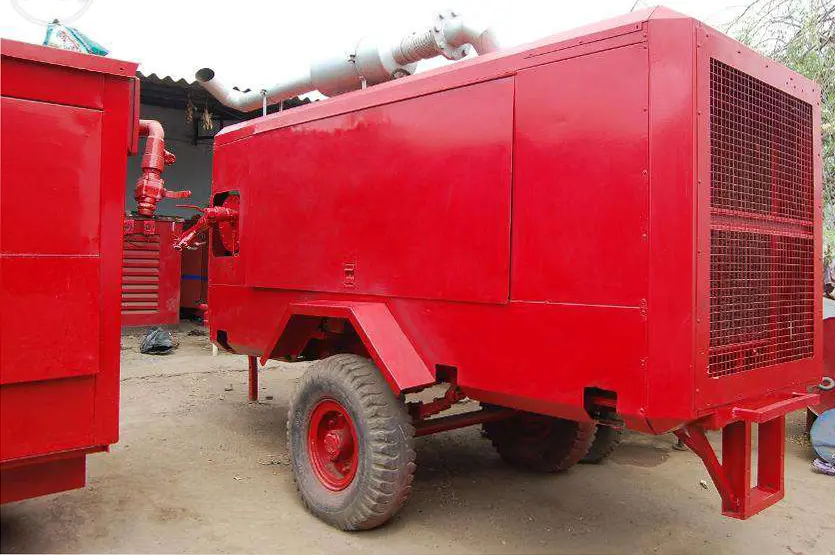
Why rental air needs a treatment train
Air leaving any compressor is hot and saturated with water vapour. An oil-injected screw machine typically discharges at about 75–95 °C before its aftercooler, and even after the aftercooler the air is warm and carries liquid water and oil aerosol. On a construction site that may not matter much, but for a pharmaceutical plant covering a compressor breakdown, an instrument-air outage at a power station, coating work or fibre-optic cable blowing, untreated air will cause product, instrument or quality problems.
Moisture load in Indian conditions is high. In a Hyderabad summer at 40–45 °C, or on a humid coastal site at Visakhapatnam or Kakinada, a 1,000 cfm compressor can condense a large volume of water every shift. A treatment train that is right-sized and well drained removes that water before it reaches the process.
What each stage does
Every stage has a specific function. More housings do not make better air if the stages are in the wrong order or sized for the wrong conditions.
| Stage | Main function | Point to watch |
|---|---|---|
| Aftercooler | Cools discharge air and condenses much of the water vapour | Ambient temperature, cooling airflow, clean cooler fins |
| Water separator with drain | Removes condensed liquid water and oil | Correct flow range, reliable automatic drain |
| General-purpose coalescing filter | Removes aerosols and particles before the dryer | Rated flow at actual pressure, drain, differential pressure |
| Dryer | Lowers the pressure dew point to the required level | Corrected capacity for inlet temperature, pressure and ambient |
| Fine coalescing filter | Removes remaining oil aerosol to a lower level | Element grade, saturation, drain |
| Activated-carbon filter | Removes oil vapour and odours where required | Only after dry, aerosol-free air; element life |
| Dust filter after desiccant dryer | Catches desiccant fines | Grade and differential pressure |
Typical dryer choices are a refrigerated dryer, giving a pressure dew point of about +3 °C, for general process and plant air, and a desiccant dryer, giving typical −20 °C or −40 °C pressure dew point, for instrument air, pharma processes, cold outdoor lines and sensitive coating work.
Defining the air quality you need
“Clean and dry” is not a specification. Define the requirement at the point where air enters the process, using ISO 8573-1 classes for particles, water and oil where the plant uses them. For example, a plant’s instrument-air standard may state a pressure dew point class, an oil class and a particle class; a pharmaceutical process may require oil-free compression plus sterile filtration at the point of use.
Record these points before choosing equipment:
- Required pressure dew point at operating pressure, and the lowest temperature the air lines will see.
- Oil content limit (aerosol and vapour), and whether oil-free compression is required.
- Particle class or filter grade required at the point of use.
- Whether the plant’s existing permanent treatment will remain in service downstream of the tie-in.
- Any specialist duties such as breathing air or medical air, which need their own standards and validation beyond an ordinary rental package.
Where the process requires Class 0 or equivalent oil-free air, a rental oil-free compressor is normally the starting point; filtration of oil-injected air is a different risk case and should be agreed with the plant’s quality team.
Sizing and correction factors
Dryers and filters are rated at reference conditions, commonly around 7 bar (101.5 psig) inlet pressure, 35 °C inlet temperature and 25 °C ambient for refrigerated dryers. Site conditions in India are often worse, so the nominal rating must be corrected:
- Higher inlet temperature carries more water vapour and reduces dryer capacity sharply.
- Higher ambient temperature reduces the refrigerated dryer’s condenser performance; air-cooled units in 40–45 °C summer heat need careful derating.
- Lower operating pressure increases the actual volume of air and reduces capacity.
- Higher pressure generally increases capacity, but housings and dryers must be rated for it.
Use the maker’s correction-factor table for each component. As a worked method: take the peak delivered flow at the lowest operating pressure, divide it by the product of the correction factors for inlet temperature, ambient and pressure, and select a dryer whose nominal rating exceeds the corrected figure. Our dryer correction factor worksheet walks through the steps.
For heatless desiccant dryers, remember that a significant share of the dried air is used as purge to regenerate the off-line tower. The compressor must supply both the process flow and the purge, so the compressor is sized larger than the process demand alone. Heated and blower-purge designs reduce purge air but need electrical power. The adsorption dryer purge worksheet helps compare options.
Pressure drop budget
Every component costs pressure. A typical train of separator, two coalescing filters, dryer and dust filter, with hoses and connections, can lose a noticeable fraction of a bar when clean and more as filters load. Since each extra bar at the compressor costs about 7% more power, and diesel portable compressors burn more fuel at higher pressure, the train should be planned with a pressure budget:
- Start from the minimum pressure needed at the process.
- Add the hose and manifold losses at peak flow.
- Add the treatment train losses at peak flow, using elements at their change-out differential, not new.
- The total sets the minimum compressor discharge pressure. Confirm the compressor can deliver the required flow at that pressure.
Fit differential pressure gauges across filters and a pressure gauge at the delivery point so the operator can see when elements need changing.
Layout, power and drainage on site
A temporary train is often set up on a site that was not designed for it. Plan for:
- Location. Shade and good ventilation for dryers; away from hot exhaust of diesel compressors and generators; level, firm ground.
- Electrical supply. Refrigerated and heated desiccant dryers need power. On a diesel-only site, a generator is required; our team across Reddy Generators and Reddy Compressors can supply both under the same management.
- Condensate. Automatic drains on every separator and filter, piped to a collection point. Condensate from oil-injected compressors contains oil and should be treated in an oil-water separator rather than run to open ground.
- Hoses and connections. Rated for the pressure and temperature, with whip restraints on large hoses, and kept clean during installation to avoid contaminating the downstream line.
- Bypass and isolation. Valves to isolate a filter or dryer for element change without stopping the process, where the process allows.
Readiness after transport and commissioning
Rental treatment equipment is moved between sites. Before it supplies a sensitive process, check that:
- Filter elements are new or verified and correctly seated, and housings are clean inside.
- Desiccant dryers have been regenerated and reach dew point; desiccant may have taken up moisture in storage or transit.
- Refrigerated dryers have stabilised and show the expected dew point before air goes to the process.
- All drains operate and discharge to the correct point.
- Downstream hoses and the first section of plant pipe have been blown through to clear any debris.
At start-up, measure pressure dew point at the delivery point with a calibrated instrument, check pressure at peak flow and record filter differential pressures. These form the acceptance record for the hire period.
Common problems and fixes
| Symptom | Likely cause | Fix |
|---|---|---|
| Water at the process after a dryer | Dryer overloaded by hot inlet air or high ambient; failed drain | Check inlet temperature and correction factors; repair drains; add aftercooling |
| Oil traces downstream | Saturated coalescing elements; wrong filter order | Replace elements; check sequence and separator before filters |
| Pressure low at the process | Loaded filters, undersized hoses, dryer pressure drop | Check differential pressures; resize hoses; revise pressure budget |
| Dew point rising with a desiccant dryer | Insufficient purge, wet inlet air, desiccant contaminated | Check purge setting and inlet water load; inspect desiccant |
| Dryer trips in afternoon heat | High ambient and poor ventilation | Shade, move away from exhausts, use a larger or water-cooled unit |
How Reddy Compressors helps
Reddy Compressors, at Tarnaka, Secunderabad since 2002, runs its own rental fleet from 50 to 2,000 cfm and 2 to 30 bar (about 30–435 psig), diesel and electric, oil-injected and oil-free. We supply rental packages with aftercoolers, moisture separators, filters and dryers matched to the duty, plus hoses and site support. Our more than 20 service engineers and technicians cover Telangana and Andhra Pradesh, and equipment is supplied across India. On hire jobs, machines are serviced every 300 running hours.
- Selection of the treatment train from the required air quality, site conditions and peak flow.
- Rental compressors with matched dryers and filters for breakdowns, shutdowns, instrument-air outages and project work.
- Generators for dryer power on diesel sites, through Reddy Generators under the same management.
- Commissioning checks of dew point, pressure and drains at the delivery point.
We are an independent multi-brand specialist, not an authorised dealer of any brand. We have tie-ups with all major and reputed brands.
What to send us
- The process being supplied and its air-quality requirement (dew point, oil, particles).
- Peak flow, minimum pressure at the process and the expected hire duration.
- Site location, ambient conditions and whether electrical power is available.
- Tie-in point, existing permanent treatment, and hose run length.
- Photos of the site location and any existing compressor nameplates.
Frequently asked questions
Do I need a dryer with a rental air compressor?
For construction tools, breakers and general site work, an aftercooler and water separator are often enough. For production, instrument air, coating, pharma, food or cable blowing, a dryer is usually needed. A refrigerated dryer gives a typical pressure dew point of about +3 °C; a desiccant dryer gives typical −20 °C or −40 °C for sensitive or cold duties.
Why is there still water after the rental dryer?
The dryer is probably overloaded or its drains are failing. Hot inlet air, high ambient temperature or low operating pressure all reduce dryer capacity, so a dryer that is correct on paper can be too small on a hot afternoon. Check inlet temperature, apply the maker’s correction factors, confirm all automatic drains work and add aftercooling if needed.
How do I size a dryer for a temporary compressor?
Start with the peak delivered flow at the lowest operating pressure. Divide it by the maker’s correction factors for inlet temperature, ambient temperature and pressure, then choose a dryer rated above that figure. For heatless desiccant dryers, add the purge air to the compressor capacity, because a significant share of the dried air is used to regenerate the off-line tower.
Can rental compressor air be used for pharmaceutical production?
Yes, with the right package. Most pharmaceutical duties start from a rental oil-free compressor, followed by a dryer and filtration, often with sterile filters at the point of use. The required ISO 8573-1 classes should come from the plant’s quality team, and the air should be tested at the delivery point before use. Oil-injected air with filtration is a different risk case.
How much pressure drop does a treatment train cause?
It depends on the components, flow and element condition. Each filter and the dryer cost some pressure, and losses grow as elements load. Plan with a pressure budget: minimum process pressure plus hose and treatment losses at peak flow, using elements at change-out condition. Fit differential gauges so operators can see when to change elements.
Is compressor condensate safe to drain on the ground?
Condensate from oil-injected compressors contains oil and should not be drained to open ground or storm drains. Collect it from every separator, filter and dryer drain and pass it through an oil-water separator, then dispose of the separated oil correctly. Condensate from oil-free compressors contains no compressor oil but can still carry contaminants from the intake air.
Related pages
Calculators and worked examples
These tools give indicative figures for screening, comparison and for preparing an enquiry. They run in your browser and send nothing. No prices or tariffs are assumed: enter your own to see costs. Efficiencies and other figures shown are example values: replace them with your own. Results are not a performance guarantee or a design certificate; final selection is confirmed by a service engineer against the machine data sheet and the site.
Dryer capacity correction
Apply one dryer model’s published correction factors to its rated capacity, find the margin against your design flow, and the minimum rated capacity that would meet it.
The worked example below shows the method with fixed numbers. Turn on JavaScript to change the inputs.
Worked example
Inputs
- Design flow (m³/min FAD): 15
- Rated capacity of the candidate dryer (m³/min): 17
- Pressure correction factor (from the data sheet): 0.96
- Inlet temperature correction factor: 0.72
- Ambient or cooling-water correction factor: 0.84
- Dew point correction factor (1 if not published): 1
- Margin you want to keep (%): 10
Result
- Product of factors: 0.581
- Corrected capacity: 9.87 m³/min (349 cfm)
- Margin against design flow: -34.2 %
- Assessment: Undersized at these conditions
- Minimum rated capacity (no margin): 25.83 m³/min
- Minimum rated capacity with your margin: 28.42 m³/min: choose the next catalogue size at or above this
- Condition reducing capacity most: Inlet temperature factor 0.72
Method. Corrected capacity = rated capacity × F(pressure) × F(inlet temperature) × F(ambient) × F(dew point). Margin (%) = (corrected capacity − design flow) ÷ design flow × 100. Required rated capacity = design flow ÷ product of factors (× (1 + your margin) if you keep one); choose the next catalogue size at or above it. Use the factors for the exact model and revision from its data sheet; enter 1 for a factor the maker does not publish. If the maker publishes a combined chart instead, enter its single factor and 1 for the rest.
What to take from it. A dryer that looks comfortably sized at rating conditions can be heavily overloaded on a summer afternoon. Recalculate after any change in pressure, inlet temperature, location or demand.
Technical content reviewed by D. Srinivas Reddy, Managing Partner and service engineer, Reddy Compressors. Last updated 17 October 2026. How our engineering content is reviewed.
Pressure budget and the cost of excess pressure
Add up the pressure that is lost between the compressor and the point of use, and see what a lower set-point would be worth.
The worked example below shows the method with fixed numbers. Turn on JavaScript to change the inputs.
Worked example
Inputs
- Pressure needed at the point of use (bar g): 6
- Dryer and filter loss (bar): 0.5
- Piping loss (bar): 0.3
- Hose, fittings and regulator loss (bar): 0.3
- Control band and safety margin (bar): 0.3
- Current compressor set-point (bar g): 8
- Compressor input power (kW): 75
- Saving per bar reduced (%): 7
- Running hours per year: 6000
Result
- Total pressure losses: 1.1 bar
- Control band and safety margin: 0.3 bar
- Compressor pressure needed: 7.4 bar g (point of use + losses + band and margin)
- Possible reduction from current set-point: 0.6 bar
- Indicative energy saving: 18,900 kWh per year
- Indicative cost saving: Enter your electricity tariff (cost per kWh) above
Method. Required compressor pressure = point-of-use pressure + sum of losses. Savings = power × (reduction in bar) × saving per bar. A saving of roughly 6–8% of compressor power per bar of pressure is commonly quoted; it is indicative and varies with machine type and control, so edit it to suit.
What to take from it. The saving is real only if the farthest and most demanding point still works at the lower set-point. Prove it before you change the setting.