
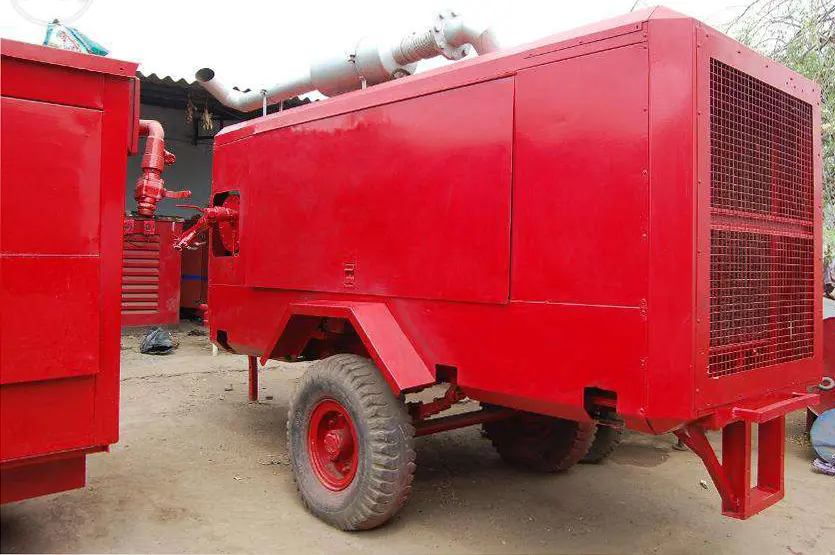
A temporary-air scope should explain what useful air will be delivered, where it will be delivered, the conditions under which that duty applies, and who provides every supporting activity. Exclusions should identify the work or resources outside the quoted package and show how the project will obtain them. An exclusion does not remove a physical requirement: if electrical connection, treatment or lifting is necessary, someone still has to provide it.
The strongest comparison between rental proposals begins with a common duty and a complete responsibility schedule. A compressor-only offer and an installed, operated air station are different products even when their compressor capacities look similar. A low daily rate can become a higher project cost after the missing equipment, utilities and services are included.
Reddy Compressors supports compressed-air requirements from its Secunderabad and Hyderabad base, with Telangana and Andhra Pradesh as priority markets and wider project support subject to scope and availability. This guide helps engineering, operations and procurement prepare an unambiguous enquiry and reconcile an offer. It is a technical scope guide, not a published set of Reddy Compressors hire terms or a substitute for the agreed project contract.
01 Separate the requirement from the proposed equipment
Begin with the production requirement rather than a machine description. State the normal and maximum useful airflow, pressure at the delivery point, required quality, operating hours, duration and essential duty after a failure. Identify the process, simultaneous users, startup events and any demand that can be rescheduled.
Then describe the equipment and services proposed to meet that requirement. The proposal may include compressors, dryers, filters, receivers, distribution, power or fuel arrangements, controls and operational support. Retain the connection between each item and the requirement it serves. An equipment list without a performance basis leaves the buyer to infer whether the full duty has been covered.
For example, “one 900 CFM compressor” does not establish the pressure at which that capacity applies, the flow reference conditions, treatment consumption, available power or the pressure at the farthest user. A requirement expressed at the agreed delivery boundary allows alternative configurations to be evaluated fairly. It also makes later changes visible when production requests a higher flow or a different air-quality condition.
02 Define the physical delivery boundary
Specify the actual connection at which the supplier's stated performance is assessed. Identify its location, connection standard, size, pressure rating and relationship to the treatment train. Distinguish the compressor outlet, the treated-air manifold and the customer's point of use. These locations can have materially different pressure and air-quality conditions.
If the rental scope ends at a manifold beside the compressor, downstream hoses and plant distribution still need evaluation. Decide who calculates their losses, supplies their components and confirms the end-use result. A statement that distribution is “by customer” should be accompanied by the information the customer needs to perform that task.
A drawing is often clearer than several pages of general wording. Mark the scope boundary, isolation points, measurement locations and retained plant equipment. Give the drawing a revision identifier and refer to it in the offer. If the connection moves during mobilisation, update the arrangement and check the consequences before treating the revised installation as equivalent to the original scope.
03 State capacity on a comparable basis
Flow must have an explicit basis and operating condition. Clarify whether a figure is compressor FAD, another reference-volume rate or actual volume in the pressurised line. Confirm the specified discharge pressure and relevant site conditions. Use equipment-specific performance information rather than assuming a nominal model designation represents the available output in every installation.
The customer normally needs useful air after treatment consumption and any included auxiliary demand. Suppose the required net flow is 18 m³/min, the selected dryer consumes an assumed 12% of compressor output, and another included auxiliary consumes 0.3 m³/min. The gross requirement is (18 + 0.3) ÷ 0.88 = 20.80 m³/min on the same reference basis. A 20 m³/min gross source would provide only 17.3 m³/min under those assumptions.
The purge allowance is illustrative, not a universal specification. Ask whether a quoted capacity already accounts for treatment and site conditions so losses are neither omitted nor counted twice. Record the information still awaiting equipment confirmation. An unresolved performance assumption should remain visible rather than being converted into a guaranteed duty through repetition in the purchase order.
04 Allocate the pressure budget
State the required operating pressure at the delivery boundary under the defined flow. Include permissible variation and any lower limit relevant to the process. Differentiate normal pressure control from maximum allowable working pressure and protective settings. One cannot be substituted for another.
A hypothetical user needs 6.2 barg. The evaluated treatment loss is 0.35 bar, temporary distribution loss 0.4 bar and local connection loss 0.15 bar. Upstream pressure needs to be 7.1 barg to meet that requirement under the stated conditions, before any separately justified control allowance. Quoting 7 barg at the compressor outlet would not meet the example duty if those losses apply downstream.
Assign responsibility for each segment of the budget. If the customer supplies a longer hose than the agreed length, the resulting pressure performance requires reassessment. If treatment elements load during the project, the scope should identify inspection and service responsibility. Do not use an exclusion for downstream piping as a reason to ignore a known mismatch between the offered pressure and the declared end-use requirement.
05 Define air quality and the evidence required
Specify the actual quality requirement rather than relying on “clean air,” “dry air” or “oil free” alone. Address particles, moisture and oil as relevant to the application, with the sampling location and operating conditions. Where a classification or test standard is required, identify the applicable edition and evidence needed in the project specification.
An oil-free compression mechanism does not by itself establish every aspect of delivered-air quality after transport through hoses and an existing plant network. Similarly, a dryer rating does not prove the required pressure dew point at every flow, inlet temperature and pressure. The supplied treatment material emphasises matching the delivered quality to the application and considering the complete treatment train.
Define who supplies sampling points, instruments, laboratory services where needed, consumables and test reports. State whether initial acceptance testing alone is included or whether ongoing monitoring is required. Specialist duties such as breathing air, medical use or validated process-contact supply require their own confirmed requirements; ordinary industrial rental wording should not be interpreted as approval for those applications.
06 List equipment and accessories by function
The equipment schedule should identify the compressors and every supporting item needed within the agreed boundary. Include treatment, storage, drains, manifolds, hoses, valves, couplings, restraints, cables, controls and metering where applicable. Provide quantities and the characteristics necessary to establish compatibility, not just generic descriptions.
An offer including “hoses” remains incomplete if the site needs a known bore, pressure rating, connection type and total route length. If six ten-metre assemblies are included but the actual approved route requires eighty metres, the missing twenty metres may also change pressure loss and handling. Resolve both the quantity and the engineering effect.
Separate supplied equipment from retained customer assets. Identify who verifies the condition and capacity of existing dryers, receivers or distribution components used by the temporary system. An old site drawing does not prove those components are suitable. Where verification is excluded from the supplier's price, appoint the party performing it and define the evidence required before the installation relies on those assets.
07 Make exclusions specific and actionable
A useful exclusion names the omitted item, its boundary, the responsible provider and the timing dependency. “Electrical work excluded” is much less useful than identifying the supply point and stating which party provides the feeder, protection, cable, termination, inspection and energisation. Apply the same clarity to lifting, fuel, operators and waste handling.
Use a short unresolved-items list where responsibility has not yet been allocated. The project cannot be considered fully scoped while necessary work remains unassigned. An exclusion may legitimately reduce a supplier's price, but it should not hide a gap in the total installation.
Scope item | Detail required | Consequence if unassigned |
|---|---|---|
Utility supply | Capacity and connection point | Package cannot operate as selected |
Treatment | Quality duty and net-flow basis | Process quality or capacity may fail |
Distribution | Route and compatible components | End-use pressure remains uncertain |
Lifting and access | Handling plan and site readiness | Mobilisation may stop at the gate |
Operating support | Attendance and responsibilities | Alarms and routine tasks may be missed |
Return and reinstatement | Release conditions and final state | Continued charges or incomplete handback |
The table is an allocation aid, not a standard allocation of liability. Each project should identify its actual parties and agreed obligations. If an item is unnecessary, record the reason rather than assigning it automatically.
08 Assign site preparation and access
Confirm the equipment location, ground or structural suitability, ventilation, drainage, access and exposure to neighbouring activities. Identify who supplies foundations or temporary support, barriers, weather protection where required and access modifications. The site-survey findings should be incorporated into the scope rather than left as informal notes.
State the vehicle and lifting access assumptions, working windows and restrictions. A package can be available at the supplier's depot while the project remains unable to receive it because the unloading area is obstructed. Distinguish equipment availability from readiness for installation and readiness to deliver accepted air.
Document site responsibilities that affect mobilisation time: inductions, permits, escorts, shutdown isolations and access to the connection point. Define how a delay will be recorded and communicated. Avoid blanket assumptions that every delay is caused by one party. A factual event log supports both rescheduling and any commercial review without compromising the technical work.
09 Define electricity and fuel responsibilities
For electric equipment, identify the required supply characteristics and which party verifies the available installation. Allocate cables, distribution equipment, protection, earthing arrangements, connection, inspection and authorised energisation. A quoted motor rating is not a complete electrical-duty specification; package auxiliaries and starting behaviour may affect the installation.
For diesel equipment, identify the fuel specification, storage arrangement, replenishment responsibility, operating access and agreed return level. Clarify whether fuel delivery, transfer equipment, attendance and consumption reporting are included. A fuel-excluded package still needs a reliable supply plan throughout nights, weekends and restricted-access periods.
Consider a hypothetical compressor consuming 28 litres per operating hour for sixteen hours each day. Planned daily consumption is 448 litres. A 500 litre usable stock would provide about 17.9 operating hours at that rate, before any separate reserve requirement. If replenishment cannot occur for two operating days, the plan is short even though the tank appears sufficient for one shift. This is a logistics calculation using an assumed rate, not a guaranteed fuel-consumption figure.
10 Separate operation from technical support
“Support included” can mean telephone advice, periodic inspection, a site visit, a resident technician or continuous attended operation. State which service is included, the hours covered, the expected competence and the tasks to be performed. Clarify who can change settings, acknowledge alarms and authorise a restart.
A technician attending commissioning is not automatically the operator for the entire hire. Similarly, remote monitoring does not itself provide a person to inspect a leak, refuel equipment or act on a local alarm. Describe the response path and the site's own responsibilities when the assigned operator is absent.
For a twenty-four-hour operation, twelve hours of included attendance leaves twelve hours to be covered through another agreed arrangement. Staffing needs must account for safe working arrangements and site requirements; the arithmetic is not a staffing recommendation. Where uninterrupted attendance is required, define the roster and handover responsibility. Do not imply a guaranteed attendance or recovery time unless the project agreement explicitly supports it.
11 Define maintenance and consumable coverage
State which routine inspections, scheduled services, lubricants, filters, replacement parts and travel are included. Distinguish normal planned maintenance from repairs associated with an identified abnormal condition, while avoiding assumptions about fault or liability before investigation. Set out how equipment will remain supported when service hours fall due during the hire.
If a unit has 180 operating hours remaining before its next scheduled service and is planned to operate eighteen hours per day, service will be due after about ten days. A fourteen-day assignment therefore needs a service arrangement within the hire period. A change to twenty-four-hour operation brings the same threshold forward to 7.5 days.
Confirm access for maintenance and whether the production duty permits a planned outage. If continuity is required, identify the temporary substitution or redundancy arrangement. “Maintenance included” does not establish that production can continue during maintenance. The scope should link the service plan with the operating demand, equipment availability and agreed interruption tolerance.
12 Distinguish standby from replacement support
A spare machine on site, a reserved off-site package and a commitment to investigate a breakdown are different services. State which is included and what useful capacity remains after the relevant failure. Include treatment, distribution and utilities in the continuity assessment.
Suppose two operating sources each deliver 12 m³/min and the normal duty is 20 m³/min. Loss of one leaves 12 m³/min until another source becomes useful. If no independent standby is provided, the installation does not maintain the full duty after that failure. A replacement transport plan may reduce the interruption but cannot be described as instantaneous redundancy.
Break recovery into identifiable events: notification, diagnosis, mobilisation, arrival, installation and accepted supply. A promise to acknowledge a call is not a promise to restore production within the same period. Reddy Compressors emergency coordination should remain subject to the confirmed project arrangement, without invented response guarantees. If the buyer requires a particular recovery objective, assess and price the arrangement needed to support it.
13 Define commissioning and acceptance
Agree the conditions under which the installation will be tested and accepted. Identify the required flow, pressure, quality, operating sequence and evidence. State who provides production access, measurement instruments, sampling services and the acceptance representative. Avoid a situation where equipment is installed but nobody is available to demonstrate the declared duty.
Separate initial equipment inspection from system acceptance. A compressor can operate correctly while the selected dryer limits capacity or a long distribution route prevents the required pressure at the user. The acceptance boundary should match the requirement and the responsibility schedule.
Set out how exceptions are handled. A minor documentation item and a failure to meet the required air quality are not equivalent. Record any temporary restriction, its operational effect and the agreed action. Any relationship between acceptance and the charging start must be expressly agreed; technical acceptance should not be assumed to define the commercial hire clock automatically.
14 State the time and charging basis
Define the hire start event, minimum period, included operating hours, extension basis, off-hire notice and collection conditions. Identify whether prices apply per calendar day, operating day, shift, week or another unit. Record how fractions, weekends and public holidays are treated in the actual agreement.
A project with ten operating days may occupy equipment for fourteen calendar days. At an illustrative ₹12,000 per chargeable calendar day, hire is ₹168,000; multiplying by ten would understate it by ₹48,000. This example does not prescribe calendar-day charging. It shows why the unit and event definitions matter before comparing offers.
Where excess hours apply, confirm the relevant meter and allowance. If the agreement includes 160 operating hours and the accepted record shows 184 hours, the excess is 24 hours. At a hypothetical ₹500 per hour, the item is ₹12,000 before any other agreed treatment. The actual contract controls the calculation, including rounding, excluded periods and any applicable adjustments.
15 Compare proposals on an equivalent scope
Use a common comparison schedule and add only the items required to meet the same duty. Do not credit a low price for omitting a necessary service. Equally, do not add a cost to an offer when it is already included elsewhere in the package.
For a hypothetical fourteen-day assignment, Offer A charges ₹10,000 per day for the compressor, ₹2,000 per day for treatment, ₹50,000 for transport and ₹30,000 for connection. Its scoped subtotal is ₹168,000 + ₹50,000 + ₹30,000 = ₹248,000. Offer B charges ₹14,000 per day including compressor, treatment and connection, plus ₹40,000 transport: ₹236,000. Offer B is ₹12,000 lower on those stated items despite its higher daily headline rate.
Both comparisons still require equal performance, quality, operating hours and support. If energy, operators or return preparation differ, include those differences before deciding. These figures are illustrative and are not supplier quotations. Keep taxes, deposits and refundable amounts identified according to their actual treatment rather than combining all payments into one unexplained operating cost.
16 Include energy within the agreed cost boundary
Clarify whether energy is included in the price, reimbursed at measured cost or provided directly by the customer. Define the metering boundary and tariff assumptions used for evaluation. An energy-excluded offer can still be compared fairly if both alternatives use comparable, credible operating data.
Assume two technically equivalent options differ by 15 kW over 168 operating hours. At an illustrative ₹9/kWh, the energy difference is ₹22,680. If the cheaper scoped package in the previous example consumes that additional energy, its ₹12,000 equipment-and-service advantage becomes a ₹10,680 disadvantage after that difference is included. This conclusion holds only for the stated equivalent duty and assumptions.
Include the whole affected system where controls or treatment change the permanent station's consumption. Do not claim a saving from compressor nameplate power or an assumed loading percentage alone. Use measured or verified performance inputs and label uncertainty. Exclude energy-saving conclusions from project claims unless supported by measurements and a defensible comparison of operating conditions.
17 Treat changed conditions as engineering changes
A revised connection route, higher pressure, longer duration, different quality requirement or additional user can alter both capacity and cost. Record the requested change, the reason, the technical effect, the proposed equipment or service change and the commercial consequence. Identify who is authorised to approve it.
For example, extending a temporary hose route from forty to eighty metres increases the straight-run length by a factor of two. Under comparable bore, flow and conditions, straight-pipe friction loss may be approximately doubled as a screening observation, but fittings, compressibility and operating pressure require an appropriate recalculation. It is not sufficient to charge for more hose while leaving the original pressure commitment unexamined.
A change from sixteen to twenty-four operating hours per day raises planned use by 50%. Over ten days that adds eighty operating hours, affecting fuel or electricity, maintenance timing and possibly attendance. Confirm all affected scope items together. Do not allow a production instruction to silently become an unlimited supplier commitment or a reason to operate outside the equipment's permitted envelope.
18 Make assumptions and deviations visible
Use explicit categories: included, excluded with assigned responsibility, optional with stated price or basis, and unresolved pending information. Assumptions should state what must be true for the proposed solution to remain valid. Deviations should identify where an offer differs from the enquiry.
Example entry | Clear scope wording | Required follow through |
|---|---|---|
Available power | Customer supply to the identified connection point | Verify capacity before final selection |
Hose route | Quoted length and bore on drawing revision | Reassess if the route changes |
Quality evidence | Defined initial test and sampling point | Allocate ongoing monitoring separately |
Standby capacity | Defined on-site or off-site arrangement | State achievable service after failure |
Collection | Defined access and readiness conditions | Reconcile off-hire and transport events |
Avoid phrases such as “as required,” “all accessories” or “complete solution” without a corresponding schedule. They can conceal different interpretations of quantity, quality and responsibility. A broad description may introduce the package, but the detailed scope should establish what that description means for this project.
19 Define return reinstatement and evidence
Allocate shutdown, disconnection, fluid handling, cleaning, preservation, loading, return transport and site reinstatement. State the final condition of any permanent connection retained for future use. Identify how accessories and equipment condition will be recorded and how unresolved return items will be reviewed.
Commercial off hire, physical collection and depot receipt can occur at different times. The scope should connect these events to the agreed charging terms without assuming they are identical. Confirm notice requirements and access windows before the project ends, especially where transport cannot operate every day.
The return record should identify the assets, closing meters, fuel basis, visible condition and agreed exceptions. A collection signature may confirm quantity without proving internal mechanical condition. Define the purpose of each record and preserve evidence for any later assessment.
20 Prepare the final scope schedule
A practical enquiry package contains the duty specification, connection drawing, equipment and accessory schedule, responsibility matrix, acceptance criteria, operating support requirements and duration basis. Add the known site constraints and the procedure for changes. Keep the current revision clear so superseded assumptions do not remain active in another document.
Before order placement, reconcile the enquiry and offer item by item. Resolve technical deviations and identify required work outside the supplier's price. Where documents disagree, the parties should expressly reconcile them rather than assuming that a generic quotation sentence overrides a detailed duty statement. Contractual precedence and liability need appropriate commercial or legal review; this article supplies the engineering questions, not legal conclusions.
For a Reddy Compressors proposal, provide the useful-air duty, location, connection details, operating pattern, dates, quality requirement and site responsibilities. Request a project-specific inclusion and exclusion schedule. The objective is a complete installation plan with transparent commercial boundaries, so the team knows what will be supplied, what the site must provide and what changes require reassessment.
21 Frequently asked questions
Does compressor hire automatically include dryers and hoses
No. The package must identify which treatment and distribution components are included, with their capacities, quantities and connection details. A compressor-only offer may be suitable when the site provides verified compatible equipment. Compare the complete arrangement required to meet the duty rather than assuming accessories are included in the headline rate.
What is the most important scope boundary
The delivery point at which useful flow, pressure and air quality are assessed is central. It determines which treatment and distribution losses are included and what the customer must provide downstream. Show that point on a drawing and align the performance statement, acceptance test and responsibility schedule with it.
Is an excluded item unnecessary for the project
No. An exclusion means it is outside the stated supplier scope or price. If it is physically necessary, another party must provide it to the agreed requirements and programme. Identify that party and the evidence required for readiness. An unassigned exclusion is a project gap, not a completed allocation.
Does technical support mean continuous operation is included
Not necessarily. Support may be remote advice, scheduled visits, callout attendance or resident operation. Define the included hours, activities and response arrangement. Allocate routine inspection, refuelling, alarm response and shift handover explicitly. Do not infer a restoration guarantee from a contact number or a general statement of availability.
How should two rental quotations be compared
First confirm equal useful capacity, pressure, quality, duration and service level. Then compare hire, treatment, accessories, transport, connection, operators, utilities, maintenance and return costs on the same basis. Keep assumptions and unresolved items visible. A higher daily rate can produce a lower complete project cost when more required work is included.
What happens if the duty changes during hire
Record the revised duty and assess its effect on equipment, treatment, distribution, utilities, maintenance, staffing and cost. Obtain the agreed technical and commercial authorisation before implementing the change. A longer hire or higher operating duty is not merely an administrative adjustment when it changes the installation's performance or service requirements.