
Fixed speed is not “old technology.”
And it is not automatically inefficient.
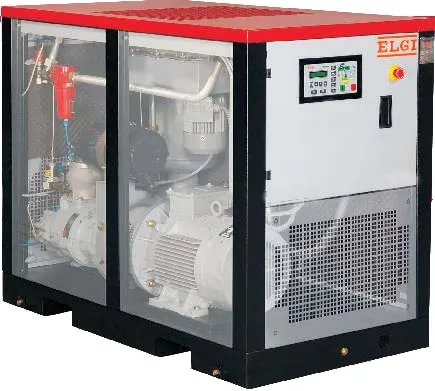
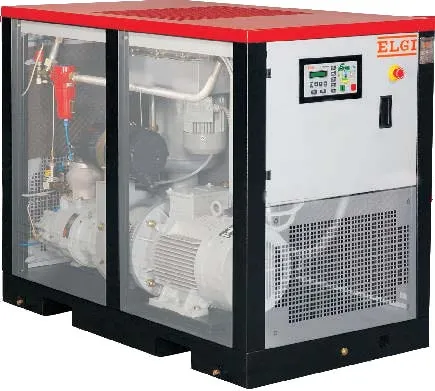
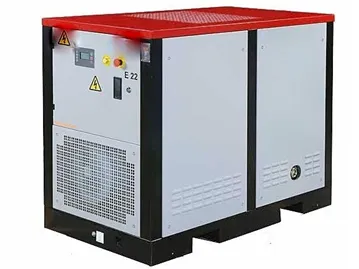
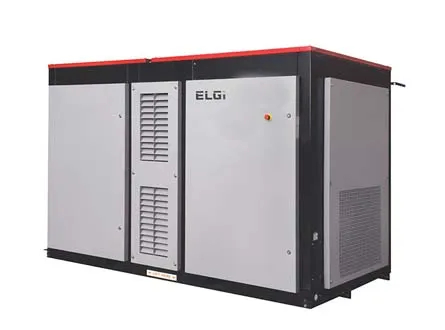
Representative images of machine types we sell, service and rent. Models and capacities are confirmed against your duty.
That distinction matters.
The compressed-air market often reduces the selection discussion to:
Fixed speed = inefficient
and:
VSD = efficient
That is not a responsible engineering conclusion.
Clearly that a fixed-speed rotary screw compressor can be highly appropriate where:
- • demand is relatively stable
- • operating hours are predictable
- • the compressor spends substantial time productively loaded
- • storage and controls are correctly designed
- • multiple compressors are sequenced effectively
The key point:
A fixed-speed compressor is not automatically inefficient
Its suitability depends on how it is used.
What fixed speed means
A conventional fixed-speed rotary screw compressor uses a motor operating at its designed rotational speed while running.
Compressor output is then managed using an appropriate control strategy—commonly load/unload or another manufacturer-specific control method.
The important distinction is:
Motor speed is fixed
But:
Compressed-air output still has to respond to system demand
That response is handled through the compressor's control architecture.
The basic operating logic
A simplified fixed-speed system can be understood as:
The exact control sequence varies by manufacturer and compressor design.
01 — load / unload control
Load/unload is one of the most important concepts in fixed-speed screw operation.
When the compressor is:
Loaded
it is productively delivering compressed air.
When it is:
Unloaded
the machine may continue running while producing much less useful air, depending on the actual design.
This is why unloaded operating time matters.
A fixed-speed compressor therefore should not be evaluated by:
Motor kW alone.
It should be evaluated by:
How often is it productively loaded?
02 — the demand profile decides whether fixed speed fits
Fixed speed may remain highly effective where:
- • demand is consistently high
- • the compressor operates near an efficient loaded condition
- • the process has a stable base load
- • capital simplicity matters
- • multiple machines can be sequenced intelligently
- This is exactly why demand profile matters
A plant with relatively steady compressed-air consumption may not need continuous motor-speed variation to achieve a good operating result.
Three demand questions
Before selecting fixed speed, ask:
Minimum demand
What is the lowest normal airflow requirement?
Average demand
Where does the system operate for most of the day?
Peak demand
How high does demand rise, and for how long?
If the operating profile remains close to a stable base demand for long periods, fixed-speed architecture may fit well.
03 — fixed speed as base load
One of the strongest roles for fixed-speed machines is:
Base-load duty
In a multi-compressor plant, one or more fixed-speed compressors may carry the stable portion of demand efficiently while another machine follows variations.
This architecture directly:
Base-load compressor(s)
carrying stable demand
plus
Trim compressor
following variable demand.
This is a much more useful discussion than:
“Should everything be fixed speed?”
or:
“Should everything be VSD?”
Fixed speed + VSD can work together
A plant may have:
Fixed-Speed Base Load
+
VSD Trim
This allows each technology to do what it may be best suited to do.
The fixed-speed machine can operate productively near a stable loaded condition.
The VSD machine can respond to changing demand within its appropriate operating range.
This is system engineering.
Not technology loyalty.
04 — storage matters
An air receiver can influence how a fixed-speed compressor behaves.
Correctly applied storage can help with:
- • short demand fluctuations
- • pressure stabilisation
- • compressor control
- • reducing excessive state changes in suitable systems
- But storage must have a defined purpose
- A receiver does not create continuous compressor capacity
If plant demand continuously exceeds compressor output:
A larger receiver will not solve the capacity deficit
Therefore receiver size and control band should be reviewed together with fixed-speed operation.
05 — pressure band matters
Fixed-speed compressors often operate between defined control pressures.
If the pressure band is poorly configured, the system may experience:
- • excessive compressor cycling
- • excessive plant pressure
- • long unloaded periods
- • unstable coordination between multiple machines
simultaneous loading, unnecessary unloaded running, excessive plant pressure and uneven operating hours.
Pressure control is therefore an energy and reliability issue.
06 — do not run the system at more pressure than it needs
Fixed-speed selection is not just about flow.
Pressure matters enormously.
The compressor may lose pressure downstream across:
- Dryers
- Filters
- Valves
- Piping
- Hoses
- Regulators
If point-of-use pressure is inadequate, the wrong response may be:
“Raise the compressor setpoint.”
Instead:
Find where the pressure is being lost
The same system principle applies to both fixed-speed and VSD compressors.
07 — fixed speed can be a strong fit for continuous base demand
Potential operating environments can include:
- • continuous manufacturing
- • process support
- • packaging
- • automation
- • general plant-air systems
- • multiple pneumatic users with stable aggregate demand
- But the industry label alone is not enough
- A factory can still have highly variable demand
- A workshop can sometimes have sustained demand
- The actual load profile should drive the decision
HP / kW TELLS YOU ABOUT MOTOR SIZE
- FAD tells you about useful air delivery
- Pressure tells you the condition of that delivery
The fixed-speed machine must therefore be selected by:
- FAD
- Pressure
- Demand Profile
- Operating Hours
- not motor rating alone
09 — a fixed-speed machine can still be oversized
Oversizing can create operating problems.
If plant demand is far below compressor capacity for long periods, a fixed-speed machine may spend excessive time unloaded or cycling through control states.
Potential consequences can include:
- • unnecessary power consumption
- • poor operating efficiency
- • unstable control
- • excessive compressor capacity for actual demand
Against adding arbitrary capacity margins because oversizing can lead to excessive unloaded operation and poor control behaviour.
So:
More capacity is not automatically more security
10 — safety margin should have a reason
Do not automatically add:
- 20%
- 30%
- or another arbitrary allowance simply because it sounds conservative
Capacity margin should reflect:
- • genuine uncertainty
- • real future expansion
- • criticality
- • credible production plans
11 — one fixed-speed compressor or several?
A single fixed-speed machine may be appropriate for a simpler stable-load system.
But multiple fixed-speed compressors can also provide:
- Redundancy
- Staged Capacity
- Maintenance Flexibility
- Expansion Capability
- The challenge is control
Poor sequencing can allow:
- • several machines to load simultaneously
- • machines to unload unnecessarily
- • uneven hour accumulation
- • excessive pressure
- This is where coordinated sequencing becomes important
12 — multi-compressor sequencing
Central or coordinated control can determine:
Which Machine Carries Base Load?
Which Machine Trims?
Which Remains Standby?
How Are Operating Hours Balanced?
This becomes especially important where several fixed-speed compressors share one header.
A compressor room with good machines but bad sequencing can still perform badly.
13 — running hours should be balanced intentionally
In a multi-machine plant, accumulated operating hours influence:
- • service scheduling
- • equipment ageing
- • availability
- • maintenance planning
Sequencing may therefore be designed not only around pressure but also around controlled hour distribution.
The purpose is not necessarily to make all machines accumulate identical hours.
It is to manage the fleet intelligently.
14 — LOADED HOURS vs UNLOADED HOURS
One of the most valuable fixed-speed diagnostic indicators can be the relationship between:
Loaded hours
and:
Unloaded hours
Measuring these before replacing a fixed-speed compressor with VSD.
If unloaded time is low and demand is stable, the existing fixed-speed architecture may already fit the duty well.
If unloaded time is high, further investigation is justified.
15 — high unloaded hours do not automatically mean “buy VSD”
This is another important distinction.
High unloaded running may indicate:
- • oversizing
- • poor sequencing
- • excessive storage/control mismatch
- • pressure settings
- • changing plant demand
- VSD may be one solution
- But it is not the only possible solution
The broader energy hierarchy says to examine demand, leakage, pressure, sequencing, storage and controls before jumping to new capacity or hardware.
16 — before replacing fixed speed with VSD
Measuring:
- Loaded Hours
- Unloaded Hours
- Pressure Profile
- Demand Profile
- Power Consumption Where Possible
- Compressor Sequence
- Leakage
- Existing Storage
- Minimum Stable Demand
- This is an excellent engineering gate
Without those data:
A predicted energy-saving percentage is only an assumption
17 — our position on “VSD saves x%”
A clear position:
VSD can reduce energy consumption in appropriate variable-demand applications; the potential should be assessed against the actual load profile.
A fixed-speed compressor should not be made to look inferior through unsupported percentage claims.
18 — fixed speed may offer capital simplicity
This should be interpreted carefully.
It does not mean:
- “Fixed speed is always cheaper.”
- It means the architecture may be simpler in suitable duty conditions
- Lifecycle cost still matters
19 — lifecycle cost
A fixed-speed selection should evaluate:
- Purchase Cost
- Energy
- Maintenance
- Repairs
- Installation
- Air Treatment
- Downtime Risk
- Useful Life
- A lower initial cost does not automatically mean lower lifecycle cost
Likewise, paying more for variable-speed technology does not automatically guarantee lower lifecycle cost.
The application decides.
20 — specific power
Specific power can provide a more meaningful compressor-performance comparison than motor rating alone when test conditions are comparable.
Conceptually:
Specific power = input power ÷ delivered airflow
But comparison must use consistent:
- • pressure
- • flow basis
- • reference conditions
- • test method
Fixed-speed compressor performance should therefore be evaluated from verified manufacturer data.
Not broad marketing labels.
21 — fixed speed & pressure stability
A properly sized fixed-speed system with suitable storage and controls can maintain stable industrial air pressure.
But poor system design can create:
- • large pressure swings
- • excessive load/unload frequency
- • unnecessary operating pressure
Therefore pressure behaviour must be evaluated at:
The system level
Not simply from the compressor controller display.
22 — point-of-use pressure still controls the requirement
The compressor discharge may show sufficient pressure while the production line sees less.
Pressure can be lost through:
- • piping
- • filters
- • dryers
- • regulators
- • hoses
So the fixed-speed selection should work backwards from:
Required point-of-use pressure
That prevents unnecessary compressor pressure from being used to mask downstream restrictions.
23 — fixed speed & air treatment
The compressor technology does not define air quality by itself.
A fixed-speed rotary screw system may still require:
- Aftercooling
- Moisture Separation
- Drying
- Filtration
- Receivers
- Condensate Management
- according to the process
Air-treatment pressure drop should also be considered because excessive restriction increases system pressure demand.
24 — fixed speed & receiver storage
Receiver design can be particularly important where load/unload control is used.
A useful storage review asks:
- What short-duration event is being buffered?
- What pressure range is available?
- How rapidly does demand change?
- How does storage interact with compressor control?
Storage should solve a defined system problem.
Not be added simply because “every compressor needs a larger tank.”
25 — fixed speed & leakage
Leakage becomes part of base demand whenever the system is pressurised.
A fixed-speed machine can therefore appear productively loaded while a portion of its output is simply feeding leaks.
The energy optimisation hierarchy places leakage correction ahead of new-capacity decisions.
This is crucial.
Productive loading is not the same as productive air use
26 — fixed speed in a leaky system
Suppose the plant has high steady leakage.
The load profile may look stable.
That does not necessarily mean the fixed-speed compressor is ideally matched to legitimate production demand.
First determine:
What portion of stable demand is useful?
and:
What portion is leakage?
Only then should control architecture be evaluated.
27 — fixed speed & future expansion
A plant expecting genuine future growth may need additional capacity.
But future expansion should be credible.
Accounting for reasonable planned future demand rather than arbitrary capacity margin.
Possible strategies can include:
- • one larger machine
- • staged additional machines
- • multiple smaller units
- • base/trim architecture
- The best option depends on how and when demand is expected to grow
28 — fixed speed & redundancy
A production-critical plant may value multiple fixed-speed compressors because individual machines can be isolated for maintenance while others continue to support essential demand.
However:
Multiple compressors ≠ automatic redundancy
Installed spare capacity has to be compared with actual critical demand.
The system should ask:
If one machine is unavailable, what load can the remaining system actually carry?
29 — fixed speed & maintenance
Control architecture does not remove normal rotary screw maintenance requirements.
Lifecycle support can still involve:
- Intake Filters
- Lubrication Where Applicable
- Separators
- Coolers
- Belts / Couplings Depending on Drive
- Controls
- Sensors
- Electrical Systems
- Maintenance remains manufacturer- and model-specific
30 — operating data to track
For fixed-speed rotary screw machines, useful data can include:
- Operating Hours
- Loaded Hours
- Unloaded Hours
- Header Pressure
- Discharge Temperature
- Motor Current / Power
- Alarm History
- Filter Differential Pressure
- Separator Differential Pressure
Data → decision
For example:
High unloaded hours
Investigate sizing, sequencing and demand.
Pressure drops only during peak production
Investigate demand and distribution.
Filter differential pressure rises
Review filter condition.
Discharge temperature trends up
Investigate cooling and operating condition.
That is what monitoring should accomplish.
31 — fixed speed does not mean simple systems only
Fixed-speed machines can form part of sophisticated industrial compressed-air installations.
A large plant can use:
- • multiple fixed-speed base machines
- • central sequencing
- • standby capacity
- • a VSD trim compressor
- • shared treatment
- • receivers
- • system monitoring
The sophistication can exist in the system architecture, even when individual machines run at fixed speed.
32 — when fixed speed may be a strong fit
A fixed-speed rotary screw configuration is worth serious evaluation where:
- Demand Is Consistently High
- The compressor can stay productively loaded
- Base Demand Is Stable
- Plant consumption does not fluctuate dramatically
- Operating Hours Are Predictable
- The duty is well understood
- Capital Simplicity Matters
- A simpler control architecture is appropriate to the requirement
- Multi-Compressor Sequencing Is Available
- Several machines can be coordinated intelligently
- These conditions are directly consistent with the current source
33 — when fixed speed deserves closer review
Reassess the architecture where:
- • demand varies significantly
- • different production shifts have materially different consumption
- • the compressor unloads for long periods
- • pressure fluctuates with demand
- • installed capacity greatly exceeds actual demand
- The conclusion still requires measurement
34 — FIXED SPEED vs VSD
The correct comparison is not:
Question | Fixed Speed | VSD |
|---|---|---|
Is it automatically efficient? | No | No |
Is it automatically inefficient? | No | No |
Stable base demand | Strong evaluation case | May not always add value |
Highly variable demand | Review unloaded behaviour | Strong evaluation case |
Multi-compressor role | Often useful for base load | Often useful for trim |
Savings percentage | Must be measured | Must be measured |
The real decision is:
Which control architecture matches the actual demand curve?
35 — multi-compressor architecture
A useful example is:
Fixed-speed base #1
Carries a stable portion of demand.
Fixed-speed base #2
Starts as demand rises or provides capacity flexibility.
VSD trim
Responds to variable demand.
Standby
Available according to redundancy strategy.
This is an architecture example—not a universal recommendation.
Actual sequencing must be engineered from real plant demand.
36 — before buying a new fixed-speed machine
Provide where possible:
- Existing Compressor Make / Model
- Existing FAD
- Working Pressure
- Loaded Hours
- Unloaded Hours
- Daily Operating Hours
- Minimum Demand
- Average Demand
- Peak Demand
- Current Receiver
- Air Treatment
- Pressure at Critical Point of Use
- Future Expansion
- Consequences of Compressor Failure
- This turns a catalogue enquiry into an engineering selection
37 — before converting from fixed speed to VSD
Do not replace a functional fixed-speed machine merely because:
“VSD is newer.”
Review:
Load profile
How variable is demand?
Unloaded hours
How much time is the existing machine non-productively running?
Pressure profile
Is pressure fluctuating unnecessarily?
Leakage
Is variable demand actually waste?
Storage
Is receiver capacity and control behaviour appropriate?
Sequencing
Are multiple compressors coordinated?
Energy baseline
What is the current measured performance?
38 — do not replace control technology to mask a system problem
A VSD compressor cannot automatically solve:
- • major leakage
- • undersized piping
- • restricted filters
- • poor dryer performance
- • excessive pressure requirement caused by downstream loss
- Control technology should not become a substitute for system diagnosis
The source's energy hierarchy places:
- Demand
- Leakage
- Pressure
- Sequencing
- Storage
- ahead of blindly adding or changing compressor capacity
39 — model-specific data still controls
Fixed-speed rotary screw compressors from different manufacturers can vary in:
- • FAD
- • pressure range
- • specific power
- • control method
- • motor
- • drive
- • cooling
- • sound
- • dimensions
- • weight
- • service requirements
- Actual model pages should use verified current manufacturer data
The fixed-speed selection gate
Before specifying fixed-speed rotary screw equipment, ask:
FLOW
What FAD does the process require?
Pressure
What pressure must reach the point of use?
Demand
Is consumption stable enough to keep the machine productively loaded?
Operating hours
How long will the compressor run?
Load / unload
How much unloaded operation is expected?
Storage
Is receiver capacity appropriate to the control objective?
Control
How will the machine load, unload and coordinate with others?
Multi-compressor strategy
Base load, trim or standby?
Air quality
What treatment is required downstream?
Reliability
What happens when the machine is unavailable?
Energy
What does measured or manufacturer-verified performance show?
Lifecycle
Can the machine be maintained and supported effectively?
If those questions support stable duty:
Fixed speed may be exactly the right technology
Fixed speed in one line
A fixed-speed rotary screw compressor is most valuable when its capacity is closely matched to a stable, productive air demand and the system around it is correctly controlled
Closing
- The question is not
- “Is fixed speed better than VSD?”
The question is:
“How does this plant actually consume compressed air?”
If demand is stable, operating hours predictable and the compressor remains productively loaded, fixed-speed rotary screw technology can remain a strong industrial solution.
If demand varies significantly, another control architecture may deserve evaluation.
Reddy compressors
- Compressed air. engineered for uptime
- Measure the demand
- Match the capacity
- Control the pressure
- Manage the storage
- Sequence the machines
- Verify the operating result
- Primary CTA
Request a Fixed-Speed Rotary Screw Compressor Selection
Secondary CTAs
Compare Fixed Speed vs VSD
Request Load-Profile Review
Review Multi-Compressor Sequencing
Discuss Compressor Room Design
Request Rotary Screw Service / AMC