
VSD is not an energy-savings percentage
Variable-speed drive technology is often marketed using one simple message:
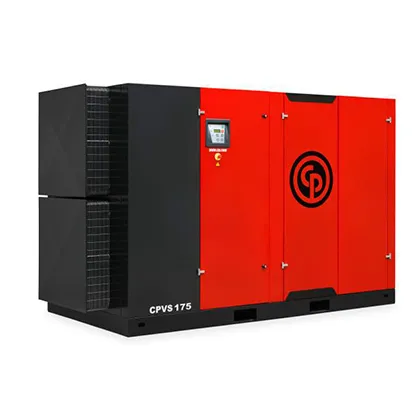
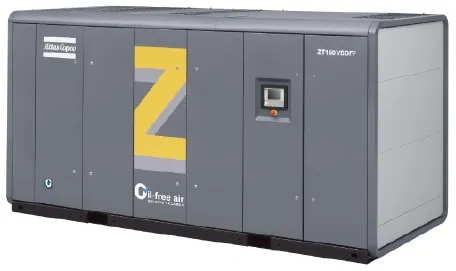
Representative images of machine types we sell, service and rent. Models and capacities are confirmed against your duty.
“VSD saves energy.”
That statement is incomplete.
The correct question is:
How does this compressed-air system actually consume air?
It identifies potential benefits including closer supply-demand matching, narrower pressure control, reduced unloaded running under suitable conditions, controlled motor starting and improved response to changing demand—but explicitly states that these benefits are application-dependent, not universal percentages.
The demand curve comes first
A VSD compressor should not be selected because:
- it is newer
- it is more expensive
- the brochure says “energy saving”
or:
someone quotes a standard saving percentage.
It should be evaluated because the plant's demand pattern gives speed control a legitimate role.
VSD as particularly worth considering where:
- • demand varies significantly
- • production shifts have different consumption levels
- • pneumatic equipment cycles frequently
- • the existing compressor unloads for long periods
- • pressure fluctuates with changing demand
- • a trim compressor is required alongside base-load units
What a VSD rotary screw compressor does
A conventional fixed-speed machine operates at its designed motor speed while running and typically manages output through load/unload or other manufacturer-specific controls.
A VSD machine changes motor speed within the compressor's allowable operating range according to demand.
Conceptually:
The exact control algorithm, operating range and machine behaviour remain manufacturer- and model-specific.
01 — VSD should follow real demand
Compressed-air demand is rarely one number.
A plant may have:
- Minimum Demand
- Average Demand
- Peak Demand
- Short-Duration Peaks
- Shift Changes
- Intermittent Users
- Leakage
- Future Loads
- That distinction matters enormously for VSD selection
- A compressor should not merely be able to satisfy peak demand
It should operate sensibly across the range of demand the plant actually experiences.
02 — minimum demand matters
Engineers frequently focus on maximum CFM.
For VSD selection, minimum demand can be equally important.
Why?
Because the VSD machine has a designed operating envelope.
The correct approach is:
Determine the plant's minimum stable demand
Then compare it with:
The verified operating range of the actual VSD model
03 — average demand matters
Where does the plant spend most of its operating time?
That question can matter more economically than one short peak.
If a plant spends most of the day at a demand level substantially below its maximum requirement, variable-speed control may deserve careful evaluation.
But the decision still requires actual compressor performance information.
That relationship must remain manufacturer- and machine-specific.
04 — peak demand still matters
A VSD compressor must still satisfy the required system capacity where it is selected to carry that demand.
So selection must determine:
How high is the peak?
How long does it last?
How often does it occur?
A momentary event has different system implications from a peak lasting several hours.
Exactly this difference between average and peak demand.
05 — VSD can reduce excessive unloaded operation in suitable duty
One reason VSD can be valuable is that variable output may reduce unnecessary unloaded operation where demand changes significantly.
But note the words:
Under suitable conditions
A VSD machine should not be credited with a saving before the existing operating pattern is understood.
06 — load profile before energy claim
This creates the correct baseline.
Without these data:
A predicted saving is an assumption
07 — no universal “VSD saves 35%”
without knowing the baseline.
Instead, the defensible position is that VSD can reduce energy consumption in appropriate variable-demand applications, with the potential assessed against the actual load profile.
08 — VSD does not create energy savings from leakage
Suppose a factory has substantial leakage.
The compressor sees that leakage as demand.
A VSD may follow it accurately.
But:
Accurately supplying wasted air does not make the waste useful
The source energy hierarchy therefore places:
- Measure Demand
- → Repair Leakage
- → Remove Inappropriate Uses
- → Reduce Pressure Loss
- → Review System Pressure
- → Review Sequencing
- → Review Storage
- → Review Control Technology
- → Then Consider New Capacity
- VSD should operate inside that hierarchy
09 — fix the system before crediting the drive
A high-energy compressed-air system may have problems caused by:
- • leaks
- • excessive pressure
- • clogged filters
- • dryer pressure drop
- • poor pipework
- • poor sequencing
- • unsuitable storage
- Installing VSD without diagnosing those issues can leave major losses untouched
The correct engineering sequence is:
Measure first
- Diagnose second
- Select control technology third
- 10 — VSD & pressure control
Variable output can potentially support narrower pressure control where demand varies.
But system pressure should still be based on:
Required point-of-use pressure
plus justified:
- Treatment Loss
- Distribution Loss
- Control Allowance
- not an unnecessarily high compressor setpoint
Lower pressure only helps when the process can use it
A VSD controller should not become a reason to operate the system at more pressure than necessary.
Pressure must be set around process requirements.
If low pressure is caused by:
- Undersized Pipe
- Restricted Filters
- Dryers
- Valves
- Hoses
- then those restrictions need investigation
- Control technology cannot eliminate physical pressure loss
11 — VSD as a trim compressor
One of the most important VSD roles in larger compressor rooms can be:
Trim duty
A multi-compressor system can use:
Base-load compressor(s)
to carry relatively stable demand
plus:
VSD trim compressor
to follow changing demand.
This is system-level control.
12 — all-VSD is not automatically the best architecture
More variable-speed drives do not automatically create a better compressor room.
A plant may have a large stable base demand.
In that situation, one or more appropriately selected fixed-speed machines may carry that base while VSD follows the varying portion.
The correct architecture depends on:
- Demand Curve
- Compressor Capacities
- Control Range
- Redundancy
- Sequencing
- Operating Hours
- The entire system should be evaluated
13 — VSD is not only a single-compressor decision
A VSD compressor can be:
The Only Compressor
or:
Part of a Multi-Compressor Network
or:
- The Trim Machine
- or potentially another manufacturer-specific role
Therefore selection should always ask:
What role will this machine play in the compressor room?
That question often matters more than simply asking:
“Is this machine VSD?”
14 — sequencing still matters
The broader Reddy Compressors control framework says coordinated sequencing can determine:
- • which compressor starts
- • which carries base load
- • which trims
- • pressure bands
- • standby sequence
- • operating-hour balancing
A VSD machine operating inside poorly coordinated sequencing can still be part of an inefficient system.
Smart equipment does not automatically create smart architecture.
15 — storage still matters
Variable-speed operation does not make air receivers irrelevant.
Storage may still support:
- • short-duration demand events
- • pressure stability
- • control behaviour
- • system buffering
- But storage needs a defined purpose
- A receiver cannot manufacture continuous capacity
Its role must be considered together with the demand profile and control philosophy.
16 — airflow still matters
VSD does not change the basic compressor-sizing requirement.
You still need:
Required FAD
at:
Required pressure
Motor rating alone remains insufficient.
A VSD machine should not be selected because it has the desired kW or HP nameplate.
The actual model's verified airflow and pressure capability must match the duty.
17 — do not oversize VSD just because it can turn down
A common reasoning error is:
“We can buy a much bigger VSD because it will simply slow down.”
Oversizing can still create:
- • unnecessary capital expenditure
- • operation outside the best-matched demand region
- • excess infrastructure
- • control problems
18 — VSD & future expansion
Future growth can be considered.
But it should be:
Credible future demand
not:
An unlimited “just in case” margin
A plant expansion plan can justify additional capacity.
A vague possibility should not automatically justify severe oversizing.
19 — VSD & shift-based production
For example, a plant may operate:
- Full Production
- during one shift
- Partial Production
- during another
and:
- Maintenance / Low Demand
- at other times
- That kind of variation can make load profiling particularly useful
20 — VSD & cyclic pneumatic loads
Where pneumatic equipment cycles frequently, demand can change throughout production.
But the system should distinguish:
True Sustained Variation
from:
- Very Short Peaks
- that may involve storage differently
- The response should be designed around the time behaviour of demand
21 — measure a full operating pattern
A load study should ideally represent the actual plant operating condition being evaluated.
Important distinctions can include:
- • weekday vs weekend
- • high-production vs low-production shifts
- • seasonal changes
- • planned shutdowns
- • unusual temporary production
- Measurement duration must be appropriate to the operating cycle being assessed
22 — power consumption where possible
Measuring power consumption where practical before claiming VSD savings.
That matters because:
Airflow alone does not prove energy performance
A credible comparison may require:
- Power
- Airflow
- Pressure
- Operating Hours
- under comparable conditions
23 — specific power
A useful compressor-performance metric is:
Specific power = input power ÷ delivered airflow
But comparison must be performed under comparable pressure and test conditions.
Against comparing specific-power values from different pressures or reference conditions without appropriate adjustment.
A VSD label does not replace performance data.
24 — energy savings should use a baseline
A proper optimisation project should distinguish:
Baseline
What happened before?
Intervention
What changed?
Post-measurement
What happened after?
Normalisation
Were the periods comparable?
Verified result
What improvement can actually be supported?
25 — production changes can distort energy comparison
If production increases after installing a VSD compressor, total kWh might rise even though compressed-air energy performance improves.
Likewise, production may fall and raw energy use may fall even without a genuine efficiency improvement.
This is why energy conclusions should be normalised against meaningful operating conditions or production output where appropriate.
26 — VSD & leakage
Leakage consumes air whenever the network is pressurised.
A variable-speed compressor may simply follow that leakage.
Therefore an energy review should distinguish:
Productive demand
from:
Unproductive demand
Leak correction should often precede equipment replacement.
The source energy hierarchy places leakage repair immediately after demand measurement.
27 — VSD & artificial demand
Operating a system at unnecessarily high pressure can increase demand and leakage.
VSD may regulate pressure more closely, but if the pressure target itself is unnecessarily high, the system can still consume avoidable energy.
The setpoint must therefore be justified from point-of-use requirements.
28 — VSD & distribution pressure loss
If critical users experience low pressure because the distribution network is restrictive, VSD does not eliminate the restriction.
Review:
- Pipe Diameter
- Filters
- Dryers
- Valves
- Hoses
- Long Distribution Runs
- before simply raising the discharge target
29 — VSD & air treatment
A VSD compressor still operates as part of the complete compressed-air system.
Air treatment can include:
- Aftercooling
- Separation
- Drying
- Filtration
- Storage
The treatment arrangement should continue to be selected from the process air-quality requirement.
Control technology does not change that requirement.
30 — VSD & reliability
Variable-speed technology can become part of production-critical plant infrastructure.
Selection should therefore consider:
What happens if the VSD machine becomes unavailable?
Potential system questions include:
- Is another compressor available?
- Can the base-load machines support critical production?
- Can loads be prioritised?
- Is temporary rental feasible?
- Is standby capacity required?
31 — THE DRIVE IS PART OF THE MACHINE—not THE WHOLE MACHINE
A VSD compressor still depends on:
- Airend
- Motor
- Cooling
- Filtration
- Controls
- Sensors
- Electrical Protection
- Air Treatment
- Distribution
A variable-speed drive cannot compensate for neglected maintenance elsewhere in the system.
32 — controls & monitoring
Useful VSD-related monitoring information such as:
- Discharge Pressure
- Airend Discharge Temperature
- Motor Current / Power
- Operating State
- Operating Hours
- Service Hours
- Differential Pressure
- Alarms
- VSD Speed
- Network Status
- The purpose is not dashboard decoration
- It is better operating decisions
33 — VSD speed data should have a question behind it
For example:
If speed remains high almost continuously:
Is the machine operating primarily as base load?
If speed repeatedly approaches a low operating region:
Is the selected capacity well matched to minimum demand?
If pressure still fluctuates significantly:
Is the issue demand, control, storage or distribution?
The actual interpretation should use manufacturer data and measured system behaviour.
34 — controlled motor starting
• exact motor-stress reductions.
Those require model-specific electrical data.
35 — VSD & compressor room electrical design
Because VSD equipment includes drive electronics, final installation should follow manufacturer-specific requirements for:
- • electrical supply
- • protection
- • installation environment
- • controls
- • commissioning
- Those should be handled on verified model/project pages
36 — VSD & cooling
Variable-speed technology does not remove the need for suitable cooling and ventilation.
The compressor room must still support the machine's heat-rejection requirement.
Actual cooling performance remains model- and operating-condition-specific.
37 — VSD & lifecycle cost
A VSD decision should evaluate more than energy.
Consider:
- Purchase
- Energy
- Maintenance
- Repairs
- Controls / Drive Support
- Installation
- Air Treatment
- Reliability
- Lifecycle
The strongest engineering decision is not:
“Which machine uses less energy on paper?”
It is:
“Which system delivers the required air at acceptable lifecycle cost and reliability?”
38 — RETROFIT vs NEW VSD COMPRESSOR
Some existing systems may raise questions about retrofit.
Others may require a purpose-designed new VSD compressor.
Retrofit suitability depends on the actual machine and engineering scope.
39 — VSD does not make fixed speed obsolete
Fixed-speed architecture can remain effective where:
- • demand is consistently high
- • the compressor operates near an efficient loaded state
- • stable base load exists
- • multiple machines can be sequenced intelligently
Therefore:
VSD and fixed speed are tools
The demand profile determines which tool fits.
40 — the best system may use both
For many larger systems, the strongest architecture may be:
- Fixed-Speed Base Load
- + VSD Trim
- + Appropriate Storage
- + Coordinated Sequencing
- + Defined Standby Strategy
- This is not a universal recommendation
It is an example of designing the compressor room around actual demand instead of selecting machines independently.
VSD selection checklist
Before finalising a VSD rotary screw compressor, establish:
Required FAD / CFM
What is the actual usable-air requirement?
Required Pressure
What must reach the point of use?
Minimum Demand
What is the lowest normal airflow?
Average Demand
Where does the plant spend most of its time?
Peak Demand
How high and how long?
Loaded / Unloaded Hours
What is the existing operating behaviour?
Demand Profile
Stable, variable, shift-based, cyclic?
Existing Storage
What is the receiver doing?
Leakage
How much demand is waste?
Sequencing
How do existing machines interact?
Air Quality
What downstream treatment is required?
Reliability
What happens if the VSD machine stops?
Power Data
What energy baseline is available?
Future Demand
What expansion is genuinely planned?
If these inputs are missing:
Measure before promising savings
The VSD decision gate
Before recommending VSD, ask:
Does demand vary enough?
If not, fixed speed may remain suitable.
Do we know minimum demand?
If not, the operating range cannot be assessed properly.
Are unloaded hours high?
If yes, determine why.
Is pressure unstable?
Find whether the cause is demand, storage, sequencing or distribution.
Are leaks controlled?
Do not mistake leakage for productive variable demand.
Is the system correctly sized?
VSD does not excuse oversizing.
Will the machine act as base or trim?
Define its role.
Is there an energy baseline?
Without one, savings remain projections.
How will results be verified?
Measure after intervention under comparable conditions.
Only after those questions are answered should the VSD decision become commercially final.
The reddy compressors VSD principle
VSD is not an energy-savings claim
It is a control technology.
Its value depends on:
The source's energy optimisation hierarchy summarises the discipline perfectly: measure demand, address leakage and pressure losses, review sequencing and storage, then review control technology and capacity.
Closing
Variable speed should follow variable demand
Not marketing.
Not assumption.
Not a fixed savings percentage.
Measure:
- Minimum Demand
- Average Demand
- Peak Demand
- Loaded Hours
- Unloaded Hours
- Pressure
- Power
- Leakage
- Storage
- Sequencing
- Then decide whether variable-speed technology fits
Reddy compressors
- Compressed air. engineered for uptime
- Variable-speed drive rotary screw compressors
- Measure the load
- Match speed to demand
- Control the pressure
- Remove system waste
- Integrate the compressor room
- Verify the result
- Primary CTA
Request a VSD Rotary Screw Compressor Assessment
Secondary CTAs
Compare Fixed Speed vs VSD
Request Compressor Load Profiling
Review Base-Load + Trim Architecture
Review Existing VSD Performance
Discuss VSD Retrofit
Field guide
Fixed speed or variable speed: let the load profile decide
A variable-speed drive (VSD) compressor changes motor speed to follow demand. Where demand swings a lot it can cut unloaded running and steady the pressure. It is not automatically the most efficient choice everywhere.
| Fixed speed | Variable speed | |
|---|---|---|
| Best where | Demand is steady and the machine runs near full load | Demand varies widely through the day |
| Advantages | Simple control, robust, predictable maintenance, strong at steady load | Less unloaded running, stable pressure, soft starts, quick response to changing production |
What to check before choosing a VSD
- A measured load profile: minimum, average and maximum demand.
- Annual operating hours and the pressure band you can accept.
- The number of compressors on the system.
- Ambient conditions and maintenance capability.
- Electrical and harmonic requirements.
- The machine's minimum speed. Below it, a VSD still unloads or stops.
Base and trim
The best arrangement is often a fixed-speed compressor carrying the base load with a VSD machine trimming the variable part of demand. With two or more machines, a master controller sequences them to cut unloaded running and start-stop cycles. See controls and sequencing. Compare running cost with the specific power calculator, entering your own load profile and tariff.