
OIL-INJECTED ROTARY SCREW IS A SYSTEM—not JUST AN AIREND WITH OIL
Oil-injected rotary screw compressors form an important part of industrial compressed-air architecture.
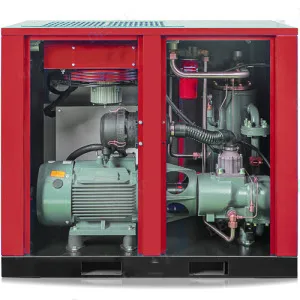
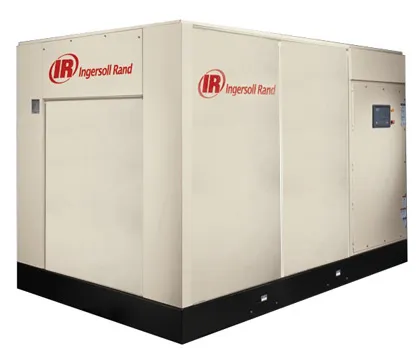
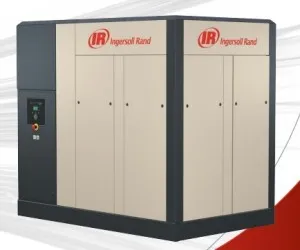
Representative images of machine types we sell, service and rent. Models and capacities are confirmed against your duty.
They can be considered where the application requires:
- Regular or Sustained Air Demand
- Stable Operating Pressure
- Industrial-Duty Operation
- Automatic Control
- Integration With Receivers, Dryers and Filtration
- Lifecycle Serviceability
But the technology should not be selected simply because:
“Rotary screw is standard for factories.”
or:
“This is the same HP as our old machine.”
Reddy Compressors' governing principle remains:
Start with the air requirement
Then determine whether an oil-injected rotary screw configuration fits the application.
What “oil-injected” means in the architecture
The most important distinction is that lubricant is an active part of the compressor operating system.
Cooling
- Sealing
- LUBRICATION
That means lubricant condition is not merely a routine consumables issue.
It is connected to how the machine operates.
Oil-injected rotary screw technology should therefore be evaluated as a complete architecture involving:
- Compression
- Lubrication
- Cooling
- Separation
- Control
- Maintenance
The basic operating path
At a high level, the oil-injected rotary screw machine can be understood through this functional chain:
The exact internal layout varies by manufacturer and model.
01 — the airend
The airend remains the central compression element.
In an oil-injected architecture, lubricant supports the compression system through its cooling, sealing and lubrication roles.
The airend therefore cannot be considered independently from the lubricant system.
02 — lubricant as part of the machine
Compressor lubricant can influence several operating conditions.
Lubricant-related functions including:
- Lubrication
- Cooling
- Sealing
- Corrosion Protection
and warns that incorrect lubricant selection can create issues related to:
- Viscosity
- Oxidation
- Deposits
- Seal Compatibility
- Temperature
- Mixing Compatibility
This is why lubricant should never be selected only by:
“The viscosity looks the same.”
The stronger rule is:
Use the manufacturer requirement and verified technical compatibility
Lubricant is not just a service item
A weak maintenance mindset treats lubricant as:
Something changed every X hours.
A lifecycle mindset asks:
- What lubricant does this model require?
- What operating environment exists?
- What temperature is the machine experiencing?
- Has contamination occurred?
- Has another fluid been mixed?
- What does the service history show?
Lubricant condition changes with temperature, contamination, operating hours and environment.
That makes lubricant condition part of equipment-health management.
03 — separation
Oil-injected systems require effective management of the compressed-air/lubricant side of the package.
The rotary screw architecture specifically includes a separator system.
Separator condition can influence:
- • residual oil carryover
- • differential pressure
- • lubricant loss
- • energy consumption
Therefore the separator is not merely a replaceable element hidden inside the package.
It is part of both:
Air quality management
and:
Energy / reliability management
Separator pressure drop matters
As separators load, differential pressure can increase.
This matters because restriction creates an operating penalty.
The correct response is not to create one universal service interval for every compressor.
Service should remain:
- Manufacturer-Specific
- Model-Specific
- Operating-Hour-Aware
- Condition-Aware
04 — cooling
Compression creates heat.
Oil-injected rotary screw machines therefore rely on appropriate cooling architecture.
This includes:
- Oil Cooler
- Aftercooler
- Cooling Fan or Water Circuit
Cooling performance depends not only on component condition but also on installation.
Potential operating concerns include:
- • dirty cooler surfaces
- • poor room ventilation
- • hot-air recirculation
- • high ambient temperature
A good compressor inside a poor thermal environment can become a poor installation.
Cooler cleanliness is a reliability issue
In practice:
- Coolers foul. Heat rejection deteriorates
- That simple relationship is critical
A rising-temperature complaint should therefore not automatically trigger:
- Replace the sensor
- The complete cooling condition should be assessed
This may include:
- Cooler Condition
- Airflow
- Ambient Temperature
- Ventilation
- Hot-Air Recirculation
- Lubricant Condition
- Fan / Cooling System
05 — aftercooling
The compressor package may incorporate an aftercooler.
But aftercooling does not automatically make compressed air suitable for every process.
Downstream requirements can still involve:
- Moisture Separation
- Drying
- Filtration
- Storage
- Point-of-Use Treatment
- Air quality is a system property and should be defined at the point of use
- That distinction is especially important for oil-injected systems
Oil-injected does not mean “no air-quality control”
The wrong conclusion would be:
“It has oil, so it can only be used for dirty air.”
That is too simplistic.
The stronger engineering question is:
What air quality does the actual process require?
The treatment system is then selected backwards from the process.
The source architecture follows:
06 — where oil-injected rotary screw may fit
Based on the existing rotary screw application architecture, rotary screw systems can be relevant across applications such as:
- General Manufacturing
- CNC & Machine Shops
- Automation
- Packaging
- Textiles
- Industrial Utilities
- Workshops With Sustained Demand
- Production Machinery
- Pneumatic Systems
The final suitability still depends on:
- Flow
- Pressure
- Duty
- Air Quality
- System Architecture
Oil-injected technology should therefore not be selected from industry name alone.
07 — when air quality may change the technology decision
Some processes have more demanding contamination requirements.
The distinction:
- Utility Air
- Instrument Air
- Process Air
and warns against assuming that all applications within the same plant require the same air specification.
For more sensitive applications, the selection discussion may need to compare:
Oil-injected + appropriate treatment
against:
Oil-free compression + appropriate treatment
The process requirement—not marketing terminology—should determine the architecture.
Oil-free is a different technology path
Clearly that oil-free screw compressors use a fundamentally different compression arrangement and should be treated separately where process or air-quality requirements justify it.
It is a different technology decision.
08 — fixed speed or variable speed
Oil-injected rotary screw machines can exist within different control architectures.
The question remains:
How does demand change?
A stable plant demand may suit fixed-speed operation.
A strongly variable demand profile may justify VSD evaluation.
Instead, load profile should drive the decision.
Oil injection and motor-control architecture are separate selection questions.
09 — drive system
Oil-injected rotary screw packages may use different drive architectures depending on manufacturer and machine design.
These can include:
- Belt Drive
- Direct Drive
- Gear Drive
No architecture should be described as universally superior; efficiency, maintenance, alignment, serviceability, design and operating environment should all be considered.
10 — single-stage or multi-stage
Rotary screw architecture may differ according to:
- • pressure
- • capacity
- • manufacturer
- • application
Compare:
- FAD
- Operating Pressure
- Specific Power
- Cooling
- Maintenance
- Lifecycle Cost
- using actual manufacturer data
11 — FLOW
An oil-injected rotary screw compressor should not be sized by HP alone.
Selection begins with:
Usable FAD
at:
Required working pressure
Two machines with similar motor power may deliver different airflow depending on the actual design and pressure rating.
12 — pressure
More compressor pressure is not automatically more useful.
The system may lose pressure across:
- Aftercoolers
- Dryers
- Filters
- Separators
- Valves
- Pipework
- Hoses
- Regulators
So:
Compressor discharge pressure ≠ point-of-use pressure
The compressor should provide sufficient operating pressure for the process plus justified system losses—not arbitrary excess pressure.
13 — demand profile
Oil-injected rotary screw systems should be evaluated against:
- Minimum Demand
- Average Demand
- Peak Demand
- Peak Duration
- Future Demand
- Leakage
- Diversity
The machine may spend thousands of hours each year responding to this demand profile.
Sizing errors therefore become lifecycle errors.
14 — one compressor or multiple machines?
Oil-injected screw systems can be deployed as:
Single Machine
or:
Multi-Compressor Plant-Air Architecture
Multiple compressors can provide:
- • redundancy
- • maintenance flexibility
- • staged capacity
- • better demand matching
- But they also create control and sequencing requirements
- The system architecture matters as much as the individual compressor
15 — load / unload behaviour
In load/unload systems, the compressor may continue running while not producing the same useful airflow as when fully loaded.
Long unloaded operation can therefore become part of the energy discussion.
The correct review should examine:
- Loaded Hours
- Unloaded Hours
- Pressure Band
- Receiver Capacity
- Demand Profile
- Sequencing
- A running compressor is not necessarily a productively loaded compressor
16 — energy performance
Do not select oil-injected rotary screw equipment from efficiency marketing alone.
Evaluate:
- Specific Power
- Required Pressure
- Demand Profile
- Loaded / Unloaded Behaviour
- Controls
- Treatment Pressure Drop
- Cooling
- Operating Hours
- Evaluating the complete operating system rather than one machine number
17 — air treatment pressure drop
Air quality equipment protects the downstream process.
But filters and dryers can also create pressure loss.
Restricted filters can become an energy penalty and should be maintained against manufacturer requirements, differential pressure and operating condition.
The objective is:
Required air quality with controlled pressure loss
18 — filters & intake condition
Intake filters protect the compressor from contamination.
Filters load.
The resulting restriction can change over time.
Routine inspection should therefore consider:
- Filter Condition
- Restriction
- Contamination
- Operating Environment
- A dirty environment changes maintenance requirements
19 — oil filters & lubrication components
Oil-injected compressor maintenance must protect the lubrication circuit as well as the air path.
Selection of:
- Oil Filters
- Lubricants
- Seals
- Related Components
- should remain machine-specific
The Reddy parts principle is:
Identify first
- Verify second
- SUPPLY THIRD.
This is especially important when customers operate multi-brand fleets.
20 — lubricant compatibility
Do not mix or substitute lubricant casually.
Potential concerns around:
- • viscosity
- • oxidation
- • deposits
- • seal compatibility
- • operating temperature
- • fluid mixing
Therefore lubricant selection must follow current equipment requirements and verified compatibility.
No universal “compressor oil” should be assumed suitable for every screw compressor.
21 — separator quality
A separator that physically fits is not automatically the correct separator.
Relevant behaviour can influence:
- Oil Carryover
- Differential Pressure
- Energy Consumption
- Lubricant Loss
The correct component should therefore be identified against the actual equipment.
This is where spare-parts quality directly affects operating performance.
22 — condensate & downstream treatment
Atmospheric air contains water vapour.
Compression does not eliminate it.
As compressed air cools, moisture can condense, creating possible problems such as corrosion, water in tools, instrumentation issues and process-quality concerns.
Oil-injected screw selection should therefore also consider:
- Aftercooling
- Moisture Separation
- Drainage
- Drying
- The complete compressed-air system matters
23 — installation
A technically capable compressor can still operate badly in a poor installation.
Review:
- Ventilation
- Electrical Supply
- Foundation
- Piping
- Receiver
- Dryer
- Filtration
- Condensate Management
- Maintenance Access
- The compressor room should make reliable operation and service practical
- Not simply fit the machine physically
24 — maintenance is part of the technology
No rotary screw compressor is maintenance-free. Reliability dependencies including:
- Clean Inlet Air
- Lubrication
- Cooling
- Separation
- Control
- Mechanical Transmission
- Electrical Operation
This is particularly important for oil-injected systems because lubricant, separation and cooling are tightly connected to machine condition.
Preventive maintenance may include
According to equipment and manufacturer requirements:
- Operating-Condition Review
- Filter Inspection / Replacement
- Lubricant Inspection / Replacement
- Separator Service
- Cooler Inspection / Cleaning
- Belts / Couplings Where Applicable
- Leakage Inspection
- Drain Inspection
- Electrical Checks
- Alarm Review
- Controller Service Review
25 — condition monitoring
Where equipment capability allows, useful parameters can include:
- Operating Hours
- Loaded Hours
- Unloaded Hours
- Discharge Pressure
- Discharge Temperature
- Filter Differential Pressure
- Separator Differential Pressure
- Alarm History
- Visible Leakage
- Vibration / Noise Observations
- The purpose is to identify trends before they become failures
26 — common developing conditions
Recurring lifecycle changes:
- Filters Accumulate Contamination
- Coolers Foul
- Lubricant Ages
- Separators Load
- Belts / Couplings Wear
- Connections Loosen
- Valves Wear
- Sensors Drift or Fail
- Maintenance exists to manage these changes
- Not merely to satisfy a calendar
27 — high temperature
High temperature is a symptom, not one single diagnosis.
A proper investigation may need to consider:
- Ambient Temperature
- Ventilation
- Cooler Condition
- Hot-Air Recirculation
- Lubricant Condition
- Cooling System
- Sensor Condition
- Do not begin by randomly replacing components
- Start with the operating evidence
28 — excessive oil carryover
Oil carryover also requires diagnosis rather than assumption.
The exact fault diagnosis must remain model- and condition-specific.
29 — high separator differential pressure
Increasing separator restriction can affect compressor performance.
The correct response is to evaluate:
- • actual differential pressure where available
- • operating condition
- • component service history
- • correct replacement requirement
Do not substitute arbitrary maintenance intervals for actual manufacturer requirements and machine condition.
30 — low pressure is not always an airend problem
A plant reporting low pressure might actually have:
- • leakage
- • excessive demand
- • restricted filters
- • dryer pressure drop
- • control issues
- • distribution restrictions
- • poor sequencing
Therefore:
Do not condemn the airend until the system has been reviewed
That principle protects the customer from unnecessary overhaul or replacement.
31 — airend overhaul
An oil-injected rotary screw airend may eventually require major assessment or overhaul.
But high operating hours alone should not automatically trigger rebuilding.
The wider lifecycle framework requires:
- Condition
- Performance
- Bearing / Mechanical Evidence
- Reliability History
- Operating Requirement
- Repair Economics
- to be evaluated
- Major work should have a technical reason
32 — repair or replace?
An ageing oil-injected compressor should not automatically be replaced.
It should also not be repaired indefinitely without reviewing lifecycle economics.
Compare:
- Condition
- Efficiency
- Reliability
- Parts Availability
- Repair / Overhaul Cost
- Future Demand
- Replacement Technology
- Remaining Useful Life
- The best decision is application-specific
33 — multi-brand oil-injected support
Different manufacturers may use different:
- • lubrication requirements
- • separator designs
- • controllers
- • drive arrangements
- • service intervals
- • cooling systems
The final service or parts decision should always identify:
- Manufacturer
- Model
- Serial Number
- Actual Configuration
- before confirming compatibility or scope
34 — genuine OEM vs verified compatible parts
Oil-injected compressor components may be available as:
Genuine OEM
or:
- Verified Compatible / Aftermarket
- or other correctly identified replacement categories
- A compatible part should never be misrepresented as genuine OEM
- Compatibility should be evaluated technically rather than from appearance alone
35 — oil-injected vs oil-free: start with the process
The wrong question is:
“Which one is better?”
The better question is:
“What air condition does the process require, and which complete system can deliver it reliably?”
Oil-injected rotary screw may be appropriate for many industrial plant-air applications.
Oil-free screw may be more appropriate where the process requirement justifies the different compression architecture.
Neither technology should be selected from a slogan.
Oil-injected rotary screw selection checklist
Before selecting a machine, establish:
Required FAD / CFM
How much usable air?
Required Point-of-Use Pressure
Not just desired discharge pressure.
Demand Profile
Minimum, average and peak.
Operating Hours
How heavily will the equipment be used?
Control Requirement
Fixed speed, VSD or multi-compressor architecture?
Air Quality
What downstream treatment is required?
Cooling
Air-cooled or another available architecture?
Installation
Ventilation, electrical supply, pipework and service access.
Reliability
What happens if the machine stops?
Maintenance
Can model-specific consumables, lubricant and separator requirements be supported?
Lifecycle
What is the expected operating and maintenance burden?
Only after these are understood should a specific manufacturer and model be finalised.
Closing
Oil-injected rotary screw technology works best when the complete architecture is understood
The airend creates compression.
The lubricant supports:
- Cooling • Sealing • Lubrication
- The separator manages the air/lubricant side of the machine
- Cooling controls heat
- Controls match the compressor to demand
- Air treatment prepares the air for the process
- Maintenance preserves the system over time
Reddy compressors
- Compressed air. engineered for uptime
- Select the duty
- Verify the FAD
- Define the pressure
- Manage the lubrication system
- Control the separation
- Treat the air for the process
- Support the lifecycle
- Primary CTA
Request an Oil-Injected Rotary Screw Compressor Selection
Secondary CTAs
Compare Oil-Injected vs Oil-Free
Compare Fixed Speed vs VSD
Request Rotary Screw Service / AMC
Request Filters, Separator or Lubricant
Discuss a Complete Compressor Room