
How a piston compressor wears in real duty
A reciprocating compressor is a cyclic machine. Every revolution the piston draws air in through the suction valve, compresses it, and pushes it out through the discharge valve. On a two-stage machine the air passes through an intercooler between the low-pressure and high-pressure cylinders, which cuts the work and the final temperature.
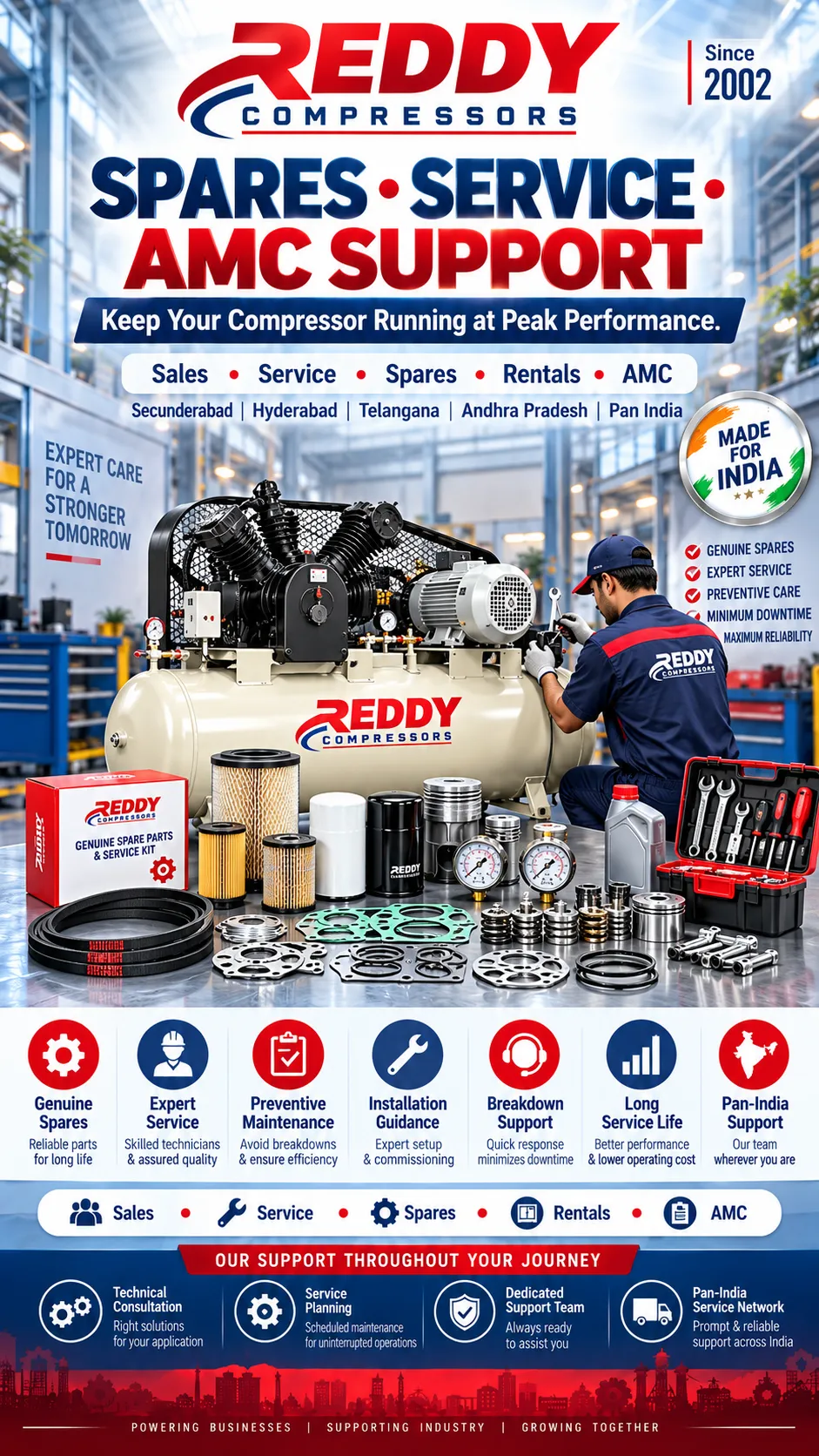
That cycle concentrates wear in a few places. Valves open and close hundreds of times a minute, so a broken spring, a cracked plate or a carbon deposit shows up quickly as lost capacity and heat. Rings and cylinder walls wear together, and the result is blow-by: compressed air leaking past the piston into the crankcase, and oil leaking the other way into the air. Bearings, the connecting rod and the crankshaft carry the shock loads, and they depend completely on clean oil at the right level.
Heat is the common thread. A piston compressor that runs hot carbonises its oil on the valves, which makes the valves leak, which makes it run hotter still. Breaking that loop is the main purpose of planned service.
Duty cycle matters as much as hours. Many air-cooled piston compressors are designed for intermittent duty, typically around 60–70% loaded time, with the rest spent stopped or unloaded so the cylinders can cool. A machine that never stops because the plant has outgrown it will wear far faster than its service schedule assumes.
What a proper reciprocating service covers
We treat a piston compressor as a set of linked systems. The table below shows what we look at, what failure looks like, and why it matters.
| System | What we check | Typical sign of trouble |
|---|---|---|
| Intake | Filter element, housing seal, intake air temperature and dust exposure | Low output, dust scoring on cylinder walls, dirty valves |
| Valves | Suction and discharge plates or reeds, springs, seats, gaskets, carbon build-up | Long pump-up times, hot cylinder head, ticking or knocking, high interstage pressure |
| Pistons and rings | Ring wear and sticking, cylinder scoring, blow-by, oil carry-over | Oil in the air and receiver, fumes from the breather, falling capacity |
| Crankcase and running gear | Oil level and condition, bearing noise, rod and crank play, breather | Knocking under load, milky or darkened oil, oil leaks |
| Cooling | Intercooler and aftercooler fins or tubes, fan, flywheel blades, water flow on water-cooled sets | High discharge temperature, interstage safety valve lifting |
| Controls | Pressure switch, unloader, unloader pilot, check valve, safety valves, gauges | Short cycling, motor tripping on start, air bleeding back from the receiver |
| Drive | Belt tension and condition, pulley alignment, motor current, guard | Belt slip and squeal, glazed belts, high motor current |
| Receiver and drains | Condensate drain, receiver condition, safety valve, pressure gauge | Water in the lines, rusty discharge, drain stuck open or shut |
Valves: the part that decides capacity
If a piston compressor has lost output, look at the valves first. A suction valve that does not seat lets air flow back to the intake on the compression stroke. A leaking discharge valve lets hot compressed air flow back into the cylinder, so the same air is compressed again and the head gets hotter.
On a two-stage machine, interstage pressure is a useful clue. Typical values for a two-stage machine working around 8–12 bar sit around 2–3 bar(g), but the right figure is in the manufacturer’s data. If interstage pressure rises above normal, suspect the high-pressure valves; if it falls, suspect the low-pressure valves or rings.
When we service valves we:
- Record pump-up time, interstage pressure and head temperature before opening anything, so we have a baseline.
- Remove the valve assemblies and inspect plates, reeds, springs and seats for cracks, wear and carbon.
- Clean deposits without scratching sealing faces, and replace any plate or spring that is cracked, worn or doubtful.
- Fit new gaskets and assemble the valves the right way round. A suction valve fitted in the discharge port is a common workshop error and it stops the stage working.
- Torque fasteners to the manufacturer’s value and run the machine to compare pump-up time and temperatures with the baseline.
Heavy carbon on the valves is a symptom, not the root cause. It usually points to overheating, the wrong oil, too much oil carry-over from worn rings, or a dusty intake. We report the likely cause so the same failure does not return in a few hundred hours.
Rings, cylinders and oil carry-over
Worn or stuck rings let air past the piston and oil past the rings. You see it as oil in the receiver drain, oil mist at the outlet, smoke or pressure at the crankcase breather, and a slow fall in capacity. On an oil-free piston compressor, ring and rider-band wear also decides how long the machine can run before the cylinder is damaged.
We inspect the cylinder wall for scoring and a wear ridge, check ring gaps and ring side clearance against the manufacturer’s limits where these are published, and look at the pistons for cracks or burnt deposits. Dust scoring tells us the intake filter has failed or been bypassed. Vertical scoring with heat marks tells us about lubrication or cooling problems.
Some measurements, such as bore wear and ovality, need proper instruments and a dismantled machine. Where the readings show the cylinder is past its limit, we discuss reboring, liner replacement or a replacement block as an overhaul decision rather than fitting new rings into a worn bore and hoping.
Crankcase oil and lubrication
A splash-lubricated piston compressor has no oil filter on many models. That makes oil level and oil change interval critical. Low oil starves the big-end bearings; overfilling increases splash and carry-over into the cylinders.
- Use the oil grade the manufacturer specifies for the machine, its pressure and its ambient temperature. A general engine oil is not always suitable, and detergent additives can behave differently in a compressor.
- Check the level daily or at each shift start on a machine that runs most of the day.
- Look at the oil itself. Milky oil means water from condensation, often from a machine that runs short cycles and never gets warm. Dark, thick or burnt-smelling oil means overheating.
- Keep the breather clear. A blocked breather pressurises the crankcase and pushes oil out of seals.
- Change oil at the manufacturer’s interval, and sooner in dusty, hot or wet conditions.
Where a machine is critical, oil analysis can show wear metals, dust and water before they cause damage. See our page on lubricant and oil analysis for how we use it.
Intercoolers, aftercoolers and running temperature
Cooling decides how long valves, rings and oil last. On an air-cooled machine the flywheel acts as the fan and blows air over the cylinder fins and the intercooler tubes. Dust, oil film and cotton fluff clog these quickly, especially in a hot compressor room in a Telangana summer.
We clean the cylinder fins and the intercooler and aftercooler surfaces, check for cracked or leaking tubes, and confirm the interstage safety valve works. If the interstage safety valve is lifting, the cause is usually a high-pressure valve problem, not a faulty safety valve, so we do not simply replace or reset it.
The compressor room matters too. A piston compressor installed in a corner with no ventilation will recirculate its own hot air. Adequate fresh air and a clear path for the hot air to leave the room often do more for reliability than any part we can fit.
Unloaders, pressure switches and starting problems
Piston compressors must start unloaded. If the cylinder or discharge line is still under pressure at start, the motor struggles, the belts slip, and the overload trips. The unloader, the pressure switch’s unloading valve and the non-return valve between the compressor and the receiver all work together to prevent this.
- A leaking non-return valve lets receiver air bleed back to the head, so the unloader hisses continuously when stopped and the motor labours at start.
- A sticking unloader can leave the compressor working against pressure or prevent it from loading at all.
- A pressure switch with a narrow differential causes short cycling, frequent starts and a hot motor.
- Larger machines with continuous-run control use suction-valve unloaders or head unloaders. These need clean, dry pilot air and free-moving parts.
Every time the operating pressure goes up, the compressor works harder. As a rule of thumb, each extra bar of discharge pressure costs about 7% more power, and on a piston machine it also adds heat and valve load. We check that the pressure switch setting matches what the plant really needs.
Common faults and their usual causes
| Symptom | Usual causes to check first |
|---|---|
| Takes longer to fill the receiver | Leaking valves, worn rings, blocked intake filter, belt slip, air leaks in the plant |
| Running very hot | Dirty fins or intercooler, poor room ventilation, leaking discharge valve, excessive duty cycle |
| Oil in the air or receiver | Worn or stuck rings, overfilled crankcase, wrong oil, blocked breather |
| Knocking or heavy noise | Worn bearings or rod, loose flywheel or pulley, broken valve part, low oil |
| Interstage safety valve lifting | High-pressure suction or discharge valve fault, blocked intercooler |
| Motor trips on start | Unloader not venting, leaking non-return valve, low supply voltage, belt over-tension |
| Water in the air lines | No aftercooler or dryer, receiver drain not working, hot air entering a cold network |
For machines that have already stopped, our breakdown page explains how we triage the fault before sending parts or an engineer.
Service, overhaul or replace?
Many piston compressors are robust and rebuildable, so the decision is often economic rather than technical. We compare:
- the cost and lead time of valves, rings and gaskets against the cost of a full overhaul with crank, bearings and cylinder work;
- whether the bore and crank are within limits or need machining;
- whether parts are still available for an older model;
- whether the machine is simply too small for today’s demand, which no service can fix; and
- whether a rotary screw compressor would suit a continuous-duty load better.
Where a reciprocating compressor is running close to continuous duty, we will say so plainly. Replacing it with a correctly sized machine, or adding a second compressor, is sometimes the cheaper answer over a few years.
How Reddy Compressors helps
We are an independent multi-brand compressor specialist based at Tarnaka, Secunderabad, serving industry since 2002. We service reciprocating compressors from Ingersoll Rand, ELGi, Kirloskar, Chicago Pneumatic and other makes, including single-stage and two-stage, air-cooled and water-cooled, lubricated and oil-free designs.
Our service teams work across Telangana and Andhra Pradesh, and we supply spare parts across India. For a piston compressor we can carry out routine service, valve and ring work, intercooler cleaning, unloader and pressure-switch repair, breakdown repair and overhaul. We identify parts from the machine’s make, model, serial number, nameplate photo or the old part, and confirm fit before we quote.
If you want regular visits rather than call-outs, our AMC and preventive maintenance plans cover piston compressors alongside screw compressors and dryers on the same site.
What to send us
- Make, model and serial number, with a clear photo of the nameplate
- Working pressure, stage count (single-stage or two-stage) and approximate running hours per day
- The symptom: slow filling, overheating, oil carry-over, noise, tripping or a stopped machine
- Photos or a short video of the machine, the pressure gauges and the installation
- Last service date and what was replaced, if known
- Site location and contact person
Frequently asked questions
Why is my piston compressor taking longer to fill the tank?
The most common causes are leaking suction or discharge valves, worn piston rings, a blocked intake filter or a slipping belt. Air leaks in the plant also make the compressor seem slow because it is feeding the leaks as well as the receiver. Check the intake filter and belt first, then time a fill with the outlet valve closed. If it is still slow with the outlet closed, the problem is inside the compressor.
Why is my reciprocating compressor putting oil into the air?
Oil carry-over usually comes from worn or stuck piston rings, an overfilled crankcase, the wrong grade of oil or a blocked crankcase breather. Overheating makes it worse because thin hot oil passes the rings more easily. Check the oil level and breather first. If carry-over continues, the rings and cylinder need inspection, and any heavy carbon on the valves should be cleaned at the same time.
How often should a reciprocating compressor be serviced?
Follow the manufacturer’s schedule for that model, then adjust for your conditions. Daily checks cover oil level, drains and unusual noise. Intake filter cleaning, belt checks and oil changes come at regular hour intervals, with valve inspection less often. Dusty sites, hot compressor rooms and machines running near continuous duty need shorter intervals than the book figure.
Why does the safety valve between the two stages keep blowing?
The intercooler safety valve lifts when interstage pressure rises too high. The usual cause is a faulty high-pressure suction or discharge valve, which stops the second stage from taking all the air the first stage delivers. A blocked intercooler can also contribute. Replacing or tightening the safety valve hides the problem, so the high-pressure valves should be inspected first.
Why does my compressor motor trip when it starts?
A piston compressor should start with no pressure in the cylinder. If the unloader does not vent, or the non-return valve leaks receiver air back to the head, the motor starts against load and trips. Low supply voltage, a wrongly set overload and over-tight belts are other causes. A continuous hiss from the unloader when the machine is stopped usually points to the non-return valve.
Can an old reciprocating compressor be overhauled instead of replaced?
Often yes. Many piston compressors can be rebuilt with new valves, rings, bearings and gaskets, and worn cylinders can sometimes be rebored or relined. The decision depends on parts availability, the condition of the crank and bore, and whether the machine is still the right size for the plant. If it is running nearly all day, a larger compressor or a screw machine may be the better investment.
Related pages
Technical content reviewed by D. Srinivas Reddy, Managing Partner and service engineer, Reddy Compressors. Last updated 7 November 2026. How our engineering content is reviewed.