
A high-pressure portable compressor enquiry should begin with the pressure required by the connected equipment and the airflow it needs at that pressure. The description alone does not establish whether a machine can support the job. Its documented operating capability must match the application, and the equipment between its outlet and the point of use must be suitable for the proposed service.
For a drilling contractor, this means bringing the rig and hammer requirements into the enquiry. For a temporary industrial project, it means identifying the receiving equipment and the conditions under which the air will be used. In both cases, the useful outcome is a defined operating duty supported by equipment information, rather than a quotation based only on a maximum pressure figure.
Send Reddy Compressors your application details for an initial supply enquiry. High-pressure portable compressor availability and the proposed supply scope remain subject to supplier confirmation.
Establish the reason for the pressure requirement
Record where the specified pressure comes from. An equipment manual, an application designer’s requirement and a reading from a previous installation provide different kinds of evidence. Keep the original document or measurement context with the enquiry so that the requirement can be assessed accurately.
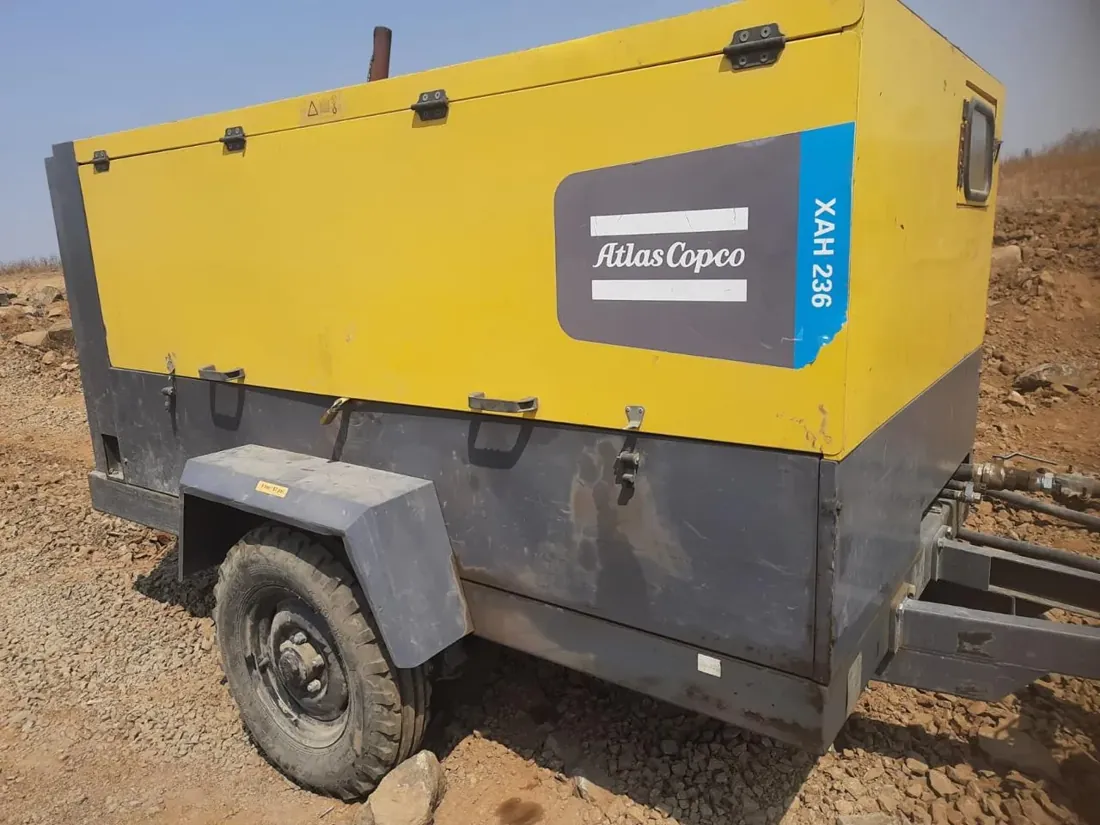
A previous machine’s setting may be useful background, but it does not explain why that setting was selected. The earlier job could have involved different equipment, a different air route or different operating conditions. Copying the setting into a new specification can carry forward assumptions that no longer apply.
The application brief should answer three questions:
- Which item of equipment requires the stated pressure?
- At what connection or measurement point does that requirement apply?
- What operating condition must exist when it is met?
These details allow a technical reviewer to distinguish a genuine application requirement from an unexplained preference for additional pressure. If the requirement is still uncertain, mark it as unresolved in the enquiry rather than presenting it as an approved design value.
Keep pressure terms separate
Several pressure figures may appear in a compressor proposal. They serve different purposes and should have separate entries in the review record.
Information requested | Question it should resolve |
|---|---|
Application operating pressure | What does the receiving equipment require during the intended task? |
Compressor working pressure | At which documented operating point is the proposed machine being offered? |
Component allowable pressure | What service limit applies to each selected component under its specified conditions? |
Control setting | Which approved operating setting will be used for this job? |
Test pressure | Which inspection or test record does this value describe? |
A test figure is not permission to operate continuously at that pressure. Likewise, a machine’s highest published pressure does not establish the allowable pressure of an attached hose assembly or treatment package.
Ask the reviewer to resolve ambiguous units and pressure references before comparing proposals. A specification should make clear whether a pressure is expressed relative to atmospheric pressure or on an absolute basis. This is especially important when information has been assembled from several equipment documents.
Confirm airflow at the proposed operating point
Pressure capability and air delivery belong in the same model assessment. Request the proposed machine’s documented flow at the pressure being offered, with the flow definition and reference conditions stated. A large flow figure elsewhere in a brochure may describe a different operating point.
The supplier’s response should identify the exact model and configuration behind the data. Where a machine has several approved pressure selections, ask which selection supports the quoted delivery. Where performance depends on site conditions, request the applicable manufacturer guidance and a documented assessment for the intended location.
For example, an enquiry that gives only a pressure target leaves the required quantity of air unresolved. An enquiry that gives both requirements but omits their measurement basis can still produce proposals that are difficult to compare. Keep pressure, flow, operating condition and supporting document together in one entry.
Detailed demand and distribution assessment belongs with high-flow portable compressor selection. Here, the essential check is whether the proposed high-pressure operating point has sufficient documented delivery for the identified application.
Review drilling requirements with the equipment information
Portable high-pressure air is used in drilling applications, including water-well and other specialist drilling work. These descriptions are starting points for an enquiry, not a selection method.
A useful drilling submission identifies the rig, hammer and relevant manufacturer requirements, together with the proposed work and site conditions. Where the project involves different operating stages, describe those stages separately. The technical review can then consider the pressure and flow requirement associated with each stage rather than treating the whole project as one unexplained rating.
Do not specify a compressor from intended depth alone. Ask the drilling equipment specialist to establish the duty for the actual arrangement. A compressor quotation should not be read as a guarantee of penetration rate, achievable depth, successful cuttings removal or water yield.
Keep responsibility for drilling performance explicit. The compressor supplier, rig provider and project contractor may each contribute information, but those contributions need to form a consistent application assessment. Borewell, water-well and DTH selection require their own detailed review beyond this portable compressor category.
Define the complete connected equipment list
A high-pressure proposal needs a clear description of what will be connected. List the compressor outlet arrangement, hose assemblies, couplings, manifolds, valves, instruments, treatment equipment and receiving connection that form the intended air path.
For each item, request identifiable equipment data and the relevant pressure and temperature limits. Include customer-owned and hired accessories. Their ownership does not remove them from the technical assessment. An accessory described simply as “site hose” or “existing filter” leaves an important part of the proposal undefined.
The review record can be organised as follows:
Connection or item | Evidence to request |
|---|---|
Compressor outlet | Model-specific outlet details and operating documentation |
Hose and end fittings | Assembly identification, service ratings and condition records |
Manifold or branch connection | Identified components and an approved arrangement |
Treatment package | Operating limits and performance information for the proposed duty |
Receiving equipment | Manufacturer requirements and connection details |
Instruments and protective equipment | Selection, location and verification requirements from the responsible reviewer |
Use the list to expose missing information before mobilisation. It is a document for engineering review, not a substitute for that review or an instruction to assemble a pressure system.
Separate operating control from system protection
The system’s pressure control and protective arrangements need competent assessment. A regulator should not be accepted as blanket evidence that everything downstream is protected against excessive pressure. The reviewer must establish how the proposed arrangement remains within its safe limits, including relevant abnormal conditions.
Specify who approves the operating settings, who may change them and which instructions govern operation. Safety devices and approved limits must not be altered simply to obtain a higher reading. Operators need equipment-specific instructions covering normal use and emergencies.
For procurement, ask for a clear handover of these responsibilities. Avoid a situation in which the compressor is supplied with one assumed limit while the site team expects a different operating condition. Any unresolved difference belongs in the technical query record before the package is accepted for use.
Identify whether a booster is part of the proposal
Some enquiries concern a portable compressor alone; others involve a separate booster arrangement. State which arrangement is proposed and identify the boundary between the equipment packages.
If a booster is included, ask its supplier to specify the required inlet conditions and the proposed outlet duty. The upstream supply must be assessed against those requirements. The quotation should identify responsibility for the connecting equipment, controls and protection rather than leaving the interface between two suppliers undefined.
Booster selection is a specialist subject. Do not infer compatibility from matching connection sizes or from seeing a suitable maximum pressure in two separate brochures. A combined proposal needs an assessment of the actual equipment working together.
State the air-quality requirement independently
Pressure capability does not establish air quality. Include any application requirement concerning particles, moisture, oil or other contaminants in the enquiry, with its source and acceptance method.
Where treatment is proposed, request evidence that both its service ratings and its performance are suitable for the intended operating conditions. A treatment unit retained from another job needs the same review as a newly supplied unit.
An enquiry for oil-free portable compressors requires separate attention to the application’s quality specification. Neither a high-pressure description nor an oil-free description establishes suitability for breathing air, medical use or cylinder filling. Those applications require their own specialist equipment assessment and verification.
Make the supply boundary visible in the quotation
Ask for an itemised proposal that distinguishes the compressor package, accessories, technical documentation and any separately agreed site services. Confirm what the customer must provide and which items remain subject to approval.
Useful commercial questions include:
- Is the proposed machine identified, or is the quotation based on an unconfirmed equipment option?
- Which accessories are included, and which are supplied by others?
- Who checks compatibility at the receiving connection?
- What documentation will accompany the equipment?
- Who is responsible for the agreed site assessment and acceptance process?
- What changes require a revised technical review or quotation?
These questions support a practical comparison between offers without assuming that similarly worded quotations contain the same scope. Availability, delivery arrangements and service responsibilities should be confirmed for the specific enquiry.
Agree acceptance evidence before the equipment arrives
Define what evidence will demonstrate that the supplied package matches the approved proposal. This may include equipment identity, current documentation, accessory identification and recorded operating observations under an agreed method.
Separate a supply check from a performance assessment. Confirming that the quoted machine has arrived does not demonstrate that the complete installation satisfies the application. Equally, an outlet gauge reading by itself does not establish all aspects of delivered performance at the receiving equipment.
The responsible specialist should specify any measurements, instruments and acceptance conditions required. This page provides no pressure-test procedure or commissioning sequence. Keep site testing within an approved method carried out by appropriately qualified personnel.
Maintain a record of changes after acceptance. A replacement accessory, revised receiving unit or different operating requirement should be referred back for assessment rather than assumed to fall within the earlier approval.
Frequently asked questions
What counts as a high-pressure portable compressor?
Use the description to identify the enquiry category, then specify the actual required duty. This page assigns no universal pressure threshold. Selection depends on documented machine capability and the application assessment.
Is high pressure the same as high flow?
They are separate specifications that must be considered together. Ask for delivered airflow at the proposed working pressure. Neither description establishes the other, and neither replaces the receiving equipment’s requirements.
Can I select a machine using its maximum pressure?
A maximum figure alone is insufficient. Request the approved operating point, delivery data and applicable limits for the proposed configuration, followed by review of the connected equipment.
Will a higher-pressure machine drill deeper or faster?
That cannot be promised from the compressor category. Drilling performance needs assessment using the actual drilling equipment, project conditions and operating requirements. Obtain the relevant equipment specialist’s recommendation.
Can existing hoses and accessories be reused?
Submit their identification, service ratings and condition information for review. Previous use on another compressor does not establish suitability for the new arrangement. Unidentified equipment leaves a verification gap.
Can one unit supply both high-pressure and lower-pressure equipment?
Treat this as a system-design question. The branch requirements, controls and protective arrangements need specialist review. Do not assume a pressure adjustment or an added regulator completes that assessment.
Does Reddy Compressors have a confirmed high-pressure range?
High-pressure portable supply is subject to supplier confirmation for the enquiry. Submit the required duty and site details so that a proposed equipment option and supply scope can be established.
What should I send with an enquiry?
Provide the application, receiving equipment details, required pressure and airflow with their stated basis, site conditions, operating pattern and proposed accessories. Attach available manuals or specifications and identify which requirements still need technical confirmation.
Request a High-Pressure Portable Compressor Review
Share your project information with Reddy Compressors, including the source of the pressure requirement and the equipment to be connected. Identify whether the enquiry concerns a compressor alone or a package involving treatment, distribution accessories or a booster.
A confirmed proposal should connect the application requirement to an identified equipment option and a clearly defined supply boundary. For the wider category, visit portable compressors.