
Package convenience does not replace system engineering
A tank-mounted rotary screw compressor combines the compressor package with an air receiver as one compact installation concept.
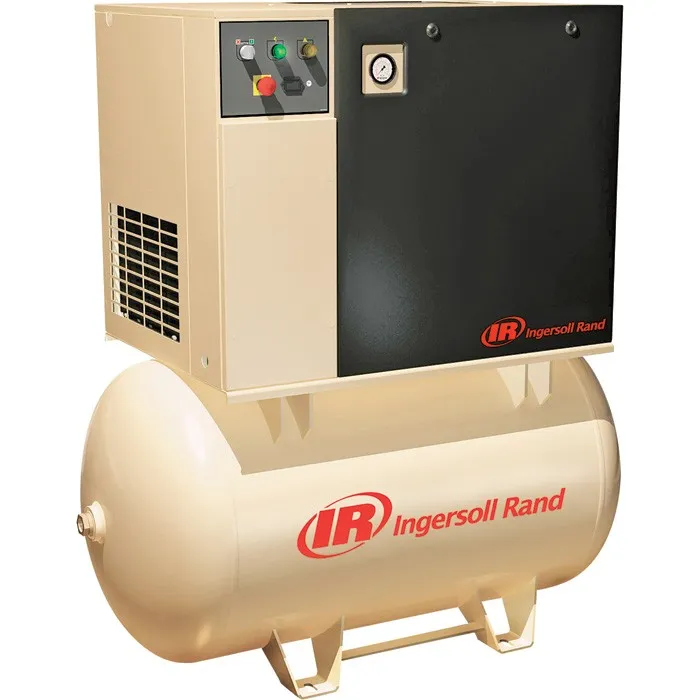
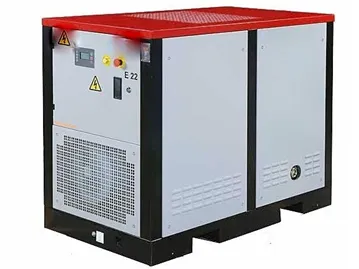
Representative images of machine types we sell, service and rent. Models and capacities are confirmed against your duty.
That can make the package attractive where:
- Space Is Limited
- A Compact Installation Is Preferred
- Integrated Storage Is Useful
- The Air Requirement Is Relatively Localised
The fact that a receiver is supplied with the compressor does not prove that the receiver is ideally sized for the application
Instead, it uses the receiver and package-engineering principles while keeping actual rotary tank-mounted model availability under manufacturer verification.
The engineering equation
The tank is part of the system.
Across brands
Models we supply and service
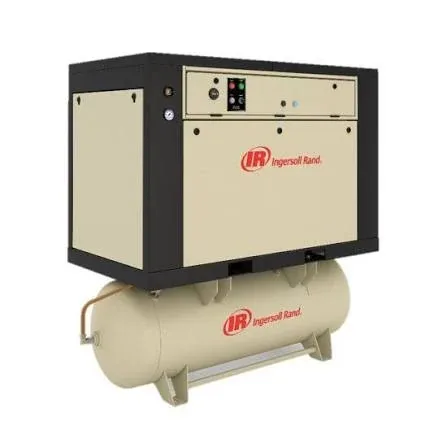
Manufacturer product images, shown to identify machines we sell, service and support. Brand names are trademarks of their owners.
It is not a substitute for correct capacity.
01 — what a tank-mounted package is
• integrated dryer availability.
Those must come from actual manufacturer documentation.
02 — why package architecture can be attractive
A combined compressor-and-receiver arrangement can potentially support:
- Compact Installation
- Integrated Storage
- Simplified Layout
- Reduced Separate-Equipment Footprint
- Short-Duration Demand Buffering
- These are package principles from the receiver-mounted architecture section
- But actual benefits depend on the real rotary package
It does not manufacture capacity
This distinction is fundamental.
Directly:
An air receiver stores air. it does not manufacture capacity
If average plant demand continuously exceeds compressor capacity, the receiver eventually discharges toward system pressure.
Therefore:
A tank-mounted package cannot turn an undersized compressor into a correctly sized compressor
04 — what a receiver can do
Assist Moisture Separation Under Appropriate Conditions.
These are the real reasons to value the receiver.
Not because “every compressor needs the biggest tank possible.”
06 — tank size must have a purpose
A receiver should be selected around a defined operating objective.
Useful sizing inputs including:
- Compressor Capacity
- System Pressure
- Minimum Acceptable Pressure
- Peak Demand
- Duration of Peak Demand
- Control Strategy
- Required Buffer Time
Therefore tank-mounted package selection should not ask only:
“What size tank comes with it?”
It should ask:
“Does that receiver support the actual demand and control requirement?”
07 — the included tank may or may not be enough
This is a critical commercial boundary.
A manufacturer package may include a receiver.
That receiver may be appropriate for the intended package class.
But:
Included does not automatically mean ideal for every installation
If more storage is required, the system may need additional or separate storage according to the actual design.
08 — TANK-MOUNTED vs SEPARATE RECEIVER
Separate-receiver architecture as potentially useful where:
- Larger Storage Is Required
- An Existing Receiver Is Available
- Plant Layout Separates Compression and Storage
- Multiple Compressors Feed Common Storage
- A Customised Arrangement Is Required
Although that source section is about reciprocating equipment, these are valid system-architecture questions to evaluate before assuming an integrated receiver is the correct layout for a rotary screw package.
The actual rotary implementation remains model-specific.
09 — small industrial applications
Tank-mounted architecture can simplify packaging.
It does not remove any of those system decisions.
10 — FAD first
Tank size should never distract from the compressor's real capacity.
The correct order remains:
Required FAD
- Required pressure
- Demand profile
- Then receiver storage
In practice:
- HP/kW tells you about motor size
- FAD tells you about usable compressor capacity
- Pressure tells you the delivery condition
- The tank does not change that
11 — do not size the compressor from tank volume
A large receiver under a small compressor does not create large continuous airflow.
Likewise, a smaller receiver does not automatically mean the compressor is undersized.
Compressor capacity and receiver storage are related—but different.
Capacity ≠ storage
12 — short demand peaks
Tank-mounted packages can be useful where the receiver has a defined role in supporting short-duration demand.
For example, a brief pneumatic event may temporarily exceed the compressor's instantaneous output.
A receiver can help buffer that event.
But if the elevated demand becomes continuous:
The receiver will eventually discharge
The compressor still needs sufficient sustained capacity.
13 — pressure stabilisation
A correctly selected receiver can help stabilise pressure.
This can be useful in compact industrial systems where demand changes over short periods.
But pressure instability can also result from:
- • undersized piping
- • poor controls
- • excessive demand
- • restrictions
- • incorrect setpoints
- A tank should not be used to hide the real cause
14 — control support
The receiver can support compressor controls by providing stored volume between control events.
The exact interaction depends on:
- Compressor Control Type
- Pressure Band
- Demand Pattern
- Receiver Volume
- System Volume
15 — fixed-speed tank-mounted packages
Where a verified manufacturer offers a fixed-speed tank-mounted rotary screw package, suitability should be evaluated against:
- Stable Demand
- Operating Hours
- Loaded Operation
- Storage
- Pressure Band
- Control Behaviour
- The receiver may assist system buffering
But it does not make every fixed-speed machine efficient in every demand profile.
16 — VSD tank-mounted packages
Where a verified manufacturer offers a VSD tank-mounted rotary screw package, the same principle applies:
VSD selection follows demand profile
The receiver can still support short events and system stability.
But:
VSD + tank does not equal guaranteed energy savings
Actual load profile and measured performance still govern.
17 — receiver size & control should be evaluated together
That makes tank selection part of control-system engineering.
Not only physical packaging.
18 — a bigger tank is not automatically better
A larger receiver does not automatically make a compressor more efficient.
So avoid generic statements such as:
“Bigger tank = lower energy.”
A receiver should have a defined function.
19 — WET RECEIVER vs DRY RECEIVER
Two system positions:
Wet receiver
Upstream of final drying, potentially supporting compressor-output buffering and bulk moisture management.
Dry receiver
Downstream of treatment, providing stored treated air where appropriately designed.
Some systems may use both.
A tank mounted under the compressor does not automatically solve all storage-location requirements.
20 — receiver position changes system function
This is important.
The integrated tank may serve one role.
A downstream receiver may serve another.
Therefore a professional system can contain:
Integrated storage
and, where required,
Additional system storage
The correct architecture depends on the operating objective.
21 — dryer integration is a separate decision
A tank-mounted compressor may or may not also include a dryer.
Do not assume tank-mounted = dryer-integrated
Verify the actual package.
22 — dryer selection follows air quality
Dryer selection should be based on:
Required pressure dew point
and:
Application
not compressor size alone.
So the presence of a receiver does not define dryer technology.
23 — air quality remains a system property
A tank-mounted rotary screw package does not automatically produce:
- Dry Air
- Oil-Free Air
- Instrument Air
- Food-Grade Air
Air quality still depends on the complete:
- Compression
- Cooling
- Separation
- Drying
- Filtration
- Storage
- Distribution
- system
24 — condensate management
Receivers can collect moisture depending on their system position and operating condition.
Therefore compact packaging still needs proper:
- Drainage
- Condensate Management
- Service Access
- Do not treat the tank as a passive component requiring no attention
25 — receiver safety
Receivers are pressure vessels.
Their:
- Installation
- Inspection
- Pressure Rating
- Relief Protection
- Regulatory Requirements
should comply with applicable rules and manufacturer documentation, and that rated working pressure must not be exceeded.
26 — package footprint does not remove installation responsibility
A tank-mounted unit may reduce the number of separate pieces of equipment.
But it still requires:
- Firm Installation
- Ventilation
- Electrical Supply
- Piping
- Drainage
- Pressure Protection
- Isolation
- Service Access
- The package may be compact
- The engineering responsibility is not
27 — ventilation
Tank-mounted rotary screw packages are still rotary screw compressors.
If air cooled, they still require proper:
- Cooling-Air Inlet
- Hot-Air Discharge
- Room Ventilation
- Recirculation Control
- Mounting the compressor above a receiver does not reduce heat rejection
28 — service access
Smaller compressor installations should allow practical access for:
- Filter Replacement
- Separator Service
- Oil Service
- Cooler Cleaning
- Motor Inspection
- Drive Service
- Electrical Work
A compact tank-mounted package should therefore be positioned so service can still be performed safely.
29 — physical compactness can create installation risk
Because tank-mounted systems can look self-contained, they may be placed:
- Too Close to Walls
- Under Low Ceilings
- In Poorly Ventilated Corners
- Where Drain Access Is Difficult
- Where Service Panels Cannot Open
30 — distribution
A compact package does not eliminate piping engineering.
Pipework should be sized to deliver required flow without excessive pressure loss and warns against compensating for undersized piping by permanently increasing compressor pressure.
Tank-mounted architecture should therefore connect correctly to the downstream distribution network.
31 — LOCAL PACKAGE vs CENTRAL SYSTEM
Tank-mounted rotary screw packages may be considered where the requirement is relatively local.
DECENTRALIZED vs CENTRALIZED AIR
That decision should consider:
- Number of Users
- Distance
- FAD
- Pressure
- Duty
- Air Quality
- Redundancy
- Maintenance
- Distribution Loss
- Future Expansion
32 — multiple tank-mounted units
If several compressors are used:
Sequencing, pressure bands and shared storage still matter
Actual system design must be reviewed.
33 — future expansion
A compact tank-mounted package may fit today's demand.
But ask:
Will More Machines Be Added?
Will Production Hours Increase?
Will Air Quality Change?
Will Additional Storage Be Needed?
Will Several Compressors Eventually Feed One Header?
Future expansion can change the preferred architecture.
34 — when a separate receiver may deserve evaluation
Based on the source's general package architecture logic, separate storage deserves evaluation where:
- • larger storage is required
- • an existing receiver is already available
- • multiple compressors feed common storage
- • the site requires a customised layout
For rotary screw systems, the actual package and plant architecture must be verified.
35 — model-specific verification
Before publishing or quoting any tank-mounted rotary screw package, verify:
- Manufacturer
- Exact Model
- Motor kW / HP
- FAD
- Working Pressure
- Control Type
- Drive Type
- Cooling Type
- Receiver Volume
- Receiver Working Pressure
- Dryer Included / Not Included
- Filtration Included / Not Included
- Dimensions
- Weight
- Electrical Requirement
- Drain Arrangement
- Service Access
- Current Availability
- No package element should be assumed from the product title alone
36 — do not infer tank size from compressor power
X kW Compressor = Y Litre Receiver.
Do not invent one.
Receiver sizing should follow the actual operating requirement and verified manufacturer package.
37 — do not infer receiver adequacy from factory packaging
A manufacturer package can be valid and still require system-level review.
The tank may support:
- Package Control
- Local Buffering
- Short Peaks
while the wider plant may still benefit from additional storage depending on system design.
Package receiver
from:
Total system storage requirement
38 — selection data to request
For a tank-mounted rotary screw enquiry, request:
- Application
- Required FAD / CFM
- Required Pressure
- Operating Hours / Day
- Minimum / Average / Peak Demand
- Peak Duration
- Current Compressor
- Current Receiver Size
- Air Quality Requirement
- Dryer Requirement
- Electrical Supply
- Installation Space
- Room Ventilation
- Future Expansion
- Criticality
39 — tank-mounted package checklist
Before selecting the package:
Compressor
Is FAD sufficient?
Pressure
Does it meet point-of-use need?
Receiver
What function should the tank perform?
Peak demand
Is the event temporary or sustained?
Control
How does storage interact with compressor control?
Air quality
Is treatment defined separately?
Installation
Is ventilation adequate?
Service
Can technicians access the package?
Safety
Is the receiver correctly rated and protected?
Future
Will the architecture still fit planned expansion?
Only then should the package be selected.
Tank-mounted rotary screw in one line
A tank-mounted rotary screw compressor can combine compression and local storage in a compact package
But the receiver still has to be engineered for the actual demand, control and system requirement
Closing
- The tank stores air
- The compressor makes air
- The system decides whether both are correctly matched
A well-selected tank-mounted package should combine:
Correct FAD
- Correct pressure
- Purposeful receiver storage
- Appropriate control
- Correct air treatment
- Ventilation
- Service access
- Safe pressure-vessel engineering
The critical boundary clearly: receivers can buffer short demand peaks, stabilise pressure, support compressor controls and reduce rapid cycling, but they cannot permanently compensate for insufficient compressor capacity, repair major pressure drop, eliminate leakage or create airflow indefinitely.
Reddy compressors
- Compressed air. engineered for uptime
- Size the compressor
- Define the storage purpose
- Verify the receiver
- Engineer the control
- Plan the air treatment
- Install for cooling & service
- Verify the complete package
- Primary CTA
Request a Tank-Mounted Rotary Screw Compressor Selection
Secondary CTAs
Review Receiver Size
Compare Tank-Mounted vs Separate Receiver
Discuss Integrated Dryer Packages
Review Small Industrial Compressor Requirements
Request Compressor Installation Review