
Tank-mounted means the compressor and receiver are packaged together
Reciprocating compressors as commonly configured as either:
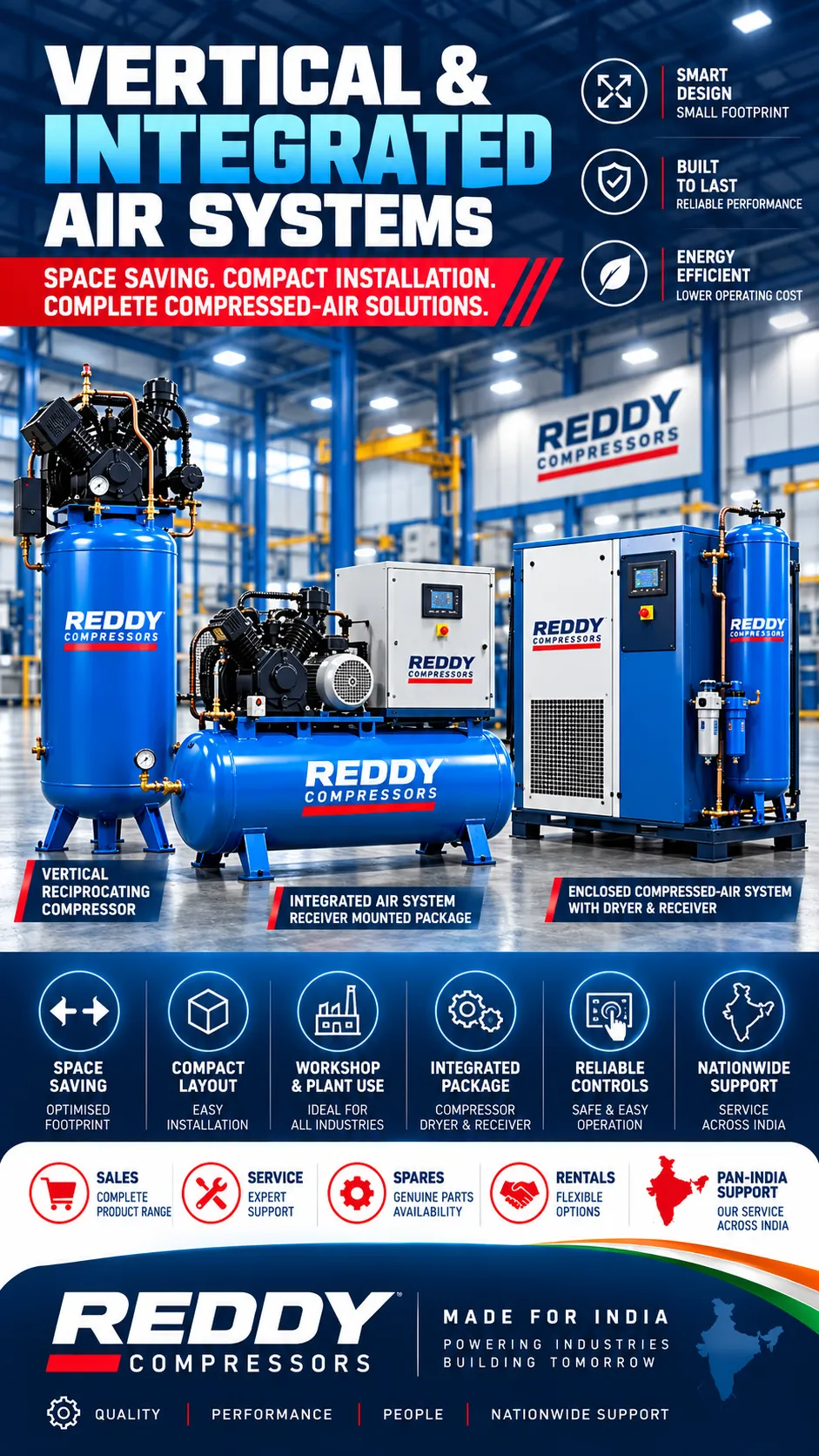
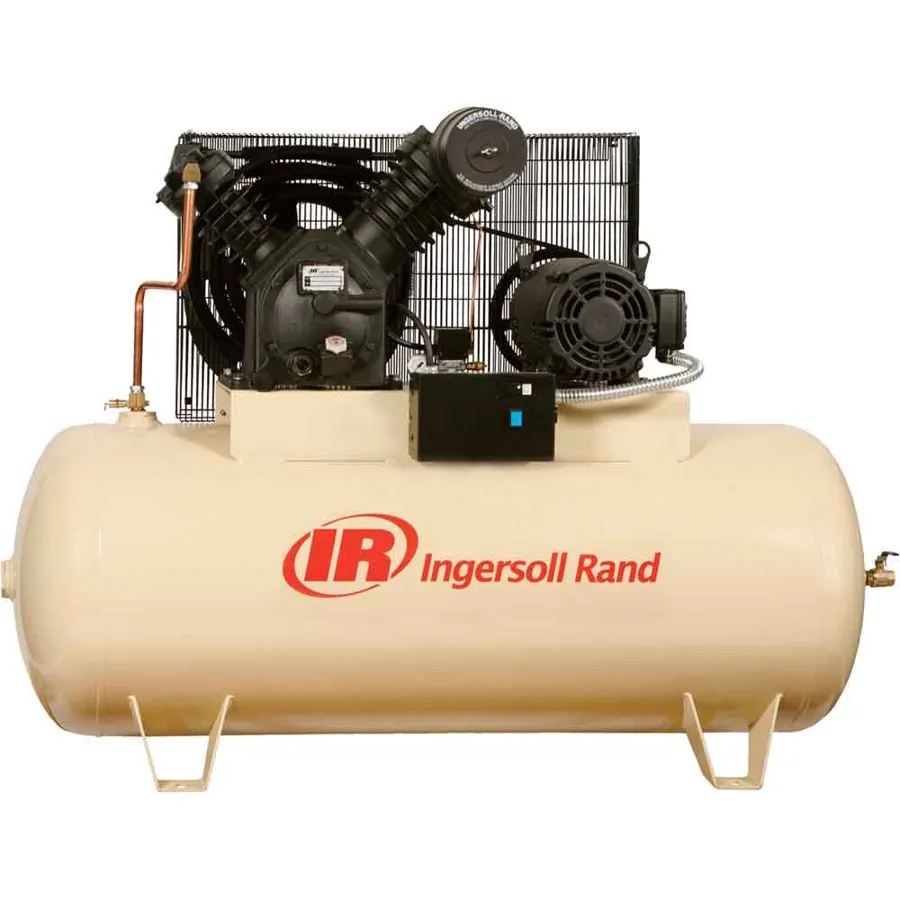
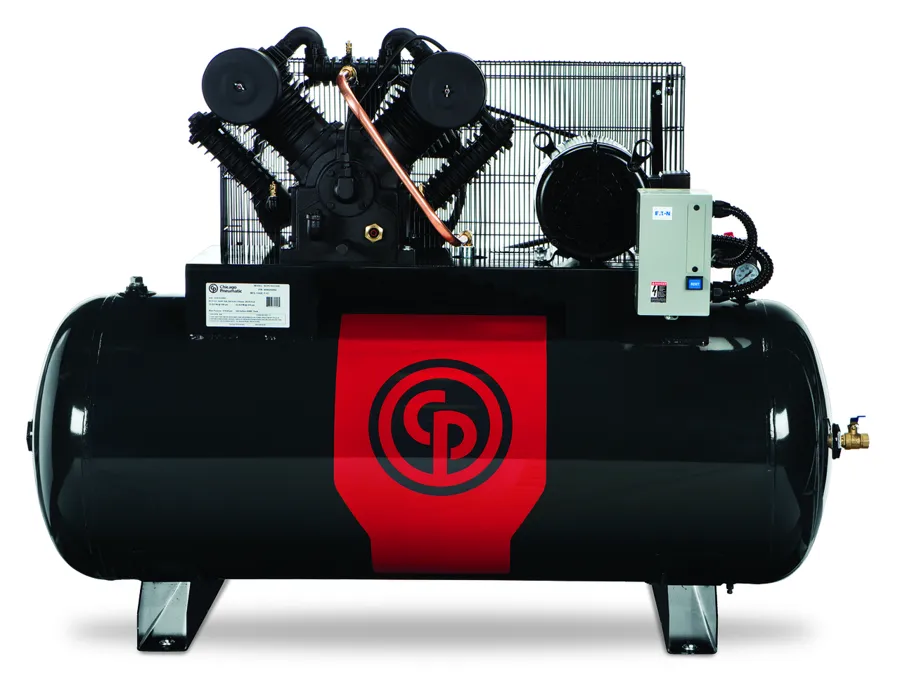
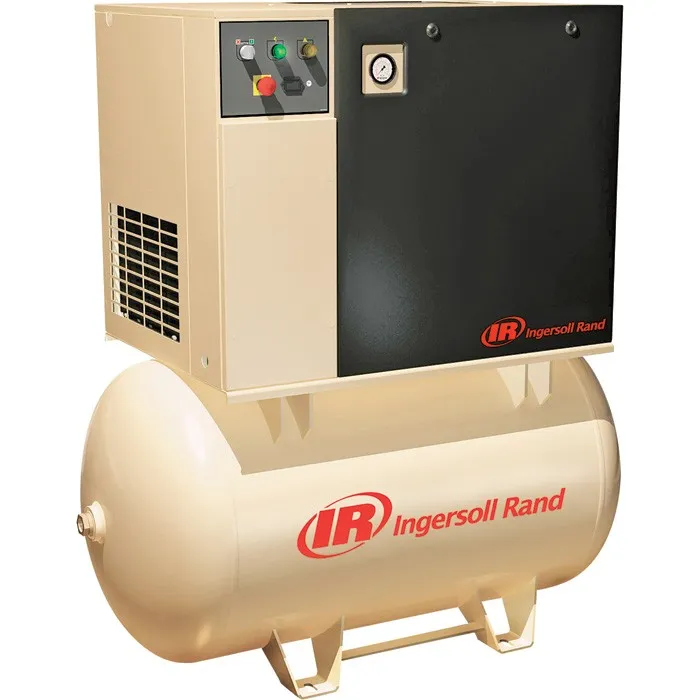
Representative images of machine types we sell, service and rent. Models and capacities are confirmed against your duty.
Receiver-mounted packages
or:
Base-mounted / separate-receiver systems
It defines the receiver-mounted arrangement as the compressor assembly packaged with an air receiver. Potential advantages include:
Across brands
Models we supply and service
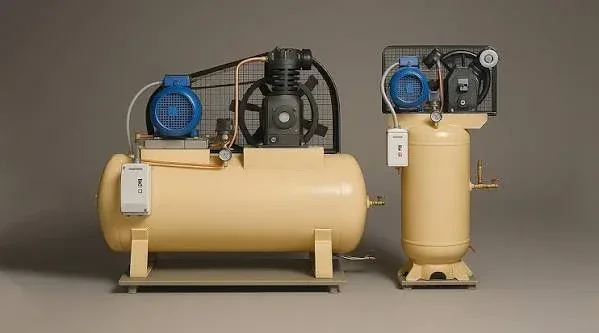
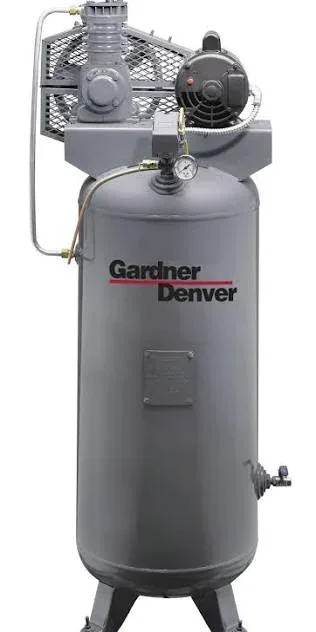
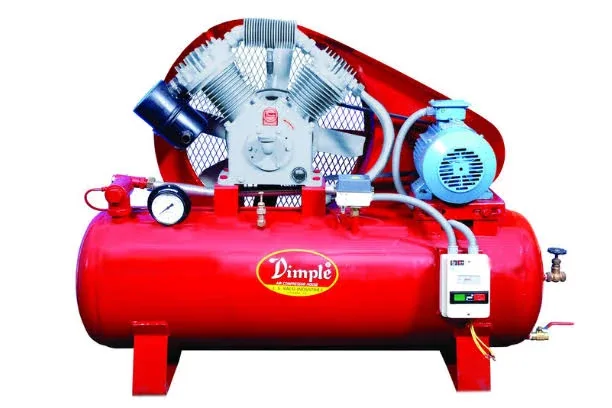
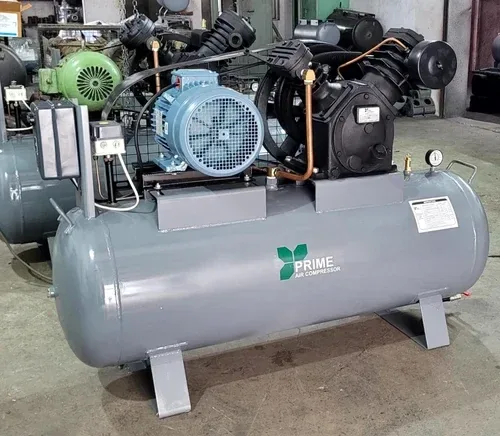
Manufacturer product images, shown to identify machines we sell, service and support. Brand names are trademarks of their owners.
- Compact Installation
- Integrated Storage
- Simplified Small-System Layout
- Buffering for Intermittent Demand
But the master adds an equally important warning:
THE FACT THAT A RECEIVER IS SUPPLIED UNDER THE COMPRESSOR DOES NOT AUTOMATICALLY MEAN IT IS IDEALLY SIZED FOR THE APPLICATION.
That is the central engineering principle of this page.
Compact package ≠ complete sizing answer
A tank-mounted reciprocating compressor combines two different functions:
Compressor = generates compressed air
Receiver = stores compressed air
Those functions are connected.
But they are not interchangeable.
Clearly:
AN AIR RECEIVER STORES AIR. IT DOES NOT MANUFACTURE CAPACITY.
If sustained plant demand exceeds the compressor's actual capacity, the receiver eventually discharges toward system pressure.
A larger tank cannot indefinitely supply missing compressor capacity.
The selection equation
The tank should have a reason.
The compressor should have sufficient capacity.
The complete package should fit the actual duty.
01 — start with the compressor requirement
Before discussing receiver litres, tank dimensions or package footprint, establish:
- Application
- Required FAD / CFM
- Operating Pressure
- Number of Users
- Operating Hours
- Expected Duty Cycle
- Receiver Requirement
- Power Supply
- Installation Environment
- Air-Quality Requirement
- These are the reciprocating selection inputs
So the first question should not be:
“What size tank?”
It should be:
“What air duty must this package support?”
02 — FAD first
A tank does not tell us compressor output.
For reciprocating compressors, the master warns customers to distinguish:
Theoretical displacement
from:
Useful delivered airflow
The practical capacity comparison should use appropriate Free Air Delivery under stated conditions.
Therefore:
Tank size ≠ compressor capacity
03 — never compare tank-mounted compressors by HP + tank litres alone
A common purchase description might look like:
“5 HP — 300 litre”
or:
“10 HP — 500 litre.”
Those numbers do not fully define the requirement.
A proper comparison needs:
- FAD
- Working Pressure
- Duty Cycle
- Receiver Volume
- Control Behaviour
- Application
04 — what an air receiver can do
A receiver may help:
- Buffer Short Demand Peaks
- Stabilise System Pressure
- Support Compressor Controls
- Reduce Rapid Cycling
- Provide Temporary Stored Air
- Assist Moisture Separation Under Appropriate Conditions
- These are useful functions
- They are also very different from increasing the compressor's continuous FAD
05 — what an air receiver cannot do
A receiver cannot:
- Permanently Compensate for Insufficient Compressor Capacity
- Repair Major Pressure Drop
- Eliminate Leakage
- Create Airflow Indefinitely
06 — the included receiver should have a defined purpose
The receiver under a tank-mounted compressor might support:
- Short Tool Demand Peaks
- Pressure Stabilisation
- Reduced Excessive Cycling
- Local Storage
- depending on the application
But the receiver should not be accepted blindly simply because it is part of the package.
Receiver sizing should still be evaluated against the operating requirement.
07 — receiver sizing inputs
Useful receiver-sizing inputs including:
- Compressor Capacity
- System Pressure
- Minimum Acceptable Pressure
- Peak Demand
- Duration of Peak Demand
- Control Strategy
- Required Buffer Time
- That is the correct framework
Not:
“Bigger tank is always better.”
08 — peak demand
A receiver can be useful when an application has a short-duration peak above the compressor's instantaneous output.
But the important word is:
Short-duration
If peak demand continues long enough to become sustained demand, the receiver will no longer solve the fundamental capacity requirement.
The compressor itself must support the sustained load.
09 — peak duration matters
A brief pneumatic event and a 30-minute production demand are not the same problem.
Receiver sizing therefore requires:
How much air?
and:
For how long?
10 — pressure stabilisation
A correctly applied receiver can help stabilise system pressure.
But pressure instability may also come from:
- Undersized Compressor Capacity
- Restricted Pipework
- Leaks
- Wrong Pressure Settings
- Peak Demand
- Regulator Problems
So:
Do not assume every pressure fluctuation is a receiver-size problem
11 — receiver storage & cycling
Receiver size interacts with:
- Compressor Capacity
- Pressure Switch / Control Band
- Demand Rate
- Allowable Pressure Change
- Starts per Hour
- This makes the tank part of the control strategy
- Not just a physical mounting frame
12 — starts per hour matter
Manufacturers may specify limits on starting frequency.
Excessive cycling can place stress on:
- Motors
- Contactors
- Pressure Switches
- Drive Components
If a tank-mounted piston compressor starts and stops too frequently, investigate the system.
13 — if cycling is excessive, investigate the cause
Reviewing:
- Receiver Capacity
- Leakage
- Pressure Settings
- Compressor Sizing
- Demand Behaviour
- That is a much stronger diagnostic approach than simply fitting a bigger tank
14 — a larger receiver does not automatically make the compressor more efficient
This directly.
“More litres = more efficiency.”
A larger receiver may be useful for a defined operating purpose.
It is not an automatic energy-saving device.
15 — duty cycle still controls the compressor
A tank-mounted reciprocating compressor is still a reciprocating compressor.
Manufacturer-specific operating limits can relate to:
- Loaded Operating Time
- Cooling
- Starts per Hour
- Discharge Temperature
- Pressure
- Environmental Conditions
Therefore:
A large receiver does not convert an intermittent-duty compressor into a continuous-duty compressor
16 — select for how long the compressor must produce air
The governing principle:
Select not only for how much air it can make
BUT FOR HOW LONG IT IS EXPECTED TO MAKE IT.
Tank-mounted packaging does not change this.
17 — where tank-mounted reciprocating can fit
Piston technology for selected:
- Workshops
- Garages
- Small Industrial Facilities
- Process Support
- Backup / Secondary Air
- depending on the operating profile
Receiver-mounted packaging may be especially practical where:
Demand Is Intermittent
and:
- Integrated Storage Is Useful
- But actual model suitability must still be verified
18 — workshops
Workshop air can involve:
- Pneumatic Tools
- Maintenance Equipment
- Intermittent Demand
A tank-mounted reciprocating compressor may be a practical architecture where:
- FAD
- Pressure
- Duty Cycle
- Receiver Buffering
- all fit the requirement
19 — garages
Garage applications can involve:
- Tyre Inflation
- Service Equipment
- Pneumatic Tools
- A receiver-mounted package can simplify the installation
- But sizing should still reflect simultaneous demand and duty
20 — small industrial facilities
Tank-mounted reciprocating architecture can also be considered where periodic industrial demand fits piston technology.
But as demand becomes:
- High
- Continuous
- Predictable
- Multi-Shift
- Rotary screw technology may deserve stronger consideration
- The load profile decides
21 — receiver-mounted does not mean single-stage
This must remain clear.
A tank-mounted compressor could have an actual manufacturer-defined:
Single-Stage
or:
- Two-Stage
- architecture where verified
Mounting configuration and compression-stage architecture are separate variables.
22 — receiver-mounted does not mean oil-lubricated
Likewise:
Tank-mounted ≠ oil-lubricated
Lubrication architecture is a separate machine characteristic.
23 — receiver-mounted does not define cooling
The compressor may use an actual manufacturer-defined cooling arrangement.
Therefore:
Tank-mounted ≠ air-cooled by definition
Tank-mounted ≠ water-cooled by definition
Verify the actual machine.
24 — TANK-MOUNTED vs BASE-MOUNTED
Receiver-mounted
Can provide:
- Compact Installation
- Integrated Storage
- Simplified Small-System Layout
- Intermittent-Demand Buffering
Base-mounted / separate receiver
Can provide flexibility where:
- Larger Storage Is Required
- Existing Receiver Is Available
- Compression & Storage Are Separated
- Multiple Compressors Feed Common Storage
- A Custom Layout Is Needed
- Neither architecture is universally superior
25 — when base-mounted may deserve evaluation
If a customer requires:
- Much Larger Storage
- Common Storage for Multiple Compressors
- A Separate Compressor Room / Receiver Location
or:
- Custom Plant Layout
- a base-mounted arrangement may deserve review
26 — WET RECEIVER vs DRY RECEIVER
The distinction:
Wet receiver
Typically upstream of final drying, potentially supporting buffering and bulk moisture management.
Dry receiver
Downstream of treatment where appropriately designed, providing stored treated air.
A tank under a reciprocating compressor does not automatically solve all system-storage requirements.
27 — the package tank may be only one storage location
Some systems may use both wet and dry storage according to the operating objective.
Therefore:
Integrated receiver ≠ total system storage by definition
28 — air quality remains a separate system requirement
A tank-mounted reciprocating compressor does not automatically produce:
- Dry Air
- Oil-Free Air
- Paint-Quality Air
- Instrument Air
or:
- Process Air
- Air quality is determined by the complete treatment and distribution system
“The receiver replaces a dryer.”
It does not.
Required moisture control still follows the process.
30 — condensate management
The reciprocating installation framework explicitly includes:
CONDENSATE MANAGEMENT.
A tank-mounted system should therefore include practical drain/condensate planning according to the actual package and applicable requirements.
31 — receivers are pressure vessels
Receiver:
- Installation
- Inspection
- Pressure Rating
- Relief Protection
- Regulatory Requirements
- should comply with applicable rules and manufacturer documentation
It further states:
NEVER EXCEED RATED WORKING PRESSURE.
32 — the tank is not just a stand
In a tank-mounted compressor, the receiver may physically support the compressor package.
But technically it remains:
A pressure vessel
Its safe operating status matters independently from the compressor pump.
33 — pressure rating must be verified
Do not assume that:
Receiver Pressure Rating
equals:
- Any Compressor Pressure the Pump Can Generate
- The complete package must operate within all applicable pressure ratings
- The lowest permissible system boundary matters
34 — safe pressure relief
This includes:
SAFE PRESSURE RELIEF.
Use applicable documentation.
35 — accessible isolation
The same installation framework includes:
ACCESSIBLE ISOLATION.
This supports safe service and maintenance planning.
A compact package should not be installed where its isolation and service points become inaccessible.
36 — firm foundation
Tank-mounted does not mean:
“Place it anywhere.”
Actual anchoring/support requirements should follow manufacturer documentation.
37 — adequate ventilation
Reciprocating compressors generate heat.
A compact package can still be installed badly if placed in a hot, poorly ventilated enclosure.
38 — service clearance
Tank-mounted packages are often selected partly because they save space.
SERVICE CLEARANCE.
Compact footprint should not prevent:
- Filter Service
- Valve Work
- Belt Service Where Applicable
- Motor Access
- Receiver Inspection
- Drain Access
- according to actual equipment design
39 — correct electrical protection
Electrical supply and protection remain part of the installation.
Tank integration does not make the compressor:
“Plug-and-play”
unless the actual manufacturer package and site electrical conditions support that statement.
40 — suitable piping
A tank-mounted compressor still connects into a downstream compressed-air system.
Piping must support the required flow without creating unnecessary pressure loss.
A good package can still perform poorly through restrictive downstream piping.
41 — small compressor ≠ insignificant installation
Tank-mounted packages can look compact and self-contained.
Their installation still involves:
Pressure
- Electricity
- HEAT
- Stored energy
- Condensate
- Maintenance access
- 42 — receiver size & future expansion
A receiver sized for today's application may not automatically remain ideal after:
- Additional Tools
- Additional Machines
- Longer Operating Hours
- Higher Peak Demand
- Changed Pressure Requirements
- Future demand should therefore be considered when the package is selected
43 — do not oversize the compressor because the tank is large
A large receiver can create an impression of a powerful compressor.
But:
Physical tank size is not the same as air-generation capacity
FAD remains the capacity measure.
44 — do not undersize the compressor because the receiver is large
The reverse mistake is equally important.
A large receiver cannot indefinitely support a sustained production demand that exceeds compressor output.
45 — leakage affects cycling
If a tank-mounted compressor starts repeatedly when no productive air should be required, investigate leakage among the possible causes.
Do not automatically install a larger receiver to feed leaks more quietly.
46 — pressure settings affect cycling
Pressure switch/control-band settings interact with receiver volume and demand behaviour.
Those remain model/system-specific.
47 — starting frequency should follow manufacturer limits
If a motor/compressor manufacturer specifies maximum starting frequency, those limits should control.
Such limits may be manufacturer-specific.
48 — maintenance
A tank-mounted reciprocating compressor remains a complete maintenance asset.
Depending on design, reciprocating service can involve:
- Piston Rings
- Valves
- Cylinders / Liners
- Bearings
- Belts
- Gaskets
- Filters
- Lubrication-System Components
- The receiver itself also requires appropriate pressure-vessel attention
- Do not treat the package as one sealed “maintenance-free” appliance
49 — receiver condition belongs in lifecycle thinking
When evaluating whether an older tank-mounted compressor should be repaired, rebuilt or replaced, the condition of the receiver should not be ignored.
The source's reciprocating repair/replace framework includes pressure vessel condition among the factors to review.
This is particularly important when compressor and receiver are physically one package.
50 — repairing the compressor does not automatically certify the receiver
The pump and receiver are different assets within the package.
A successful mechanical repair to the compressor does not, by itself, establish pressure-vessel condition.
Receiver assessment should follow applicable requirements and actual condition.
51 — REPLACEMENT PACKAGE vs REUSING EXISTING RECEIVER
Where an existing receiver is suitable and its condition/rating are appropriately verified, a base-mounted replacement architecture may sometimes deserve evaluation.
This should remain a project-specific option.
52 — lifecycle economics
The purchase package may look financially attractive because compression and storage are combined.
But lifecycle comparison should still consider:
- Purchase
- Energy
- Maintenance
- Repairs
- Receiver / Pressure-Vessel Requirements
- Installation
- Air Treatment
- Downtime Exposure
- Parts Support
- Do not select from capital price alone
53 — model data required before product publication
For each tank-mounted reciprocating compressor, verify:
- Manufacturer
- Exact Model
- Motor kW / HP
- FAD
- Working Pressure
- Stage Architecture
- Cylinder Configuration
- Lubrication Type
- Cooling Type
- Drive Type
- Control Method
- Duty Limit
- Receiver Volume
- Receiver Rated Working Pressure
- Receiver Documentation
- Relief / Protection Arrangement
- Drain Arrangement
- Dimensions
- Weight
- Electrical Requirement
- Service Requirements
- Current Availability
- No tank or compressor specification should be inferred from another model
54 — customer data to request
For a tank-mounted piston compressor enquiry, collect:
- Application
- Required FAD / CFM
- Required Pressure
- Number of Users
- Simultaneous Users
- Operating Hours / Day
- Expected Duty Cycle
- Peak Demand
- Peak Duration
- Existing Compressor
- Existing Receiver Size
- Power Supply
- Air-Quality Requirement
- Installation Space
- Ventilation
- Future Expansion
If replacing an existing tank-mounted package:
- Manufacturer
- Model
- Serial Number
- Receiver Nameplate / Rating
- Photographs
- Current Fault / Condition
- These details make the selection far more reliable
55 — tank-mounted reciprocating selection gate
Before choosing a package, ask:
What airflow is required?
Use FAD.
At what pressure?
Match the application.
What is the duty cycle?
Do not let the receiver disguise an unsuitable compressor duty.
What should the receiver accomplish?
Short-peak buffering? Pressure stability? Cycling control?
How long is the peak?
Duration matters.
Is the included receiver large enough for that purpose?
Verify—do not assume.
How often will the compressor start?
Check manufacturer limits.
Is the receiver correctly rated?
Pressure-vessel safety matters.
Is ventilation adequate?
The package still produces heat.
Can it be serviced?
Provide access.
What air quality is required?
Tank mounting does not define treatment.
Is future expansion expected?
Architecture may change.
Only then should the package be selected.
Tank-mounted reciprocating in one line
A tank-mounted reciprocating compressor combines air generation and receiver storage into one package
But the compressor capacity, duty cycle and receiver function must still be verified separately
Closing
- The compressor makes the air
- The receiver stores the air
- The application determines whether the package is correct
A properly selected tank-mounted reciprocating compressor should therefore have:
The right FAD
- The right pressure
- The right duty cycle
- The right receiver purpose
- The right storage volume
- Controlled cycling
- Correct pressure-vessel rating
- Adequate ventilation
- Service access
- Correct air treatment
And the storage rule remains absolute:
AN AIR RECEIVER STORES AIR. IT DOES NOT MANUFACTURE CAPACITY.
Reddy compressors
- Compressed air. engineered for uptime
- Define the air requirement
- Verify the FAD
- Define the duty cycle
- Give the receiver a purpose
- Control the cycling
- Verify the pressure vessel
- Install it correctly
- Maintain the complete package
- Primary CTA
Request a Tank-Mounted Reciprocating Compressor Selection
Secondary CTAs
Review Receiver Size
Compare Tank-Mounted vs Base-Mounted
Review Starts & Cycling
Discuss Workshop / Garage Air Requirements
Request Reciprocating Compressor Service