
Multi-stage compression should have an engineering reason
That:
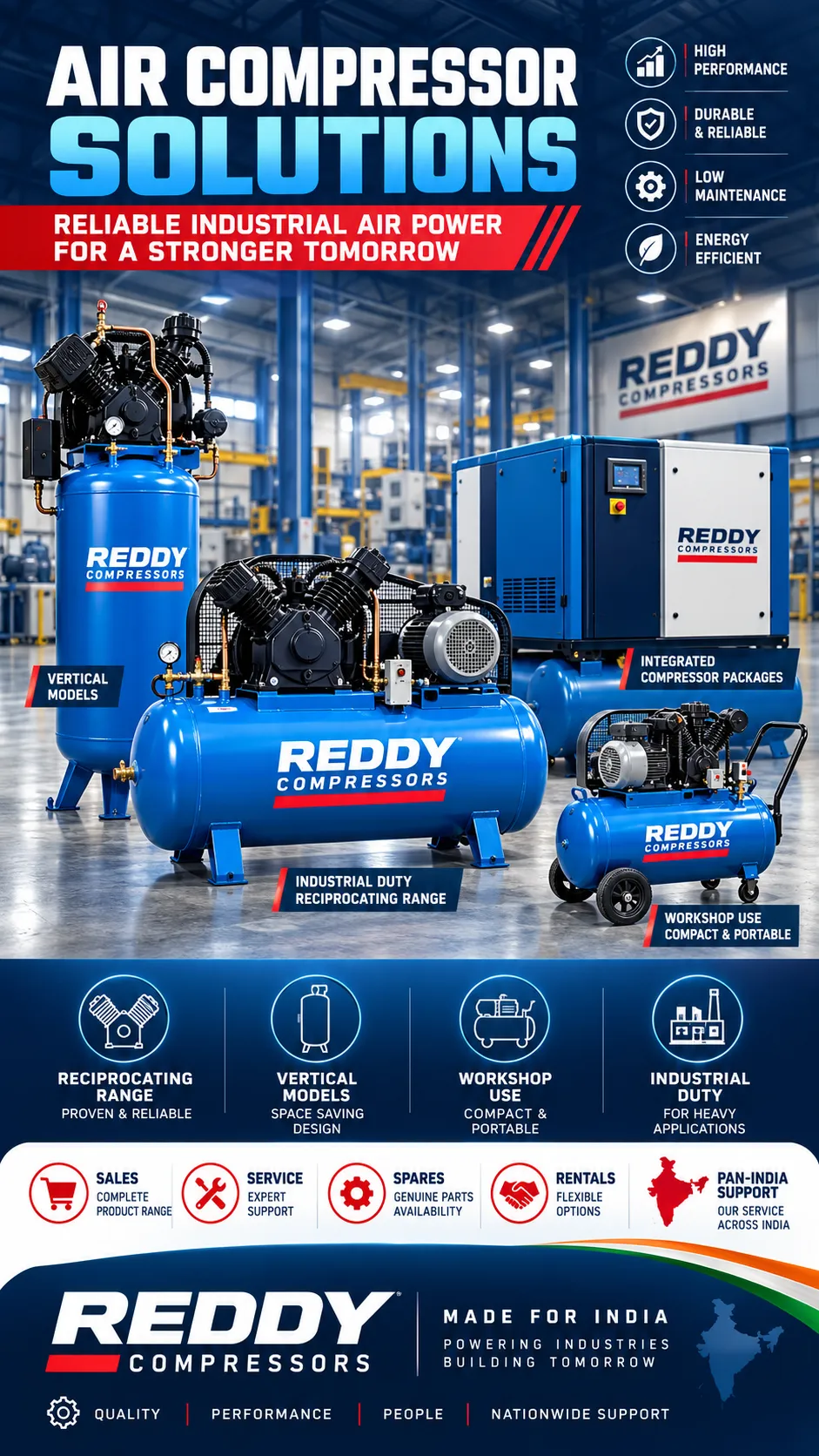
MULTI-STAGE RECIPROCATING TECHNOLOGY CAN BE SUITABLE FOR CERTAIN PRESSURE REQUIREMENTS BEYOND CONVENTIONAL PLANT AIR.
More stages do not automatically mean “better.”
For the documented single-stage and two-stage comparison, the correct architecture depends on:
Across brands
Models we supply and service
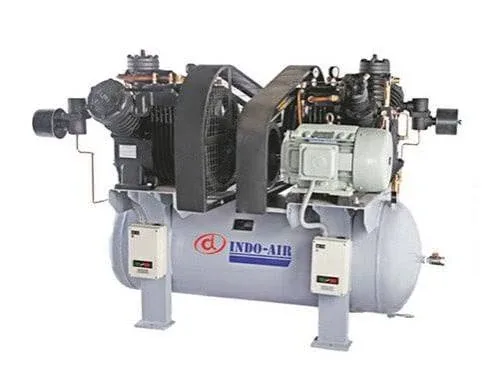
Manufacturer product images, shown to identify machines we sell, service and support. Brand names are trademarks of their owners.
- Required Operating Pressure
- Airflow
- Duty
What “multi-stage” means on
For this page, multi-stage reciprocating compressor means a manufacturer-defined piston compressor in which compression is divided across multiple compression stages rather than completed in a single stage.
Such reciprocating technology exists for selected pressure requirements beyond conventional plant air.
However:
The exact number of stages and internal compression path must be verified for the actual model
The selection equation
Stage count is one part of the equation.
Not the answer by itself.
01 — start with the required final pressure
Multi-stage technology should not be selected first.
The application should be defined first.
The source's documented stage-selection method asks:
What Pressure Does the Application Require?
What Pressure Must Leave the Compressor?
What Pressure Is Lost Downstream?
What Duty Cycle Will the Compressor Experience?
What Does the Manufacturer Permit?
02 — do not start with stage count
The weak enquiry is:
“I need a three-stage compressor.”
The stronger enquiry is:
“I need this airflow at this pressure for this duty.”
Then the manufacturer/model architecture can be selected.
03 — pressure + flow must be considered together
A machine capable of higher pressure is not automatically suitable if it cannot provide the required airflow.
Likewise:
High FAD without required pressure
does not satisfy the application.
The selection must establish:
Required FAD
- At required final pressure
- 04 — FAD matters more than theoretical displacement
Piston compressors can be described using different airflow figures.
It instructs customers to distinguish theoretical displacement from useful delivered airflow and says practical comparison should use the appropriate Free Air Delivery under stated conditions.
Therefore multi-stage selection should compare:
- FAD
- Pressure
- Reference Basis
- Operating Conditions
- rather than swept volume alone
05 — never compare two multi-stage machines by “CFM” without context
Ask:
What Does the Flow Figure Represent?
At What Pressure?
Is It Delivered Air?
What Test / Reference Basis Was Used?
A larger airflow number can be misleading if the comparison basis differs.
06 — what the two-stage example teaches us
The source's detailed staged-compression example is two-stage reciprocating compression:
This demonstrates the general engineering idea that compression can be divided into stages.
Those must come from verified equipment documentation.
07 — intercooling is an important staged-compression principle
Compression raises air temperature.
For the documented two-stage architecture, cooling between stages can:
- Reduce Temperature Entering the Next Stage
- Reduce Work Associated With Subsequent Compression
- Support Thermal Management
This provides the technical foundation for discussing cooling as a major consideration in multi-stage compressor selection.
08 — do not invent universal intercooling performance
for generic multi-stage equipment.
Therefore:
Intercooling performance = model-specific
09 — more stages do not automatically mean more efficiency
The source's stage-selection philosophy is explicit:
MORE STAGES DO NOT AUTOMATICALLY MEAN BETTER.
without verified comparable machine data.
10 — more stages do not automatically mean higher quality
Stage count is an engineering configuration.
Quality depends on the complete machine:
- Design
- Materials
- Manufacturing
- Cooling
- Controls
- Maintenance
- Installation
- Operating Conditions
11 — multi-stage may be relevant to higher-pressure duties
Multi-stage reciprocating technology can be suitable for certain pressure requirements beyond conventional plant air.
But it should not pre-empt those specialised pages.
12 — multi-stage ≠ universal high-pressure solution
Even if pressure is high, the correct compressor technology may depend on:
- Gas / Air Medium
- Required FAD
- Final Pressure
- Duty
- Cooling
- Air Quality
- Safety
- Application
Therefore:
Do not force every high-pressure requirement into a generic multi-stage air compressor
13 — duty cycle still controls
Manufacturer-specific operating limits may relate to:
- Loaded Operating Time
- Cooling
- Starts per Hour
- Discharge Temperature
- Pressure
- Environmental Conditions
- That principle is just as important for multi-stage equipment
14 — high pressure does not cancel duty limits
A compressor can be capable of reaching the required pressure and still be unsuitable for:
- Continuous Operation
- Long Loaded Periods
- High Ambient Conditions
- Frequent Cycling
- if the actual manufacturer limits do not support the duty
Therefore:
Pressure capability ≠ duty capability
15 — rotary screw may still deserve evaluation for sustained plant air
Where air demand is:
- High
- Continuous
- Predictable
- Present Across Multiple Shifts
- rotary screw technology may deserve consideration
Therefore a multi-stage reciprocating compressor should not be selected merely because the plant has high operating hours.
The complete duty matters.
16 — reciprocating may remain attractive where demand is intermittent
Reciprocating technology can be commercially and technically attractive where demand is:
- Intermittent
- Periodic
- Relatively Low
- Characterised by Long Idle Periods
The same load-profile principle should remain visible even on the multi-stage page.
17 — SINGLE STAGE vs TWO STAGE vs MULTI-STAGE
Architecture | Principle |
|---|---|
Single-stage | Compresses from inlet to final discharge in one stage |
Two-stage | Compression divided between two stages, with intercooling where designed |
Multi-stage | Source confirms suitability for certain higher-pressure duties, but detailed 3+ stage architecture is not defined |
No ranking should be attached to this table.
18 — stage count should follow required pressure
The correct stage-selection question is:
What final pressure is required?
Then:
What verified compressor architecture is designed for that pressure and duty?
This is stronger than choosing stage count first.
19 — stage count should also follow FAD
The machine still has to deliver enough useful air.
A multi-stage compressor with inadequate FAD is still the wrong compressor.
Therefore:
Final pressure + FAD + duty
must be evaluated together.
20 — cooling becomes a major engineering item
Staged compression involves thermal management.
Actual multi-stage cooling architecture must come from the selected model.
21 — air-cooled or water-cooled?
Therefore:
Multi-stage ≠ automatically water-cooled
and:
Multi-stage ≠ automatically air-cooled
Verify the machine.
22 — lubrication is a separate design dimension
Multi-stage does not automatically mean:
Oil-lubricated
Nor does it mean:
Oil-free
The actual compressor model determines the configuration.
23 — drive & prime mover are also separate
Reciprocating compressors can differ by drive and motor/engine architecture.
Stage count alone does not identify those systems.
For actual equipment, verify:
- Prime Mover
- Drive
- Controls
- Electrical Requirements
- from manufacturer data
24 — receiver / storage is not defined by stage count
A multi-stage compressor may be installed with a receiver arrangement according to its system design.
The source's general reciprocating architecture distinguishes:
Receiver-Mounted Packages
and:
Base-Mounted / Separate-Receiver Systems.
The correct arrangement depends on:
- System Size
- Available Space
- Storage Requirement
- Installation Strategy
25 — receiver storage can buffer demand
A receiver can help absorb short demand periods and reduce excessive start-stop behaviour where correctly applied.
But:
Storage does not change the compressor's stage capability
A receiver cannot turn an unsuitable multi-stage machine into the correct pressure/flow machine.
26 — large receiver ≠ high-pressure capability
Receiver size and compressor final pressure are different engineering variables.
Do not infer:
Big tank = higher-pressure compressor
Pressure rating, receiver volume and compressor capacity must each be verified.
27 — pressure vessel safety becomes important
As with all receiver-based compressed-air systems, storage must be suitable for the actual pressure and installed according to applicable manufacturer and regulatory requirements.
28 — distribution pressure loss still matters
Ask:
WHAT PRESSURE IS LOST DOWNSTREAM?
That means high final compressor pressure should not be used to hide avoidable:
- Piping Loss
- Filter Loss
- Dryer Loss
- Valve Restrictions
- Regulator Loss
- Measure the system before increasing compression requirements
29 — point-of-use pressure should drive the requirement
A multi-stage compressor should be selected around:
The pressure the application actually needs
Then account for legitimate downstream losses.
Do not select an unnecessarily high-pressure machine merely because that pressure is technically available.
30 — air quality remains separate from stage count
A multi-stage compressor does not automatically produce:
- Cleaner Air
- Drier Air
- Oil-Free Air
- Food-Grade Air
- Instrument Air
The process still determines:
- Moisture
- Oil
- Particles
- Pressure Dew Point
- Contamination Risk
- and therefore treatment architecture
31 — PET / CNG / process-gas applications require separate verification
Those are specialist pages later in the sequence.
Do not assume air-compressor architecture transfers directly into specialist gas duty
32 — booster duty also requires separate engineering
A booster system should not be represented as simply “another multi-stage compressor” unless the actual equipment documentation supports that configuration.
Source-grounded publishing requires the equipment to define the claim.
33 — maintenance
Multi-stage reciprocating compressors remain mechanical assets.
The broader reciprocating architecture can include service items such as:
- Piston Rings
- Valves
- Valve Plates
- Gaskets
- Bearings
- Cylinders / Liners
- Connecting-Rod Components
- Filters
- Pressure Switches
Actual maintenance depends on:
- Manufacturer
- Model
- Duty
- Pressure
- Cooling
- Environment
- Service History
34 — interstage components must remain model-specific
Because the current master only details a two-stage intercooling example, it does not support universal statements about:
- • third-stage coolers
- • interstage separators
- • intercooler drain arrangements
- • stage-specific relief systems
- • pressure equalisation
- • cylinder sequencing
35 — more components do not automatically mean “worse”
Lifecycle performance depends on the actual machine and service environment.
36 — more stages do not automatically mean “better”
This remains the strongest editorial safeguard.
Every additional architecture decision should therefore be justified by:
The duty
37 — serviceability
Before purchasing a specialist multi-stage compressor, review:
- Parts Availability
- Technical Documentation
- Service Capability
- Maintenance Access
- Component Lead Times
- Overhaul Capability
- Actual support status must be verified
38 — multi-brand governance
If a multi-stage compressor belongs to another manufacturer, the website should clearly distinguish:
- Equipment Supplied
- Equipment Serviced
- Parts Supported
- Customer-Owned Equipment Supported
- Sourced on Request
- Knowledge Only
- Verification Required
- Do not imply authorised status without current documentation
39 — model verification is essential
For every multi-stage reciprocating model, verify:
- Manufacturer
- Exact Model
- Compression Medium
- Number of Stages
- Cylinder Configuration
- FAD
- Inlet Conditions
- Final Working Pressure
- Intermediate Pressure Data Where Published
- Cooling Architecture
- Intercooling Architecture
- Lubrication
- Prime Mover
- Drive
- Control Method
- Receiver / Storage Configuration
- Duty Limit
- Ambient Limit
- Dimensions
- Weight
- Electrical Requirement
- Service Requirements
- Supply Status
- No value should be inferred from another product family
40 — high-pressure claims require particular discipline
Multi-stage reciprocating technology can be suitable for certain higher-pressure requirements.
It does not say:
Every multi-stage compressor is high pressure
Nor:
Every high-pressure application requires multi-stage reciprocating
Keep both claims controlled.
41 — no universal stage count rule
Actual manufacturer engineering must define them.
42 — no universal compression-ratio rule
for generic multi-stage reciprocating equipment.
43 — no universal interstage-pressure rule
Similarly, do not state that intermediate pressure must equal a specific formula or ratio.
The current project is source-grounded.
That information is absent from the supplied master.
44 — no universal efficiency claim
It does not establish a percentage energy advantage for generic multi-stage machines.
Therefore:
No baseline / no verified data → no savings claim
45 — customer selection data
For a multi-stage reciprocating enquiry, collect:
- Application
- Compression Medium
- Required FAD / CFM
- Required Final Pressure
- Required Point-of-Use Pressure
- Existing Inlet Condition if Not Atmospheric
- Operating Hours
- Expected Duty Cycle
- Number of Users
- Peak Duration
- Cooling / Site Conditions
- Air-Quality Requirement
- Power Supply
- Receiver / Storage Requirement
- Existing Equipment
- Future Requirement
46 — multi-stage selection gate
Before selecting equipment, ask:
Why is multi-stage compression being considered?
Because of a verified pressure/duty requirement—not because more stages sound better.
What final pressure is required?
Define it at the application.
What FAD is required at that pressure?
Verify useful delivered air.
What does the manufacturer's actual stage architecture show?
Do not infer it.
What cooling is provided between / around stages?
Use actual documentation.
What is the duty cycle?
Pressure capability does not prove continuous-duty capability.
What is the installation environment?
Cooling and ambient condition matter.
What air quality is required?
Compression stage count does not determine treatment.
What storage is required?
Receiver with a defined purpose.
Can the machine be serviced and supported?
Verify parts and technical capability.
What does lifecycle cost show?
Evaluate the complete asset.
Multi-stage reciprocating in one line
Multi-stage reciprocating technology can be appropriate where the required pressure and duty justify dividing compression across multiple stages
But the exact stage count, pressure path, cooling arrangement and performance must come from the verified machine
Closing
More stages should solve a real compression requirement
Not create a marketing hierarchy.
A properly selected multi-stage reciprocating system should establish:
Application
- Final pressure
- FAD at pressure
- Duty cycle
- Verified stage count
- Cooling / intercooling
- Storage
- Air quality
- Installation
- Serviceability
- Lifecycle
And the governing stage principle remains:
MORE STAGES DO NOT AUTOMATICALLY MEAN BETTER.
- Reddy compressors
- Compressed air. engineered for uptime
- Define the application
- Define the final pressure
- Verify FAD at pressure
- Understand the duty
- Verify the stage architecture
- Engineer the cooling
- Verify pressure integrity
- Plan the lifecycle
- Primary CTA
Discuss a Multi-Stage Reciprocating Compressor Requirement
Secondary CTAs
Discuss Higher-Pressure Air Requirements
Compare Two-Stage vs Multi-Stage
Review Booster Requirements
Discuss PET / Process-Air Boundaries
Request Reciprocating Compressor Service