
OIL-LUBRICATED IS A MACHINE ARCHITECTURE—not AN AIR-QUALITY GUARANTEE
An oil-lubricated reciprocating compressor uses a manufacturer-defined lubrication system as part of its mechanical architecture.
What it does establish is highly relevant:
- • reciprocating compressor architecture can vary by lubrication
- • reciprocating maintenance can include lubricant-system components
- • lubrication condition belongs in repair/replace assessment
- • oil-lubricated systems can introduce additional contamination mechanisms
• compressor lubricant must be selected for verified technical compatibility rather than viscosity grade alone.
Verify the actual machine
The selection equation
Lubrication is important.
Across brands
Models we supply and service
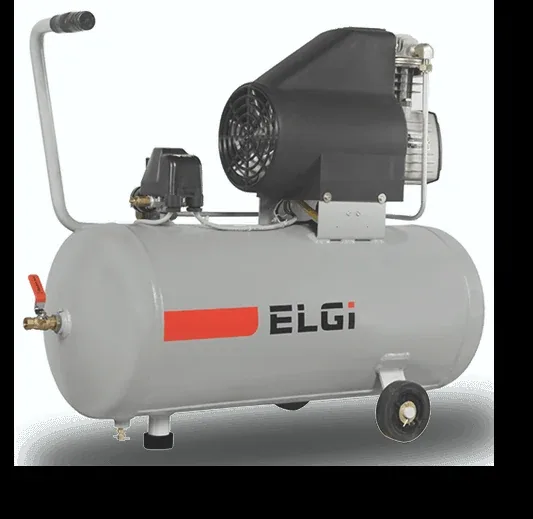
Manufacturer product images, shown to identify machines we sell, service and support. Brand names are trademarks of their owners.
It is not the only selection variable.
01 — start with the compressed-air requirement
Before discussing oil type, lubricant chemistry or service intervals, define:
- Application
- Required FAD / CFM
- Operating Pressure
- Number of Users
- Operating Hours
- Duty Cycle
- Receiver Requirement
- Installation Environment
- Air-Quality Requirement
02 — oil-lubricated does not define compressor capacity
A lubrication label does not tell you:
How Much Air the Compressor Delivers
or:
- At What Pressure
- FAD remains the meaningful delivered-air reference
- Pressure remains the application condition
- Duty remains the operating boundary
So:
Lubrication type ≠ capacity
03 — FAD before motor HP
Useful compressor comparison should distinguish delivered FAD from theoretical displacement.
A piston compressor may have an impressive displacement figure but still needs to be compared using useful delivered airflow under stated conditions.
not motor HP alone.
04 — pressure still comes from the application
Oil-lubricated reciprocating compressors can exist in different pressure architectures.
Lubrication type does not determine the required pressure.
Selection should establish:
What pressure must reach the process?
Then compare verified machines designed for that duty.
05 — duty cycle remains one of the most important variables
A compressor rated for a given airflow should not automatically be assumed suitable for continuous operation at that output.
Manufacturer-specific operating limits may include:
- Loaded Operating Time
- Cooling
- Starts per Hour
- Discharge Temperature
- Pressure
- Environmental Conditions
- Oil lubrication does not remove those limits
06 — oil-lubricated ≠ continuous duty
This claim must be controlled.
A lubricated piston compressor should not automatically be described as suitable for:
Continuous Plant Air
or:
- 24/7 Duty
- simply because lubricant is present
- Actual duty capability comes from the verified manufacturer/model
07 — where reciprocating technology can fit
Reciprocating compressors for:
- Workshops
- Garages
- Small Industrial Facilities
- Process Support
- Selected Higher-Pressure Duties
- Backup / Secondary Air
- depending on the actual duty
Oil-lubricated versions may exist within such categories where actual equipment data confirms the configuration.
08 — lubrication is a design variable
This is important because:
Stage count
- Cooling method
- Drive type
- Receiver configuration
and:
Lubrication type
are separate design dimensions.
A machine can only be described accurately when the complete configuration is verified.
09 — single-stage + oil-lubricated
An actual manufacturer may offer a single-stage oil-lubricated reciprocating compressor.
But:
Single stage does not automatically mean oil-lubricated
They should remain separate.
10 — two-stage + oil-lubricated
Likewise, some verified two-stage reciprocating machines may use oil lubrication.
But:
Two-stage does not automatically mean oil-lubricated
Actual model documentation must establish the configuration.
11 — multi-stage + oil-lubricated
The same rule applies to multi-stage equipment.
Stage count does not define lubrication.
Pressure requirement does not define lubrication.
Lubrication architecture must be verified independently.
12 — the source supports lubricant-system maintenance
Reciprocating compressors contain wear/service components that can include:
- Piston Rings
- Valves
- Cylinders / Liners
- Bearings
- Belts
- Gaskets
- Filters
- Lubricant-System Components
The lubrication system is part of the maintenance asset
It should not be treated as an incidental consumable.
13 — “simple maintenance” does not mean “no maintenance”
This directly in its reciprocating service discussion.
Oil-lubricated machines still require a planned lifecycle approach.
Actual service tasks and intervals depend on:
- Manufacturer
- Model
- Operating Hours
- Duty
- Environment
- Lubricant Specification
- Machine Condition
14 — lubrication condition matters in repair / replace decisions
That gives lubrication a lifecycle role beyond routine oil changes.
It becomes part of the overall machine-condition assessment.
15 — the correct lubricant matters
Compressor lubricant can perform several possible functions, including:
- Lubrication
- Cooling
- Sealing
- Corrosion Protection
This is deliberately framed as:
Possible functions
The actual machine architecture determines its role.
16 — do not select lubricant by viscosity grade alone
In practice:
Do not select compressor lubricant by viscosity grade alone
Use:
MANUFACTURER REQUIREMENTS + VERIFIED TECHNICAL COMPATIBILITY.
17 — incorrect lubricant can create multiple problems
Potential compatibility issues involving:
- Viscosity
- Oxidation
- Deposits
- Seal Compatibility
- Temperature
- Mixing Compatibility
Therefore:
“Compressor oil” is not a universal specification
The exact lubricant must fit the actual equipment.
Do not assume two compressor lubricants can be mixed because their viscosity label appears similar
Compatibility needs verification.
19 — do not invent universal oil change intervals
or any universal oil-change interval for reciprocating compressors.
Therefore:
Oil change interval = manufacturer / model-specific
Site duty and condition may also matter according to actual documentation.
20 — do not invent universal oil viscosity
or any other universal grade across all piston compressors.
Against selecting lubricant by viscosity grade alone.
21 — oil-lubricated systems can introduce additional contamination mechanisms
This is a direct air-quality boundary.
In practice:
OIL-LUBRICATED SYSTEMS CAN INTRODUCE ADDITIONAL CONTAMINATION MECHANISMS.
That means the process air-quality requirement must be evaluated explicitly.
22 — this does not mean “oil-lubricated air is always unsuitable”
Many applications may be compatible with oil-lubricated compression when the complete air-treatment and process requirements are satisfied.
The correct sequence is:
23 — oil-lubricated does not define final oil content at the point of use
Air quality is a system property.
The condition produced in the compressor room can differ from the condition reaching the application because:
- Treatment
- Storage
- Pipework
- Operating Environment
- all matter
24 — air quality must be defined at the point of use
This is especially important for applications sensitive to contamination.
The compressor is only one part of the chain:
Every component should have a purpose.
25 — drying does not remove every contamination risk
A dryer addresses moisture.
It does not automatically solve:
- Oil
- Particulate
- Aerosol
- Other Contamination
Drying
and:
Filtration
as separate treatment functions.
26 — filtration must target the actual contamination mechanism
Filters can target different mechanisms including:
- Particulates
- Liquid Contamination
- Aerosols
- Fine Downstream Contamination
It also states:
NO SINGLE FILTER SHOULD BE DESCRIBED AS REMOVING “EVERYTHING.”
This is critical for oil-lubricated compressor marketing.
27 — do not market “oil-free air” from filtration without verified evidence
An oil-lubricated compressor plus downstream filtration should not automatically be advertised as delivering universally oil-free or contamination-free air.
Actual final air quality needs:
- Defined Acceptance Criteria
- Correct Treatment
- Correct Sampling / Verification Where Required
- and relevant evidence
28 — food & sensitive processes require stronger claim control
If compressed air interacts with:
- Product
- Packaging
- Sensitive Process
- Instrumentation
- the site/process team should define the required acceptance condition
“Oil-lubricated is fine for food”
or:
“Oil-lubricated is never allowed for food.”
The process requirement decides.
29 — OIL-LUBRICATED vs OIL-FREE
This should be a decision framework—not a marketing contest.
Oil-lubricated
Evaluate actual equipment duty, maintenance and downstream contamination-control requirements.
Oil-free
Evaluate actual equipment architecture, duty and final point-of-use air-quality requirements.
The stronger question is:
Which verified compressor + treatment system meets the process requirement?
30 — oil-free does not automatically mean better
The technologies serve different requirements.
Application first.
31 — lubrication condition & thermal duty
Forcing an intermittent-duty reciprocating compressor into continuous industrial service can contribute to:
- Thermal Stress
- Accelerated Wear
- Increased Maintenance
- Shorter Component Life
Oil lubrication does not remove the need to respect the compressor's thermal and duty boundaries.
32 — oil-lubricated ≠ immune to wear
Reciprocating machines still contain wear components.
Depending on architecture, these can include:
- Piston Rings
- Valves
- Cylinders / Liners
- Bearings
- Belts
- Gaskets
- Filters
- Lubricant-System Components
- Lubrication supports the machine
- It does not eliminate mechanical wear
33 — condition should be reviewed systematically
For an existing oil-lubricated reciprocating compressor, review where relevant:
- Cylinder Condition
- Valve Condition
- Bearing Condition
- Motor Condition
- Lubrication Condition
- Pressure-Vessel Condition
- Parts Availability
- Repair Cost
- Required Reliability
- This creates a stronger repair/replace decision than equipment age alone
34 — do not replace a compressor only because it is old
In practice:
DO NOT DECIDE BASED PURELY ON EQUIPMENT AGE.
Likewise:
Do not keep repairing a machine only because it can be repaired
The complete technical and economic case matters.
35 — serviceability can be a real advantage where support exists
Reciprocating compressor serviceability can be advantageous where:
Parts
and:
- Technical Capability
- are available
- That wording matters
- Serviceability depends on support infrastructure
- Not merely on technology age or mechanical familiarity
36 — parts identification
Parts should be identified against the actual compressor.
Where practical, record:
- Supplier
- Part Number
- Equipment Model
- Installation Date
- Operating Hours
- Service Date
- This helps create machine history and improve future maintenance decisions
37 — lubricant traceability
The same discipline should apply to lubricant.
A good maintenance record can document:
- Manufacturer / Product Identification
- Equipment Model
- Service Date
- Operating Hours
- where appropriate
- Do not substitute a generic product merely because it appears similar
38 — OEM vs COMPATIBLE LUBRICANT CLAIMS
If the lubricant is:
- Genuine OEM
- that status should be verifiable
If another product is being considered:
Compatibility must be verified
Warranty implications depend on manufacturer terms, equipment status, jurisdiction, actual component and failure mechanism; blanket claims should be avoided.
39 — do not say “any aftermarket oil voids warranty”
The proper wording is:
VERIFY COMPATIBILITY AND ANY WARRANTY IMPLICATIONS BEFORE INSTALLATION.
That is more technically defensible.
40 — receiver-mounted oil-lubricated machines
Where a verified oil-lubricated reciprocating compressor is receiver-mounted, the receiver may support:
- Compact Installation
- Integrated Storage
- Intermittent-Demand Buffering
- depending on package architecture
- But lubrication type does not determine receiver requirement
41 — base-mounted oil-lubricated machines
Similarly, a verified oil-lubricated machine may exist as a base-mounted compressor.
The decision between:
Receiver Mounted
and:
- Base Mounted
- depends on storage and installation strategy—not lubrication alone
42 — cooling architecture is separate
Oil lubrication does not automatically define:
Air Cooled
or:
- Water Cooled
- Reciprocating architecture can vary by cooling arrangement
43 — stage architecture is also separate
Oil-lubricated reciprocating equipment can potentially exist in different stage architectures where actual manufacturer data confirms it.
Therefore:
Oil-lubricated ≠ single stage
- Oil-lubricated ≠ two stage
- Oil-lubricated ≠ multi-stage
Each dimension should be verified independently.
44 — installation
Oil-lubricated reciprocating compressors still require a correct installation.
The existing reciprocating framework calls for:
- Firm Foundation
- Adequate Ventilation
- Service Clearance
- Correct Electrical Protection
- Suitable Piping
- Condensate Management
- Safe Pressure Relief
- Accessible Isolation
- Lubrication does not reduce these requirements
Compressed-air leakage
and:
Lubricant leakage / machine condition
Any visible abnormal condition should be inspected according to manufacturer/service procedures.
46 — do not top up without understanding the requirement
Add Y quantity.
Follow the manufacturer's procedure for the actual machine.
47 — do not mix machine-specific lubricant practices
Different compressors may require different:
- Lubricant Type
- Quantity
- Service Interval
- Drain / Fill Procedure
- Compatibility Rules
- One compressor's lubricant practice should never be copied blindly to another
48 — economics
Lifecycle economics depends on how the machine actually operates and that purchase price is only one line in the decision.
Evaluate:
- Purchase
- Energy
- Lubricant / Service Requirements
- Maintenance
- Repairs
- Air Treatment
- Downtime
- Installation
- where relevant
49 — INTERMITTENT vs CONTINUOUS DUTY CAN CHANGE THE ECONOMIC CASE
For suitable intermittent applications, a reciprocating machine may have a strong economic case.
But forcing an intermittent-duty compressor into sustained industrial service can increase:
- Thermal Stress
- Wear
- Maintenance
- Component-Life Exposure
So:
Right duty first
Then evaluate lubricant and maintenance economics.
50 — model verification before product publication
For each oil-lubricated reciprocating compressor, verify:
- Manufacturer
- Exact Model
- Motor kW / HP
- FAD
- Working Pressure
- Stage Architecture
- Cylinder Configuration
- Lubrication Architecture
- Specified Lubricant
- Lubricant Quantity Where Published
- Service Interval
- Cooling Type
- Drive Type
- Receiver Configuration
- Duty Limit
- Control Type
- Dimensions
- Weight
- Electrical Requirement
- Air-Treatment Requirement
- Current Availability
- No value should be inferred from another compressor family
51 — selection data to request
For a new equipment enquiry:
- Application
- Required FAD / CFM
- Required Pressure
- Operating Hours / Day
- Expected Duty Cycle
- Number of Users
- Receiver Requirement
- Power Supply
- Installation Environment
- Air-Quality Requirement
For an existing lubricated machine:
- Manufacturer
- Model
- Serial Number
- Current Lubricant if Known
- Operating Hours
- Service History
- Fault / Symptom
- Photographs / Nameplate
- Air-Quality Concern if Any
- This keeps equipment selection and service grounded in the actual machine
52 — oil-lubricated selection gate
Before choosing the compressor, ask:
Does the compressor fit the air duty?
FAD, pressure and duty first.
Is oil-lubricated architecture acceptable for the process?
Review contamination risk.
What lubricant does the manufacturer require?
Do not guess.
Is the lubricant technically compatible?
Viscosity alone is not enough.
What is the service interval?
Use current documentation.
What air quality must reach the process?
Design treatment accordingly.
What cooling does the machine require?
Verify.
What receiver / storage is required?
Separate decision.
Can the machine be maintained?
Parts and access matter.
What is the lifecycle case?
Purchase cost alone is insufficient.
Oil-lubricated reciprocating in one line
An oil-lubricated reciprocating compressor should be selected first for the correct FAD, pressure and duty
Then maintained with the lubricant and service practices verified for that specific machine, while air quality is engineered from the process backwards
Closing
- The lubricant is part of the machine
- The process defines the air quality
- The duty defines whether the compressor fits
A correct oil-lubricated reciprocating compressor system therefore requires:
Right FAD
- Right pressure
- Right duty cycle
- Verified lubrication architecture
- Correct lubricant
- Correct service
- Correct air treatment
- Correct installation
- Lifecycle support
First, reciprocating compressors contain lubricant-system components and lubrication condition belongs in lifecycle assessment. Second, oil-lubricated systems can introduce additional contamination mechanisms, so air treatment must follow the process requirement rather than assumptions.
And the lubricant rule is equally clear:
Do not select compressor lubricant by viscosity grade alone
Use manufacturer requirements and verified technical compatibility.
Reddy compressors
- Compressed air. engineered for uptime
- Define the air duty
- Verify the compressor
- Verify the lubricant
- Control the air quality
- Respect the duty cycle
- Maintain the machine
- Verify the result at the point of use
- Primary CTA
Request an Oil-Lubricated Reciprocating Compressor Selection
Secondary CTAs
Compare Oil-Lubricated vs Oil-Free
Review Lubricant Compatibility
Review Air-Treatment Requirements
Request Reciprocating Compressor Service
Request Piston Compressor Parts