
Single stage does not mean “entry level.”
It describes the compression architecture.
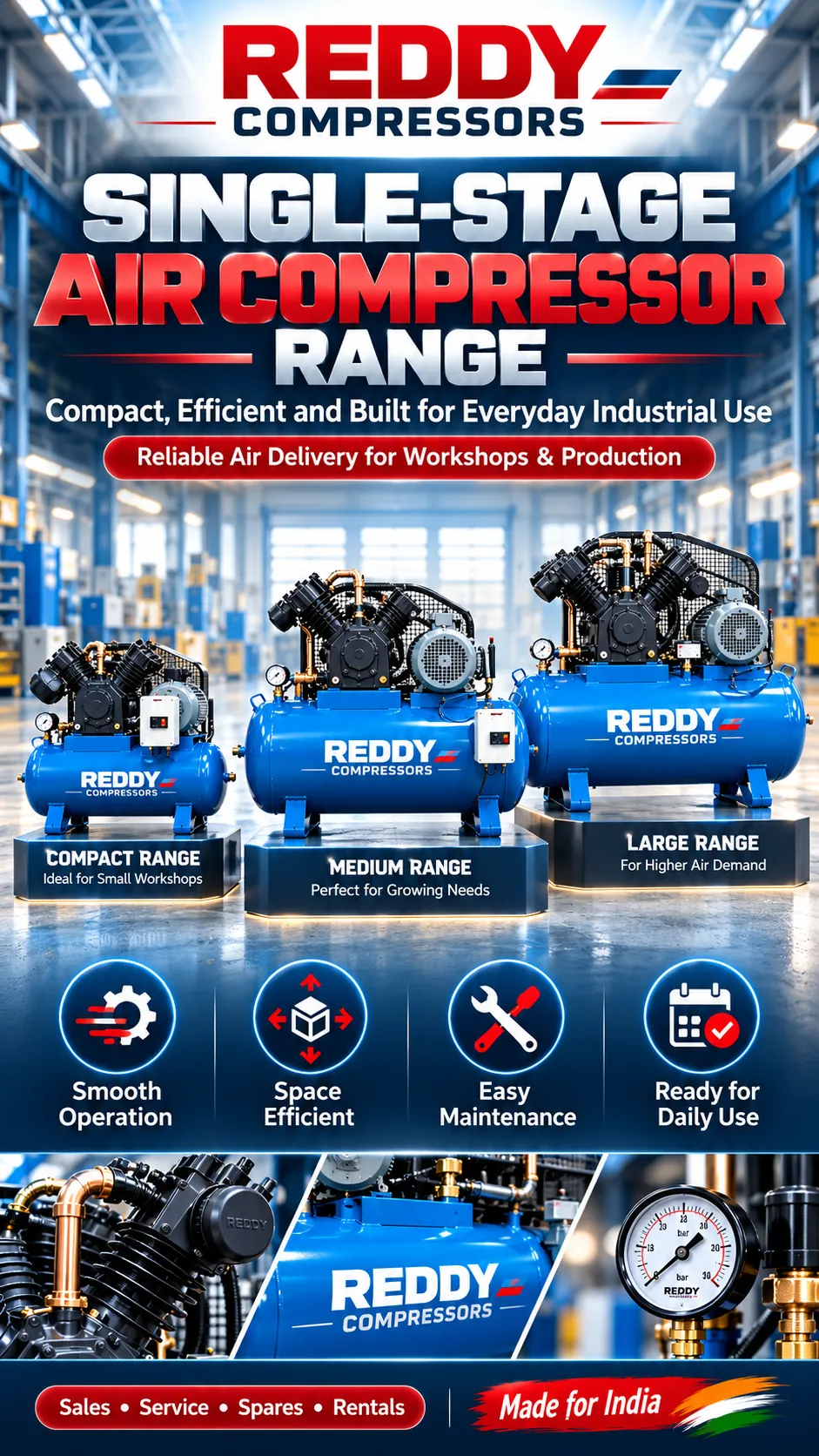
A simplified single-stage reciprocating arrangement as one in which air is compressed:
From inlet conditions
- To final discharge pressure
- IN ONE COMPRESSION STAGE.
This architecture may suit appropriate lower-pressure and moderate-duty applications and identifies potential characteristics including:
- Relatively Straightforward Construction
- Service Familiarity
- Compact Packaging
- Practical Capital Cost for Suitable Duties
Suitability depends on required pressure and operating cycle
- The correct question is not
- “Is single-stage good enough?”
Across brands
Models we supply and service
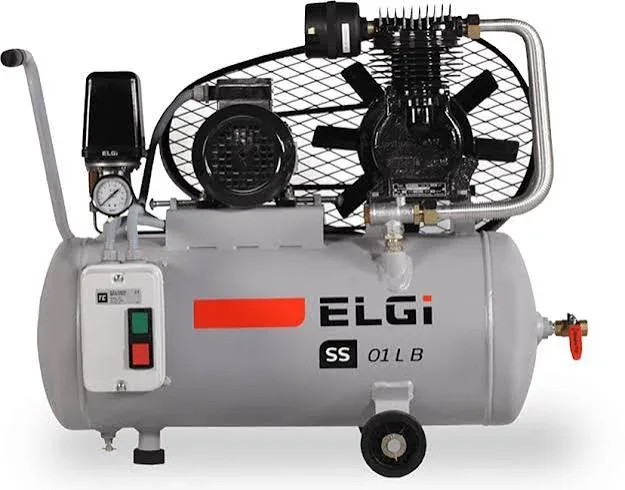
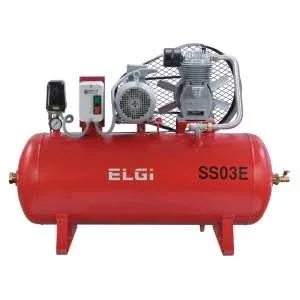
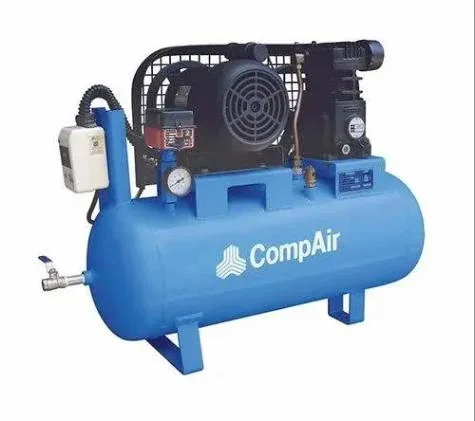
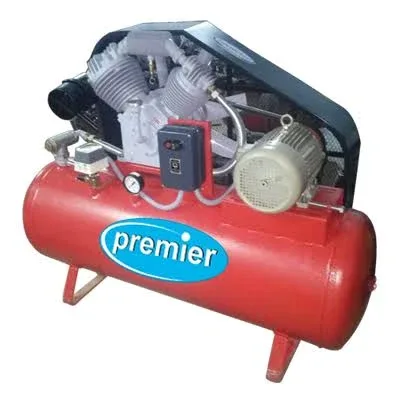
Manufacturer product images, shown to identify machines we sell, service and support. Brand names are trademarks of their owners.
The stronger question is:
“Does this verified single-stage compressor deliver the required FAD at the required pressure for the actual duty cycle?”
Single-stage is neither automatically inferior nor automatically economical.
It is an architecture that must match the application.
The selection equation
In a single-stage arrangement, that compression process takes the air from inlet conditions to final discharge pressure within one compression stage.
That is the central mechanical distinction.
02 — one stage does not define the whole machine
A single-stage reciprocating compressor may still differ according to:
- Cylinder Configuration
- Pressure
- Cooling Arrangement
- Lubrication
- Drive
- Motor / Engine
- Receiver Configuration
- Reciprocating architecture can vary across these variables
Therefore:
Single stage = one architectural characteristic
Not the complete equipment specification.
03 — lower-pressure / moderate-duty applications
But it does not define a universal:
- Bar Range
- PSI Range
- kW Range
- CFM Range
or:
Duty Percentage.
Actual pressure and duty capability must come from current manufacturer/model documentation.
Lower-pressure / moderate-duty where appropriate
It does not establish an industry-wide numerical cutoff.
Therefore:
Pressure range = model-specific verification item
05 — duty cycle is critical
A compressor rated for a given airflow does not automatically mean it should operate continuously at that output.
Manufacturer-specific limits may involve:
- Loaded Operating Time
- Cooling
- Starts per Hour
- Discharge Temperature
- Pressure
- Environmental Conditions
The source summarises the rule powerfully:
Select not only for how much air the compressor can make
- BUT FOR HOW LONG IT IS EXPECTED TO MAKE IT.
- 06 — moderate duty does not have one universal percentage
The source provides no universal duty-cycle percentage.
Actual limits depend on:
- Manufacturer
- Model
- Cooling
- Pressure
- Ambient Conditions
- Operating Pattern
- Use the current manual/data sheet for the selected equipment
07 — where single-stage reciprocating may fit
Applications such as:
- Workshops
- Garages
- Small Industrial Facilities
- Process Support
- Backup / Secondary Air
- where piston technology may be relevant depending on the actual demand profile
A single-stage version may deserve evaluation within those applications when its verified:
- Pressure
- FAD
- Duty
- fit the requirement
08 — workshops
Workshops as a clear reciprocating-compressor application where:
- Tools Operate Intermittently
- Receiver Storage Can Buffer Peaks
- The Compressor Is Not Continuously Loaded
- This operating pattern can align well with suitable single-stage equipment
But:
Workshop ≠ automatically single stage
The actual pressure, airflow and duty still decide.
09 — garages
Garage applications may involve:
- Service Equipment
- Tyre Inflation
- Pneumatic Tools
Before choosing a single-stage unit, establish:
How Many Tools?
How Many Simultaneously?
Required Pressure?
Required FAD?
Hours of Use?
Peak Duration?
The compressor should be selected from the actual workload.
10 — small industrial facilities
Reciprocating compressors may suit smaller industrial facilities where demand is periodic rather than continuously high.
Single-stage architecture may be relevant if:
Pressure + flow + duty
all remain inside the actual model's capability.
As operating hours or sustained demand increase, another architecture may deserve comparison.
11 — when rotary screw may be the better fit
Where air demand is:
- High
- Continuous
- Predictable
- Present Across Multiple Shifts
- rotary screw technology may deserve consideration
By contrast, reciprocating technology can be attractive where demand is:
- Intermittent
- Periodic
- Relatively Low
- Characterised by Long Idle Periods
Therefore:
The load profile decides
Not brand loyalty or technology preference.
Two stage is always better
It says the correct architecture depends on:
- Required Operating Pressure
- Airflow
- Duty
So a correctly matched single-stage machine should not be rejected merely because a two-stage alternative sounds more “industrial.”
13 — when two-stage may deserve evaluation
Two-stage reciprocating compression as:
- Low-Pressure Stage
- → Intercooling
- → High-Pressure Stage
- → Final Discharge
and says dividing compression between stages can be advantageous where pressure requirements justify that architecture.
Therefore:
If the required pressure / duty exceeds a verified single-stage machine's suitability, evaluate the appropriate alternative
Do not force single-stage architecture into the wrong duty.
14 — FAD matters more than swept volume
Piston compressors may be marketed with different airflow figures.
Customers should distinguish:
Theoretical displacement
from:
Useful delivered airflow
It says practical capacity comparison should use the appropriate Free Air Delivery under stated conditions.
This is especially important in smaller compressor purchasing.
15 — never compare “CFM” without knowing what the number represents
Ask:
Is It FAD?
Is It Theoretical Displacement?
At What Pressure?
Against What Test / Reference Basis?
A larger published airflow number does not automatically mean greater useful delivered capacity.
16 — motor HP does not define capacity
A familiar selection shortcut is:
“We need a 5 HP / 10 HP / 15 HP compressor.”
Motor power is useful.
But it does not fully define:
- FAD
- Pressure
- Duty
- which are the actual operating variables
17 — pressure should match the process
Single-stage architecture should be selected only where the required operating pressure falls within the actual compressor's capability.
Asking:
What Pressure Does the Application Require?
What Pressure Must Leave the Compressor?
What Pressure Is Lost Downstream?
What Duty Cycle Will the Compressor Experience?
What Does the Manufacturer Permit?
This is far stronger than buying a compressor from nominal pressure alone.
18 — point-of-use pressure matters
A compressor may produce adequate discharge pressure while the tool or machine sees less pressure because of:
- Piping
- Hoses
- Filters
- Regulators
- Fittings
- Distribution Loss
Therefore:
Compressor discharge pressure ≠ point-of-use pressure
Do not oversize or overpressurise the compressor before investigating the distribution system.
19 — receiver-mounted single-stage compressors
Single-stage reciprocating compressors may be supplied in receiver-mounted configurations where verified by the actual manufacturer/model.
Receiver-mounted packages can provide:
- Compact Installation
- Integrated Storage
- Simplified Small-System Layout
- Buffering for Intermittent Demand
- This can be practical for intermittent applications
20 — the receiver still has to be correctly sized
Be aware:
THE FACT THAT A RECEIVER IS SUPPLIED UNDER THE COMPRESSOR DOES NOT AUTOMATICALLY MEAN IT IS IDEALLY SIZED FOR THE APPLICATION.
The package tank should be evaluated against:
- Demand Pattern
- Compressor Capacity
- Control Band
- Peak Events
- Operating Objective
21 — base-mounted single-stage compressors
Where a verified single-stage model is offered base-mounted, separate system storage may be used.
Separate-receiver architecture as useful where:
- Larger Storage Is Required
- An Existing Receiver Is Available
- Compression & Storage Are Separated
- Multiple Compressors Feed Common Storage
- A Custom Layout Is Required
- The correct package depends on the system
22 — receiver storage & intermittent demand
A receiver can absorb short demand periods and reduce excessive start-stop behaviour where correctly applied.
This makes storage especially relevant in intermittent piston-compressor systems.
But:
Receiver storage does not increase sustained compressor FAD
23 — receiver size interacts with control
Receiver size interacts with:
- Compressor Capacity
- Pressure Switch / Control Band
- Demand Rate
- Allowable Pressure Change
- Starts per Hour
- Therefore receiver sizing is not only a “bigger tank is better” decision
- It is part of machine-control and demand engineering
24 — a larger receiver does not automatically improve efficiency
This.
The receiver needs a purpose.
25 — starts per hour
Manufacturers may specify starting-frequency limits.
Excessive cycling can place stress on:
- Motor
- Contactors
- Pressure Switches
- Drive Components
If a single-stage machine cycles excessively, investigate:
- Receiver Capacity
- Leakage
- Pressure Settings
- Compressor Sizing
- Demand Behaviour
26 — single-stage does not automatically mean oil-lubricated
Stage architecture and lubrication architecture are different.
A single-stage reciprocating model may have a manufacturer-defined lubrication configuration.
Single stage = oil-lubricated
unless the actual model confirms it.
27 — single-stage does not define cooling method
Cooling is another independent design variable.
Therefore:
Single stage ≠ automatically air cooled
Actual equipment documentation controls.
28 — air quality remains a separate requirement
Single-stage compression does not determine whether the final compressed air is:
- Dry
- Oil-Free
- Low-Particulate
- Suitable for Product Contact
or:
Suitable for Instrument Duty.
The process still determines:
- Moisture
- Oil
- Particulate
- Pressure Dew Point
- Point-of-Use Acceptance Criteria
29 — food / sensitive processes
Compressor type alone does not establish final air quality in food-processing applications.
If air interacts with product, packaging or sensitive processes, the contamination risk and complete air-treatment requirement must be defined separately.
Therefore:
Single-stage piston ≠ process-air quality classification
30 — installation
Practical reciprocating installation requirements:
- Firm Foundation
- Adequate Ventilation
- Service Clearance
- Correct Electrical Protection
- Suitable Piping
- Condensate Management
- Safe Pressure Relief
- Accessible Isolation
Its summary is important:
Small compressor ≠ insignificant installation
31 — ventilation
Single-stage reciprocating equipment still generates heat during compression.
Adequate ventilation is therefore part of installation.
• ambient-temperature limit.
Those remain manufacturer/model-specific.
32 — service access
A compact compressor should still allow access for actual maintenance.
Potential service areas vary by machine but can include:
- Valves
- Piston Rings
- Cylinders / Liners
- Bearings
- Belts
- Gaskets
- Filters
- Lubrication Components
“All single-stage compressors are easy to repair.”
Serviceability still depends on:
- Machine Design
- Parts Availability
- Condition
- Technician Capability
- Installation Access
34 — practical capital cost does not mean lowest lifecycle cost
But purchase price is only one part of ownership.
Review:
- Energy
- Maintenance
- Repairs
- Operating Hours
- Air Treatment
- Installation
- Downtime Exposure
- before deciding
35 — compact packaging does not mean “put it anywhere”
Compact size can simplify installation.
It does not remove:
- Ventilation
- Noise / Site Consideration
- Electrical Safety
- Drainage
- Piping
- Service Clearance
- Pressure-Vessel Safety
- requirements
- The complete installation still matters
36 — backup air
A suitably designed reciprocating machine may provide backup or secondary capacity in some installations.
A verified single-stage compressor could potentially serve such a role where:
- FAD
- Pressure
- Duty
- Connection
- Air Quality
- fit the backup requirement
- But availability and application suitability must be verified
37 — do not use a backup compressor outside its duty
A machine that is adequate for short backup operation is not automatically a substitute for a continuous production compressor.
Backup planning must still respect:
- Manufacturer Duty Limits
- Cooling
- Pressure
- Operating Time
- and actual plant demand
38 — SINGLE-STAGE vs ROTARY SCREW
The relevant question is not:
“Which technology is better?”
For intermittent/moderate duty, suitable reciprocating equipment may deserve strong evaluation.
For sustained high-hours plant air, rotary screw may deserve stronger consideration.
The duty decides.
39 — model verification before publication
For every single-stage reciprocating compressor, confirm:
- Manufacturer
- Exact Model
- Motor kW / HP
- FAD
- Working Pressure
- Number of Cylinders
- Lubrication Type
- Cooling Type
- Drive Type
- Motor / Engine Configuration
- Receiver-Mounted / Base-Mounted
- Receiver Volume Where Applicable
- Duty Limit
- Control Type
- Dimensions
- Weight
- Electrical Requirement
- Service Requirements
- Availability
- Do not infer specifications from another model
40 — selection inputs
Collecting:
- Application
- Required FAD / CFM
- Operating Pressure
- Number of Users
- Operating Hours
- Expected Duty Cycle
- Receiver Requirement
- Power Supply
- Installation Environment
- Air-Quality Requirement
41 — single-stage selection gate
Before choosing the machine, ask:
Application
What will the air operate?
FAD
How much useful delivered air is required?
Pressure
What pressure must reach the process?
DUTY
How long will the compressor be loaded?
Operating pattern
Intermittent, periodic or sustained?
Receiver
What storage function is required?
Start frequency
Is cycling compatible with the actual model?
Cooling
Can the installation support the machine?
Lubrication
What architecture does the actual model use?
Air quality
What treatment does the process require?
Maintenance
Can the machine be serviced appropriately?
Lifecycle
Does the complete ownership case make sense?
Only then should “single stage” become the selected architecture.
Single-stage reciprocating in one line
A single-stage reciprocating compressor compresses air from inlet condition to final discharge pressure in one compression stage
And should be selected only when its verified pressure, FAD and duty cycle fit the application
Closing
One stage can be exactly the right architecture
When the operating requirement matches it.
A correct single-stage reciprocating selection should establish:
Application
- FAD
- Pressure
- Duty cycle
- Receiver requirement
- Cooling
- Lubrication
- Installation
- Air quality
- Lifecycle
- Reddy compressors
- Compressed air. engineered for uptime
- Define the application
- Verify the FAD
- Define the pressure
- Respect the duty cycle
- Size the receiver with purpose
- Engineer the installation
- Verify the actual model
- Primary CTA
Request a Single-Stage Reciprocating Compressor Selection
Secondary CTAs
Compare Single Stage vs Two Stage
Compare Reciprocating vs Rotary Screw
Review Receiver Requirements
Discuss Workshop Compressor Requirements
Request Reciprocating Compressor Service