
This page develops the automotive application brief. Use Workshop Compressed-Air Systems for the shared methods of demand, receiver, distribution and installation assessment.
Map the work by bay
List tyre-service equipment, impact tools, pneumatic repair tools and lifts where pneumatic. Identify which activities can occur together. For body-shop or finishing work, record the separate process requirements and the outlets involved.
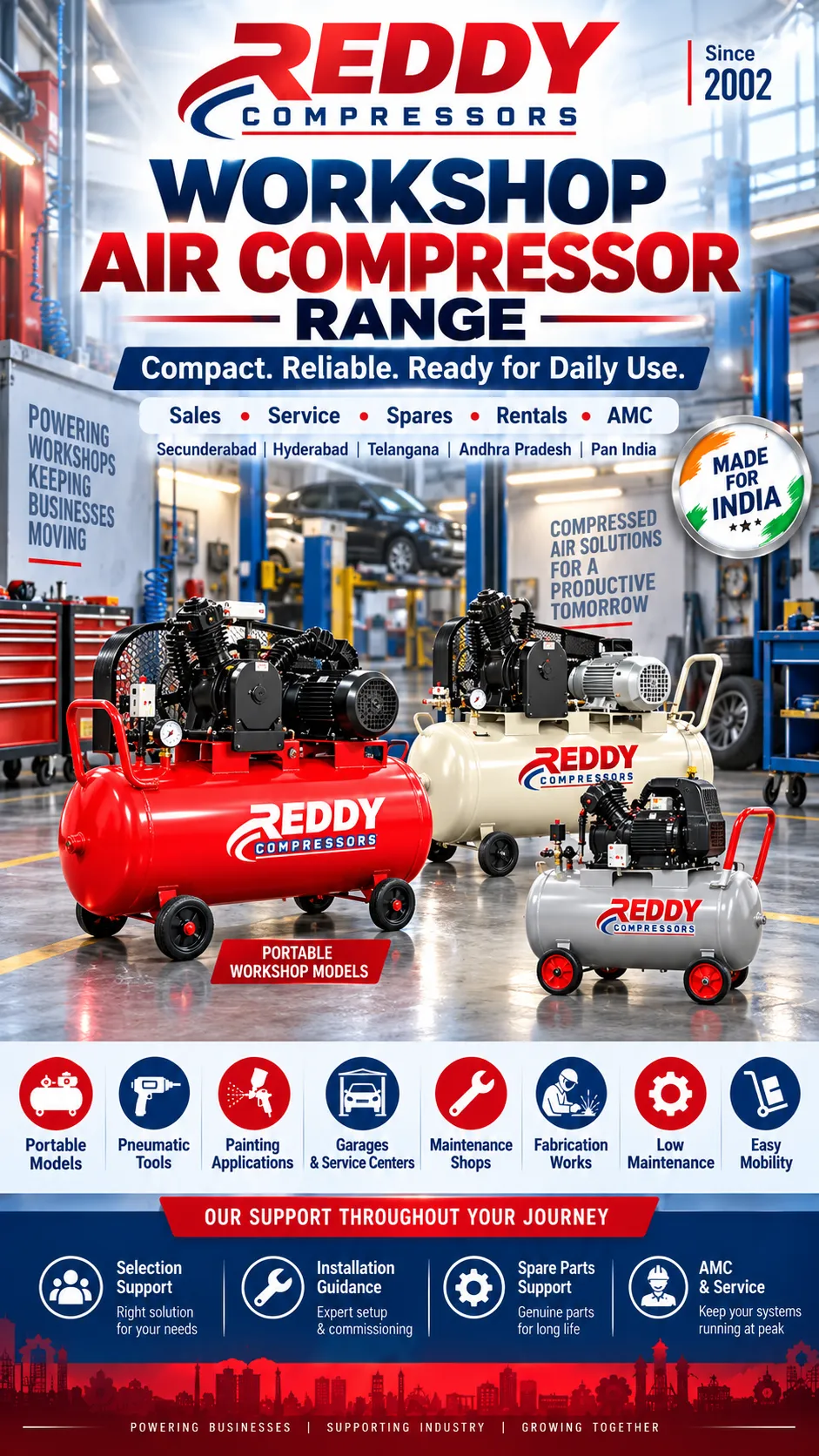
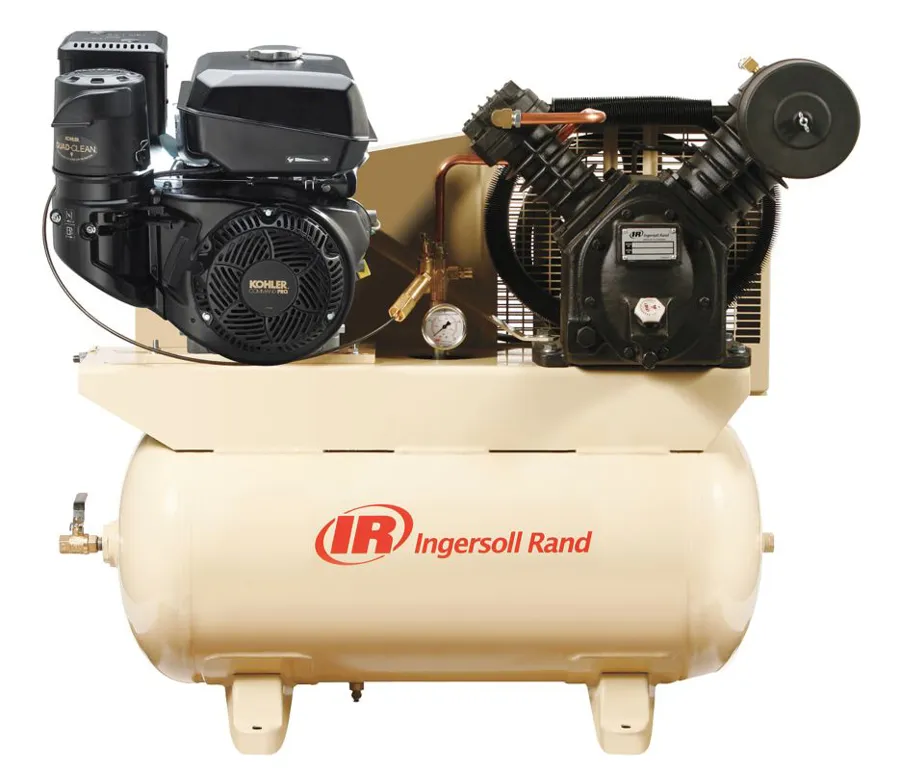
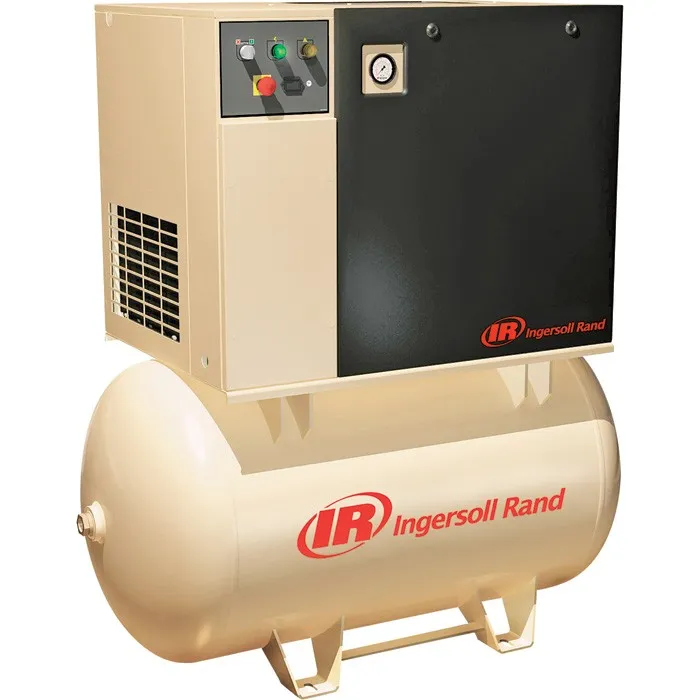
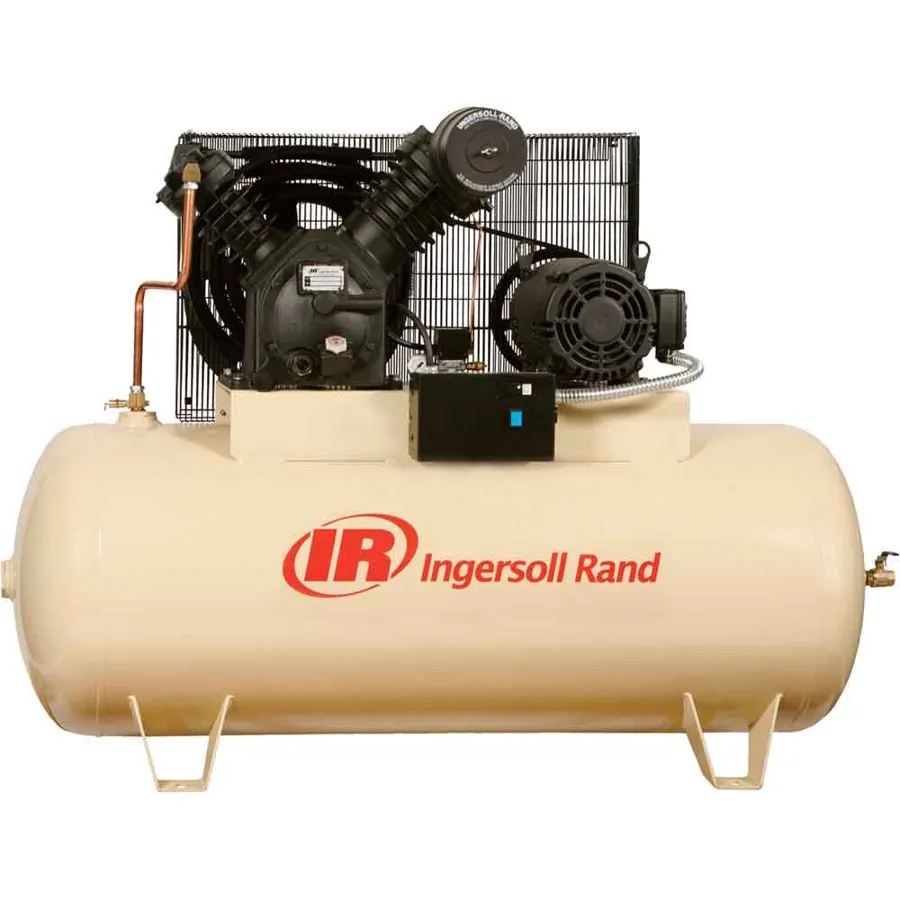
Representative images of machine types we sell, service and rent. Models and capacities are confirmed against your duty.
Avoid counting every installed tool as a continuous load, or assuming that only one tool operates at a time. Describe the actual work pattern. Where the schedule is uncertain, collect observations during representative service activity.
Bay or activity | Information to collect |
|---|---|
Tyre service | Equipment model, documented air demand and working pressure |
Repair tools | Tool requirements, use duration and coincident operation |
Pneumatic lift | Manufacturer's requirement and operating pattern |
Body-shop work | Process-air specification and equipment instructions |
Additional bays | Expected work and overlap with existing activity |
Treat tyre equipment as part of the complete load
Tyre inflation alone does not describe the demand of a garage that also operates tyre-service machinery and repair tools. Obtain the equipment-specific requirement rather than assigning a universal CFM or pressure to the word tyre.
Record when those machines operate alongside other users. The selection discussion should be based on that combined duty, with clear assumptions about use duration and simultaneous work.
Check tool and lift interfaces
For impact tools, capture the duration of use and the conditions at the tool connection. Record the hose, regulator and coupling arrangement when a performance complaint is being investigated.
Where a lift uses compressed air, obtain its manufacturer's requirements. Do not assume that every lift has the same air demand, or that the requirements of a familiar lift apply to another model.
Separate body-shop requirements
Identify which outlets serve general pneumatic tools and which serve painting or finishing processes. Obtain the actual process and equipment requirements before deciding whether they can share the same treatment arrangement.
Do not assume that installing an oil-free compressor alone establishes paint-quality air. Include the relevant downstream equipment and point of use in the review. Keep the body-shop acceptance requirement documented so it does not disappear inside a general garage-air description.
Review intake conditions around vehicle activity
Show the proposed compressor location and nearby running-engine activity on the site layout. Review what air the compressor may draw and obtain the applicable installation requirements. Do not invent a universal separation distance to replace that review.
The layout should also show access for service and the routes to the bays. Refer the general ventilation, electrical and distribution assessment to the workshop-system review, while retaining the garage-specific conditions in the application brief.
Investigate a weak-tool complaint systematically
If an impact wrench performs poorly, record compressor pressure and tool-end conditions during the affected work. Include simultaneous users, hose, regulator, couplings, filters and possible leakage in the investigation. Keep the observation tied to the operating state.
A larger machine should not be the automatic first response. The review needs to establish whether the limitation is in compressor delivery, operating duty, treatment, distribution or the tool connection before choosing a remedy.
Plan additional bays from their work
Describe the equipment and activities expected in each new bay. Record whether the expansion changes simultaneous demand, working hours or body-shop requirements. Avoid an unexplained fixed percentage allowance as the entire expansion plan.
Request a garage air review
Provide a bay schedule, equipment requirements, compressor details, outlet layout and any recorded performance complaints. Keep current equipment availability and the final technical recommendation subject to verification. The completed brief should allow a reviewer to distinguish the garage's actual duty from a generic workshop example.
Garage air compressors
A garage does not have one universal air requirement
Garages as a reciprocating-compressor application for:
Across brands
Models we supply and service
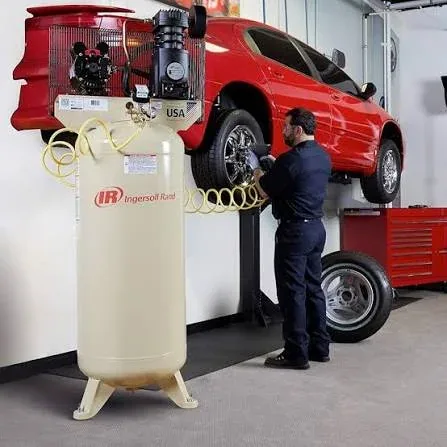
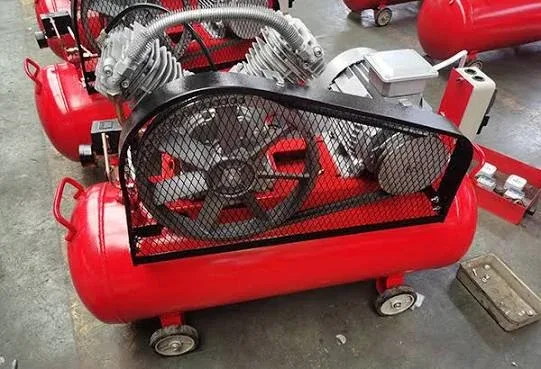
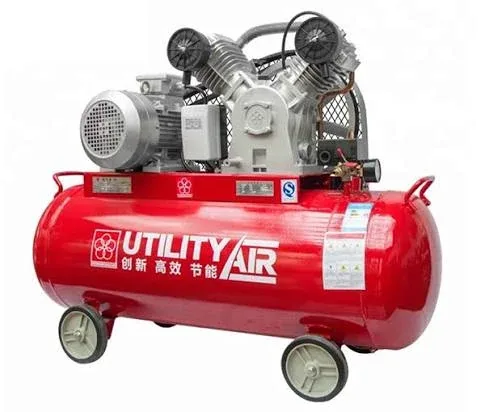
Manufacturer product images, shown to identify machines we sell, service and support. Brand names are trademarks of their owners.
- Service Equipment
- Tyre Inflation
- Pneumatic Tools
The wider automotive/workshop section adds potential users such as:
- Impact Tools
- Tyre Equipment
- Pneumatic Lifts Where Applicable
- Cleaning
- General Maintenance, and notes that demand may be highly intermittent
Start with the equipment
- “How many HP does a garage need?”
The garage selection equation
The right compressor follows the garage duty.
01 — identify every air user
Build a garage air-user schedule.
Potential users include:
Do not select compressor capacity from garage size alone.
02 — FAD is more useful than a motor-size shortcut
The compressor has to deliver sufficient useful airflow.
HP ≠ usable air capacity
03 — do not buy only by “5 HP”, “7.5 HP” or “10 HP”
A garage may ask for a compressor using motor power because that is familiar.
But motor rating alone does not establish:
The equipment should be selected from the actual air requirement.
04 — TYRE INFLATION IS AN APPLICATION—not THE COMPLETE GARAGE LOAD
Tyre inflation is explicitly identified as a garage air use.
But a garage may simultaneously operate:
Sizing only for inflation can therefore understate the complete requirement.
05 — tyre equipment should use equipment-specific data
Tyre equipment as an intended compressed-air user but does not provide a universal:
Use the actual equipment specification.
06 — impact tools can create short high-demand events
Impact tools are specifically.
The important questions are:
How Many Tools at Once?
A short high-flow event may behave very differently from a continuously operating pneumatic process.
07 — pneumatic lifts where applicable
But it does not provide generic consumption data.
Verify the lift manufacturer's air requirement
Do not infer it from lift capacity or physical size.
08 — cleaning air can add to the peak
Cleaning is also identified as a workshop air use.
If cleaning occurs while other tools are operating, it becomes part of simultaneous demand.
Do not treat it as “free air.”
09 — simultaneous use is more important than tool count
A garage may own:
- but normally use only two simultaneously
- Another garage may own fewer tools but operate several continuously
The selection should therefore consider:
Ignoring simultaneity can create undersizing while blindly adding every maximum demand can create oversizing.
10 — demand should be split into different types
Useful demand categories:
This framework works well for garage compressor sizing.
11 — garage demand is often intermittent
That means receiver storage and duty cycle can matter significantly.
12 — intermittent garage duty may suit reciprocating technology
It further says reciprocating technology can be attractive where demand is:
- Characterised by Long Idle Periods
- That can fit many garage profiles
13 — but garage ≠ automatically piston compressor
If air demand becomes:
Rotary screw technology may deserve consideration.
The load profile decides
14 — small garage & large service centre are different air systems
A one- or two-bay garage can have a very different duty from:
- Large Automotive Service Centre
- Multi-Bay Tyre Facility
- Industrial Vehicle Maintenance Workshop
- The name “garage” does not define compressor size
COMPRESSOR DISCHARGE PRESSURE ≠ POINT-OF-USE PRESSURE.
The impact wrench, tyre machine or lift experiences the pressure at its actual connection point.
Not the pressure displayed beside the compressor.
16 — work backwards from the tool
A practical pressure framework is:
This follows the source's pressure-stack approach.
17 — more pressure is not automatically better
The objective should be to minimise avoidable pressure losses rather than indefinitely compensate for them with higher compressor discharge pressure.
So if a garage tool feels weak:
Do not turn up the compressor first
18 — low tool pressure can be a distribution problem
The automotive/workshop source provides an explicit warning:
Buying a larger compressor to solve low tool pressure without first checking:
- Hose Size
- Regulators
- Fittings
- Leaks
- Filtration
- is a common error
19 — hose size matters
A garage frequently uses flexible hoses between the air distribution network and tools.
A restrictive hose can reduce usable pressure at the tool.
So selection should consider:
and actual equipment requirements.
20 — couplings & fittings can become the restriction
A large compressor feeding air through undersized or restrictive fittings can still leave tools short of pressure.
where pressure loss is suspected.
Do not diagnose only from compressor size.
21 — leakage becomes a continuous load
A garage can have many:
- which can create leakage
- The broader demand framework explicitly includes leakage as unproductive demand
A compressor should not be oversized merely to feed avoidable leaks without review.
22 — receiver storage can be valuable for garage loads
A correctly selected receiver can help:
- Provide Temporary Stored Air
- This can align well with intermittent garage-tool use
Bigger tank ≠ bigger compressor
24 — SHORT PEAK vs SUSTAINED DEMAND
A receiver can support a short impact-tool event.
It cannot supply an entire garage indefinitely if average demand exceeds compressor output.
25 — receiver size should have a purpose
Receiver-sizing variables including:
Do not select the tank only because:
“More litres looks better.”
26 — tank-mounted compressors can fit many garages
A receiver-mounted reciprocating package may provide:
- Simplified Small-System Layout
- where verified against the actual duty
27 — base-mounted + separate receiver may fit larger garage systems
Where a garage has:
base-mounted architecture can deserve evaluation.
28 — the source shows a practical small-garage system chain
For smaller automotive/workshop facilities:
29 — dryer as required
The word required matters.
Dryer selection should follow the application's required pressure dew point—not compressor size alone.
Garage ≠ automatic “no dryer.”
Garage ≠ automatic “dryer required.”
The end use decides.
30 — general garage air & paint air should not be treated as identical
Spray painting, tyre inflation and pneumatic repair tools should not automatically receive the same air specification.
That distinction can improve both:
31 — body shop / paint air
Painting applications may be sensitive to:
So a garage with paint work should define a separate finishing-air requirement where appropriate.
32 — oil-free compressor alone does not guarantee paint-quality air
This directly.
Paint-quality air depends on the complete system.
Point-of-Use Condition.
33 — general tool air may not need the same treatment as paint air
This is an important system-design opportunity.
A garage should not automatically:
Over-treat every air user
because one sensitive process needs better air.
Nor should it under-treat the sensitive process.
Segment requirements where appropriate.
34 — point-of-use regulators
Different downstream tools may need different controlled pressures.
But a regulator cannot create airflow that is not present upstream.
35 — pipework should be sized for the flow
Distribution pipework should deliver the required flow without excessive pressure loss.
A garage compressor can be correctly sized while the distribution network remains the real restriction.
36 — do not permanently raise compressor pressure to compensate for undersized pipework
Against doing this.
Correct the distribution problem where practical.
37 — reciprocating duty limits still matter
A garage may have intermittent demand, but the selected reciprocating machine still has manufacturer-specific limits involving:
Adequate CFM does not automatically mean adequate duty
38 — select for how long the compressor must run
Reciprocating compressors should be selected not only for how much air they can make—but for how long they are expected to make it.
This is especially important in garages that gradually expand from intermittent to nearly continuous air usage.
39 — starts per hour
Intermittent garage demand can cause frequent start-stop cycles.
A receiver can help where properly applied.
But excessive cycling should be investigated—not simply accepted.
Actual manufacturer starting limits remain model-specific.
40 — rotary screw may become appropriate as the garage grows
If the garage evolves into:
- Multi-Bay Service Centre
- High-Hour Fleet Workshop
- Multi-Shift Maintenance Operation
rotary screw technology may deserve evaluation because the duty profile has changed.
Technology should follow operating behaviour—not the business name.
41 — small rotary screw can sit between workshop piston & larger plant air
The broader site architecture recognises small rotary screw compressors as a possible fit where demand becomes more regular or continuous while the physical installation remains relatively compact.
42 — compressor room air in
Compressors require adequate clean cooling and intake air and warns against drawing:
This is highly relevant in garages.
Running engines, fumes and dusty service work can affect the compressor environment.
43 — engine exhaust & compressor intake should not be treated casually
Therefore compressor placement should consider what air the machine will actually draw.
Do not invent one.
Compressor input energy ultimately becomes heat that must be managed.
Poor ventilation can contribute to:
A garage compressor room still needs ventilation.
45 — physical space is not the only installation question
A compressor that fits physically can still be badly installed.
Routine service must remain safely possible.
This should guide garage installations where floor space is often valuable.
Allow practical access to actual service components such as:
- Oil System Where Applicable
- Belts / Couplings Where Applicable
- Do not bury the compressor behind tyres, shelving or workshop equipment
47 — air quality at the tool
General garage tools may tolerate one air condition.
Paint equipment may require another.
The correct design works backwards from:
What each user needs
This is more useful than specifying one treatment package for the whole facility without understanding the applications.
Garage air can still experience moisture-related problems.
Where the process requires drier air, the system may need:
- according to the actual requirement
- Do not assume receiver storage alone produces sufficiently dry air
49 — pressure regulation should not be used to justify excessive main pressure
A regulator can reduce downstream pressure but should not become an excuse to run the complete network at excessive pressure.
Generate only what the system genuinely requires.
50 — future garage expansion
Before selecting equipment, ask:
Will More Service Bays Be Added?
Will More Technicians Use Air Simultaneously?
Will Tyre Equipment Expand?
Will Painting / Body Work Be Added?
Will Operating Hours Increase?
Expansion should be credible.
Not a reason for arbitrary oversizing.
51 — do not automatically add “30% extra”
Against arbitrary capacity margin and says it can create:
- Inefficient Part-Load Operation
- Capacity margin should reflect real uncertainty and planned growth
Before selecting the compressor, verify actual:
Compressed air stores energy.
Receiver rating, relief protection and applicable inspection requirements remain important.
Receivers are pressure vessels and must not be operated above rated working pressure.
A garage compressor may operate in an environment containing:
Maintenance should therefore follow:
rather than one universal calendar.
55 — low tool pressure troubleshooting
If a garage complains:
“The impact wrench is weak,”
do not immediately conclude:
“Buy a bigger compressor.”
and actual compressor load.
This is directly consistent with the source's garage/workshop diagnostic warning.
56 — model data required before product publication
For every recommended garage compressor, verify:
- Technology — Reciprocating / Rotary Screw
- Receiver Volume Where Applicable
- Do not infer garage suitability merely from a catalogue category
57 — customer data to request
For a garage compressor assessment, collect:
- Garage / Service-Centre Type
- Number of Service Bays
- List of Pneumatic Tools
- Pneumatic Lift Details Where Applicable
- Tool-End Pressure if Known
- Painting / Body-Shop Requirement
If CFM is unknown:
Send the tool / machine details
That is enough to begin.
58 — garage compressor selection gate
Before selecting equipment, ask:
What will the compressor operate?
Tyre equipment, tools, lifts, cleaning?
What FAD does each user require?
Use actual equipment data.
What pressure must reach each tool?
Point of use matters.
How many users will run at once?
Simultaneity drives peak demand.
Is demand intermittent or sustained?
This influences piston vs rotary.
How long does the peak last?
Receiver usefulness depends on duration.
What should the receiver do?
Storage needs a purpose.
Is painting / body work included?
Air-quality requirement may change materially.
Are hoses / regulators / fittings causing loss?
Measure before buying bigger.
Is the compressor environment clean enough?
Intake air matters.
Can heat leave the room?
Ventilation matters.
Can the machine be serviced?
Access matters.
Only then should the garage compressor be selected.
Garage air compressors in one line
A garage compressor should be selected from the airflow, pressure, simultaneous tool use and duty profile of the actual service operation
With receiver storage, hoses, regulators, air treatment, ventilation and point-of-use pressure treated as part of the same system
The garage does not need “a compressor.”
It needs the right air at each tool
A correct garage compressed-air system should define:
Tyre-equipment demand
- Tool demand
- FAD
- Working pressure
- Simultaneous users
- Duty cycle
- Receiver storage
- Air quality
- Hoses & distribution
- Ventilation
- Service access
It also makes clear that automotive workshop air is not one universal specification: tyre inflation, pneumatic repair tools and painting should not automatically receive the same air-quality design.
And for smaller facilities it provides the practical system chain:
COMPRESSOR → RECEIVER → DRYER AS REQUIRED → FILTRATION → DISTRIBUTION → POINT-OF-USE REGULATORS.
Most importantly, the source gives the garage troubleshooting rule:
Before buying a larger compressor for low tool pressure, check the hoses, regulators, fittings, leaks and filtration
Compressed air. engineered for uptime
- List the equipment
- Verify the FAD
- Define tool pressure
- Calculate simultaneous use
- Understand the duty
- Size storage with purpose
- Separate general air from finishing air
- Control pressure loss
- Install for ventilation & service
- Verify the complete system
- Primary CTA
Request a Garage Air Compressor Selection
Secondary CTAs
Send Your Garage Tool List
Compare Piston vs Rotary Screw
Review Receiver Size
Investigate Weak Pneumatic Tools
Review Body-Shop Dryer & Filtration Requirements