
Prepare the site for the complete air supply
A large portable compressor can be central to a temporary project or a planned replacement-air arrangement. Its selection needs to account for more than the machine arriving at the gate. The receiving site must be able to accept, position, connect, operate and eventually remove the proposed equipment.
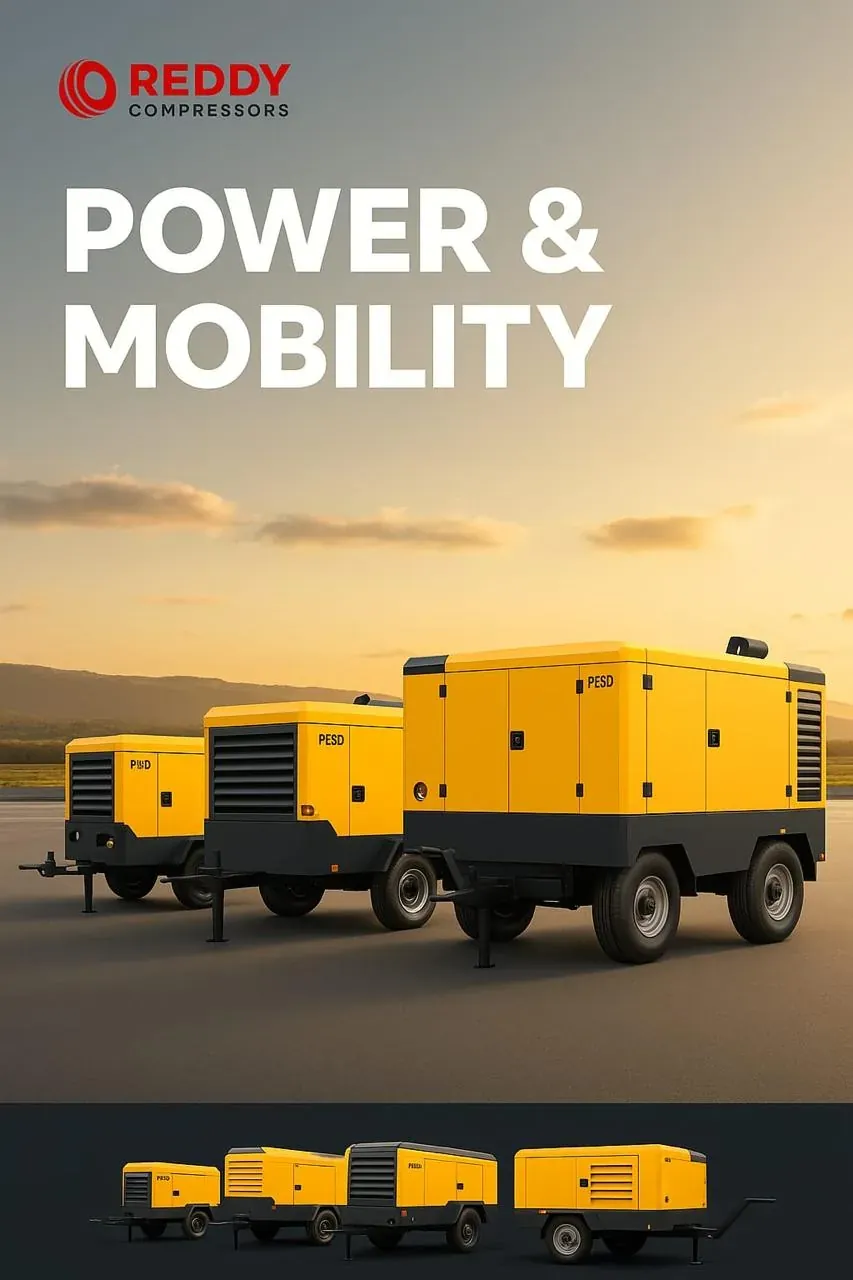
Begin with the required air service and the site connection. Then work back through the supporting equipment, utility arrangements and delivery plan. This helps establish whether the proposed unit can become a usable air source within the project's available time and space.
“Large” does not define a universal pressure, airflow or transport category. Use the exact model's documented capabilities and the actual supplied configuration. Size alone establishes neither application suitability nor readiness for service.
Discuss your large portable compressor requirement with Reddy Compressors. Provide the air duty, destination layout, proposed connection point and required period of operation.
Define where the supplied air becomes the site's responsibility
Identify the point at which the required air service must be delivered. It may be the compressor outlet, the outlet of a treatment package or an agreed connection to the customer's system. These are different boundaries and should be shown clearly in the enquiry.
State the required flow, pressure, quality and operating pattern at that boundary. Ask the supplier to explain which parts of the proposed system are included in demonstrating those requirements.
Also identify who supplies and approves the equipment between the compressor and the receiving system. A compressor quotation may exclude treatment, distribution, connection hardware or site work unless these items are explicitly included.
Use the Portable Air Compressors hub for the wider selection framework. This page concentrates on preparing a deployment in which equipment, site services and connection responsibilities must come together.
Confirm the proposed machine before planning around it
Request the model, configuration, current technical data and applicable manuals. Obtain delivered-air information for the intended pressure and operating conditions rather than relying on a range headline.
Describe the required operating hours, expected demand changes and interruption constraints. Have the supplier identify any restrictions or additional provisions relevant to those conditions. No standard correction factor or continuous-duty promise should be inferred from the category name.
Keep large-package selection distinct from high-pressure and high-flow selection. A physically substantial machine is not automatically suitable for a high-pressure task, and a flow rating must always be considered with its pressure and reference conditions.
If the proposal changes to another unit, review the resulting effects on transport, connections, support equipment and site services. An equivalent air-duty claim does not establish identical installation requirements.
Build a site-readiness record
Bring the supplier, transport team and receiving site into one planning record. Assign an owner to each interface so that unresolved work remains visible before mobilisation.
Interface | Information to settle before dispatch |
|---|---|
Machine identity | Exact unit or accepted substitution criteria, configuration and relevant documentation. |
Delivery and receipt | Transport method, access arrangements, receiving contact and agreed delivery window. |
Positioning | Approved handling method, operating position and supporting-surface assessment. |
Air connection | Delivery boundary, connection specification and responsible system designer. |
Treatment and auxiliaries | Included equipment, layout, utilities and required performance evidence. |
Energy supply | Documented electrical or fuel arrangements appropriate to the selected machine. |
Commissioning | Required inspections, checks, records and authority to release the installation for use. |
Removal | Disconnection responsibilities and continued access for collection. |
The record is a coordination tool, not an engineering approval. Use it to identify which drawings, assessments and procedures must be completed and who is responsible for them.
Review delivery access with the actual transport arrangement
Give the transport planner the supplied configuration's dimensions and mass, including the condition represented by the figures. Confirm whether running gear, accessories or separate modules affect the delivery arrangement.
Review the route from the site entrance to the unloading or positioning area. Include turning space, overhead restrictions, surface information and interaction with site traffic. Obtain the assessments required for the actual route and transport equipment.
Plan the delivery sequence where the compressor, treatment equipment and supporting items arrive separately. Identify where each item can wait and whether installing one item will obstruct the next delivery.
Do not assume that a portable unit is approved for road towing. Towing eligibility, carrier transport and any handling operations require their own documented arrangements for the selected equipment.
Reserve an operating area, not just a parking space
Prepare a layout showing the compressor and every separately deployed item. Include the space required for controls, access, cooling, servicing and the proposed connection routes.
Have the responsible site professional confirm the suitability of the supporting surface or structure using the equipment information. Where lifting or other mechanical handling is involved, provide the complete assembly data to competent personnel planning that operation.
Use the designated handling provisions and instructions. A feature intended to lift one component or one configuration should not be assumed suitable for the whole delivered arrangement.
Keep the access needed during operation available after installation. A delivery vehicle leaving the area should not be followed by storage or other equipment occupying the space needed for service, fuel delivery or later removal.
Engineer the air connection as a system interface
The connection needs to be suitable for the intended pressure, temperature, flow and service conditions. Ask the responsible designer to specify the appropriate hoses or piping, fittings, supports, isolation and protective arrangements for the complete interface.
Confirm the compressor's documented outlet details and the receiving connection before procuring hardware. A similar nominal size does not demonstrate compatibility between two fittings or assemblies.
Where the portable supply connects to an existing header, review the conditions on both sides. Identify other possible sources of pressure and the measures needed for isolation, prevention of unwanted reverse flow and safe intervention. Follow the selected equipment's requirements and an approved system design.
This page provides no universal hose diameter, manifold design or connection sequence. Those decisions require actual system information. A large compressor's output capability is not proof that an existing temporary connection can accept it.
Include treatment in the deployment plan
If the application requires cooling, moisture removal, filtration or drying, identify the equipment that will provide it and where it will be installed. Ask for selection evidence at the proposed inlet and operating conditions.
Clarify the pressure and flow to be available at the agreed delivery boundary after the included equipment. Establish any utility needs and service arrangements for the treatment package, including drainage where applicable.
Keep access to consumables, instruments and maintenance points in the layout. An auxiliary delivered as a separate skid still needs appropriate support, handling and connection planning.
For oil-free or other specialist applications, establish the required evidence for the complete air service. A compressor's size or compression technology alone does not certify the air reaching the process. Use the Oil-Free Portable Compressors guide where relevant to the enquiry.
Make energy provision part of readiness
For a diesel-driven unit, agree the fuel-supply arrangement and responsibilities using the machine's requirements. If external fuelling is proposed, confirm that the selected unit supports it and obtain the appropriate equipment and installation instructions.
An external connection is not an unlimited-runtime guarantee. Fuel quality, supply continuity, machine operating limits, maintenance and any other required consumables still need to be addressed. Use supported consumption information when planning replenishment.
For an electrically driven unit, obtain the complete package's supply requirements and a qualified assessment of the proposed connection. Include starting or changing-load conditions where relevant. A connection point nearby is not evidence of adequate capacity.
Keep fuel-system and electrical design details with the responsible technical teams. The deployment record should confirm that these services are ready for the actual machine, not prescribe a generic arrangement.
Agree how the temporary source joins the operation
Where portable air replaces or supplements an existing supply, define the proposed transition with the site operations team. Establish the permitted interruption, isolation requirements and the checks needed before the new source is accepted.
Any common-header or multi-compressor arrangement requires engineering review of compatibility, control and protection. Do not connect machines together simply because their outlet fittings can be adapted.
Record who directs the changeover, who communicates with affected users and who can authorise operation. Use the approved procedures for the selected equipment and receiving system.
If uninterrupted service is required, obtain a documented design and verification plan for that requirement. The presence of another compressor on site is not by itself proof of automatic or interruption-free backup.
Commission the installed arrangement against the specification
Agree the acceptance evidence before mobilisation. Separate identification and condition checks from installation checks and from demonstration of the required air service.
Record the delivered equipment, the accepted configuration and the completed site interfaces. Have the responsible parties verify the support, utilities, connections and other work within their scopes.
Then follow the applicable commissioning procedures. Measure or otherwise verify the specified parameters at the agreed boundary under recorded conditions. Keep the measurement method and relevant operating settings with the results so that they can be interpreted later.
If a requirement remains unverified, identify it and assign the next action. A startup demonstration confirms only what was actually demonstrated; it should not be described as complete acceptance of every performance or air-quality requirement.
Organise operation over the required period
Assign responsibility for operating observations, service coordination, replenishment and fault reporting. Establish which tasks the site performs and which remain with the equipment provider.
Keep the relevant instructions and contact arrangements accessible to each shift. Record changes that may affect the accepted installation, such as another connected user, altered pressure requirements, a relocated auxiliary or a changed fuel or power source.
Plan service access and the process for taking equipment out of use when required. If interruption would affect critical work, assess the alternative supply and its connection before describing it as available backup.
The aim is to maintain the installation that was reviewed and accepted. Unrecorded changes can invalidate the assumptions on which the original selection was based.
Plan removal while access is still available
Agree the end-of-use procedure and responsibilities at the start of the deployment. Identify who will isolate and disconnect the air and utilities under the approved procedures, and who will prepare the equipment for collection.
Preserve the required handling access. Later construction, temporary structures or stored materials should not leave the unit trapped behind completed work.
Record the condition of hired equipment and supplied accessories at return. Clarify responsibility for reinstating the customer's connection and dealing with remaining materials or fluids where relevant.
If the unit moves directly to another project, the new site needs its own readiness review. The equipment documentation travels with the machine; acceptance of one installation does not transfer automatically to another.
Request a quotation with the deployment scope defined
Send the duty specification and destination layout together. Include the connection boundary, operating period, interruption constraints and the services available at the site.
Ask the offer to identify equipment supply, transport, handling, treatment, connection work, commissioning and ongoing support separately. Make customer-provided items and unresolved design inputs explicit.
Compare offers against the same service boundary. A compressor-only price and a price for an installed temporary air arrangement represent different scopes, even where the headline capacity is similar.
Request a Large Portable Compressor Deployment Review from Reddy Compressors. Define the required air service and the site work needed to make it available, from delivery through removal.
Frequently asked questions
What qualifies as a large portable compressor?
There is no universal threshold used in this guide. Confirm the actual model, delivered performance and physical configuration. The category does not replace a duty or deployment specification.
Does large mean high pressure?
No. Verify the rated pressure and delivered flow together. Physical size and pressure capability are separate selection considerations.
Can it connect directly to an existing plant header?
Only through an assessed connection arrangement compatible with the portable unit and existing system. The design must address the actual pressure conditions, other sources, isolation and protection.
Does an external fuel connection allow unlimited operation?
No. It may support an approved external supply arrangement, but operating limits, maintenance, replenishment and other consumables still apply. Obtain the exact machine's requirements.
Is a separate dryer always required?
The required treatment depends on the application and the proposed air system. Define the air-quality requirement and obtain evidence for the selected arrangement rather than assuming treatment from machine size.
Can several portable compressors supply one connection?
Potentially, with an engineered and verified arrangement. Compatibility, controls, connection capacity and protection must be assessed; adding advertised capacities is not a complete design.
What proves the installation is ready?
The agreed installation and commissioning records should demonstrate the relevant requirements at the defined delivery boundary. Delivery or engine startup alone does not establish full readiness.
What information is needed first?
Provide the duty, operating period, receiving connection, site layout, access constraints and available utilities. Identify who will approve the site interfaces and commission the installation.